The char kway teow man on Lebuh Carnarvon works with two woks and a cigarette going simultaneously, and the cigarette is the tell. He takes a drag, sets it on the rim, throws lard into the wok, and the flame jumps so high it licks the range hood. The whole stall smells of smoked oil and prawn shell. If you order after he’s already sweating through his shirt, the noodles come out slightly different — smokier, more char, because the wok never really cools down between orders. That’s the version I keep coming back for, and it’s not on any list I’ve seen pinned to a hostel wall.
George Town rewards people who eat by queue rather than by guidebook. A stall with a dozen people fanning themselves in the heat is almost always better than the one with framed newspaper clippings out front. The clippings are a trap — some of those places have been coasting on a review from years ago and the portion sizes have quietly shrunk in the meantime. I learned this the slow way, standing in a short line at a famous name off Chulia Street, paying for a plate of assam laksa that tasted like it had been made by someone following a recipe rather than remembering one.
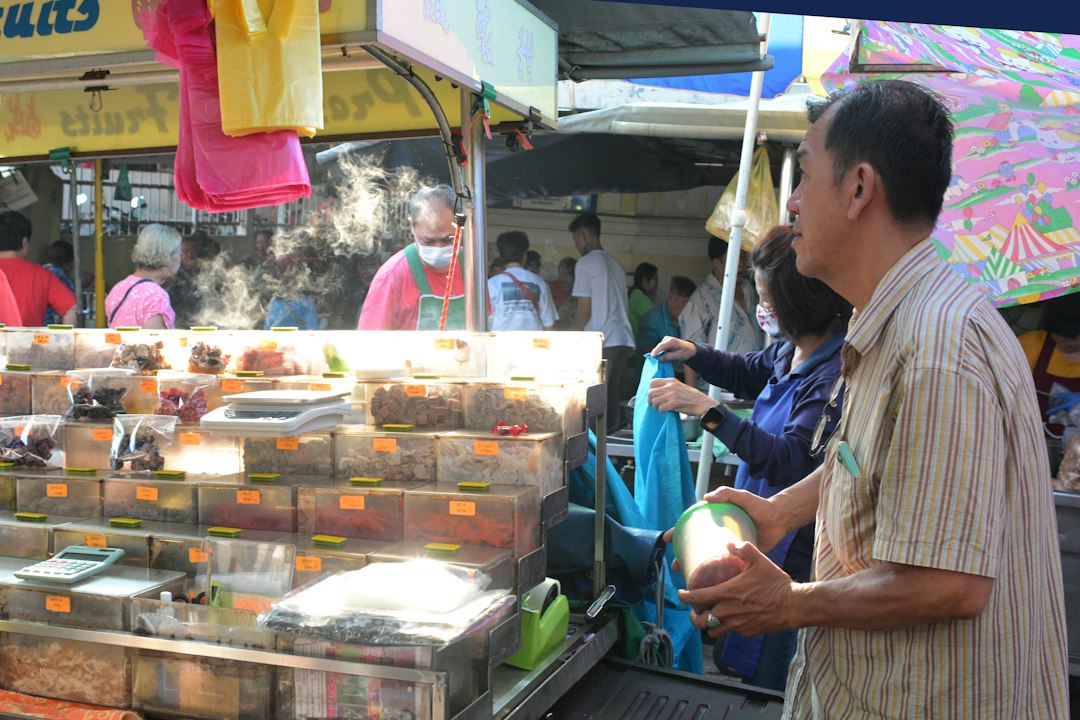
The correct move is to walk, look at what people are actually holding, and follow the smell. George Town is compact enough that this works. From Armenian Street to the Clan Jetties is maybe fifteen minutes on foot if you’re not stopping, and the whole peninsula is threaded with lanes where a stall has been parked in the same spot for decades. There’s a rhythm to it: the morning crowd wants noodles and coffee, the midday crowd wants rice and curry, and the evening crowd wants grilled things and beer. Eat by that rhythm and the city opens up.
Start with the morning, but not at the famous dim sum places. The coffee shops around Lebuh Campbell do a version of kaya toast that costs a couple of ringgit — thin white bread, a slab of cold butter, a spoon of green coconut jam, all of it run through a charcoal grill until the crust goes almost black at the edges. You dip it into a soft-boiled egg with a splash of soy and a shake of white pepper. The egg arrives in a chipped cup that’s too hot to hold. That’s the correct state of affairs. The kopi at these places is thick and sweet enough to make your teeth ache, and nobody asks if you want it strong.
By mid-morning the curry mee stalls get going. The one I keep returning to is tucked into the ground floor of a shophouse where the ceiling fan turns so slowly it barely moves the air. You get a bowl of noodles in a coconut broth the colour of rust, a spoon of chilli paste on the side, and a choice of toppings that includes pig’s blood, which you should take. The broth is the point. It’s rich without being heavy, and it has a faint sourness underneath from something — tamarind, probably, though the cook won’t tell you. Every stall has a proprietary version of that sourness and the argument about whose is correct is essentially a local sport. When I asked the shophouse cook where hers came from, she laughed, said something I didn’t catch, or something like that, and went back to ladling. I’ve been told a different answer at every stall since.
What most visitors miss is that the best stalls don’t all sit on a single street. There’s a whole cluster along the lanes behind the Khoo Kongsi temple that only really fills up around lunch, when the office workers from the nearby buildings come out. Look for the stall selling laksa with a queue of people in office shirts. The broth there is sharper than the famous versions near the jetties, more fish-forward, and the noodles are cut by hand on a wooden press so they come out uneven — thicker in some places, thinner in others. That unevenness is the point. It catches the broth differently in every spoonful.
Midday is when the popiah stalls get busy. A good popiah is all texture: the softness of the turnip and jicama filling, the crunch of fried shallot, the resistance of the wrapper as you bite through. The woman I buy from rolls them to order on a flat griddle, smearing on a sweet sauce and a chilli paste with the back of a spoon, then adding a spoonful of crushed peanut and a few strips of egg. She wraps each one in about the time it takes to blink. I paid a little over two ringgit for two of them and ate them standing up, and the wrapper stuck to my fingers slightly from the sauce.
The afternoon heat is brutal, which is why the ais kacang stalls do a roaring trade. Shaved ice, red beans, sweet corn, a drizzle of rose syrup and evaporated milk, and a scoop of something bright green on top that turns out to be pandan jelly. It’s the most photographed dessert in the city and also the easiest to get wrong — too much syrup and it becomes a sugar headache. The trick is to ask for less syrup. No one behind the counter will judge you for it. I watched a man in a singlet order his with extra corn and no beans, and respect him for it.
By evening the whole thing shifts. The stalls along the Esplanade start setting up their grills, and the smell of satay smoke drifts across the water. A plate of satay comes with cucumber and a peanut sauce that’s more sweet than spicy, and if you don’t ask for extra sauce you’ll be scraping the bottom of the bowl. I got a dozen sticks for a few ringgit and ate them at a folding table that wobbled every time someone walked past. It’s not a refined experience. It’s the point.
The one thing I’d push back on is the idea that there’s a definitive list of twelve stalls. Every local I’ve talked to about food has a different twelve, and they’ll argue about it with genuine heat. The stall that’s best for char kway teow is not the same as the one that’s best for laksa, and the one that’s best for laksa depends on whether you want it sour or creamy. There’s a version of this trip where you chase someone else’s ranking and end up disappointed because your taste doesn’t match theirs. The better version is to treat the city as a series of chances — a queue here, a smell there, a stall with no name and a cook who looks like he’s been doing this since before you were born, and probably has.
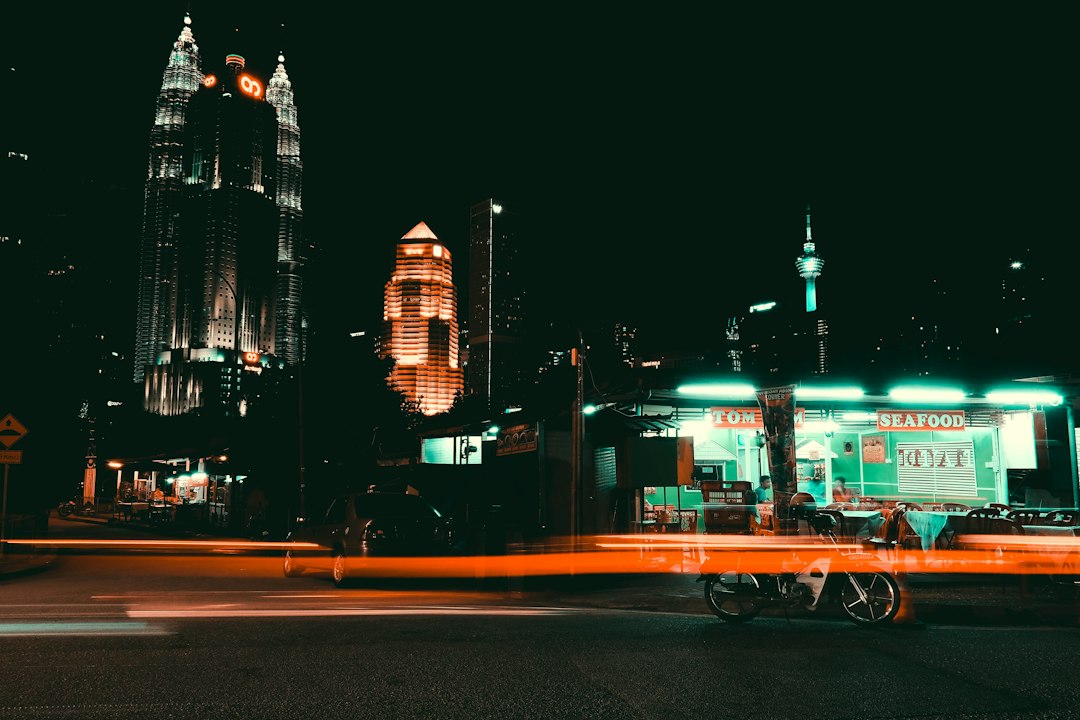
Late one night I ended up at a roadside stall with three plastic chairs and a single fluorescent tube swinging above it, eating a bowl of Hokkien mee that had been fried so hard the prawn stock had caramelised into the noodles. The cook was doing the whole thing on a burner that sounded like a jet engine. I paid a few ringgit, and he didn’t say a word to me the whole time, and that felt like the right way to end a day of eating. The fluorescent tube buzzed. The burner roared. The noodles came out black at the edges and I ate them standing up under the swing of the light.

📷 Photos: Kelvin Zyteng (Unsplash), Kelvin Zyteng (Unsplash)