Kuala Terengganu had been the kind of stop that makes a traveler reconsider the whole idea of coastal Malaysia — a city where the morning market felt more alive than the waterfront, where the campervan had sat for two nights under a tree that dropped something sticky on the roof at dusk. But by the time the engine turned over on Day 8, the itinerary demanded a hard shift east. The islands were waiting, and they weren’t going to wait quietly.
The drive from Kuala Terengganu to the Perhentian Islands ferry point at Kuala Besut takes roughly an hour, depending on how many packs of keropok lekor get bought at roadside stalls along the way. The road hugs the coast for stretches, then pulls inland through small kampungs where chickens treat the asphalt like a pedestrian crossing. Anyone driving a campervan through here learns quickly that Malaysian rural driving has its own logic — slower vehicles pull over, faster ones expect you to, and the horn is used as a polite heads-up rather than an accusation. It works, mostly.
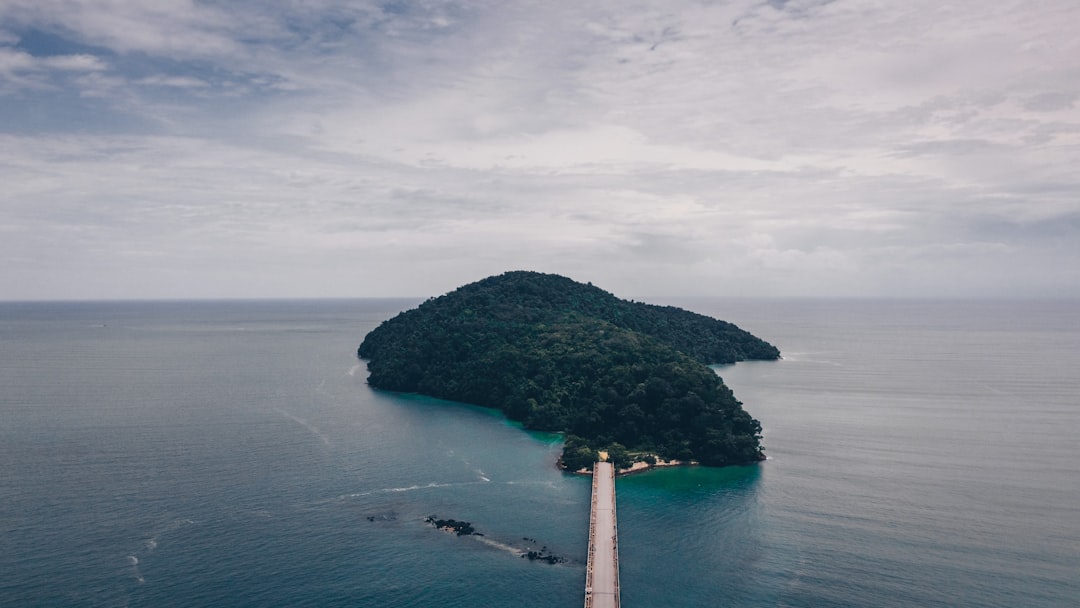
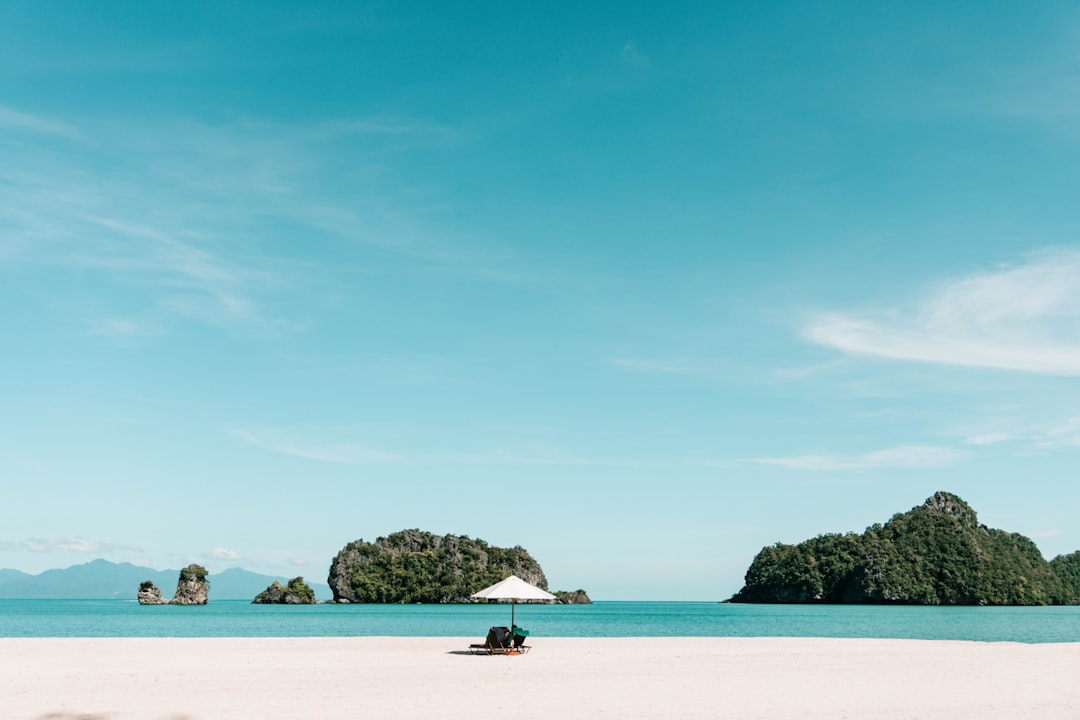
Perhentian Besar and Perhentian Kecil sit about twenty minutes apart by boat, and the choice between them is less about facilities and more about what kind of island rhythm a traveler wants. Kecil has the backpacker energy — Coral Bay on the west side catches the sunset, and Long Beach on the east side catches the morning light and the boat traffic. Besar is quieter, with resorts that feel more like they’ve been there for decades rather than years, and a beachfront where the tide leaves patterns in the sand that look like abstract art until the next wave wipes them clean.
Snorkeling around the Perhentians works best when the tide is right, which isn’t always obvious from shore. The fish aggregations near Shark Point and the Turtle Sanctuary are well-documented, but the less famous spots — the rocky drop-offs near the southern tip of Kecil, the coral gardens that sit barely three meters down off a beach with no name on most maps — hold their own surprises. One afternoon, a traveler who had been snorkeling for less than ten minutes found themselves surrounded by a school of fusiliers so thick the light turned silver. It lasted maybe thirty seconds before the school moved on. Thirty seconds shifting your whole sense of an afternoon.
The campervan sat parked in a designated lot near Kuala Besut during the Perhentian stay, which raised the question of security. The answer, based on reports from other van travelers, was mixed — most lots are attended during daylight hours, but overnight parking is less supervised than some visitors assume. A steering wheel lock and a willingness to keep valuables in a small dry bag on the ferry seemed like enough. Nobody reported an issue, but nobody was sanguine about ignoring the possibility either.
Day 9 required a significant reorientation — from the islands back inland, toward Taman Negara, the country’s oldest national park. The drive from Kuala Besut to the park entrance at Kuala Tembeling takes around three hours, depending on road conditions and how often the traveler stops for durian season. The road passes through Jerantut, a town that doesn’t bother pretending to be a tourist hub, and that’s part of its charm. The campervan parked at a lot near the park headquarters, and from there, the riverboat became the only way in.
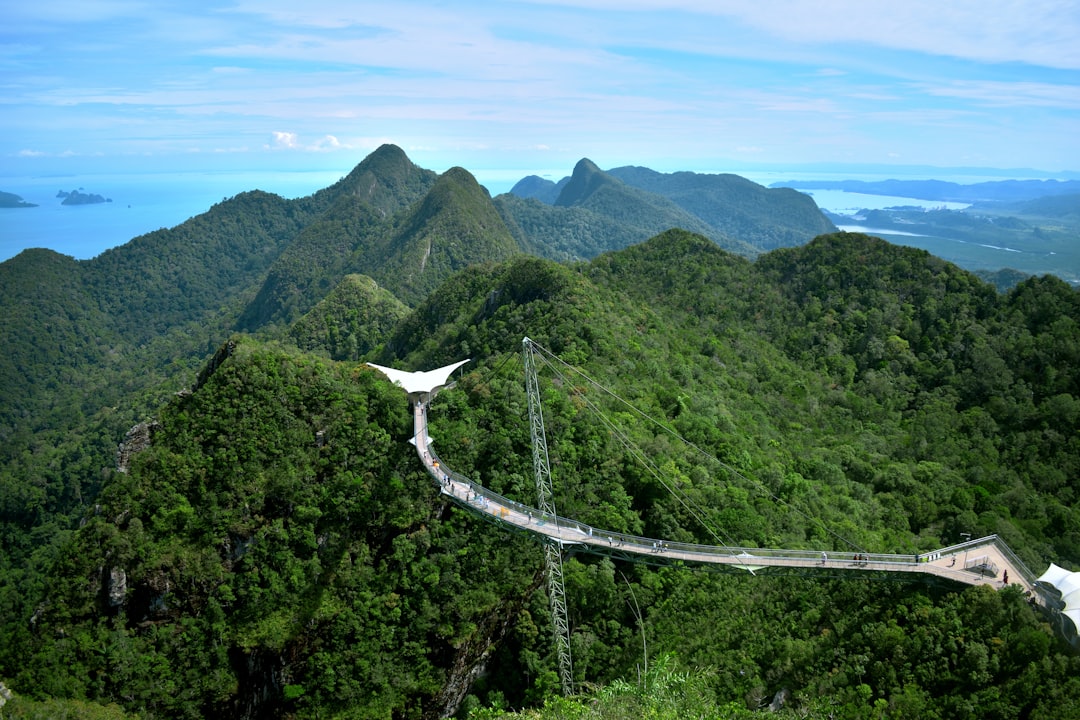
Taman Negara is wet in a way that coastal air isn’t. The humidity in the rainforest is a physical presence — it sits on the skin, muffles sounds, makes a simple walk to the jetty feel like exertion. The canopy walkway, suspended about forty meters above the forest floor, sways with each step in a way that feels engineered to unsettle anyone with a fear of heights. The cables creak. The wooden planks shift underfoot. But from the middle of the walkway, the view down through the layers of canopy reveals things that the ground-level path never could — birds moving in the upper branches, the way light filters through leaves that have never been touched by a human hand, the sense of the forest as a vertical world rather than a horizontal one.
The river safari is billed as a gentle introduction to the park, but it’s not gentle in the way a lake cruise is gentle. The boat driver negotiates rapids that look minor from a distance but feel genuine from the front seat. Monkeys appear on the riverbanks, often in groups that seem to be waiting for something. An elephant sighting is possible but not probable — the park’s wild elephants move through territories that rarely overlap with the main boat routes, and the guides don’t promise what they can’t deliver. What the river safari does reliably is create a sense of scale. The forest stretches on both sides of the river, uninterrupted by roads or villages, and the boat moves through it like a needle through fabric — present but temporary.
Jungle trekking in Taman Negara demands a different kind of preparation than coastal hiking. The trails are marked but not paved, and the mud in the wet season can turn a two-hour circuit into a four-hour negotiation with gravity. Leeches are a fact of life here, not a footnote. They appear on socks, on ankles, on the backs of hands, and the experienced response is to remove them without panic and keep moving. One trekker, who had read about leeches but assumed the warnings were exaggerated, found eleven of them on a single leg after a twenty-minute walk to a waterfall. It didn’t ruin the day, but it recalibrated expectations in a way that reading never could have.
The campervan, during the Taman Negara leg, was parked at a lot near the park headquarters that charged a flat rate per night and had basic washing facilities. It was not luxurious. The showers were cold, the lighting was dim, and the nearby food stalls closed early. But the alternative — staying inside the park at one of the lodges — would have cost significantly more and required booking weeks in advance. For the traveler already committed to the van life, the lot worked. It just didn’t work elegantly.
Day 10 brought the final drive: from Taman Negara to Kuala Lumpur, a journey of roughly four hours through the interior of the peninsula. The road passes through Genting Highlands on the way, a hill station turned casino resort that sits above the clouds on most days. The campervan had to contend with steep grades and the occasional tour bus that seemed to take corners with a confidence that bordered on aggressive. There is a viewpoint just before the descent into KL where the city appears in the distance, flat and sprawling, the Petronas Towers visible on clear days. It’s the moment when the trip starts to feel like it’s ending, and it arrives whether the traveler is ready or not.
Returning the campervan in Kuala Lumpur requires navigating the city’s traffic, which operates on its own set of rules. The rental agency, located in a suburb south of the city center, had a drop-off process that involved a brief inspection, a discussion about a small scratch on the rear bumper that had been there since Day 2, and a refund of the deposit minus a cleaning fee that seemed to apply regardless of how thoroughly the van had been tidied. The agent, a man who had been doing this for twelve years, noted that the scratch was probably from a low-hanging branch on a plantation road, or something like that. He was right. It wasn’t worth arguing about.
Kuala Lumpur in the hours after the campervan handover feels different than it did at the start of the trip. The city is more aggressive, more air-conditioned, more defined by its verticality. The traveler who has spent over a week moving through jungle and coastal towns and mountain roads finds themselves suddenly in a place where everything is built upward, where the humidity is still present but the sounds are different — traffic instead of birdsong, construction instead of river currents. The transition is jarring, and that jarring quality is itself worth noting.
A final evening in KL might involve a walk through the Bukit Bintang district, where the street food operates alongside luxury boutiques in a way that only this city manages. The satay at a stall on Jalan Alor, the view from the SkyBar at Traders Hotel, the way the Petronas Towers look from below at night when the lights reflect off the glass — these are the images that get saved to phones and posted later. But the images that stay longer, the ones that surface unbidden during a workday months afterward, are the small ones: the sound of the canopy walkway creaking, the weight of the leech-proof socks drying on the campervan’s side mirror, the taste of the keropok lekor from a stall whose name nobody wrote down.
Whether a ten-day loop of the peninsula’s east coast and interior works as a single itinerary depends on how much driving a traveler is willing to tolerate for the privilege of sleeping in the same bed — or the same van — each night. The distances are manageable. The roads are mostly good. The diversity of experiences — islands, rainforest, city — fits into a timeline that doesn’t require rushing. But the trade-off is real: the traveler who packs three environments into ten days trades depth for breadth. The loop works. It just works differently for different travelers, and figuring out which kind of traveler you are is the real task of the trip.

📷 Photos: Antonio Araujo (Unsplash), Aaron Lee (Unsplash)