I was handed a bib and a stack of wet towelettes before I’d even finished ordering. The woman at the table next to mine, a regular from the look of her practiced technique, saw me eyeing the spread and nodded toward the cracked steel bowl in the center of her table. “Don’t wear anything you care about,” she said. The warning came too late for my pale blue shirt, but that was the first honest piece of advice I got in Singapore about eating chili crab, and it turned out to be the only one that mattered.
Singapore doesn’t have a single chili crab. It has dozens, and the differences between them matter more to locals than visitors tend to assume. The version from a hawker centre stall bears almost no relation to the one served at a white-tablecloth restaurant on the river, and both are a world apart from what gets exported as “Singapore-style” in frozen packets overseas. What all of them share—the thing that makes the dish more than just a sauce vehicle—is the same basic principle: the crab should be alive when it hits the wok, and the sauce should be something you’re willing to stain your clothes for.
My first attempt was at a place that came recommended by a colleague who’d lived in Singapore for six years. She sent me a Google Maps pin with no name attached, just coordinates and a single instruction: “Go at five.” The location turned out to be a coffeeshop in a housing estate in the eastern part of the island, a stretch of Tampines where the buildings all look the same and the ground floor is a maze of independent stalls. I walked past it twice before I found the right one—no English signage, just a Chinese banner and a queue of people holding numbered tickets. I took a number and stood there for forty-seven minutes, watching the wok cook work through a haze of steam and soybean oil. The crab came out in a dark red sauce that was more savoury than sweet, with a heat that built slowly rather than hitting all at once. It cost under thirty Singapore dollars. I ate it with my hands at a plastic table under a fluorescent light. A stray cat watched me from under the next table, waiting for me to drop something.
That first experience set an expectation that most of the famous places couldn’t meet. Not because the famous ones are bad—most of them are good, some are excellent—but because the dish scales up in price faster than it scales up in quality. The difference between a fifteen-dollar plate of chili crab at a hawker centre and a ninety-dollar version at a tourist-facing seafood restaurant is not a sixfold improvement in taste. It’s the air conditioning, the tablecloth, the view, the service. All of those things have value. But if it’s the crab itself you’re after, the best version I found in two weeks of eating was not at the landmark restaurants.
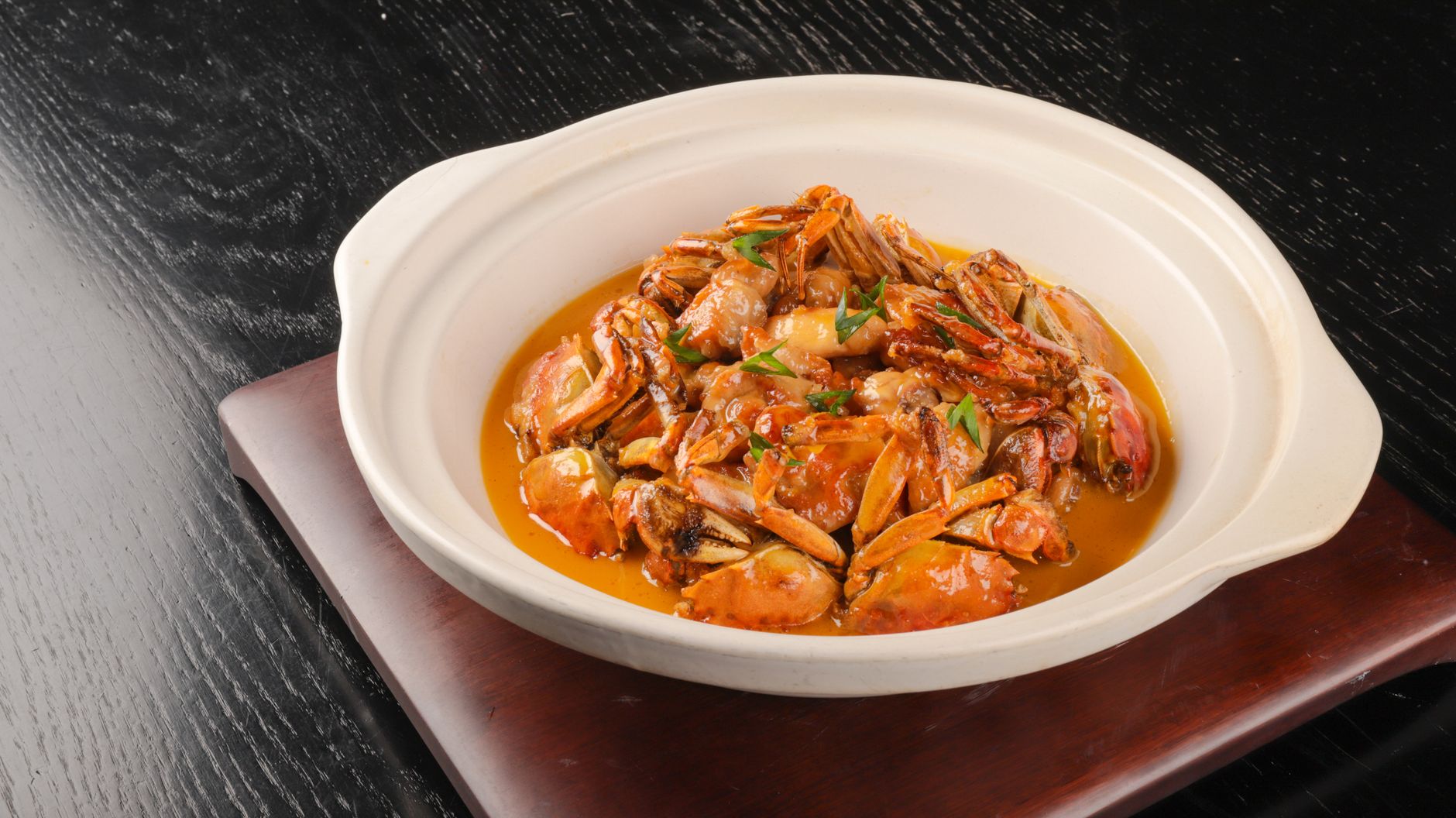
It was at a stall in a basement food court near Bugis that I wouldn’t have found if the rain hadn’t forced me indoors. The storm came suddenly mid-afternoon—a brief, violent squall that turned the streets into shallow rivers within minutes. I ducked into the nearest covered building, which turned out to be a shopping centre that felt like it hadn’t been renovated since the 1980s. The basement smelled of floor cleaner and fried garlic, and the food court was nearly empty because it was between lunch and dinner service. A single stall was still open, operated by an older man who seemed more interested in the Chinese drama playing on his phone than in serving anyone. I had to call out to get his attention. He looked up, appraised me with the kind of neutral disinterest Singaporean hawkers have perfected, and pointed at a handwritten menu taped to the counter. I ordered the chili crab without much expectation. Twenty minutes later, he placed a plate in front of me that was so simply presented it looked almost plain—no garnish, no drizzle, no sesame seeds. Just a mud crab in a sauce the colour of a dark sunset, with two slices of white bread on the side for soaking.
The bread is not decoration. It’s a critical piece of equipment. The sauce is the whole point of chili crab—the crab itself, when it’s fresh and well-cooked, is a vehicle for the sauce, and the bread is the vehicle for what the crab leaves behind. A well-made chili crab sauce has a texture that’s thick enough to cling to the shell but thin enough to soak into the bread’s crumb. Too runny, and it slides off the bread. Too thick, and it coats the tongue in a way that feels more like glue than flavour. The stall in Bugis had it exactly right—a sauce that was sweet before it was spicy, with a tamarind tang that cut through the richness of the egg. I ate the whole thing alone at a table for four, the storm still drumming against the basement’s high windows. I realized I’d been eating chili crab wrong my entire life. I’d been treating the sauce as a condiment. It is the main event.
I went to one of the best-known places on the East Coast, a sprawling seafood centre right on the water, on a Thursday evening when the crowd was manageable. The chili crab there was sweeter, more ketchup-forward, with a consistency closer to a bisque than a stir-fry sauce. It was pleasant. It was also eighteen dollars per hundred grams of crab, and the crab itself was a Sri Lankan mud crab that weighed well over a kilo. The final bill came to over a hundred dollars for a single dish, and while I didn’t regret it, I also didn’t feel I’d learned anything new about chili crab. I’d learned something about pricing, about atmosphere, about the way a restaurant can transform a humble dish into a special-occasion meal. But the dish itself? The stall in Bugis had taught me more about it for a third of the cost.
That’s the central tension of eating chili crab in Singapore. The best versions are often at the most anonymous places—stalls without websites, restaurants that don’t take reservations, coffeeshops where the menu is handwritten and the English is rough. But those places are also the hardest to find, the least accommodating to tourists, the ones most likely to be closed on the day you show up. The famous places are famous for a reason: they’re consistent, they’re comfortable, and they serve a version of the dish that most people will enjoy. But they’re also calibrated for a broad audience, which means the sauce gets rounded off at the edges, the spice level gets dialled down, the vinegar gets softened. The version that makes you sweat and leaves your fingers stained for the rest of the evening is harder to come by.
A friend who grew up in Singapore told me that the real test of a chili crab joint is not the crab itself but what happens when you ask for more sauce. “If they bring you a separate bowl without charging for it,” she said, “you’ve found a good place. If they look annoyed, find somewhere else.” I tested this theory at five different establishments over the course of two weeks. It held true in every case. The stall in Tampines brought me an extra bowl without my even asking, noticing I was scraping the last of it off the plate with my bread. The famous restaurant on the East Coast charged me five dollars for a tiny ramekin of extra sauce and brought it only after I’d flagged down a waiter twice. The stall in Bugis was closed by the time I finished eating, the old man already packing up his equipment, so I never got the chance to test him. I suspect he would have passed.
Chili crab doesn’t travel. The dish is nearly impossible to take away because the crab needs to be eaten hot, straight from the wok, and the sauce congeals into something unappealing once it cools. But it’s not just the logistics—the dish is a context, a specific arrangement of ingredients, equipment, timing, and atmosphere that only exists in the moment of cooking and eating. The same chef, using the same ingredients, in a different kitchen, will produce something different. The best chili crab I ate was inseparable from the circumstances in which I ate it: the rain, the empty food court, the old man’s indifference, the plastic spoon, the single fluorescent tube flickering above my table. None of that is reproducible. The dish is a memory before it’s a meal.
For anyone planning to eat chili crab in Singapore, the practical advice is simple. Skip the tourist-rated restaurants on your first night. Go to a hawker centre or a coffeeshop instead. Order the smallest crab available—the meat on a smaller crab is often sweeter, and you’ll be less intimidated by the cracking and shelling. Ask for a side of mantou, the fried buns, even if they’re not on the menu. Use your hands. Accept that your shirt will not survive the experience. And if you find a place where the owner watches you eat with a faint, unreadable expression that might be approval or might be impatience, order a second plate. Those are the ones that count.

📷 Photos: Change C.C (Pexels), Shameel mukkath (Pexels)