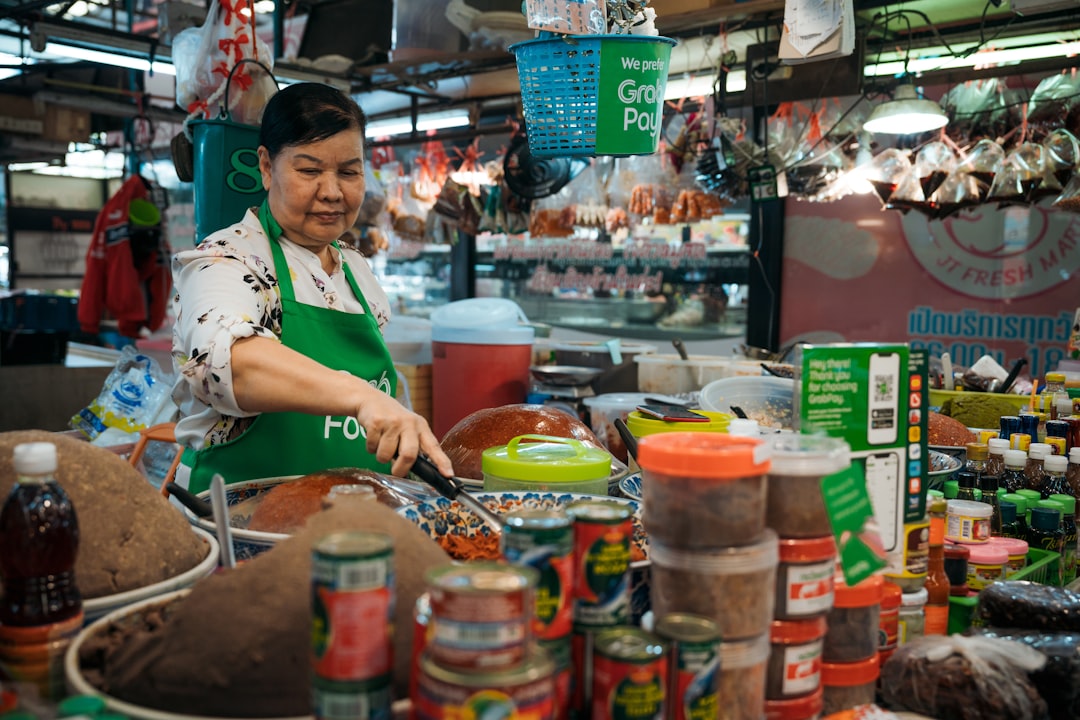
I remember the exact sound of my first proper hawker centre meal in Singapore. Not the taste — though that was immediate and unmistakable — but the noise. The percussive clatter of metal bowls being stacked, the hiss of a wok hitting its highest flame, the low hum of maybe thirty conversations happening at once in three different languages, and underneath all of it, the steady, almost hypnotic thwack of a cleaver against a wooden block. I was standing in the middle of Maxwell Food Centre at half past twelve on a Tuesday, sweating through the back of my shirt in the kind of humidity that feels personal, and I realised I had completely misunderstood what I was about to eat here.
I had come expecting street food. What I found was something closer to a public dining room — an open-air hall of permanent stalls, each one a tiny, fiercely independent kitchen, and each one run by someone who had been making the same dish for decades. The turnover at some of these stalls is generational. The son takes over from the father, the nephew from the aunt, and the recipe doesn’t change. The prices barely do either. A bowl of wanton mee at the right stall still costs around four or five Singapore dollars, which at current exchange rates is roughly the price of a mediocre sandwich on a bad day in most Western cities.
I ate at eleven hawker centres over the course of ten days, and I am not a small man. I do not say this lightly: I covered ground. I also learned quickly that the word “authentic” carries very little meaning when every stall claims authenticity and most of them deliver it. The real distinction isn’t between authentic and touristy. It’s between the stall that has a queue of office workers at eleven in the morning and the one that doesn’t.
Old Airport Road Food Centre was where I understood this best. It’s not the most famous hawker centre — that title probably belongs to Maxwell or Lau Pa Sat — but it might be the most revealing. The building itself is unglamorous: a low, rectangular structure in a residential estate, surrounded by HDB flats that look like they were designed by someone who cared more about function than form. Inside, the ceiling fans spin lazily, the fluorescent lights cast a flat, unforgiving glow, and the food is magnificent. I ordered a plate of carrot cake from a stall called Toa Payoh Rojak & Carrot Cake, which is a terrible name for a stall doing excellent work, because the carrot cake here has no carrot and is not cake. It’s a steamed radish flour cake, diced and fried with egg, preserved radish, and a dark soy sauce that caramelises on the surface. The version at this stall comes with a side of chilli that arrives looking innocuous and leaves a heat that builds slowly, politely, until your forehead is damp and you’re reaching for your drink without quite knowing when it became urgent.
The drink, by the way, is part of the ritual. Every hawker centre has at least one drink stall, usually tucked near an entrance or in a corner, selling everything from sugarcane juice to barley water to teh tarik. The teh tarik — pulled tea — is a performance in itself. The drink is poured from one container to another at arm’s length, the liquid stretching into a dark brown ribbon before it hits the cup, aerating as it goes. The result is a sweet, frothy, intensely milky tea that cuts through the heat of a spicy meal like nothing else. I paid one dollar and fifty cents for a large cup at Old Airport Road. I drank it standing up, because all the seats were taken. I did not mind.
Chinatown Complex Food Centre is a different beast entirely. It’s larger, more chaotic, and noticeably louder. The building houses a wet market on the ground floor, and if you arrive early enough — say, before nine in the morning — you can watch the fishmongers and vegetable sellers doing their work before the food centre upstairs opens properly. The smell is the first thing: a mixture of raw seafood, damp concrete, and the faint sweetness of tropical fruit. By eleven, the stalls upstairs are in full swing, and the crowd is almost entirely local. I saw one white tourist during my visit, a man in his sixties with a camera around his neck, looking slightly overwhelmed at the sheer volume of choice. I was probably that tourist by someone else’s definition, but I had learned by then to stop pretending I wasn’t.
The thing that surprised me most about Chinatown Complex was the laksa. I had read about the famous stalls — 328 Katong Laksa, Sungei Road Laksa — but the best bowl I ate there came from a stall with no English name on its signboard, run by a woman who looked to be in her seventies and who moved with the efficient, almost robotic economy of someone who has made the same motions fifty thousand times. The broth was rich with coconut milk, the noodles were thick and chewy, and the cockles — tiny, briny, and served in their shells — added a note of salinity that cut through the richness. I asked for extra chilli. She looked at me, said nothing, and added a spoonful so small I thought she hadn’t heard me. She had heard me. That spoonful was exactly enough.
Tekka Centre in Little India is a case in point. It’s a wet market and food centre combined, with the food stalls concentrated on the second floor. The atmosphere is different here — the spices are more pronounced, the curries darker and more fiery, the clientele almost entirely Indian-Singaporean. I ordered a plate of biryani from a stall that had a queue of about fifteen people, which I took as a reliable signal. The rice was fragrant with cardamom and cloves, the chicken tender enough to fall apart with a nudge of the spoon, and the accompanying dal was thin and salty and exactly right. But the seating area was cramped, the ventilation poor, and the heat — the kind of heat that sits on you like a blanket — made the experience feel more like an endurance test than a meal. I don’t mean that as a criticism. Some food demands discomfort. The biryani at Tekka Centre is one of those.
East Coast Lagoon Food Village sits right on the water, and it is the closest Singapore comes to a beachside dining experience. The breeze from the sea makes the heat bearable, and the stalls here specialise in seafood and grilled meats. I ordered a plate of satay from a stall called Noor’s Satay, which had a sign claiming it had been in business since 1978. The satay was decent — the peanut sauce thick and slightly sweet, the meat charred at the edges — but the real discovery was the otah. Otah is a fish cake steamed in a banana leaf, and the version at East Coast Lagoon was soft, almost mousse-like, with a gentle spice that built as I ate. I paid three dollars for two pieces. I ate them standing at a high table, watching a family at the next table argue about something in Cantonese, and I thought: this is what a city looks like when it gets public eating right.
The gulf between the famous hawker centres and the lesser-known ones is smaller than most guidebooks suggest. I visited Lau Pa Sat on a Saturday evening, and while the satay street — a row of stalls that set up outside the main building after dark — was genuinely impressive, the main hall felt like a food court in an airport terminal. The architecture is beautiful — an octagonal Victorian cast-iron structure that dates back to the nineteenth century — but the crowd is overwhelmingly tourist, and the prices reflect it. A bowl of fishball noodles that cost four dollars at Old Airport Road was six-fifty here. The quality was fine. It was not better.
What I came to appreciate, over the course of those ten days, was the way hawker centres function as social infrastructure. They are not just places to eat. They are where people meet, where families gather, where retirees spend their mornings reading newspapers over a cup of kopi. At the Adam Road Food Centre, I watched three generations of the same family share a table: the grandmother feeding the toddler, the parents eating quickly between bites of conversation, the teenagers glued to their phones. Nobody was rushing them. The table was theirs for as long as they wanted it. In a city where space is measured in square feet and priced accordingly, that feels like a small miracle.
I had one genuinely bad meal. It was at a stall in the basement of a shopping centre on Orchard Road — not a hawker centre, technically, but a food court, and I include it only as a warning. The Hainanese chicken rice was dry, the rice was bland, and the chilli sauce tasted like it had been sitting out for hours. I ate about half of it and threw the rest away. I mention this because the existence of bad food in Singapore is not a secret, but it rarely gets mentioned in the breathless accounts of how every meal here is transcendent. It is not. Some meals are forgettable. Some are actively disappointing. But the good ones — the ones that make you stop talking and just eat — are common enough that the bad ones stand out precisely because they are rare.
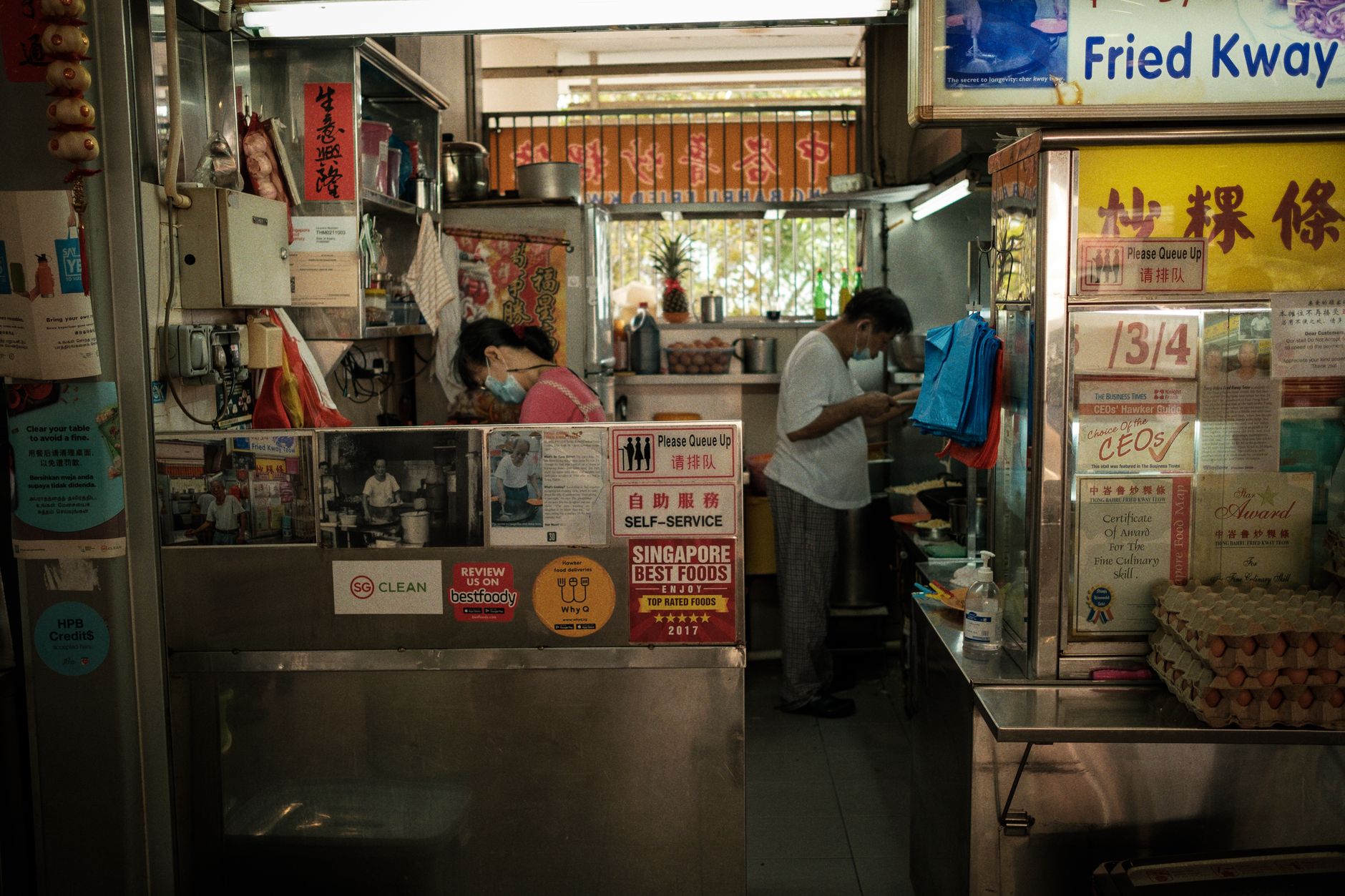
My last meal was at Tiong Bahru Market, the hawker centre attached to one of Singapore’s oldest housing estates. Tiong Bahru is a neighbourhood that has become fashionable in recent years — independent bookshops, artisanal bakeries, a coffee roastery tucked into a shophouse — but the hawker centre has resisted gentrification. The stalls are the same ones that have been there for decades. I ordered char kway teow from a stall that had a picture of the late founder on the wall, a man in his seventies with a gap-toothed smile, and I ate it at a table next to a man who was reading the Chinese-language evening paper and eating a bowl of fish head curry with his hands. The char kway teow was heavy with pork lard, the noodles stained dark with soy, the cockles plump and sweet. It was the kind of meal that makes you want to cancel your dinner plans and come back for round two.
I didn’t cancel anything. I paid my bill — three dollars and fifty cents — and walked out into the evening air, which had finally cooled to something approaching bearable. The market was closing down around me, the stallholders hosing down their counters, the metal grates coming down one by one. I stood there for a moment, in that peculiar stillness that descends when a place goes from busy to empty, and I thought about the next time I would come back.
📷 Photos: Grab (Unsplash), Alec Doualetas (Pexels)