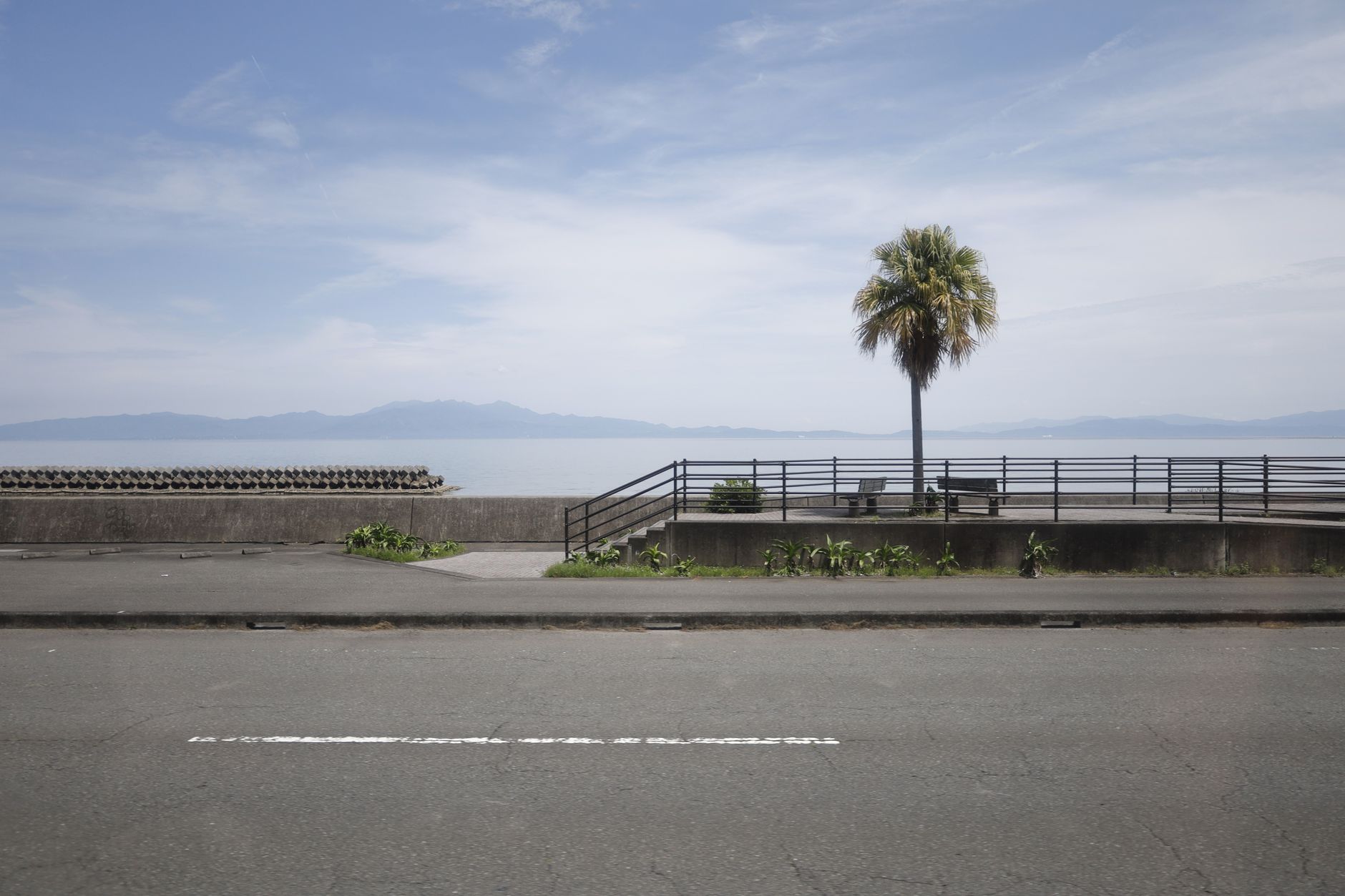
The ferry from Naruto cuts across the Seto Inland Sea on a Tuesday morning that looks like it might rain, then might not. The water is that particular shade of grey-green that happens when clouds sit low over islands that don’t bother being dramatic about their shape. A man in a canvas hat is eating a bento box of octopus rice at the table next to us, separating the ginger with chopsticks like he’s performing a minor surgery. Nobody on the boat looks like they’re going anywhere special — that’s how you know the island isn’t just for tourists.
Shodoshima takes about an hour to reach from the Shikoku side, and the approach gives you nothing to prepare for. The ferry slides into Tonosho Port past a handful of fishing boats and a concrete pier that could belong to any small coastal town in Japan. But the signs are olive green — literally, the color of the fruit — because this is the place where olives were first cultivated in Japan, back when someone in the Meiji government decided the climate might suit them. It did. There are now groves everywhere, and the island’s mascot is an olive with a face, which is either charming or unsettling depending on how much coffee you’ve had.
The olive groves themselves are less manicured than the ones in the Mediterranean. The trees are shorter, more carefully spaced, and the rows run up hillsides that catch whatever breeze comes off the sea. We spent an hour at the Olive Park, which is free to enter and mostly just a hillside with trees and a view of the water. There’s a windmill painted white that stands at the top of the slope — a replica of the one from the 1971 film Tora-san Goes North — and people queue to take photos in front of it holding olive leaves above their heads. It’s the kind of thing that feels pointless until you do it, and then it feels fine.
Angel Road is the other famous draw. It’s a sandbar that connects Shodoshima to a tiny nearby island, visible only at low tide, and the story goes that if you walk across it holding hands with someone, your wish comes true. We arrived two hours before low tide and watched the water retreat in stages — first the top of the sandbar appearing like a spine, then the whole thing drying out enough to walk on. The sand was wet and packed firm, not the kind that sucks at your shoes. A group of schoolchildren ran across it shouting at each other, which seemed to disprove the romantic theory about holding hands, but maybe their wish was different.
The soy sauce museum is a better reason to come. Shodoshima has been brewing soy sauce for centuries, and the Yamaroku brewery on the island still uses wooden barrels that are older than anyone working there. The museum is housed in an old factory building that smells like fermentation and wood rot in equal measure. A woman at the counter let us taste five different soy sauces from unmarked bottles — light, dark, aged, unaged, one that had been in a barrel for three years and tasted like someone had distilled miso soup into a single sharp note. We bought a bottle of the three-year aged one for 1,200 yen. It sat in the campervan for the rest of the trip and never quite made it into any meal, because we were afraid of using it wrong.
The campervan park on Shodoshima was a gravel lot behind a convenience store, which sounds worse than it was. The convenience store had a public bath attached to it — one of those coin-operated sento setups where you pay 400 yen and get a towel the size of a handkerchief. By the time we parked, the sun had gone down and the air smelled like the soy sauce from the brewery.
Kotohira is a town that exists for one reason: the shrine at the top of the mountain. Kotohira-gu, also called Konpira-san, sits 785 stone steps above the town below, and everything about the place is calibrated toward that climb. The train station has signs showing how many steps remain. The shops near the base sell walking sticks that you leave at the top for the next person. The whole town seems to be holding its breath, waiting for you to start walking.
We started at nine in the morning, when the sun was still low enough that the first third of the climb was in shadow. The stone steps are uneven — worn down in the middle from centuries of feet — and the handrail is a thick chain bolted into the rock wall on one side. The first section passes through a shopping street lined with shops selling konpira-themed sweets, grilled rice cakes on sticks, and small wooden plaques for offerings. We stopped at the fifth rest area, where a woman was selling cups of fresh-squeezed mandarin juice from a cooler. She was reading a paperback novel between customers and barely looked up when we paid.
We saw a man in business shoes halfway up, leaning against the chain, breathing like he was being asked a difficult question. He made it, eventually — everyone does, because the alternative is going back down and having to tell someone you didn’t.
The main hall at the top is less ornate than you might expect from a major Shinto shrine. The wood is dark with age, the gold leaf has faded to a muted yellow, and the view of the Sanuki Plain below is the real reason to be there. We sat on a bench near the edge for twenty minutes, watching clouds cast shadows on the rice fields below. A priest walked past in white robes carrying a tray of offerings, and nobody paid him any attention. That’s the thing about a place that requires an hour of stair-climbing to reach — the people who make it tend to be too tired to gawk.
The walk back down is harder on the knees than the climb up. We took it slowly, stopping at the midway point for a bowl of sanuki udon at a small restaurant that had been there since the 1950s. The noodles were thick and chewy, served in a broth that tasted faintly of sardines, and the woman who brought them out asked where we’d come from in the kind of English that had clearly been practiced on other travelers. We told her the campervan, and she nodded like that explained something.
We slept that night in the parking lot of a roadside rest area twenty minutes south of Kotohira. The van’s heater made a clicking sound every few minutes, and the wind rattled the awning that we’d forgotten to secure properly. It was the kind of sleep where you’re aware of being half-awake, but it counts.
Beppu announces itself before you see it. Coming down the highway from Oita, plumes of steam rise from vents across the city like the ground is exhaling. The whole place sits on a geothermal vent system that produces more hot water per minute than anywhere in Japan, and the smell of sulfur reaches you through the car’s air vents long before the exit sign appears. It’s not unpleasant — more mineral than rotten.
The Hells of Beppu — jigoku — are seven thermal pools that are too hot to bathe in, so they’ve been turned into something between a natural wonder and a theme park. We started with Umi Jigoku, the Sea Hell, which is a pond of cobalt blue water so vivid it looks like someone dumped laundry dye into it. The steam rises off the surface in thick clouds, and the water temperature is close to boiling. A man in a uniform stood next to a sign explaining that the color comes from dissolved minerals, not dye, which is the kind of fact you hear but don’t fully believe until you see another pool a different color.
Yama Jigoku is the Mountain Hell, which is actually a collection of smaller pools — one that looks like milky tea, one that bubbles like a cauldron, one that’s the color of rust. The steam makes everything feel humid and warm even in the shade, and we found ourselves sweating through our shirts within fifteen minutes. A Japanese couple nearby were taking photos with their phones, then wiping the lens with a cloth because the steam kept fogging it up. It’s the kind of problem you don’t anticipate and then spend the rest of the visit managing.
Chinoike Jigoku, the Blood Hell, is the most famous and the least subtle — a pond of red clay and hot water that looks like a wound in the earth. The color is natural, caused by iron and magnesium, but it’s impossible to look at without feeling like something is wrong. We spent less time there than at the others, not because it wasn’t interesting but because the intensity of the red started to feel theatrical after a while. The souvenir shop at the exit sells skin cream made from the clay, which we bought and later gave to someone who never used it.
The sand bath onsen at Beppu is a different kind of experience. You wear a yukata — the thin cotton robe the onsen provides — and lie down in a shallow pit of hot sand while an attendant buries you up to the neck with a shovel. The sand is heavy and warm, and the weight of it against your body is disorienting at first, like being pressed into the earth from all sides. The attendant said something in Japanese that we didn’t understand, a regular came over and translated: “She says don’t move your arms too much, or the sand will shift.” We stayed for fifteen minutes, the maximum recommended time, and when we stood up the sand fell away in sheets and left our skin feeling like it had been exfoliated and steamed at the same time.
Fukuoka is where the campervan gets returned, and that changes your relationship to the city. You’re not exploring it from a base — you’re entering it knowing that the vehicle is no longer yours. We drove through the morning traffic on the expressway, handed the keys to a man in a blue jumpsuit at the rental office near Hakata Station, and suddenly we were pedestrians in a city of three million people.
Ohori Park sits on the west side of the city, a long rectangle of green around a lake that was originally part of the castle moat. The path around the lake is exactly 2.2 kilometers, and people run it, walk it, sit on benches beside it, fish from the edges. We rented a paddleboat shaped like a swan for thirty minutes and drifted across the water while a family on the shore fed breadcrumbs to a flock of ducks that had figured out the system. The park has a Starbucks on one end and a Japanese garden on the other, and the tension between those two things — the global and the local — is the city in miniature.
We spent the afternoon walking through the Nakasu district, which is where the yatai stalls set up at night. Yatai are mobile food carts, wooden structures on wheels that unfold into small kitchens and serve ramen, gyoza, yakitori, and the local specialty of mentaiko — spicy cod roe that Fukuoka is famous for. One stall holder, an older woman with a cigarette behind her ear, told us to come back after dark because the atmosphere was different. “Daytime,” she said, in a way that suggested she’d said the same thing to every tourist that week. “Nighttime is better.”
We waited until the sun went down, then walked back to Nakasu along the river. The carts were lit up with red lanterns and string lights, and the steam from the boiling pots mixed with the cool evening air. We sat at a counter that could hold five people and ordered a bowl of tonkotsu ramen — the rich, pork-bone broth that Fukuoka is known for everywhere but somehow tastes different here. The noodles were thin and firm, the broth was milky and hot, and the egg on top had a yolk that ran into the soup like a slow orange river. The stall operator slid the bowl across the counter without saying anything, just a nod, and we ate it in silence because that’s what you do when something doesn’t need commentary.
Fukuoka ends the trip the way cities often end road trips — not with an arrival but with a series of small actions: returning the keys, washing the dishes you’d been stacking in the van’s sink, making a note of where you left the map. We checked into a hotel near the station that had a coin laundry in the basement and a convenience store on the ground floor, and the ordinary quality of that — a bed that doesn’t rock when you roll over, a sink that doesn’t drain into a bucket — felt like a minor luxury. Whether any of this changes how a given trip gets planned is up to the traveler. But it’s worth knowing the option exists — a campervan that takes you from the Inland Sea to the hot springs to a city’s evening streets, then gives you back to the train schedule and the hotel key.

📷 Photos: Glen Zi 加侖子 (Pexels), Winged Jedi (Unsplash)