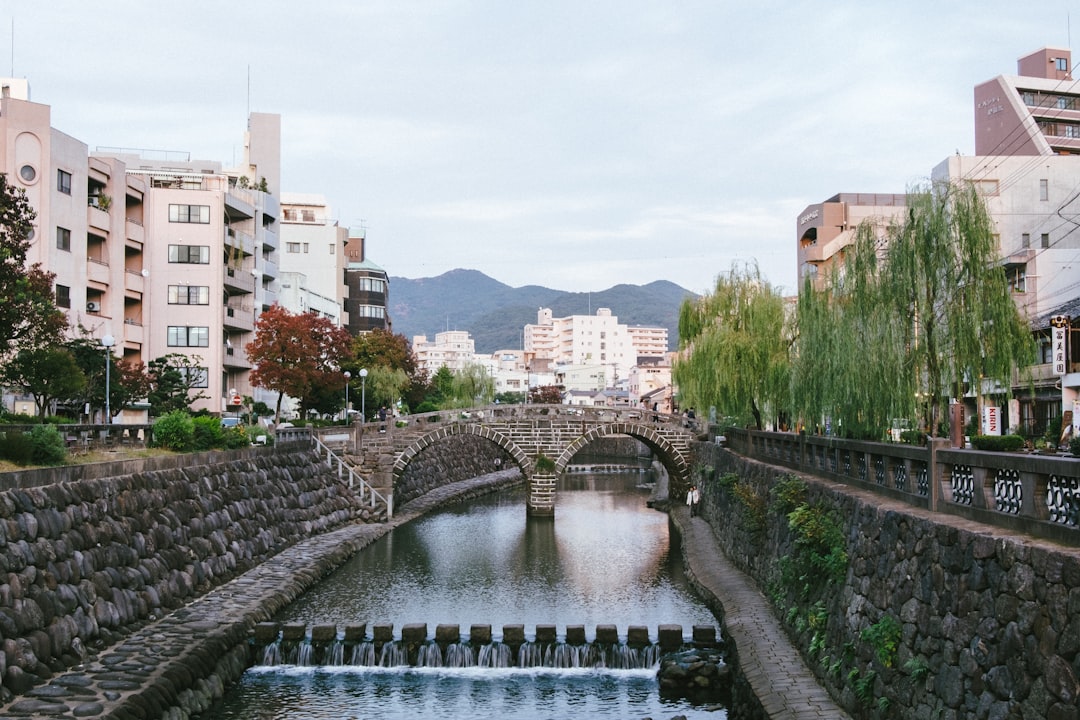
We woke early in Tsumago-juku, not because we planned to beat anyone, but because the light filtered through the paper screens of the minshuku at an hour that made lying still feel like wasting something. The old post town was already stirring—a shopkeeper sweeping the narrow street with a broom that had no plastic on it, the sound of water running somewhere we couldn’t see. We’d parked the campervan the night before in a lot just outside the preserved district, and the walk in that morning, past the restored wooden buildings and the single convenience store that felt like a time machine glitch, had been quiet enough to hear our own footsteps.
The Nakasendo trail from Tsumago to Magome is the section everyone talks about, the one that shows up on every list. It’s about eight kilometers, mostly forested, with sections of stone path that have been walked for four centuries. What the lists don’t tell you is how the trail negotiates its own history—not as a museum piece, but as a working path you share with cyclists, elderly local walkers cutting between towns, and the occasional delivery scooter that’s clearly not supposed to be there but has been doing this route for decades anyway. We passed a woman in her seventies carrying a basket of vegetables, moving faster than we were.
The cedar tunnels are the part that photographs don’t capture well. They’re dark, enclosed, and the light filters through in strips that shift with the breeze. The smell is cedar, damp earth, and something like old tea leaves that had been rewetted. We stopped at a point where the trail opens briefly onto a clearing with a stone Jizo statue, its face worn smooth by weather, and a small pile of coins left by someone who came before us. No explanation, no sign. It was just there.
Magome-juku, when we arrived two and a half hours later, felt busier than Tsumago had—more souvenir shops, more tour groups, a woman in a kimono posing for a photographer at the top of the stone staircase. We bought yakisoba from a stall run by an old man who didn’t speak English and didn’t need to. He handed us the noodles in a paper tray, gestured at a bench, and went back to tending his grill. Three-fifty yen, the price was. The noodles were fine. The moment was better.
We drove south the next morning, leaving the Alps behind for the Kii Peninsula, and the landscape changed character about two hours in. The mountains became denser, the valleys narrower, and the towns smaller and more scattered. Koyasan sits at 800 meters on a plateau that feels like it was carved out specifically for a purpose that predates tourism. The temple town has been a center of Shingon Buddhism since Kobo Daishi founded it in the 9th century, and the whole place still operates on that logic. Temples aren’t attractions here. They’re the infrastructure.
We’d booked temple lodging at one of the smaller temples near the main complex, a place called Eko-in. A friend had described it vaguely: “You’ll eat vegetarian and sleep on a futon or something.” He was right on both counts. The monk who checked us in gave no formal welcome speech. He pointed at a diagram of the temple layout, handed us a map of the Okunoin cemetery path, and said, “Dinner at six. No photography in the halls.” The rooms were simple: tatami, a low table with a thermos of green tea, a small alcove with a scroll and a single flower. The bathroom was down the hall. Nothing about it was luxurious.
The cemetery walk after dark is what we’d come for. Okunoin has over 200,000 graves, and the path that leads to the mausoleum of Kobo Daishi is lit by lanterns that cast just enough light to see the shape of the moss-covered tombstones. We went at dusk, when the last tour groups were leaving. The only other people on the path were a French couple speaking in whispers and a priest in wooden sandals who passed us without acknowledgment. The air cooled as the light faded, and the sound of the stream alongside the path became louder. At the Gobyo, where Daishi is said to be in eternal meditation, a single flame burned in a stone lantern—a flame that, according to temple lore, has been lit for over a thousand years. We didn’t test it. We just stood there, in the dark, with the cold and the quiet.
Day eight brought rain to the Kumano region, a steady drizzle that started as we left Koyasan and didn’t let up until we reached the Kumano Hongu Taisha. The grand shrine’s massive thatched roof and dark wood seemed made for grey skies, but the rain added a quality that sunshine would have diminished. The water dripped from the eaves in a rhythm that matched the mumbling of a priest doing something in an auxiliary hall we couldn’t enter. We paid our respects at the main altar, bought a goshuin stamp from a woman who wrote it with a brush that looked too large for the paper, and then stood under the covered walkway for ten minutes, watching a group of schoolchildren in yellow raincoats run up the stone steps. The Kumano Kodo pilgrimage trail starts from here, and we’d intended to hike a section, but the rain had turned the dirt paths into mud. We compromised: a short walk to the Oyunohara, the original shrine site, where the great torii gate stands alone in a field that once held the main complex. The gate is twenty meters tall. Without the shrine buildings around it, it looks like a doorway to nothing. Or to everything. Depends on your mood.
Yunomine Onsen, a few kilometers down the road, was the antidote to a wet afternoon. This is one of the oldest hot springs in Japan, and the town is small enough that the onsen dominates everything—there’s a public bathhouse, a few small inns, and a single shop selling onsen-steamed eggs. We parked the van by the river and walked to the Tsuboyu bath, a tiny wooden hut that holds a single bathtub fed directly by the hot spring. It costs about six dollars for twenty minutes. The water is milky and hot, and the hut is so small that two people barely fit. We soaked in silence, listening to the rain on the roof and the sound of the river through the walls. When our time was up, we bought the eggs—steamed in the onsen water, their yolks a deep orange—and ate them standing in the rain, not caring.
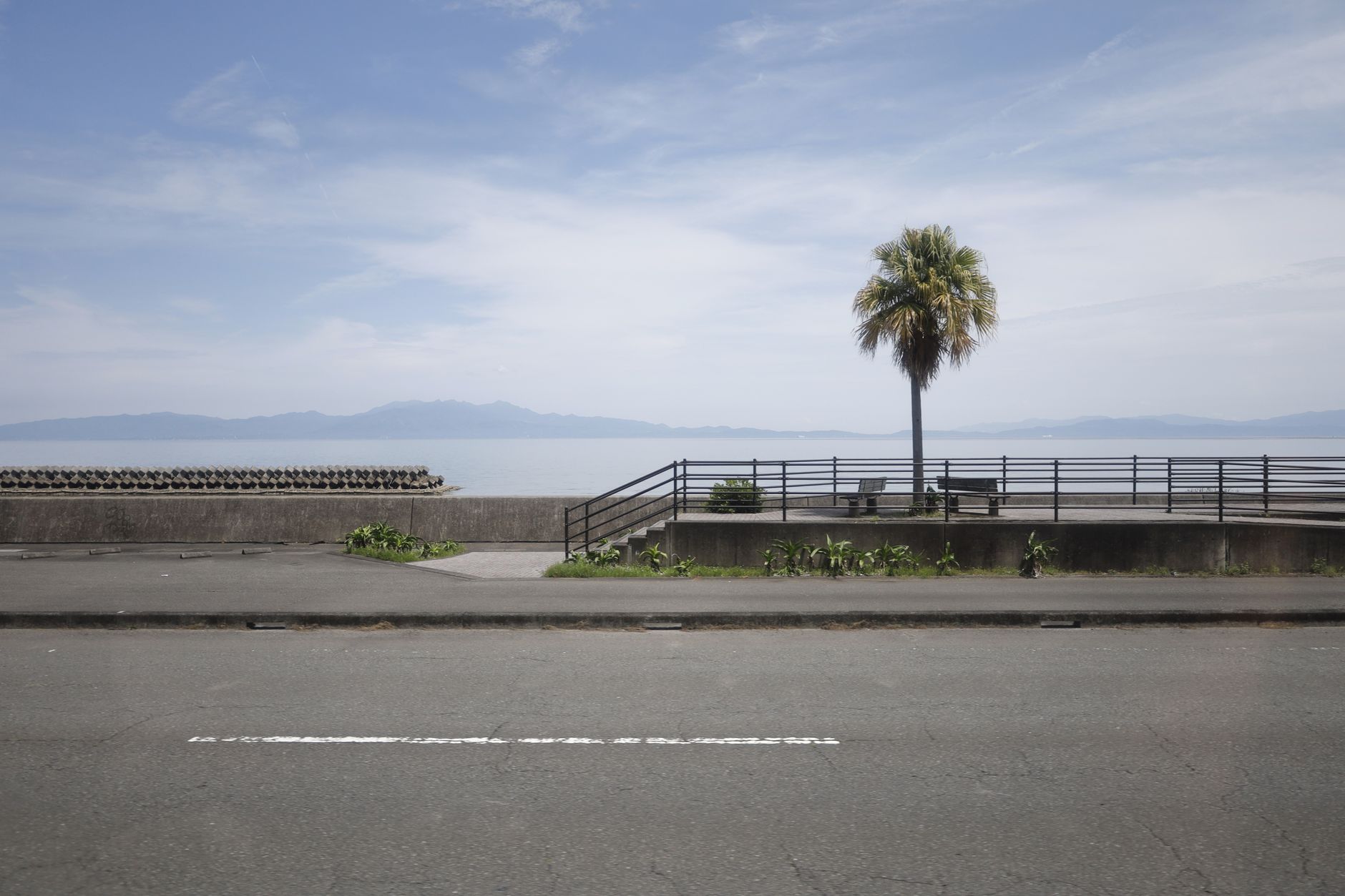
The Kumano coast, on day nine, was a different kind of landscape altogether. The mountains gave way to a shoreline of jagged rocks and small coves, and the road from Tanabe southward is one of those coastal drives that demands you pull over every ten minutes. We did, at a spot called Senjojiki, a flat expanse of rock formations that the sea has carved into platforms and pools that fill at high tide. A fisherman was casting a line from a ledge that looked too narrow to stand on. He didn’t catch anything. He didn’t seem to mind.
Tanabe itself is a working port town, not a resort, and its beach reflects that. The sand is dark, the water is clear. We swam in the late afternoon, when the sun was low enough to turn the water gold, and the salt dried on our skin as we walked back to the van. A woman selling kakigori from a cart parked at the beach entrance charged us two dollars for a bowl of shaved ice with sweetened condensed milk.
Day ten was the drive to Naruto, and the bridge that connects Shikoku to Honshu is the kind of engineering that makes you forget you’re on an island. The Onaruto Bridge is long and suspended and designed to look like it belongs in the wind. The strait below is famous for its whirlpools, created by the tidal flow between the Seto Inland Sea and the Pacific Ocean. We arrived at the observation deck around midday, when the current was at its strongest, and watched the water churn in patterns that seemed almost deliberate—circles within circles, foam lines that appeared and dissolved. The whirlpools aren’t the dramatic maelstroms of movie imagination; they’re subtler, a constant roiling that you have to watch for a few minutes to fully see. Tourists on the sightseeing boat below looked like they were enjoying themselves, but from above, the better view was free.
We crossed the bridge into Shikoku, parked the van at a rest stop overlooking the strait, and ate lunch—onigiri again, and a can of hot coffee from a vending machine. The crossing felt like an ending, but it wasn’t. The road ahead was long. We just couldn’t see it yet.

📷 Photos: Tayawee Supan (Unsplash), Tayawee Supan (Unsplash)