The lift doors opened onto a corridor that looked like somebody’s storage floor. Cardboard boxes stacked against a wall. A fluorescent tube flickering. Through a doorway to the left, we could hear the clatter of bamboo steamers and what sounded like half a dozen people talking at once in Cantonese. It was 10:15 on a Tuesday, and we were standing outside what is almost certainly the best dim sum in Sheung Wan, hidden in plain sight above a dried-seafood shop that doesn’t advertise it. This is the thing about Hong Kong’s old-school dim sum houses: they don’t need to be found. They just wait.
The place is called Lo’s, though no sign says that anywhere. Regulars know it by the faded red characters painted on the glass door, which simply read “third floor” in Chinese. Inside, five tables, white tablecloths that have been washed so many times they’ve gone thin, and a view of the kitchen through a pass-through window that is never fully closed. We sat down without being told to. A pot of jasmine tea appeared, then a small dish of chili oil that had clearly been made by someone who understands the difference between heat and flavor. The woman who brought it looked at us, then at the empty table next to us, then back. “You want har gow,” she said. It was not a question.
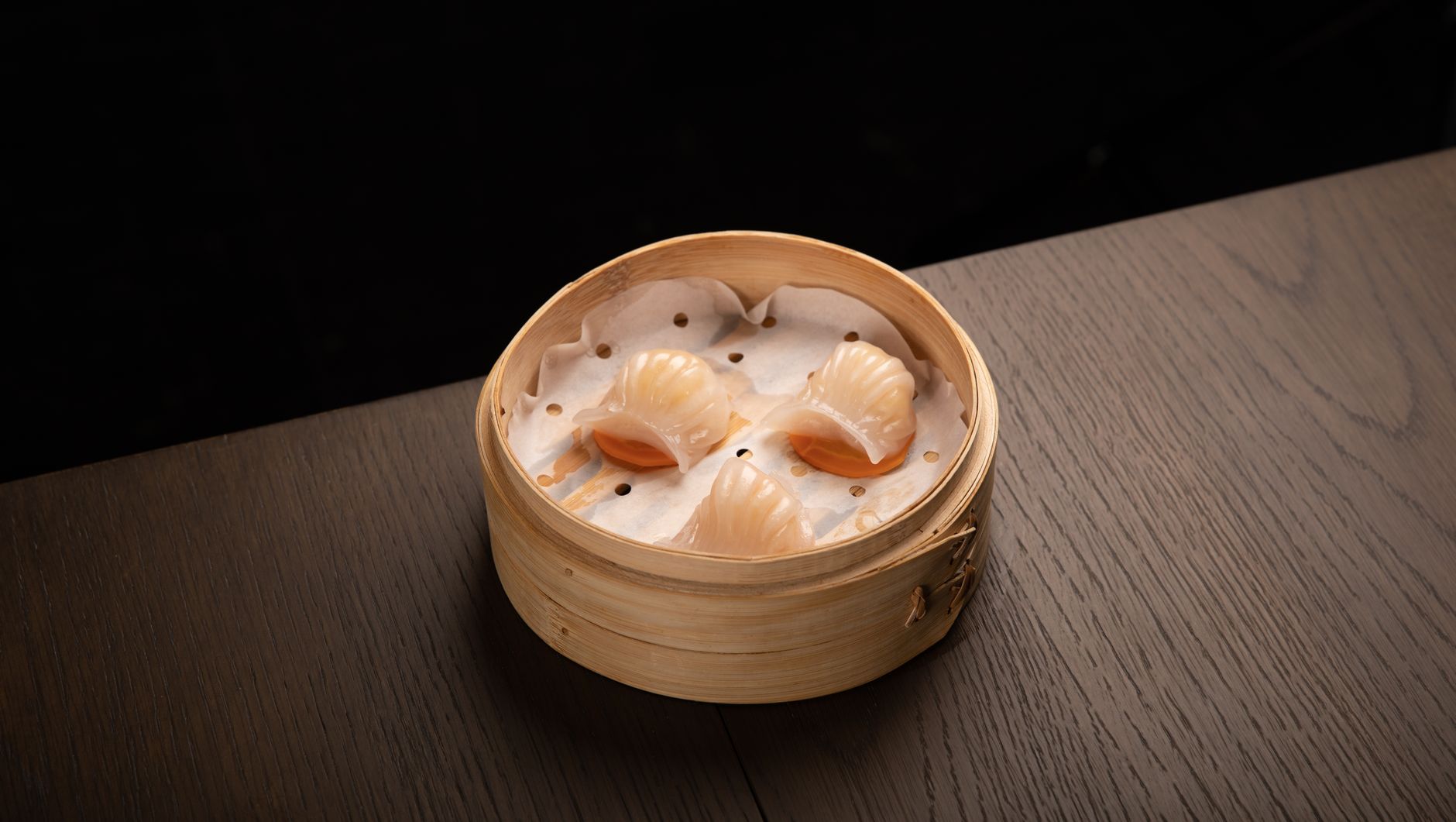
Most writing about dim sum in Hong Kong focuses on the grandes dames — the Michelin-starred spots, the hotel restaurants, the chains that have turned the art into assembly-line work. What gets missed is that the best har gow in the city is not made by a chef in a toque. It is made by a 68-year-old woman named Mrs. Lo, who has been folding shrimp dumplings in this same third-floor kitchen since 1987, maybe 400 a day, sometimes 800 before Chinese New Year. She does not use a recipe. She does not weigh the filling. She folds each one in exactly seven pleats — not six, not eight — and she knows when the wrapper is wrong by the feel of it against her fingertips. “If the dough talks back,” she told us once, in Cantonese, “you didn’t rest it long enough.”
The har gow here cost HKD 48 for four pieces, which is roughly what a chain restaurant charges for three. The difference is not in the price. The difference is that Mrs. Lo buys her shrimp whole, not peeled, every morning from a stall in the wet market two blocks away, and she shells them herself at a stainless steel table in the back while a small television plays Cantonese opera. The filling is not the sweet, springy paste that has become standard in dim sum houses across the city. It is coarser, more textured, with pieces of bamboo shoot that still have a little resistance in them. The wrapper is thin enough that you can see the pink of the shrimp through it, but not so thin that it tears when you pick it up with chopsticks. This is a dying skill, and everyone in the room knows it.
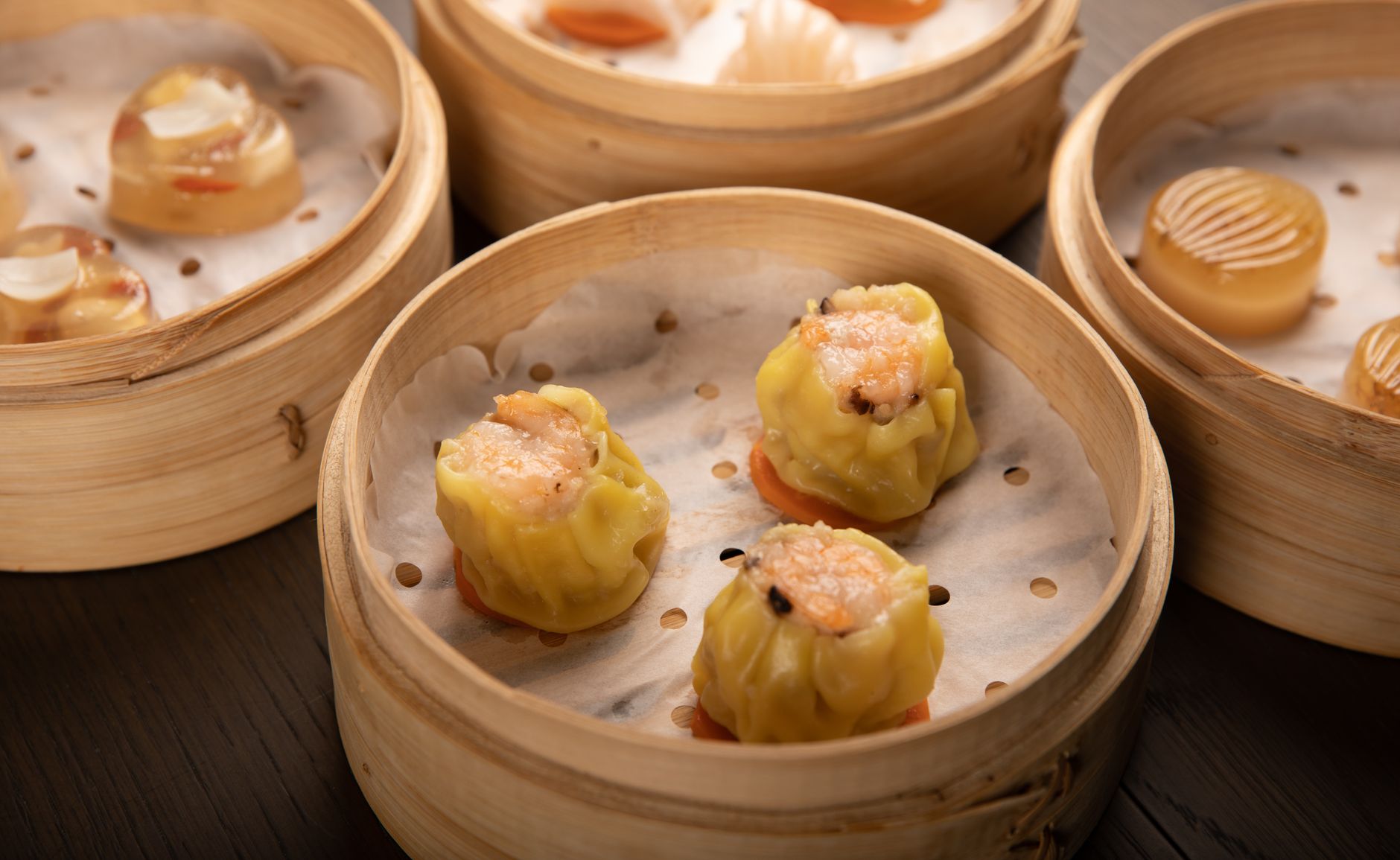
We ordered siu mai next, partly because that’s what you do and partly because we wanted to see if the quality held across multiple dishes. It did, but not in the way we expected. The siu mai at Lo’s are not the tight little parcels you get at the chain places. They are looser, more irregular, with the pork and mushroom mixture spilling slightly at the top, finished with a single piece of fish roe that is not there for color but for the pop of salt it releases when you bite down. “The tourists want perfect-looking,” a man at the next table said, without being asked. He was in his seventies, reading a newspaper that had been folded down to the racing pages. “Perfect-looking means machine-made. This is not machine-made.” He pointed at his plate with his chopsticks, then went back to his tea.
The inconvenience of Lo’s is real. There is no menu in English. The staff, all three of them, speak Cantonese and Cantonese only. The air conditioning is inadequate, and on humid days the steam from the kitchen settles into the dining room and stays there. The bathroom is down the hall, through a fire door, and requires a key on a wooden block that the staff will hand you if you ask. On our second visit, a Thursday afternoon, the power flickered and went out for about twenty minutes. Nobody left. The staff lit a candle on the counter and kept serving. We ate char siu bao by dim light, and it was probably the best bao we’ve had anywhere — the bun fluffy but with enough structure to hold the barbecue pork without disintegrating, the filling not too sweet, a faint char on the edges that suggested it had been steamed and then briefly baked, a method that used to be common in Guangdong kitchens but has largely disappeared because it takes longer.
The turnover of dishes is slow. That is not a criticism. Things come out when they are ready, not when the order is placed. A basket of shrimp dumplings might arrive twelve minutes after you order. The cheung fun, rice noodle rolls with dried shrimp and scallions, took eighteen minutes on our third visit, and when we asked why, the woman shrugged and said, “The oil wasn’t hot enough yet.” This is the kind of answer you only get in a kitchen where one person is doing everything. At a chain, the oil is always hot enough, or at least it is always the same temperature. At Lo’s, the temperature depends on when the last batch was finished and whether Mrs. Lo has stepped away to answer the phone, which she does, because the phone sits on a shelf right next to the steamer and she refuses to move it.
A surprise, on the seventh or eighth visit: Lo’s does a lunch special that is not on any menu and is only available when the weather is chilly, which in Hong Kong means maybe fifteen days a year. It is a clay pot of chicken and Chinese sausage with rice, cooked on the stove in the back, with a layer of crispy rice at the bottom that you scrape up with a spoon. We learned about it because a woman at the next table — a regular, clearly — asked for it before she sat down, and the woman nodded and went into the kitchen. We ordered it too, not knowing what we were getting. When it arrived, we understood why nobody at that table had looked at the menu. The sausage had rendered its fat into the rice. The chicken was bone-in, thigh and leg, dark meat that stayed moist despite the long cooking. The crispy rice at the bottom was not a gimmick. It was the point.
It would be easy to romanticize Lo’s, to turn it into a parable about tradition and authenticity and the soul of Hong Kong. We have read those articles. They exist, and they are usually wrong, not because they are inaccurate but because they miss the texture of ordinary life that makes the place what it is. Mrs. Lo does not see herself as a guardian of culinary heritage. She makes dim sum because she has always made dim sum, and her mother made it before her, and she learned by standing at her mother’s hip in a kitchen in Sham Shui Po in the 1960s, folding wrappers until her fingers cramped. “The tourists ask me why I don’t write down my recipe,” she said once, wiping her hands on a towel. “I tell them I still remember what my mother said. She said, ‘If you write it down, you stop remembering it.'” She laughed when she said this, a short laugh, then went back to folding.
The bean curd rolls, when we finally tried them, were stuffed with a mixture of minced pork and water chestnuts, wrapped in a thin sheet of dried bean curd skin that had been rehydrated and then steamed. They arrived in a pool of light soy sauce and sesame oil, with a single chive tied around each one. The chive was not decorative. It held the roll together, and you could taste the mild garlic of it in every bite. We asked how long it took to tie them. The woman who served them — the same woman from earlier — said it depended on the day. Some days, a hundred. Some days, none. “If the chives are good, we do it,” she said. “If not, we don’t bother.” This is not the logic of a restaurant trying to optimize its output. This is the logic of a kitchen that has not changed its approach in decades, and has no intention of doing so.
The crowd at Lo’s is mixed. Office workers from the buildings around, older couples who have been coming since the 1990s, the occasional food writer who has heard about it through word of mouth and shows up with a notebook. On a Friday afternoon, there was a young family with a toddler who sat on a booster seat and ate rice with his fingers while his parents folded har gow into a napkin for him. Nobody seemed to mind. The staff brought an extra napkin and a small plate of sliced oranges when the meal was done, which is a gesture that has no price but happens in every table in the room. It is the kind of detail that no guidebook captures, because guidebooks capture what can be photographed.
A thing that surprised us: the turnover of tables is not fast. People stay. They drink tea and read newspapers. They talk to each other across the aisle. The staff do not bring the check until you ask. On one visit, we sat for forty minutes after finishing, reading a book, and nobody said anything. When we finally got up to pay, the woman at the counter looked at us and said, “How was the rice?” Not whether we wanted anything else. How was the rice.
The address, such as it is, is above 60 Bonham Strand, a street that runs through the middle of Sheung Wan and is lined with dried-seafood shops that smell of ocean and salt and something slightly medicinal. The entrance is between two shops, a narrow staircase that is easy to miss. The lift is old and slow and sometimes smells of dried scallop. There is no sign. The door to the third floor is unlocked during business hours, which are roughly 10 AM to 3:30 PM, though Mrs. Lo closes early if she runs out of ingredients, which happens often. The dim sum stops coming around 2:30. The regulars know this. The new visitors, the ones who show up at 3 PM expecting a full menu, learn it the hard way.
On our last visit, a rainy Tuesday in early November, we sat by the window and watched the umbrellas move through the street below while the tea cooled in our cups. The woman who had served us every time we came — still unnamed, still unbothered — brought out a plate of something we hadn’t ordered: turnip cakes, pan-fried, with a thin crust and a soft interior. She set it down and walked away. When we tried to ask about it, she waved her hand and said something in Cantonese that we didn’t quite catch — something about the weather, or maybe that we looked hungry. We ate them. We did not ask again.
📷 Photos: Change C.C (Pexels), Change C.C (Pexels)