The ferry from Central to Mui Wo leaves every hour, but the one we wanted was the 7:15 PM sailing — the last one that still carried a faint, useful daylight for the first stretch of the walk. A group of teenagers with skateboards and a woman carrying a live chicken in a mesh bag shared the upper deck. The chicken seemed unbothered by the salt spray. We took this as a good omen, though superstition has never served us well on any hike before.
Lantau Island is mostly known for two things: the airport and the Buddha. The airport is visible from almost everywhere on the north coast, a constant low hum of arriving and departing that blends into the background noise of the island after a few hours. The Buddha sits at Ngong Ping, reachable by cable car or a very patient bus ride, surrounded by souvenir stalls and the particular kind of quiet that comes from being a ticketed attraction. Neither of these is why we came. We came for the ridgelines that run south and west of the main tourist corridor, the ones that don’t appear on the MTR map or in the official walking guide that the tourism board hands out at the ferry terminal.
The salt smugglers used these routes because they were invisible from the water. During the Qing dynasty, salt was a government monopoly, and the penalties for moving it without a license were severe — execution, in some districts. The smugglers who worked the southern coast of Lantau had to move their cargo at night, using trails that had been in use since before any written records existed. They carried the salt in bamboo tubes sealed with wax, lashed to their backs, following paths that had been worn into the hillsides by generations of feet. Our plan was to follow the same ridgelines, though we intended to carry nothing more valuable than water and a tent.
The trail begins behind the Silvermine Bay Beach, past the public changing rooms and a row of shops selling dried squid and inflatable pool toys. There is no sign marking the start of the salt smugglers’ path. A local man who ran a small convenience store near the ferry pier drew us a rough map on a napkin, adding with a shrug that most of the paths had been reclaimed by grass anyway. He wasn’t wrong. Within the first kilometre, the path narrowed to the width of a single foot, and the vegetation closed in overhead. The light went from dusk to near-dark in the space of twenty minutes.
Headlamps became necessary earlier than we had anticipated. The trail was mostly stone steps — ancient, uneven, worn smooth by centuries of rain — and the steps were slick with moss and decomposing leaves. Each footfall required attention. We passed a small shrine set into the hillside, barely visible behind a tangle of ferns. A pair of red paper lanterns, faded almost to pink, hung above the entrance. Someone had left a fresh orange and a bottle of water at the base. The water was still cold to the touch. Placed there that same day.
The first night’s camp was a flat patch of ground near the summit of Nei Lak Shan, about four hours from the start. The altitude is modest — the peak reaches just over 700 metres — but the exposure is significant. From the campsite, the entire southern coastline of Lantau was visible, dotted with the lights of small fishing villages and the occasional cargo ship making its way through the Lamma Channel. The wind was stronger than we had expected, and the tent pegs struggled to find purchase in the thin soil. We ate dinner — instant noodles with dried vegetables, the kind of meal that tastes better at altitude than it has any right to — and watched the lights of Hong Kong’s skyline flicker in the distance, sixty kilometres away but somehow intimate, like a neighbour’s television visible through a window.
At the ferry terminal before we left, a retired history teacher overheard us asking about the smugglers’ routes and offered his opinion freely, the way people in Hong Kong do when they consider a subject important. “The smugglers weren’t criminals in the way people think now,” he said, without being asked. “They were farmers. Fishermen. People who needed to eat. The government made salt expensive. The smugglers made it possible for ordinary people to have a meal that tasted like something, or something like that.” He told us that some of the families who lived in the remote villages on the south coast still spoke of the smugglers with respect, the way other places might speak of wartime resistance fighters.
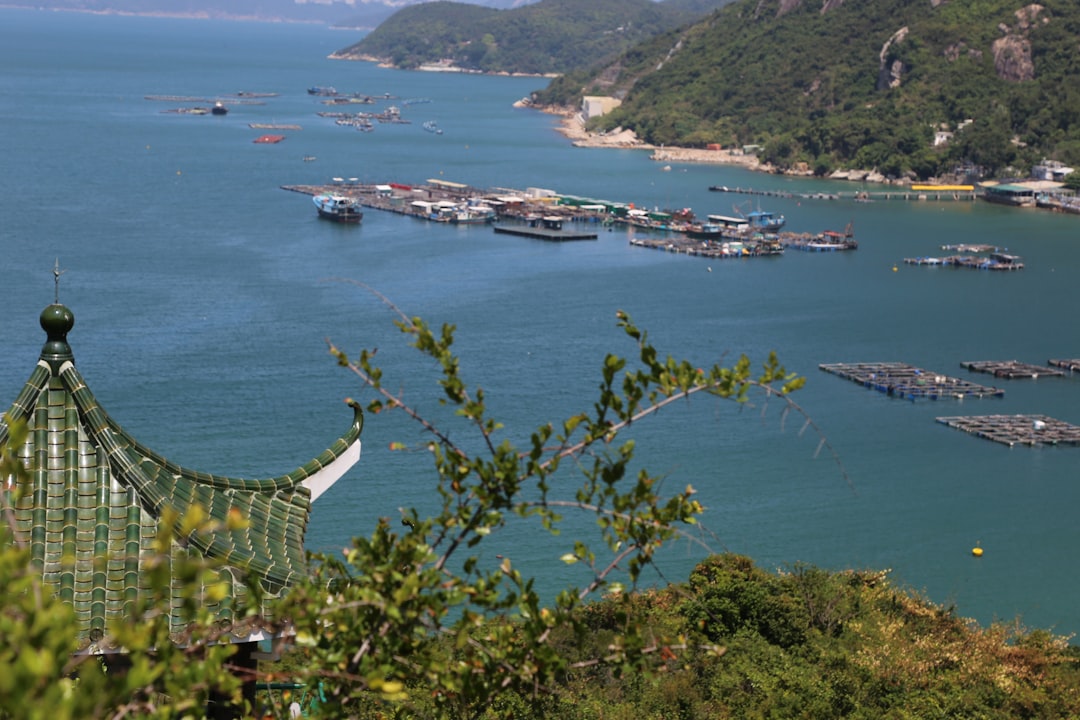
Morning came early, not because we planned it but because the sun hits Lantau’s eastern ridgelines before six and there is no sleeping through it when your tent is pitched on an exposed slope. The view was worth the lost sleep. The haze that typically blankets Hong Kong had not yet risen, and the South China Sea was a deep, clear blue that looked almost counterfeit. We could see the outlines of islands that rarely appear in any tourist literature: Soko, Shek Kwu Chau, the jagged silhouette of the Ninepin Group further out. The water between them was empty of boats at this hour, which felt significant in a place where shipping traffic is as constant as the air.
We packed and continued south, following a ridgeline that descended toward the coast. The vegetation changed as we dropped in elevation: scrubby hill grasses gave way to dense stands of bamboo and then to the broad-leaved trees that thrive in the humid coastal lowlands. The path became less distinct in places, and we relied on a combination of GPS and the faint impressions of foot traffic to find the way. In one section, the trail disappeared entirely into a landslide — a recent one, judging by the exposed roots and fresh soil. We detoured around it through a stream bed, losing about forty minutes in the process.
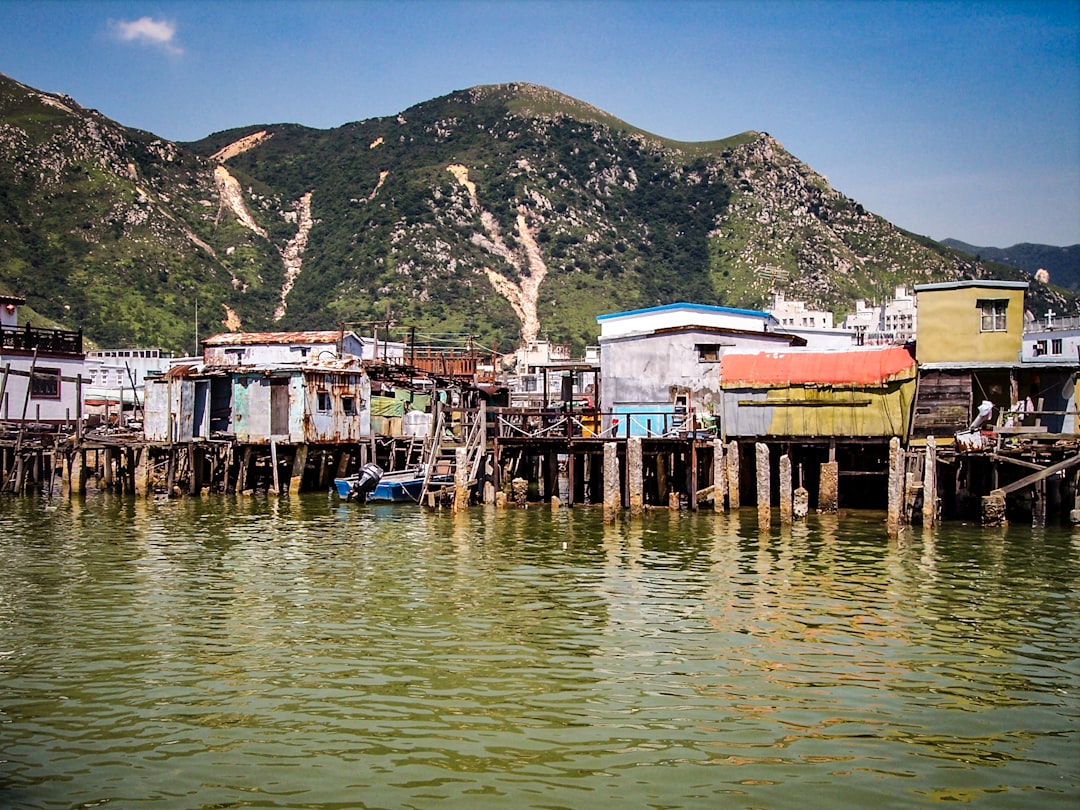
Around midday, we reached a ridge that overlooks the village of Tai O. From above, the stilt houses that line the river look like a village suspended between land and water, which is more or less accurate. The village has been a fishing community for centuries, and the stilt houses were built to accommodate the tidal changes that flood the riverbanks twice daily. The salt smugglers would have used Tai O as a landing point, bringing their cargo ashore under cover of darkness and distributing it inland through the network of trails we had just walked. Today, Tai O is known for its dried seafood and its elderly population of fishermen who still live in the stilt houses, though the younger generation has largely moved to the city. It feels less like a preserved heritage site than like a place that has simply continued doing what it always did, indifferent to tourism.
The trail descended sharply into the outskirts of the village, and we stopped at a small shop that sold cold drinks and steamed rice rolls. The woman running the shop had the particular competence of someone who has spent decades in a place where things break and need fixing. She took one look at our boots — caked in mud, with the laces frayed from days of scrambling over rock — and wordlessly handed us a roll of duct tape from behind the counter. We bought three bottles of water and a bag of dried mango, and she charged us less than we expected. When we tried to pay more, she waved us off and returned to the small television set on the counter, which was showing a Cantonese opera.
The second night’s camp was near the mouth of the Tung Chung River, where the water meets the sea in a wide, slow estuary. The spot is popular with local fishermen but sees almost no overnight visitors. We set up the tent on a sandy bank beneath a grove of casuarina trees, the needle-like leaves creating a canopy that filtered the remaining light into a soft, green glow. The tide was low, and the mudflats were exposed, dotted with the small holes of crabs and worms. A group of egrets stood motionless at the water’s edge, waiting for something that we couldn’t see.
That night, the weather shifted. A front moved in from the southwest, bringing a light drizzle that started around midnight and continued through the early hours. The tent held, but the humidity was uncomfortable, and sleep came in short, restless intervals. By dawn, the rain had stopped, and the air had the particular freshness that follows a night of wet weather in a coastal environment — clean, saline, cool. We packed a wet tent and continued along the final stretch of the route, which follows the coast northward toward Tung Chung.
The last few kilometres were unremarkable in terms of scenery — a mix of paved paths and gravel tracks running parallel to the highway — but they carried a different kind of significance. This was the route the smugglers would have used to bring their cargo into the distribution network that fed the city. The salt that came over these ridges would have ended up in kitchens across Kowloon and Hong Kong Island, in the brine tanks of fishmongers and the preserving jars of home cooks. It’s a strange thing to think about while walking past a bus stop and a 7-Eleven, but the ordinariness of the endpoint is part of what makes the story hold.
A bus from Tung Chung back to Central took twenty-five minutes. The contrast was jarring in a way we had expected but still felt: the quiet of the ridgelines, the sound of wind through bamboo, the salt-stained rocks that had been stepped on for centuries, and then the fluorescent hum of the MTR, the escalators, the city’s constant motion. The napkin map from the convenience store had been reduced to a damp, illegible pulp somewhere in the bottom of a backpack. We threw it away in a bin at the station, and it felt like the right thing to do — the kind of map that was meant to be used for one journey only, then discarded.
The packing list for a trip like this is straightforward: a tent that can handle coastal wind, more water than you think you need, a map that you might have to draw yourself. The smugglers carried salt. We carried curiosity. Both are heavy enough, in their own way.

📷 Photos: Joshua J. Cotten (Unsplash), Stephan HK (Unsplash)