The Peninsular Malaysian rainforest is not quiet at 4:15 AM. It hums. Cicadas cycle through frequencies like a dial being turned, and somewhere in the dark a bird repeats the same three notes for so long it starts to sound mechanical. The air is dense and warm in a way that makes the lungs work harder. A flashlight beam hits the trunk of a meranti tree and the bark glows orange, then disappears as the beam swings away. Steps crunch on leaf litter, then on gravel, then on the wooden slats of a boardwalk that leads toward the river crossing.
Taman Negara is often described as one of the world’s oldest rainforests—older than the Amazon, older than the Congo, a continuous canopy that has stood here for 130 million years through ice ages and sea-level changes that redrew coastlines. But that fact, repeated in every brochure and blog post from Kuala Tahan, has a way of becoming abstract. What isn’t abstract: the ferryman who appears from a hut at the jetty, yawning, rubbing his face with both hands, and unties the motorboat without a word. The crossing takes less than four minutes, the boat’s single light cutting across black water that reflects nothing back.
On the other side, the trail rises immediately. Not a gentle slope—a root-tangled staircase of a climb that begins testing the legs within the first hundred meters. A group of three trekkers from Melbourne had set out an hour earlier and gotten lost, taking a wrong fork near the first shelter. By the time they found the correct path, the sky above the canopy had begun showing the first pale shift from black to deep blue. “We thought we missed it completely, or something like that,” one of them said later, sitting on a bench at the viewpoint, still breathing hard. “We could hear the monkeys going crazy and we were just running up the stairs in the dark.” The mistake cost them forty minutes and a lot of water, but they made it.
The Bukit Teresek viewpoint sits at 334 meters above sea level, which is modest compared to the mountains further north. But in a landscape where the canopy itself rises sixty meters from the forest floor, that modest elevation matters. The boardwalk and stairs that lead up have been reinforced over the years, replaced section by section as humidity and insects claimed the old wood. Some of the planks are still new, pale and rough, while others have darkened to the color of wet teak. The handrail is smooth in places from years of palms sliding along it.
What makes the viewpoint worth the climb at dawn is neither the height nor the distance. It’s the light. The sun rises over the eastern edge of the park, and for about twelve minutes the canopy stops looking green and starts looking gold. Mist hangs in the lower layers, not thick enough to obscure but thick enough to soften the edges of trees a kilometer away. The sound changes, too—the canopy is a different acoustic space than the forest floor. Sounds arrive from farther away, from birds and insects and the distant rumble of a tour boat starting its engine on the river.
A photographer from Penang named Aiko had been coming to this spot for three years before she got the shot she wanted. The problem, she said, wasn’t the light or the composition. It was the humidity. “You get there, you set up, and the lens fogs immediately. Not on the outside—inside. The glass is cold from the air conditioning in the car or the lodge, and the air here is almost completely saturated. You have maybe thirty seconds to shoot before the fog forms, and then you wait for it to clear, and then it fogs again.” The solution she eventually settled on: leave the camera bag outside the lodge for an hour before starting the climb, so the equipment temperature-matches the ambient air by the time the shutter needs to fire. It sounds simple. It took three trips to figure out.
The animals follow their own schedule. Gibbons call from somewhere to the south in the first gray light, their voices carrying across the valley in a way that sounds almost human. A large bird—possibly a hornbill, possibly an eagle—glides over the canopy without flapping, riding a thermal. Below the viewpoint, a troupe of long-tailed macaques moves through the mid-story branches, shaking leaves and occasionally dropping fruit that hits the forest floor with a wet thud. None of this is staged. The macaques are not performing. They are doing exactly what they would be doing whether anyone was watching or not, which is what separates a place like this from a zoo or a sanctuary.
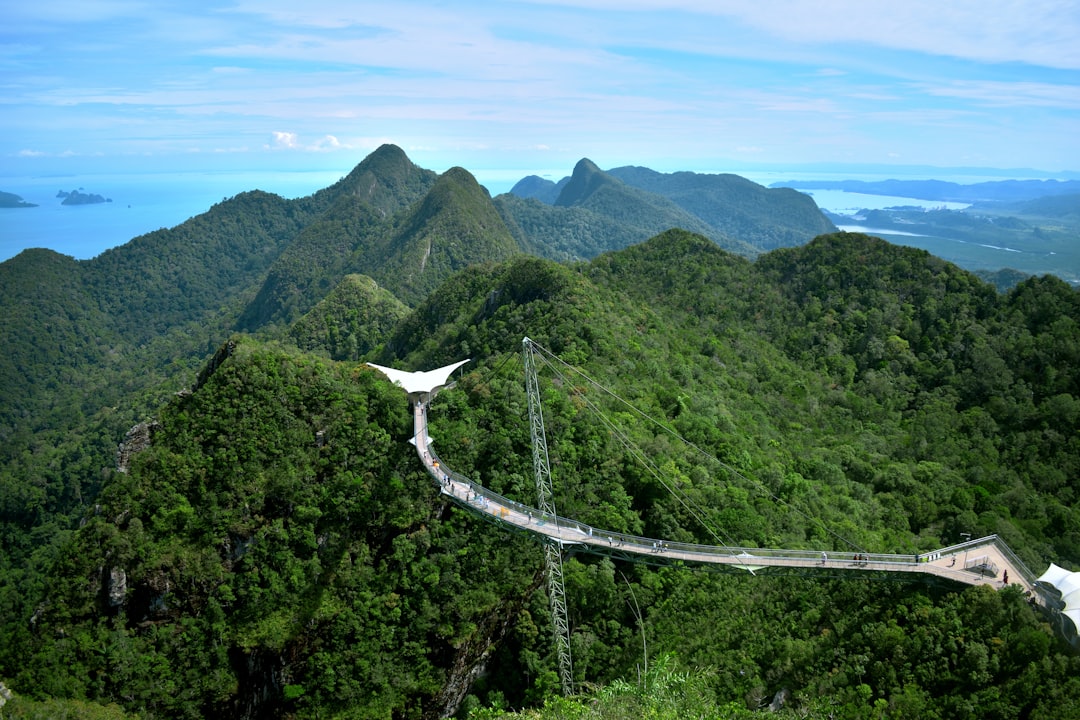
The trail system in Taman Negara covers more than 130 kilometers, but most visitors stay within a few kilometers of the park headquarters at Kuala Tahan. The canopy walkway, a suspension bridge strung between trees that reaches 45 meters at its highest point, draws the largest crowds. By nine in the morning, the queue can stretch for thirty minutes. The viewpoint on Bukit Teresek sees fewer people, partly because it requires effort to reach and partly because it doesn’t have the same name recognition. The walkway is the famous photo. The viewpoint is where people go to take their own version of it.
A ranger stationed near the top of Bukit Teresek has been working in the park for eleven years. He has watched the visitor numbers grow, particularly after 2017 when international arrivals to Malaysia increased significantly. He has also watched the weather change. “The rains used to come at predictable times,” he said, speaking in a mix of Malay and English. “Now there are weeks where it rains every afternoon, and then three weeks with almost none. The trees know. The animals know.” He gestured toward a fig tree near the viewpoint platform. “That tree fruited two months early this year. The birds figured it out before we did.”
The practical details matter here in a way they don’t at a more developed tourism site. The park entrance fee is one ringgit for Malaysians and thirty for international visitors, but that fee covers only the permit to be in the park, not access to any specific trail or viewpoint. The boat from Kuala Tahan to the park headquarters costs ten ringgit per person one way and runs from seven in the morning until seven at night, though the last boat often leaves earlier if the boatman decides no one else is coming. Lodging inside the park is limited to a single government-run resort and a handful of basic chalets. Booking ahead during the dry season—roughly February through September—is less a convenience than a necessity. Show up without a reservation in July and the options are either a dorm bed at the backpacker hostel across the river or a long drive back to Jerantut.
The mistake most first-time visitors make is trying to do too much in one day. The park is 4,343 square kilometers. The trails nearest to headquarters cover maybe three percent of that area. A common itinerary involves the canopy walkway, Bukit Teresek, a river cruise in the afternoon, and a night walk after dinner. It sounds efficient on paper. In practice, the humidity alone drains more energy than most people expect. By three in the afternoon, the heat index regularly exceeds forty degrees Celsius, and the motivation to walk anywhere diminishes sharply. The visitors who come back a second or third time tend to do one thing per day and do it properly.
The river itself is worth attention. The Tembeling River runs along the southern boundary of the park and serves as the main transport artery. People live on its banks—not inside the park but just outside it, in villages that predate the national park designation by generations. Their houses stand on stilts above the flood line, and their children swim in the water during the hottest part of the day. A boat ride upriver in the late afternoon, when the light goes orange and the tree shadows stretch across the current, reveals a different version of the same landscape. The canopy looks different from water level. The roots are visible.
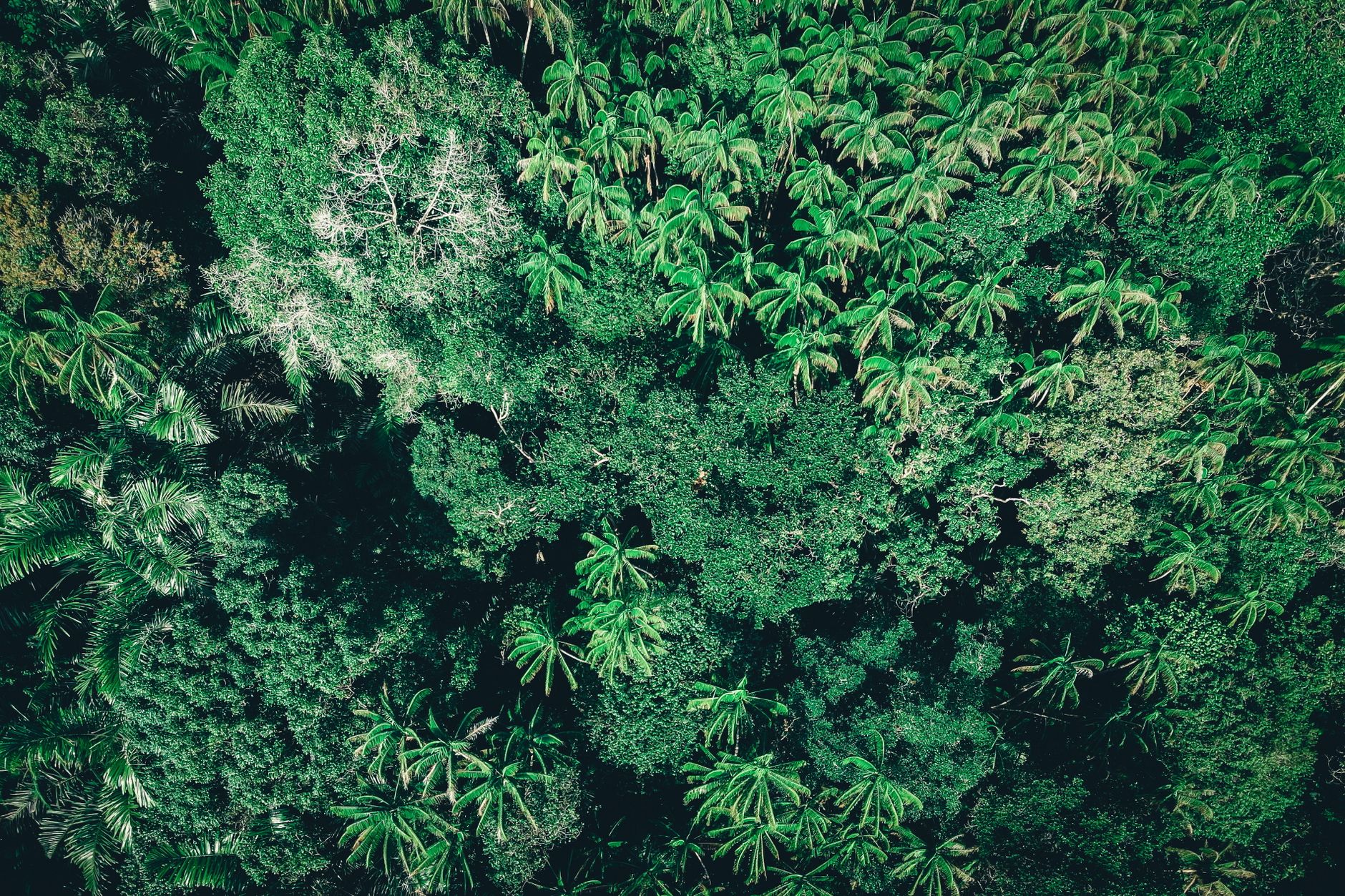
There is a moment that surprises most people who make the climb to Bukit Teresek. It does not happen at sunrise, though that is when most visitors are looking up. It happens about an hour later, when the sun has cleared the canopy and the mist has burned off and most people have already packed their gear and started heading down. The air shifts. The temperature climbs rapidly. And the canopy, which had been a single unified green surface in the early light, resolves into individual trees. Species become distinguishable—the spiky crown of a merbau, the pale trunk of a kapur, the buttress roots of a mengaris that flare out like walls. The rainforest stops being a wall of green and becomes a collection of distinct, competing lives.
Taman Negara is often described as ancient, which is true, but the word carries a suggestion of stability that the actual place does not have. Nothing here is stable. Trees fall. Rivers change course. Fig trees strangle their hosts over decades. The entire system is a slow, violent contest for light and space, and the viewpoint from Bukit Teresek shows it clearly. The canopy is not a ceiling. It is a battlefield.
The walk back down takes half the time of the ascent. The knees feel it more than the lungs. By the time the trail levels out near the river, the temperature has climbed past thirty degrees and the humidity makes the air feel thick as cloth. Small stalls near the jetty sell coconut water and fried bananas. A cat sleeps on a stack of life jackets. A boatman in a faded sarong smokes a cigarette and waits for passengers.
Lunch options at the park headquarters are limited to a canteen serving nasi lemak, fried rice, and instant noodles, all of which taste better than they have any right to after a morning of physical effort. The canteen is open-air, roofed with corrugated metal, and populated mostly by guides and rangers who eat quickly and talk quietly. A plate of nasi lemak costs four ringgit. A bottle of water costs two. The prices have not changed in at least five years.
Later in the afternoon, when the worst of the heat has passed, the canopy walkway reopens and the crowd returns. The viewpoint on Bukit Teresek is empty by then, or nearly so. A ranger might be there, sitting on the bench that faces east. A lone visitor might show up and stay for ten minutes, then leave. The light at that hour is flat and white, good for nothing photographic. But the silence is different from the morning silence—fuller, more complete. The birds have gone quiet. The cicadas are loud again.

📷 Photos: Pok Rie (Pexels), Rudi Singh (Pexels)