
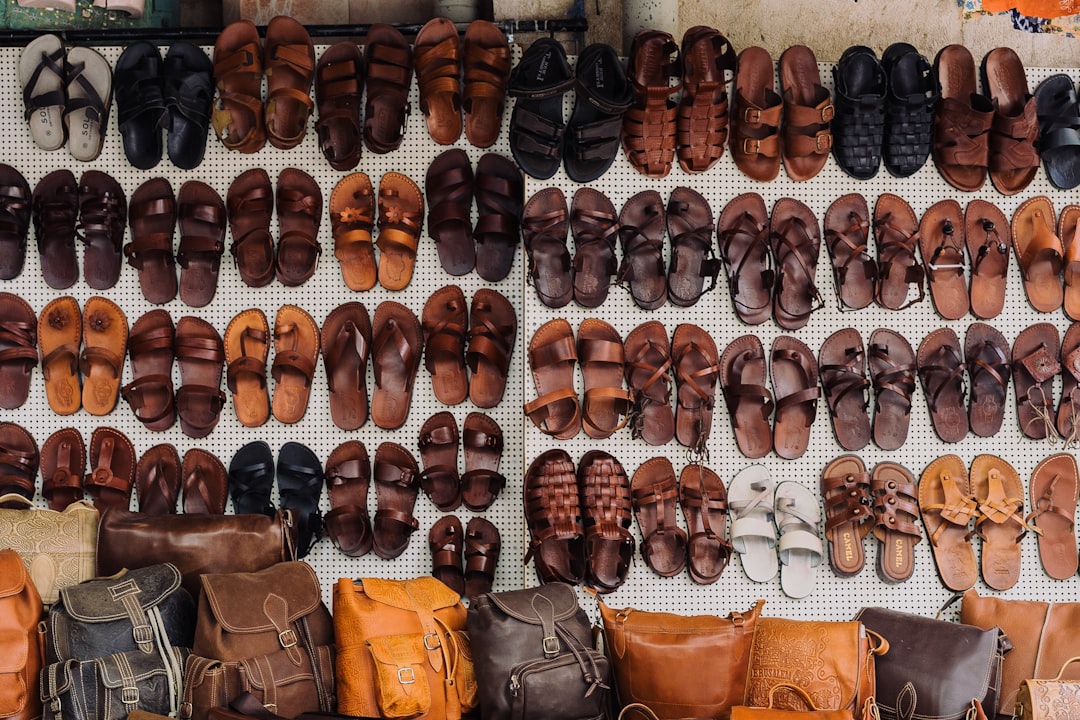
You find it tucked away not on the tourist maps but in the quiet, tree-lined stretch of Kadoorie Avenue on the Kowloon side, a narrow shopfront that could easily be mistaken for a storage room if not for the faint, sweet scent of leather wafting out. This is the workshop of a fourth-generation cobbler, a man whose family has been shaping shoes and sandals in Hong Kong since before the neon signs went up in Mong Kok, and what you want is a pair of custom-made leather sandals that will carry you through the rest of your trip and far beyond. You step inside, and the first thing you notice is the quiet — a deliberate quiet, the opposite of the city’s clamour — punctuated only by the rhythmic tap of a hammer against a last, that wooden form that holds the shape of a foot while the leather is stretched and stitched around it. You are here to do something that feels almost radical in an age of fast fashion and online ordering: you are going to have something made, slowly, by hand, exactly for you.
The process begins not with a sketch or a Pinterest board but with your feet. The cobbler, a man in his fifties with grease-stained fingers and the calm patience of someone who has done this thousands of times, gestures for you to sit on a low stool. He does not ask what style you want first. Instead, he asks you to stand on a piece of brown paper, and he traces the outline of each foot with a pencil that has been sharpened to a fine point. You watch as he marks the width across the ball of your foot, the arch, the heel, noting the way your left foot is slightly wider than your right — a detail you never knew but he sees in an instant. He measures the distance from your heel to the base of your toes, the circumference of your ankle, the height of your instep. This is the foundation of everything that follows, and it takes longer than you expect, maybe fifteen minutes of careful attention to a single pair of feet. You realize, sitting there, that no shoe you have ever bought off a shelf has been fitted to you with this level of precision. The cobbler explains that most foot pain in sandals comes not from bad design but from a bad fit — a strap too loose here, an arch unsupported there — and that a custom sandal, made to your exact measurements, will feel different from the moment you put it on. He is not selling you a product; he is solving a problem you did not know you had.
Choosing the leather comes next, and this is where the real personality of your sandals begins to emerge. The cobbler pulls out stacks of hide from a drawer beneath his workbench, each one a different thickness and texture and colour. There is a full-grain cowhide in a rich tobacco brown, supple and slightly pebbled, that he says will darken with wear and develop a patina over a few years. There is a black buffalo leather, thicker and stiffer, that will hold its shape rigidly and last through monsoon rains. He shows you a vegetable-tanned leather in a pale honey that he recommends for a first pair, because it molds to your foot more quickly and takes on a warm, honeyed glow as it ages. You run your fingers over each sample, feeling the differences. You ask about colours, and he shakes his head gently. He does not offer red or blue or green. He offers brown, black, tan, and a dark cognac that leans almost toward burgundy in certain light. His philosophy, he says, is that a sandal should be an extension of your foot, not a statement piece; the leather itself, with its natural grain and the way it ages uniquely to your walking pattern, is the decoration. You choose the tobacco cowhide, and he nods approvingly, as if you have passed some small test.
Now you discuss design, and this part is surprisingly collaborative. The cobbler brings out a few samples of his previous work: a classic two-strap sandal with a buckle at the ankle, a simpler slide with a single wide band across the top, a more elaborate design with crossed straps that lace up the front. He asks you about where you will wear them — city streets, beach boardwalks, casual dinners, maybe light hiking on trails. He recommends a thicker sole for durability on Hong Kong’s uneven pavements, where the granite steps have been worn smooth by a century of footsteps. He suggests a modest heel lift, about a centimetre, to take pressure off your lower back if you plan to walk for hours, which you do. You tell him you want something that feels elegant but not fragile, something that can survive a full day of exploring and still look good over a drink at a rooftop bar. He listens, then sketches a rough design on a scrap of paper: two adjustable straps, a closed heel for security, a subtle toe cover to protect against stubbed toes on curbs. You make a few small changes — move the ankle strap slightly lower, round the toe a little — and he adjusts the sketch without any impatience. This is your sandal, and he treats it as such.
The discussion of price is less romantic but equally important. You will pay somewhere around eight hundred to twelve hundred Hong Kong dollars, which is roughly a hundred to a hundred and fifty US dollars, depending on the leather and the complexity of the design. The cobbler explains that a well-made leather sandal, properly cared for, can last a decade or more, and that the cost per wear becomes negligible compared to the three pairs of cheap sandals you might otherwise buy and discard in the same period. He offers a simple guarantee: if the sandals do not fit perfectly when you pick them up — if a strap is too tight or the arch feels off — he will adjust them at no extra charge. He has been doing this long enough to get it right the first time most of the time, but he is also a craftsman, not a machine, and he wants you happy.
You leave your traced outlines, your chosen leather, your agreed-upon design, and a deposit of half the total amount. The cobbler tells you to come back in three days, which gives you time to explore the rest of Hong Kong while your sandals take shape. You wander down Nathan Road, past the flashing signs of the jewellery shops and the electronics stores, and you think about the difference between shopping for something and having something made. The former is about acquisition; the latter is about creation. You pass a store selling mass-produced sandals for a third of the price, and you feel no pull toward them. You have already invested something in your pair.
On the third day, you return to the workshop. The cobbler is finishing the stitching on your sandals when you walk in, threading a waxed linen cord through holes he has punched with an awl. He holds them up for you to see, and they look exactly like the sketch, but real, in three dimensions, with the tobacco leather already beginning to soften around the curves of the last. You try them on, and the sensation is immediate. They do not feel like wearing new shoes; they feel like wearing your feet. The straps sit exactly where you wanted them, neither too tight nor too loose, and the sole conforms to the arch of your foot with a firm, supportive pressure. You walk across the workshop floor, and there is no slipping, no rubbing, no pressure point. The cobbler watches you, his head tilted, and when you nod, he smiles a small, quiet smile. He shows you how to care for the leather — a light coat of conditioner every few months, avoid leaving them in direct sunlight for extended periods, replace the sole when it wears thin. He hands you a small tin of beeswax-based polish, free of charge, and tells you that if you ever have a problem, you can send him a photograph and he will advise. He means it.
You pay the balance, slip the sandals into a cloth bag he provides, and step back onto Kadoorie Avenue. The city feels different now, or you feel different in it. You have a pair of sandals that were made for you, by a man whose father and grandfather and great-grandfather all did the same work, in the same city, using the same tools. You walk down toward the waterfront, and the leather begins to warm to the temperature of your skin. You notice how the sandals grip the pavement without squeaking, how the buckles do not jingle with every step, how your feet do not feel tired even after an hour of walking. You stop at a small park and sit on a bench, taking off one sandal to examine the stitching. It is even and tight and exact. You think about the fact that this cobbler could have moved to a bigger shop, hired assistants, mechanized his production, sold his designs online, and made more money. But he chose to stay small, to work slowly, to serve people who walk through his door one at a time.
Later, you find yourself in a dim sum restaurant in Sham Shui Po, sitting at a communal table with strangers, and you notice one of them eyeing your sandals. She asks where you got them. You tell her about Kadoorie Avenue, about the fourth-generation cobbler, about the tracing and the leather and the three-day wait. She nods, understanding. She says she has lived in Hong Kong for twenty years and never knew such a thing existed. You tell her it is worth the trip, that if she goes, she should ask for the tobacco cowhide, that she should let the cobbler trace her feet and not rush the process. You feel a small surge of satisfaction, not because you have discovered something exclusive, but because you have participated in something old and honourable and still alive in this hyper-modern city.
Back in your hotel room that night, you set the sandals on the dresser and just look at them. They are not flashy. They do not have a logo. The leather has small, natural variations — a faint scar here, a slight crease there — that make them unique. You think about the years ahead, about the trips you will take with these sandals, about the way they will darken and soften and conform to your feet until they are as familiar as your own skin. You think about returning to Hong Kong one day, walking back into that workshop, and having the cobbler replace the soles or add a new pair of straps. The relationship does not end with the purchase.

📷 Photos: Adam Jang (Unsplash), mana5280 (Unsplash)