The wind came up an hour before sunset, carrying the smell of frying fish and the low thrum of a generator somewhere behind the food stalls. We were standing on a stretch of sand near Pantai Cahaya Bulan, the beach that runs north from Kota Bharu, and the sky above the South China Sea was doing something peculiar — turning a shade of violet that felt less like weather and more like a deliberate choice. It was the kind of light that makes photographers check their settings twice. The kind that suggests the evening might deliver something worth carrying a tripod twelve hundred kilometers for.
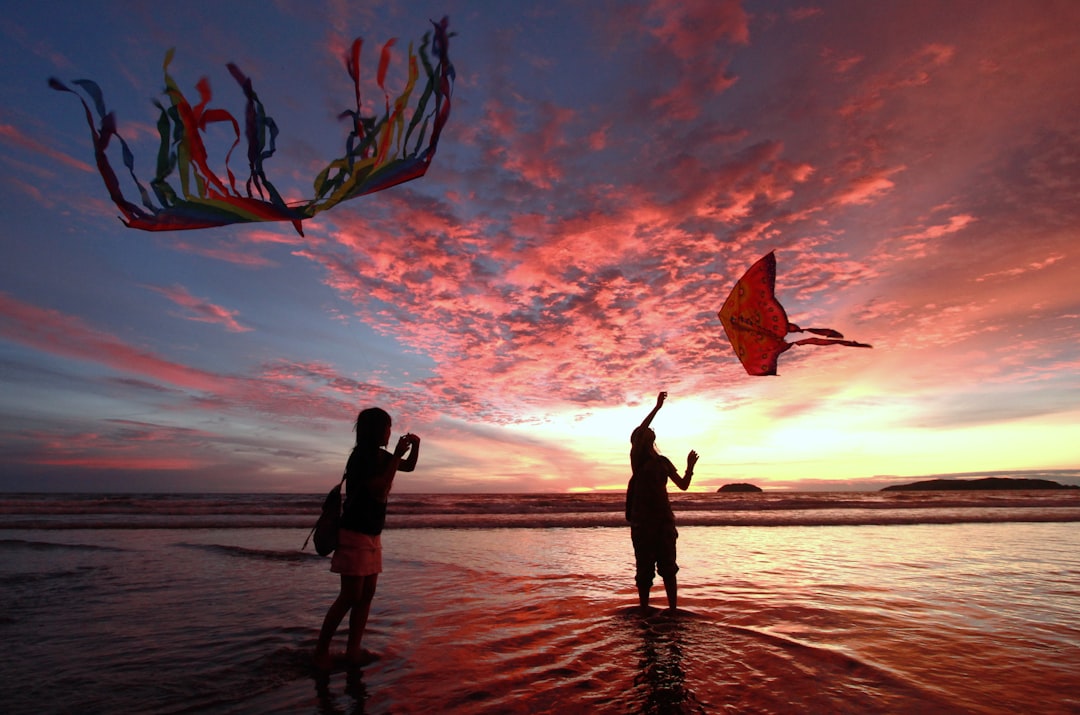
The Illuminated Kite Festival isn’t a single event with a fixed date and a published program. It’s more of a seasonal rhythm — a loose succession of evenings between March and May, when the monsoon winds settle into something reliable and the local kite-making community brings out their best work. Each kite is a frame of bamboo and thin synthetic fabric, some as tall as a person, wired with LED strips that trace the skeleton in white, blue, or amber. Against the darkening sky, they don’t look like objects flown on strings. They look like slow-moving constellations, drifting with the kind of unhurried confidence that comes from a tradition decades deep.
We’d heard about the festival from a photographer based in Kuala Terengganu who’d been shooting along this coast for years. “Don’t bother with the dates they post online,” he’d said over the phone, his voice crackling on a connection that kept dropping. “The real nights are unannounced. They happen when the wind is right, not when the calendar says so.” That piece of advice turned out to be the most useful thing we’d packed. The official tourism page for the state listed a handful of dates, but when we called the number listed, nobody answered. We drove up from Kuala Terengganu anyway, hoping the wind would cooperate, and spent the first afternoon eating nasi kerabu at a stall near the jetty while watching clouds race inland off the sea.
The kite flyers gather informally, usually in the hour before dusk. By the time we reached the beach on the second evening, a dozen men and boys were already assembling their kites on the sand. The construction is surprisingly practical — a central bamboo spine, cross ribs tied with monofilament, and a skin of ripstop nylon that rustled like a sail when the wind caught it. The LEDs are taped along the internal frame, powered by a small battery pack clipped to the flying line a few meters below the kite. It’s a simple system, but the effect is anything but. When the first kite lifted off the sand and climbed into the violet air, trailing a string of warm white lights that wobbled slightly with every gust, someone nearby let out a low whistle.
There’s a moment with kite festivals that photographs rarely capture well. The images you see online are usually long exposures, turning the moving lights into smooth trails against a black sky. They’re impressive, but they miss the actual experience: the way the kites weave and dip in the wind, the way one will suddenly surge upward while another stalls and drops, the way the crowd on the beach — maybe sixty or seventy people that night, mostly families with children and a few older men sitting on plastic chairs — reacts to each near-collision with a collective intake of breath. We packed a tripod and a remote shutter release, but after the first twenty minutes, we mostly just stood and watched.
The downside of this timing is the mosquitoes. They come off the mangroves at the northern end of the beach around the same time the kites go up, and they are relentless. We’d brought repellent, but not enough, and we spent the first hour slapping at our ankles and necks between shots. A local woman selling kuih from a basket noticed our discomfort and silently handed us a bottle of something dark and oily — a homemade repellent made from citronella and what tasted like coconut oil. She refused payment and just pointed at the sky. “This is more important,” she said, or something close to it — her Kelantanese dialect was hard to parse, but the gesture was unmistakable.
By eight o’clock, the sky was fully dark and the kites had become something else entirely. The battery packs lasted close to two hours on a full charge, and the flyers timed their launches so that the peak of the display coincided with the deepest part of the twilight. At some point, a fisherman’s boat passed a few hundred meters offshore, its own running lights a dim counterpoint to the spectacle above. The contrast was accidental but perfect: the working sea against the celebratory sky.
A word on gear. We were shooting with a mirrorless body and a 24-70mm f/2.8, which turned out to be the right range — wide enough to capture several kites together, tight enough to isolate a single one against the dark. The mistake we made was not bringing a second body with a longer lens, because there were moments when a 135mm or even a 200mm would have been better for picking out the details of the kite frames against the black. The other mistake was assuming we could brace the tripod in the sand without weighting it. A gust caught the tripod on the third shot, and the camera tipped forward into the sand. We caught it before any damage was done, but spent the next ten minutes cleaning sand out of the lens threads.
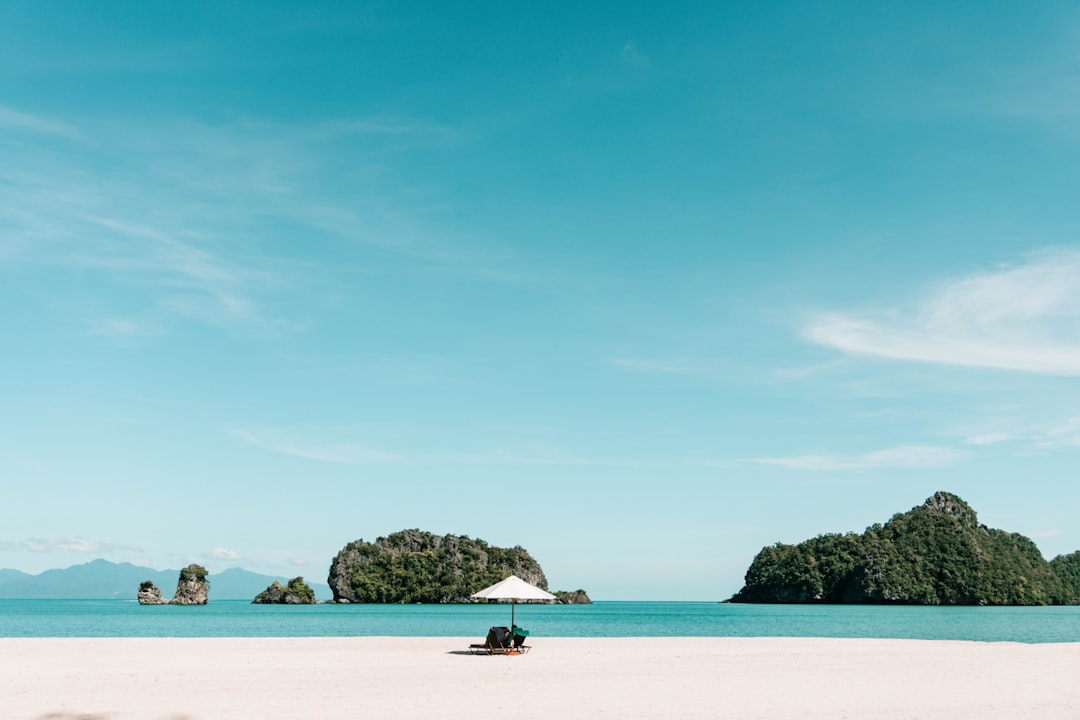
The beach itself is not a pristine postcard. Pantai Cahaya Bulan — Moonlight Beach, in translation — is a working stretch of coastline with fishing boats pulled up on the sand, a few small resorts, and the kind of casual litter that accumulates wherever people gather to eat fried food and drink coconut water. It’s not dirty enough to be off-putting, but it’s not clean enough to be photogenic in the conventional sense. That honesty is part of what makes the festival work.
By nine thirty, most of the kites had been reeled in. The flyers packed their gear with a practiced efficiency, coiling lines and folding fabric that still held the residual warmth of the LEDs. A few families lingered on the sand, and someone had produced a portable speaker playing what sounded like keroncong — the old Portuguese-influenced folk music that still survives in parts of coastal Malaysia. We sat on the sand for another hour, eating fried bananas from the same woman who’d given us the repellent, watching the last kite — a small one with a single blue LED — drift low over the water before its pilot finally brought it down.
The next morning, we drove back to the beach to see the site in daylight. It looked ordinary. The sand was scattered with footprints and bottle caps, and the wind had shifted to a steady onshore breeze that smelled of salt and diesel. Some children were flying a cheap plastic kite from a shop, the kind that costs three ringgit and lasts an afternoon. It was hard to reconcile this mundane scene with the spectacle of the night before, and that disjuncture is maybe the most honest thing about the experience. The festival doesn’t transform the beach into something it isn’t. It just borrows the sky for a few hours.
The photographer had warned us about something else, too. “The second night is always better than the first,” he’d said. “Because by then, the flyers know who’s serious.” We hadn’t understood what he meant until the third evening, when a man named Hassan — one of the older flyers, with forearms like rope and a patient, unhurried way of handling his kite — noticed us setting up and waved us over. He didn’t speak much English, and we didn’t speak much Kelantanese, but he gestured at his kite and made a winding motion with his hand. We watched as he launched a kite that carried not just white LEDs but a pattern of red and green lights that spelled out, in rough Arabic script, a word we later learned was “barakah” — blessing. He flew that kite for exactly seventeen minutes, then reeled it in and packed it away without a word of explanation. The rest of the evening, he flew the simpler ones.
Go in April or early May, when the wind is most consistent. Stay at one of the small guesthouses within walking distance of the beach — the drive from Kota Bharu is only fifteen minutes, but parking fills up fast when the word spreads. Bring insect repellent and a way to weight your tripod. But more than any of that, go without expectations about exactly what you’ll see. The festival resists scheduling. It happens when it happens, and the people who fly the kites are the ones who decide when that is.
On our last night, the wind died completely around eight thirty. The kites that were already up began to sink, their lights descending slowly like things giving up a fight. The flyers reeled them in without visible frustration, and the crowd began to disperse. We packed our gear and walked back toward the guesthouse, past a row of food stalls where the smoke from grilling satay rose straight up into a still, warm air. Somewhere behind us, a kite touched down on the sand, its lights flickering once before someone switched them off. The darkness where they’d been felt heavier than the darkness around it.

📷 Photos: Thomas Lee (Unsplash), Abdulaziz hasan (Pexels)