The Interislander terminal at Picton is a study in patience dressed up as procedure. Lines of painted arrows guide vehicles through lanes that fan out like a fan of cards, and a man in a high-vis vest walks the queue with a clipboard, checking booking references against windscreens. The campervan ahead of me is a long wheelbase rental with a bike rack and a driver who keeps leaning out to check his mirrors. When it’s my turn, the check-in is brisk: vehicle length, gas bottle declaration, a sticker for the windscreen. The paperwork asks whether the rental company permits a Cook Strait crossing, and it does — that clause had been ticked in the booking confirmation weeks earlier, and the ferry holds a vehicle space reserved in the same transaction as the foot passenger fare. What nobody tells you is how the van feels once the wheels are chocked and you climb the stairs to the passenger deck, leaving all that steel and bedding and half-used bags of rice below.
The crossing from Picton to Wellington is a few hours of landscape that shifts without warning. The Marlborough Sounds open up first — long fingers of water between bush-clad hills, the kind of drowned valleys that make you understand why the first surveyors struggled to draw accurate maps. Then the strait proper, where the water turns a colder, deeper blue and the wind picks up across the open deck. I stood at the rail for a while watching the wake, then went inside for a coffee that was fine in the way ferry coffee is always fine. By the time the Arahura, or whichever of the fleet was on duty that day, slid past the Miramar peninsula, the harbour was already busy with the shapes of the city: the stadium, the container terminal, the first terrace houses stacked up the hills like something spilled.
Wellington greets you with wind and the smell of salt and coffee. I drove the van off the ramp and up through the waterfront, past the blue of the harbour and the jumble of the CBD, and found a spot in a motorhome park near the edge of the city. The capital is small enough that walking works better than driving, and that afternoon I did the obvious things — the cable car up to Kelburn, the botanic garden path back down, a flat white in a Cuba Street café that had a wobbling table and a dog asleep under the register. Every corner seems to have something going on, even on a weekday when nothing is.
Te Papa is free to enter and full of the kind of exhibits that reward a slow walk rather than a checklist — the colossal squid in its tank, the earthquake house that shakes under your feet and makes a grown woman next to me grab my arm. The wind is the other thing. It comes through the streets in gusts that are almost theatrical, flipping umbrellas and sending paper cups skittering across the pavement. By evening I was back at the van with the heater on, listening to the rigging of a nearby yacht clink through the night.
The drive north the next morning was a lesson in how quickly New Zealand changes its mind. The Remutaka ranges, then the flat farmland of the Wairarapa, then the long run up the east coast toward Napier. The city itself is a strange and specific place — flattened by an earthquake in the 1930s and rebuilt in a style that now feels like a whole town dressed for a party it never left. The art deco buildings are painted in pale pinks and greens and ochres, with geometric sunbursts above the windows and little zigzag motifs that make ordinary shops look like cinema sets. I wandered the streets for an hour without a map and found the same motifs repeating: the fountain, the old newspaper building, the awnings along Emerson Street.
Napier’s vineyards are close enough to town that you can cycle between them, which is what a lot of people do. I took the van out toward the Gimblett Gravels, where the soil is grey and stony and the vines look dustier than they should. The cellar doors are low-key, often just a shed with a counter and a view of the rows, and the people pouring are usually the people who make the wine. I tasted a syrah that had the peppery quality the region is known for, and bought one bottle to keep in the van for a later night. The coast there is long and flat and slightly melancholy — grey sand, driftwood, the sound of the surf carrying all the way up to the road.
Back in town, the afternoon light on the art deco facades was doing something that no photograph quite captures: the pastel paint went warm, the shadows went long, and the whole street looked freshly painted. I sat on a bench outside a bakery with a pie and watched a group of schoolkids in blazers walk past the fountain. One of them had a clarinet case and was dragging it along the pavement by the handle, and the city seemed, for a moment, entirely at ease with its own strange history.
Lake Taupō arrives before you see it — a flash of blue through the trees, then a vast flat sheet of water with mountains behind it. I parked at a holiday park on the edge of town and walked down to the lakefront in the late afternoon, where the water was still and cold and the air smelled faintly of sulphur even from a distance. The lake is enormous, something you only appreciate when you’re standing on the shore and can see the far side as a thin line of hills, and the town itself is small and unfussy, built around the water rather than on top of it.
The next morning I drove out to Huka Falls, which is less a waterfall than a sluice gate the size of a building. The Waikato River narrows into a channel maybe a dozen metres wide and then drops, and the water goes from deep blue to a violent, almost unnatural turquoise as it accelerates. The viewing platform is close enough that you can feel the spray and hear the roar, and a group of teenagers were leaning over the rail filming it on their phones with the kind of enthusiasm that made me smile. The path along the river is short and well made, and it leads to a second viewpoint where the falls open out into a broader pool, and the difference between the two — the choke and then the release — is the whole point.
That afternoon I found a hot pool. The public ones near the lake are cheap and unglamorous — concrete basins, a few benches, the smell of minerals rising in steam. I sat in water that was almost too hot and watched the lake through the steam, and the cold of the morning was gone within a few minutes. I stayed longer than I intended, until my fingers went pruney and the light began to fade.
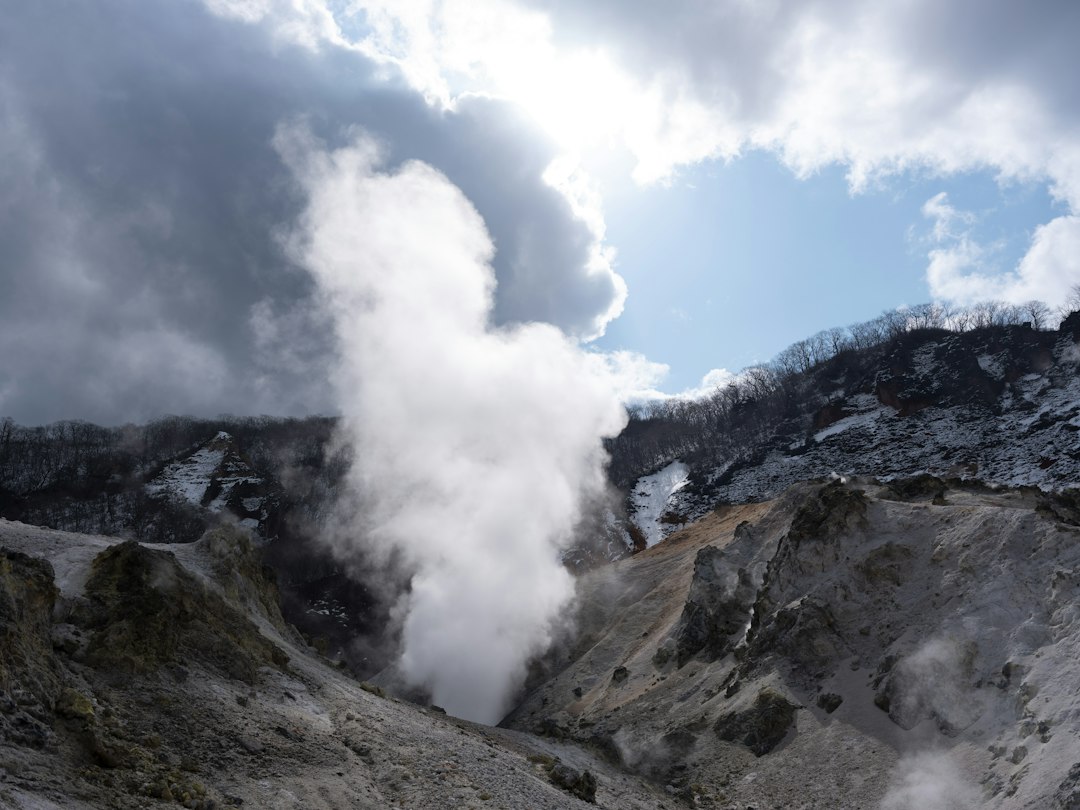
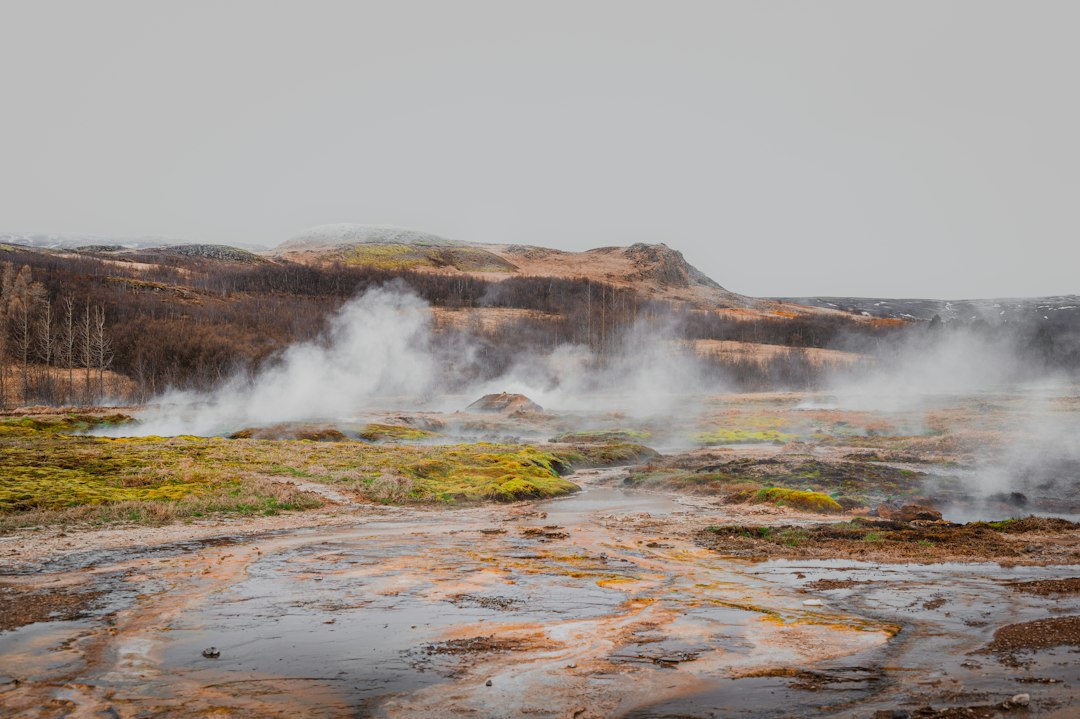
Rotorua announces itself with smell. The sulphur hits the nose a good few kilometres out of town, a rotten-egg sharpness that gets into the car and stays there, and by the time you’ve parked you’ve stopped noticing it. The geothermal parks are the obvious draw, and they are genuinely strange: pools of boiling mud that plop and bubble like something alive, steam vents in the middle of suburban gardens, a geyser that goes off on a schedule you can check on a board. I paid for the main park and walked the loop through the craters and the coloured pools, past water that was the colour of a bruised sky. Near the far end, a cave mouth had so much steam coming out of it that I walked past twice before realising it was there.
What I hadn’t expected was how much of the town’s Māori culture is woven into the everyday rather than set aside for tourists. The marae, the carving school, the hot pools that local families have used for generations — it is a living place, not a museum. I joined an evening tour that included a hangi meal and a concert. The staging is obvious — the lighting, the scripted welcome, the bus that runs you there and back. The performers explain the songs and the challenges and the stories, and halfway through the concert one of them broke off to ask whether anyone in the audience had been to a marae before, and then spent ten minutes answering questions from a man in the front row about the carving on the meeting house. The food, cooked in the earth, tasted of smoke and was better than it needed to be. Nobody seemed to want to leave when it ended.
By the last morning I was sitting in the van with the heater on and the windows fogged, listening to the geyser in the distance and the sound of a town waking up. I had a ferry to catch back one day, and a rental company to return the van to, and a bottle of Hawke’s Bay syrah still wrapped in a towel under the seat. The road out of Rotorua was waiting, and the morning light was flat and grey.

📷 Photos: Pietro Donà (Unsplash), Samantha Fortney (Unsplash)