The kea arrived before the coffee did. I had pulled into a gravel turnout on the eastern side of Arthur’s Pass, mostly because the light on the rock face had turned the colour of weak tea and I wanted a photograph of it, and within about a minute there was a bird on the roof of the van, working at the rubber seal around the roof vent with the fixed concentration of someone defusing something.
Everyone on this road gets told about the kea. What the warnings don’t prepare you for is the sound — a rasping, almost metallic squawk that carries down the valley and seems to bounce off the scree. They are not shy. One bird hopped down onto the bonnet and regarded me through the windscreen with one eye, then the other, the way a mechanic looks at a car they’ve decided is a write-off. I moved a sandwich out of the passenger seat well out of reach and got out to shoo it off, which achieved nothing except confirming to the bird that I was worth keeping an eye on.
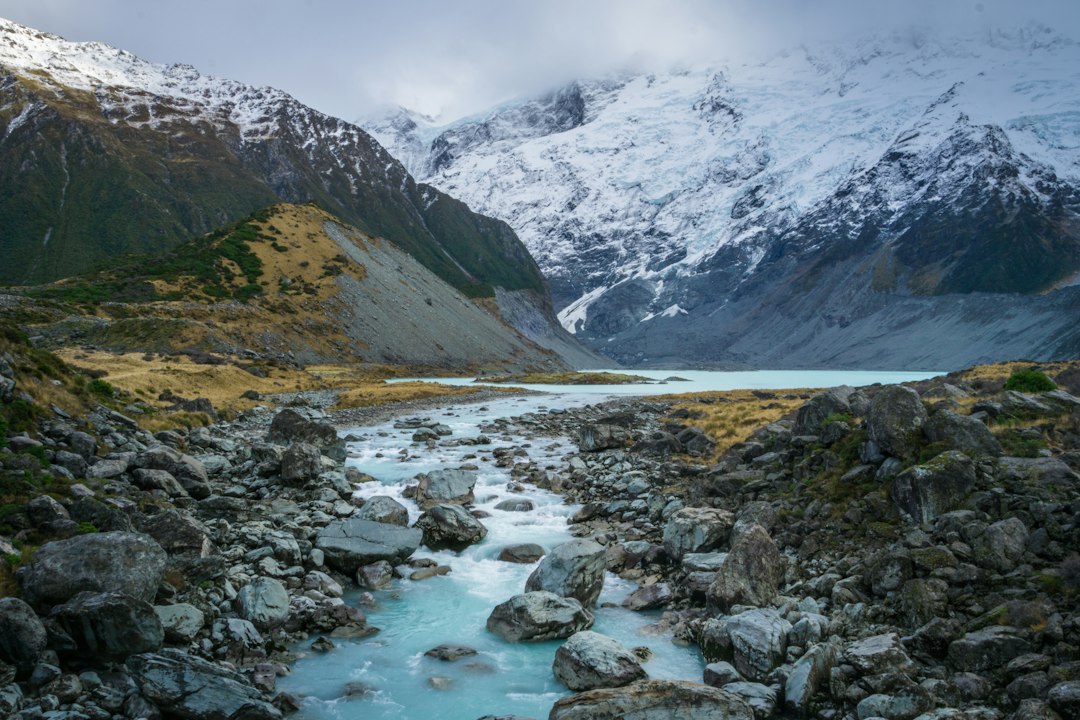
The pass itself is the highest point of the drive south from Hokitika, and the van told me so in its own way — the engine note flattening out, the temperature gauge steady, the climb through beech forest giving way to bare tussock and then, briefly, to a low saddle of alpine scrub where the road runs along the floor of a broad glacial valley. There’s a viaduct up above the road and a waterfall that drops in a single ribbon on the western side, and I stopped at both, and the kea followed me to the second one. Somewhere between the two, the weather turned from the soft grey of the West Coast to something sharper and higher and drier, which is the thing about this crossing — it’s not just a road, it’s a change of island character. The light alone tells you.
By late afternoon I was down the eastern side and the van was pointed at Hanmer Springs. The descent is fast and long, the kind of road that makes you glad of a fresh set of brakes, and the trees changed again — fewer of the beech and more of the dry, open, brown-country scrub of the rain shadow. Somewhere near the bottom I realised I’d spent most of the day on the wrong side of a mountain and hadn’t once thought about the ferry I’d booked for Picton. That felt like a good sign.
Hanmer Springs does exactly what it says on the sign. The hot pools sit at the bottom of a small town that exists almost entirely for them, and after a day of pass road and wind, the first plunge — they run the temperatures in a broad spread, from a big lukewarm family pool up to the near-scalding water of the smaller rock pools at the top, and the whole place has the air of somewhere that has been doing this a long time and sees no reason to change — is a genuine reset. I did the thing everyone does and moved between pools every few minutes, from the hottest I could stand to the coldest I could bear, until my hands went pink and my shoulders came down from somewhere near my ears.
The forest walks above the town are the part people skip, and they shouldn’t. There’s a network of them that climbs through the trees behind the pools, and after the heat, the cool air in there is a different kind of good. The path I took wound past a couple of old wooden footbridges and came out at a viewpoint over the whole basin, the town small and tidy below, the mountains behind it still holding patches of snow in their shadowed gullies. I stood there for a while with the smell of pine and the faint sulphur taste of the water still on my lips, and I didn’t take a photo.
The next morning I drove east to Kaikoura, and the road does something I hadn’t expected — it turns coastal with almost no warning, the inland brown hills dropping away and the Pacific suddenly there on the left, grey and wide and busy with swell. There are seal colonies along the shore road before you even reach the town, and the first one I found required no searching at all: a sign, a short path, and there they were, hauled out on the rocks below, a dozen or so of them lying in that floppy, collapsed way seals have, with one or two shifting position and grunting at the ones that lay too close.
Whale watching out of Kaikoura runs on the weather, and the weather ran fine — calm enough that the boat went out and spent a good while sitting over deep water waiting. I hadn’t expected the waiting to be so absorbing. There’s a rhythm to it, the watching of the water for the change in surface texture that means something large is coming up, and when the first sperm whale surfaced and lay there breathing, the sound of it carried across the water — a slow, heavy, deliberate exchange of air that went on longer than seemed possible. Then the flukes came up, and it was gone. That’s the whole show, and it’s enough. The crew knew what they were doing with the engines, keeping a respectful distance, and nobody had to be told to put their phones down.
The food in Kaikoura is a serious business and I ate accordingly — crayfish from a roadside caravan, served simply with a bit of butter and lemon and not much else, eaten on a bench with the sea and the wind and the gulls all making their presence felt. It was expensive and it was worth it and I’d do it again. I also found, on the walk back to the van, a little secondhand bookshop open late, and bought a paperback of short stories about the sea. Felt like the correct sort of souvenir.
Blenheim arrived with vineyards. There is no gentle transition — one moment you’re on the coast road, the next you’re in rows of vines stretching out on either side, the leaves turning that late-season yellow, the mountains of the Wairau in the distance. I did the obvious thing and spent an afternoon tasting. The Marlborough wines are rightly famous, and the cellars are hospitable places, but what surprised me was how much the land inside the vines looked like a place you could walk around with a picnic and forget the wine entirely. The rows are planted on a plain so flat and open that the light feels bigger than it does anywhere else on this stretch of road.
What I hadn’t expected was the food. The wineries have grown restaurants attached to them, and the one I stopped at did a plate of local produce that put the wine in the shade — lamb, greens, and a bread so fresh it was still warm when it came out. I sat out on a terrace with the vines below me and the afternoon stretching out, and did not think about the ferry.
Picton is a harbour town that exists in two directions at once. There’s the ferry terminal on one side, all queues and road markings and the steady procession of vehicles waiting to be loaded onto the crossing to the North Island, and there’s the town itself, tucked into the curve of the harbour with the green hills rising behind it and the Queen Charlotte Sound spreading out to the north like a hand of fingers. I spent the last day here doing the sort of things you do when a trip is winding down — finding a walk along the waterfront, watching the boats come and go, and going out on a short cruise into the sound to see the coves and the bush up close.
The sound is a different sort of landscape from anything on the trip so far. The hills come down steeply into the water, bush right to the edge, and the water is a deep, quiet green that makes the whole place feel sheltered and private. The boat threaded between the points and into bays where the only sign of anyone was a jetty and a couple of moored boats, and it was strange to think that this was the last thing I’d see before the van and I crossed to the other island. On the way back the wind picked up and the boat pitched a little, and the passengers who had all been at the rail on the way out found the benches on the way back.
Back at the van, parked up for the evening, I checked the ferry booking and the fuel and the tyres and all the small things you do before a crossing. The kea was several days and a whole island character behind me now, and the hot pools and the whale flukes and the vineyards were behind that. Tomorrow the van would go into a queue and onto a boat, and the second half of the trip would start from the other side of the water. I made a cup of tea and sat in the open door of the van with the harbour lights coming on across the sound, and did nothing much at all until the light went.

📷 Photos: あま あわれ (Unsplash), Samantha Fortney (Unsplash)