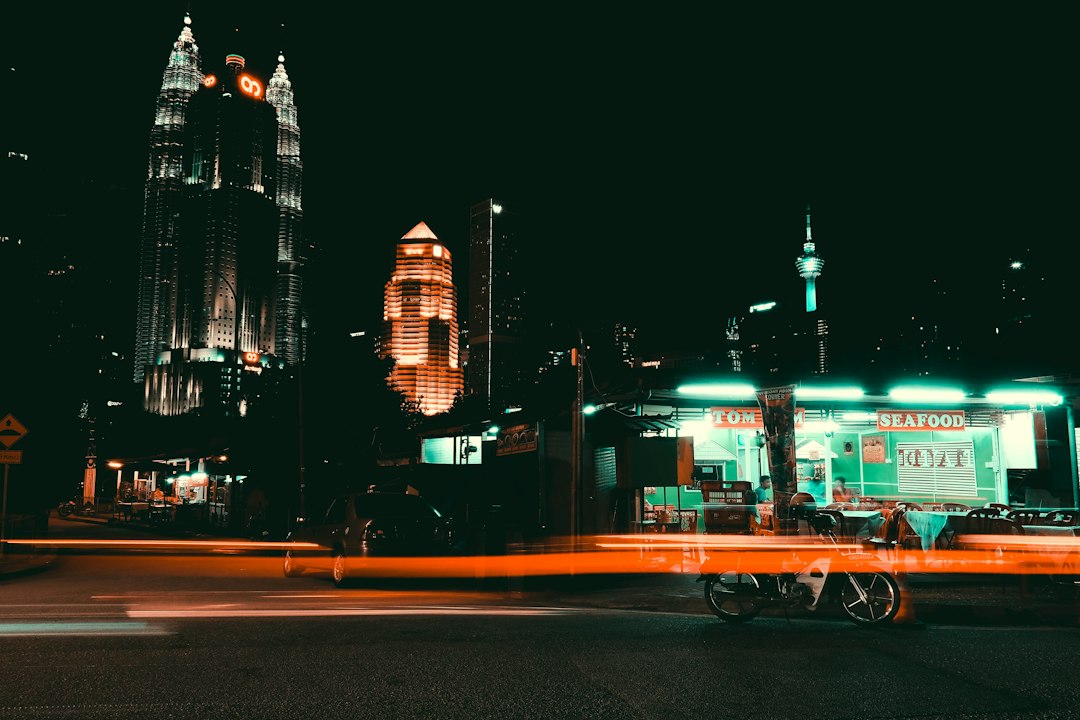
The first thing that hits me on Jalan Alor is not the smell of satay but the sound of it: a hiss and a crackle from a charcoal trough, a fan whirring against the heat, and somewhere behind it a man slapping dough against a steel counter with a rhythm you could set a watch by. The road itself is barely a road by evening. Plastic chairs creep out from the shophouses until there’s a single narrow lane left for anyone on foot, and walking it feels like moving through a corridor of kitchens where the walls are made of smoke.
What most coverage of Kuala Lumpur’s night markets misses is that the city doesn’t really have one scene. It has a dozen, and they behave differently depending on what day it is, what neighbourhood you’re in, and which dialect you hear being shouted over the woks. The famous stretches are famous for a reason. The good stuff, the stuff people who live here actually eat at, tends to sit a few streets back, quieter, cheaper, and less concerned with being photographed.
Jalan Alor is the one everybody names first, and it’s worth an evening — but understand what you’re getting. This is the showpiece, the stretch that has been catering to visitors for decades. The seafood stalls at the northern end put their live tanks right out on the pavement, and the price of a plate of grilled stingray is often negotiated in a tone that assumes you’re a tourist. I still go, but I go for the stalls rather than the seafood palaces: the small cart selling putu piring, a steamed rice-flour cake filled with melted palm sugar, is the kind of thing that disappears by the time the road gets genuinely busy. Eat it standing, with the paper still warm in your hand, and the sugar runs down your wrist.
The quieter truth is that the markets rotate. Ramadan turns entire blocks into a different city at dusk, with the bazaar off Jalan Tuanku Abdul Rahman running long rows of stalls that exist for a month and then vanish. On an ordinary Tuesday in the middle of the year, the same street is just traffic and tailors. You either happen to be here when the bazaar is on or you don’t.
For the everyday version, I keep coming back to the roving pasar malam, which sets up in a different neighbourhood each night of the week. There’s one that runs near Bangsar, one in Taman Tun, one in Cheras — and the character of each is genuinely different, not just the crowd. At the Bangsar version the pace is brisk and the food skews toward what a young office crowd wants: grilled skewers, laksa in paper cups, a man blending sugarcane juice with a press that has clearly been repaired more than once. At the Cheras market it feels slower, more like a family doing the weekly shop, with vegetables laid out on tarpaulins and a woman selling nothing but three kinds of fried banana.
I got lost looking for the Cheras one the first time, because the market had moved to a different car park from the one I’d mapped out. The neighbourhood parking arrangement turns out to matter more than any online listing — the pasar malam packs up and relocates into whichever lot the local council has made available, and signage is more of a suggestion than a promise. I eventually found it by following the sound of a generator and the smell of fish being grilled over coconut husks, which drifted two streets away. That’s the sort of navigation detail nobody prints, because it changes.
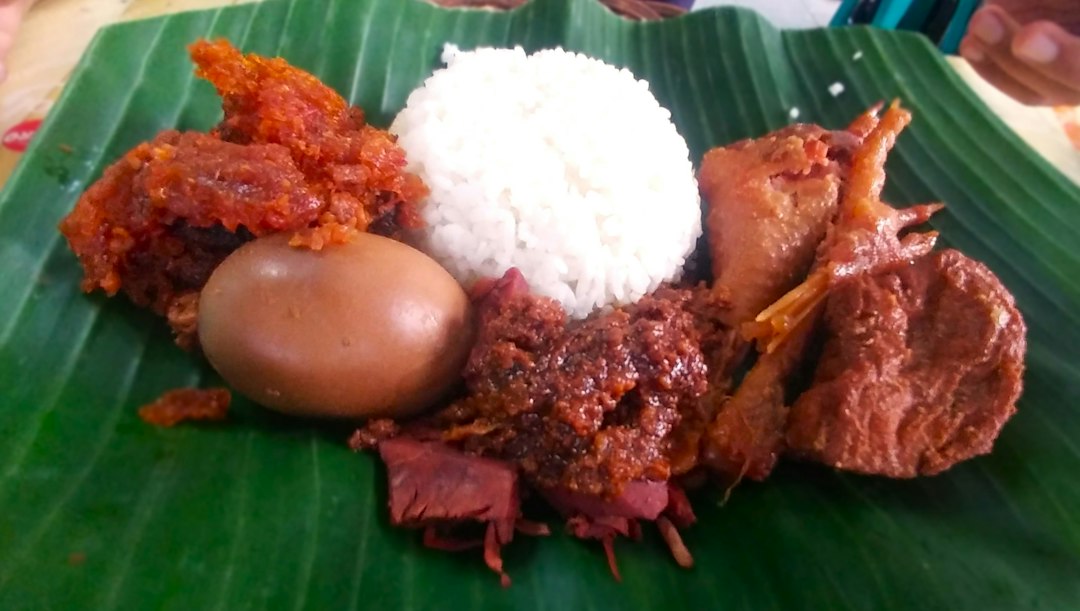
The standout for the sheer density of small producers is the market around Kampung Baru, the last big Malay enclave sitting right under the shadow of the skyscrapers. This is where I found a stall making kuih in colours so saturated they looked almost artificial, except the vendor told me the green came from pandan and the pink from nothing more exotic than food colouring. “The pink is cheating,” she said, and laughed, and looked a bit away. The kuih are sold in little plastic trays, four or five to a stack, and the whole tray costs less than a coffee in the city centre. The stall next door was a man with a single wok making carrot cake — the savoury radish cake, not the dessert — cut chunky and fried until the edges went crisp against the soft middle.
What I like about Kampung Baru is that it doesn’t perform. There’s a wooden house with a satellite dish on the roof, a mosque, and then a wall of glass towers behind it, and the food stalls sit in the gap between the two worlds. If you’re there on a Friday evening, the pace picks up as families come out. The lighting is fluorescent and unflattering, the ground is uneven, and the plastic tables wobble. None of that matters once the food arrives.
The Indian-Malaysian night market scene gets less attention than it deserves. Brickfields, the old Indian quarter not far from KL Sentral, has stalls that run late, and the banana-leaf restaurants that line the streets stay open well past the pasar malam hour. On a recent evening I ate a plate of idli and sambar at a place with ceiling fans and no air conditioning, and the sambar was thin and sour in a way I’d been missing. Down the road, a man was selling vadai from a cart, frying them to order so the crunch on the outside survived the trip back to the table. It’s the sort of thing you eat standing up, tilting the paper to keep the oil from running down your arm.
There’s a specific smell to Brickfields at night — jasmine from the flower stalls mixed with frying oil and the faint diesel of a passing bus, and somewhere behind that the sharp sweetness of incense from the temple. It doesn’t smell like a postcard. It smells like a working neighbourhood.
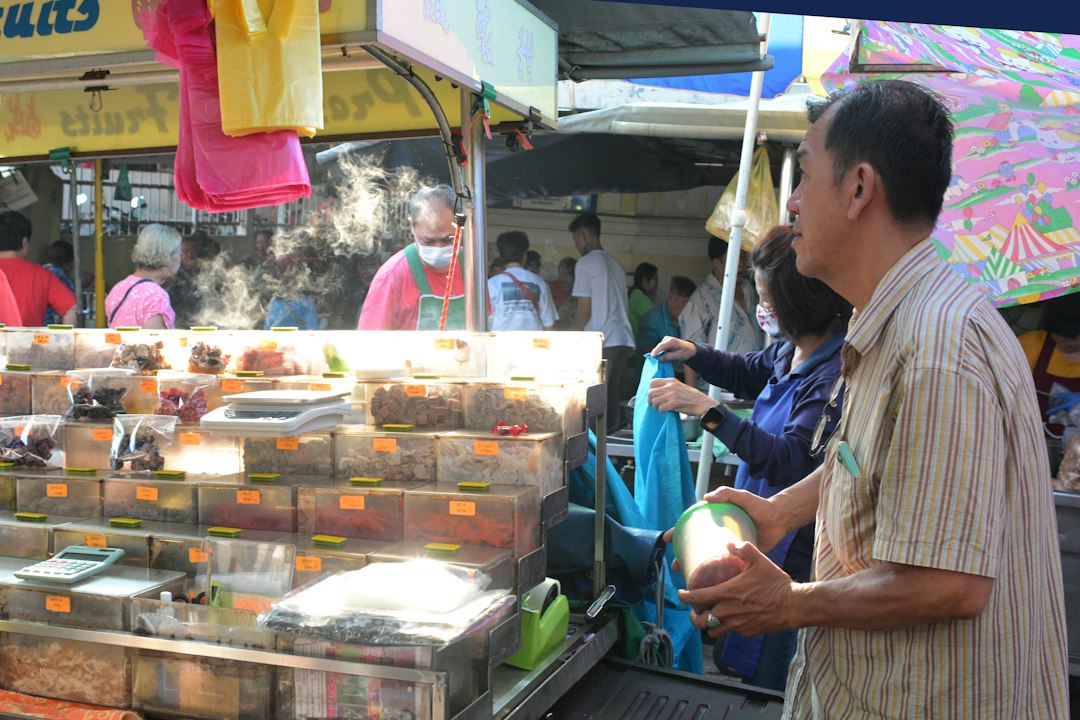
The Petaling Street market in Chinatown is the one most first-timers gravitate toward, and I understand why: it’s central, it’s covered partly by awnings, and the air is thick with the smell of roasting chestnuts and herbs. The covered section is a gauntlet of knock-off watches and phone cases, but push past that into the lanes behind and the food changes. I found a stall selling nothing but fish-ball soup and another making apam balik, the thick folded pancake with a filling of crushed peanuts and sweet corn, and the woman running it turned the pancake with a flick of the wrist that suggested decades of practice.
The inconvenience I keep running into here is the negotiation. Prices bounce depending on who’s asking, and the opening number can be double what a local pays. It’s not sinister, it’s just the way a market this central works. My approach now is to watch what the person ahead of me pays, then order the same thing and hand over roughly that amount. It mostly works, and when it doesn’t, the food is still good enough that I don’t mind the small overpayment.
What ties all of these together is a rhythm that isn’t really about food. The markets run on the working day of the people running them: setup happens in the late afternoon, the peak is early evening, and the whole thing winds down as the city cools. If you arrive as the stalls are being folded up, you’ll get the last of the food but the atmosphere has gone flat. The hour before the wind-down, when the crowd thins but the woks are still going, is when I find the vendors most willing to talk and the portions most generous.
There’s one thing I haven’t worked out yet. I keep trying to find a single reliable way to know which pasar malam is happening where on any given night, and every source I’ve tried disagrees with the next. A man running a satay grill in Bangsar told me one thing: “The council, they move it, nobody tells us, we just drive around looking.” He shrugged and turned back to the coals. The schedules change, the informal markets shift, and the WhatsApp groups that actually track it aren’t something an outsider can join. So I’ve settled on a looser method: I ask the person at the next table, or I follow the generators. It works often enough, and the getting-lost part is its own small pleasure. The stalls are still out there, folding and unfolding, whichever car park has been assigned this week.

📷 Photos: nik radzi (Unsplash), nik radzi (Unsplash)