The ferry from Central Pier left well after the evening rush, which meant the sky was already doing that Hong Kong thing where the city lights and the last of the daylight compete for a few minutes before the city wins. We had the upper deck mostly to ourselves, a handful of other passengers reading or sleeping, the boat cutting through the channel past Lamma and then turning south toward the outer islands. The plan was simple: find a place to sleep on Lantau that wasn’t a hotel, wasn’t a guesthouse, and wasn’t on dry land. What we found instead was a lesson in how much noise displacement creates when the water decides to argue with the hull.
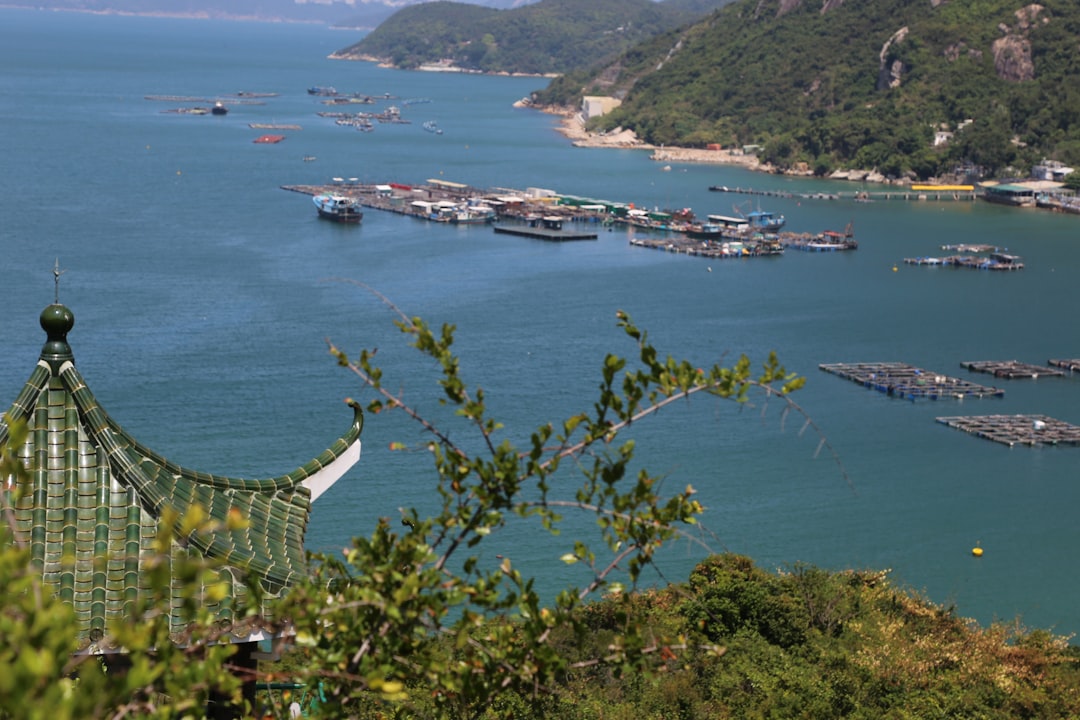
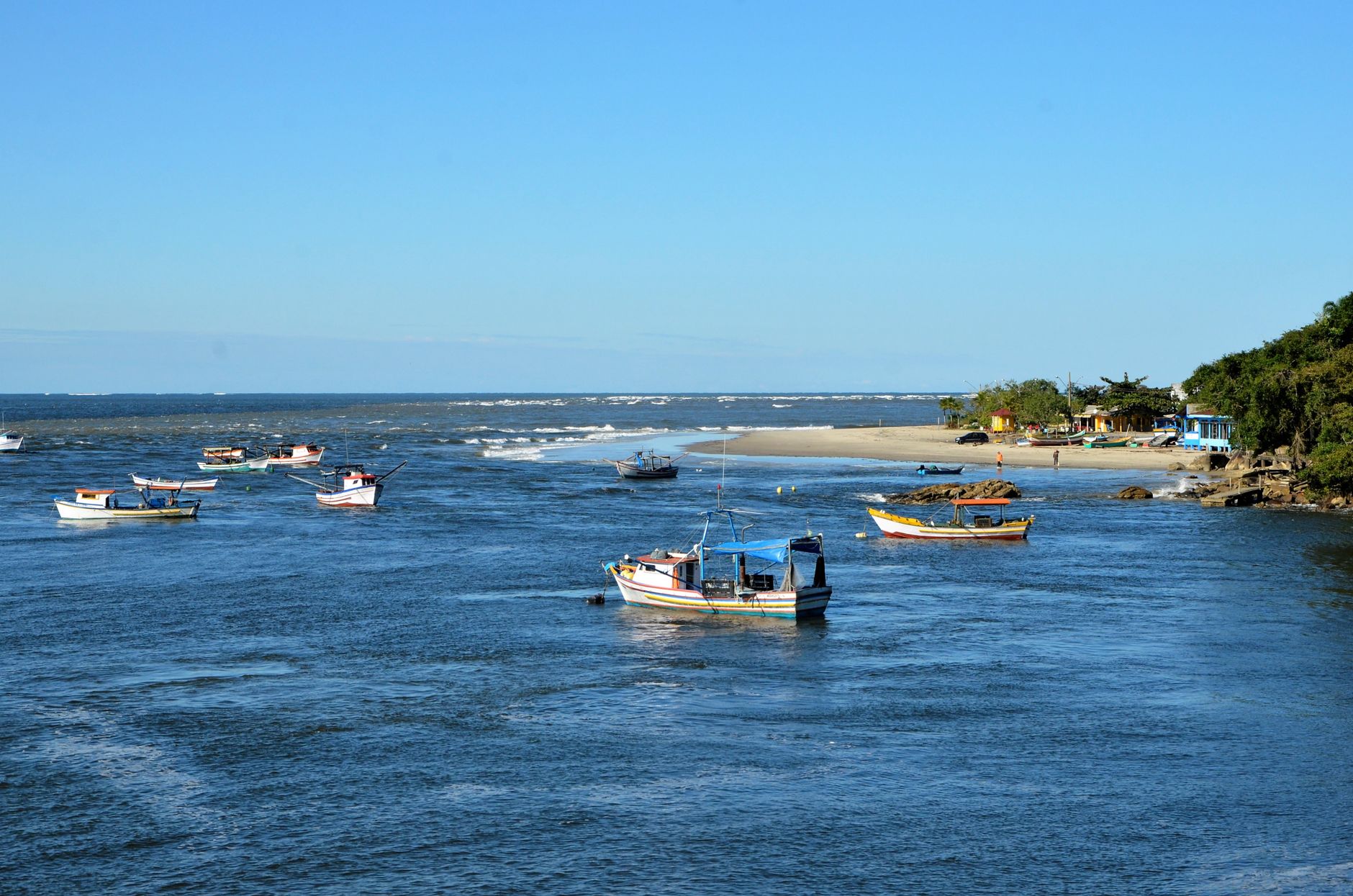
The place calls itself a hostel, but that word undersells the part where it floats. Moored in a small fishing harbour on Lantau’s southern coast, the boat was a converted wooden trawler, maybe thirty feet at the deck, with bunks crammed into the former fish hold below. The owner, a man named Mr. Yeung who had fished these waters for decades before retiring, met us at the end of a rickety gangplank. He handed us each a set of thin sheets and a pillow that felt like it had been stuffed with old rice sacks. “You sleep down,” he said, pointing to a hatch in the deck. “Water under you all night.” He said it like it was a selling point. Maybe for some people it was.
Below deck, the space was tight enough that you couldn’t stand fully upright unless you were directly under the hatch. Four bunks lined each side, stacked in pairs, with a narrow aisle between them. The wood of the hull was dark with age and moisture, warped in places where the planks had given up trying to stay flat. A single bulb hung from a wire in the centre, casting the kind of light that makes everything look like it’s been underwater for a long time. The smell was diesel and salt and something older — the accumulated residue of decades of fish storage that no amount of cleaning would ever fully remove.
We chose the lower bunks on the port side, reasoning that being closer to the waterline might mean less sway. That reasoning turned out to be wrong. The boat was moored bow-first into the harbour, tied to a concrete jetty with ropes as thick as a forearm, but the harbour itself offered little protection from the swell coming around the southern tip of the island. Every few seconds, the hull would nudge against a fender made of old tyres, producing a sound like someone dragging a heavy piece of furniture across a wooden floor. And beneath that, the actual sensation of the water moving — not violently, not dangerously, but persistently — against the underside of the planks.
Sleep came in fragments. We lay on our backs, watching the single bulb sway slightly with each roll of the boat, listening to the creak of wood that sounded less like a ship and more like an old house settling, except the house kept changing its mind about which way to settle. Around midnight, a neighbouring bunk’s occupant — a German woman in her forties who had been kayaking around the islands for a week — climbed out and sat on the edge of the hatch, staring at the dark harbour. “I’ve been on the water for days,” she said quietly, more to herself than to us. “But this is different. This feels like the boat is breathing, or something like that.” She wasn’t wrong, and her description didn’t help us sleep any better.
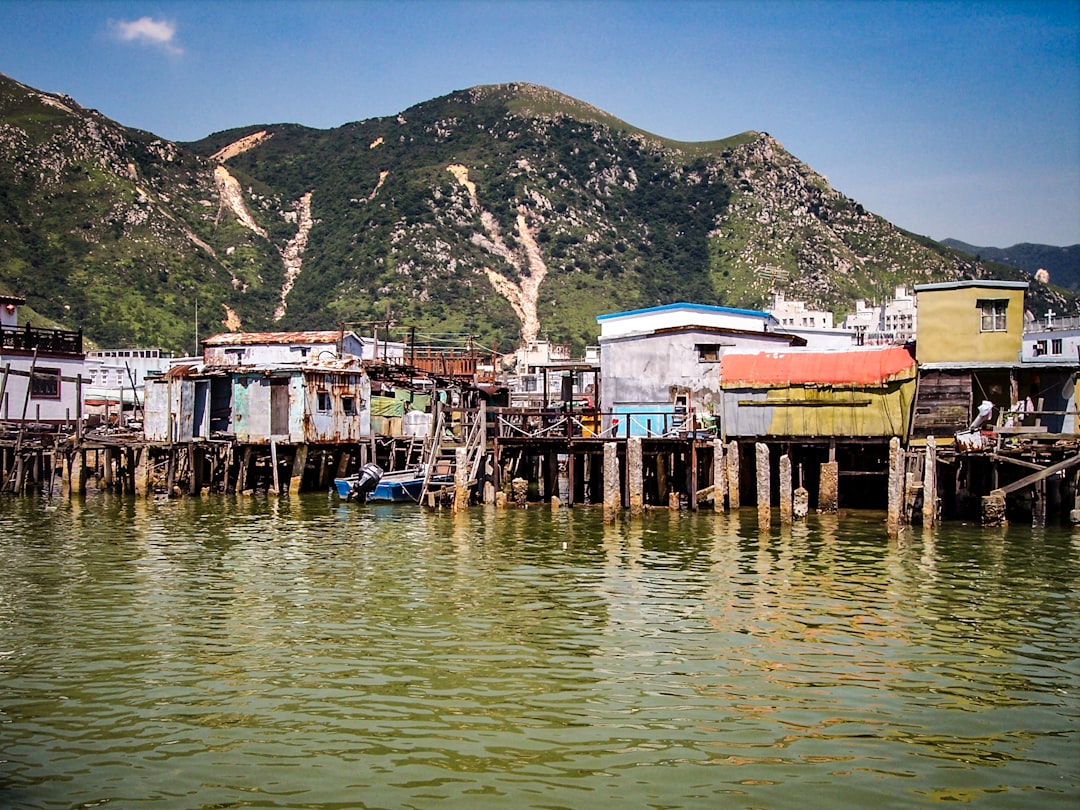
By three in the morning, we had given up on deep rest and accepted the kind of half-sleep that comes in twenty-minute cycles, punctuated by the shifting of weight as other guests turned over in their bunks, the occasional splash of something against the hull, and the distant rumble of a ferry passing through the channel on its way to somewhere else. At one point, we got up and climbed onto the deck to see what the harbour looked like in the small hours. The answer: dark shapes of other fishing boats, lights from a village on the hillside above, and the feeling that the water was blacker than any night sky we had seen in a long time.
Mr. Yeung appeared at first light, moving across the deck with the easy balance of someone who had spent his entire life on boats. He carried a thermos of coffee and a stack of paper bowls containing congee, the rice porridge topped with preserved egg and shredded pork. “Eat,” he said, setting the bowls on a low table near the stern. “Good for stomach. Boat life, you need strength.” The congee was hot and salty and exactly what a body wants after a sleepless night on cold water. We ate it sitting on the deck, watching the morning light spread across the harbour.
The other guests emerged one by one. A young couple from Singapore who had found the hostel through a budget travel forum. A solo traveller from Finland who was photographing every fishing village in the South China Sea. The German kayaker, who was already packing her gear for another day on the water. None of them had slept well either. But none of them seemed to mind.
After breakfast, Mr. Yeung showed us around the boat. The engine room, long since gutted of its original machinery, now held a small generator and a water tank. The wheelhouse, where he had once stood for hours navigating the waters around the islands, had been converted into a common area with cushions and a bookshelf filled with dog-eared paperbacks in half a dozen languages. He pointed to a faded photograph taped to the wall, showing the same boat in its fishing days, netting a haul of mackerel so large that the deck was barely visible beneath the silver mass. “Thirty years,” he said. “Every day, same water. Now I let other people sleep on it.”
The toilet situation deserves its own mention. It was a marine head, the kind that requires a manual pump and a lot of patience, and it was located in a tiny compartment at the stern that smelled of bleach and salt and something that the bleach hadn’t quite reached. Using it involved a precise sequence of valves and levers that we never fully mastered, and the first attempt resulted in a small flood that we spent ten minutes mopping up with towels that were already damp. By the second day, we had learned to hold it until we could walk to the public toilets onshore, which were not much better but at least didn’t require a degree in maritime plumbing.
We took a small dinghy that Mr. Yeung kept tied to the stern and rowed out to a sandbar about a hundred metres from the boat, visible only at low tide. There, with the water barely ankle-deep and the sun directly overhead, the world became quiet in a way that felt deliberate. The fish hostel, with its creaking hull and sleepless nights, was still within sight, but it no longer felt like a problem to be solved.
Back on the boat that evening, the second night was easier. Not because the water had calmed — it hadn’t — but because we had stopped fighting the movement. The sway became a rhythm, the creaks became a language we were starting to understand. We fell asleep sometime after ten, pushed there by exhaustion and a bowl of noodles that Mr. Yeung had cooked on a single-burner stove, and woke once to the sound of rain pattering on the deck above.
The next morning, we took the early ferry back to Central. The city felt different — louder, faster, more insistent. The harbour in Hong Kong proper is a working harbour, crowded with container ships and ferries and the constant churn of commerce. The fishing harbour on Lantau, with its derelict boats and its one floating hostel, felt like a remnant of something older, something that was slowly being replaced by marinas and luxury developments. Mr. Yeung said he had been offered money to sell the boat several times. He had refused each offer.
What does a place to sleep need to provide? A hotel room offers comfort, privacy, predictability. The fish hostel offered none of those things. What it offered instead was the sense of being held by something that had its own history, its own reasons for existing, its own way of moving through the world. It was uncomfortable and strange — and memorable in a way that a clean, quiet room could not be.
The total cost for two nights: HKD 380 per person, which included breakfast both mornings and the use of the dinghy. The congee was free. The lessons about what constitutes a good night’s sleep were not itemised on the bill.

📷 Photos: Jorge Luiz Souza de Araujo (Pexels), Amr Raj (Pexels)