The horn sounded at Gilimanuk like a water buffalo clearing its throat — low, patient, entirely unhurried. We had been parked for perhaps ninety seconds at the ferry terminal, long enough for the man in the faded sarong leaning against the ticket booth to look up once, decide we weren’t going anywhere yet, and look back down at his phone. The ferry from Java deposits you here, at the westernmost edge of Bali, and the road that runs east from the port is the kind that makes you glad you rented something small. Our campervan, a Daihatsu Grand Max with a pop-top roof and a stove we never quite learned to trust, fit the narrow lanes well enough. The rice paddies on either side were almost fluorescent under the late-morning sun, and the first thing we noticed — after a week of Java’s relentless heat — was how much cooler the air felt once we crossed the strait. Not cool, exactly, but less punishing. The humidity had a different texture here, lighter, as if the island had been designed with relief in mind.
Lovina, on the north coast, is a town that doesn’t try to impress you on arrival. The black sand beaches stretch in a long, unbroken curve, and the water is calm — almost unnervingly so — because the reef breaks the waves long before they reach shore. We parked the campervan on a patch of gravel behind a warung that sold grilled fish and cold Bintang, and the owner, a woman named Wayan, waved us toward a spot near the water tap. “You can sleep here tonight,” she said, not as a question. We ate ikan bakar with sambal matah that evening, the raw shallot and chili still sharp on our tongues, and watched the fishing boats come in. The dolphins are the advertised attraction here — everyone comes for the dawn boats — but the quiet after the last boat returned was what lingered. The black sand holds the heat of the day long after sunset, and walking on it barefoot in the dark felt like standing on a warming stone.
We had been warned about the dolphin tours. “They’ll take you out, show you a fin from fifty meters, and call it a success,” a German traveler in our homestay in Yogyakarta had said, shaking his head. But the tour we joined the next morning was different — a small outrigger with four passengers, not the packed speedboats we saw farther down the beach. The captain, a man in his fifties who introduced himself as Komang, seemed less interested in getting close to the dolphins than in finding the right spot and letting them come to us. We motored out into the calm sea just as the sky began to lighten, and for twenty minutes there was nothing but the sound of the engine and the low voices of the other passengers. Then Komang cut the engine and pointed. A pair of dolphins surfaced perhaps fifty meters off the starboard side, their backs dark and slick against the grey water. They did not perform. They simply swam, and we watched them until they disappeared, which took all of ninety seconds but felt longer. Back on shore, we ate nasi goreng at a stall near the beach, the rice still hot from the wok, and watched the tour boats coming in one by one. Some had passengers snapping photos of fins in the distance. Ours had been quieter. We preferred it that way.
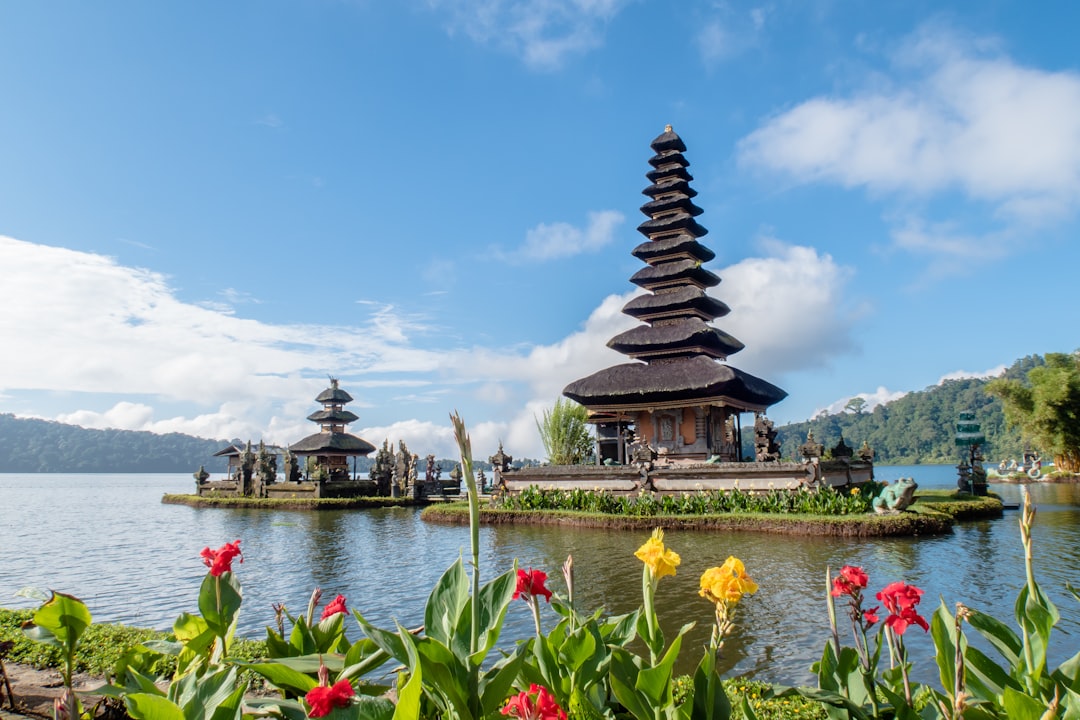
The drive to Bedugul the next morning took us through the mountains, and the temperature dropped with every hundred meters of elevation. By the time we reached the lake, we had pulled on long sleeves for the first time in days. Lake Beratan sits at about 1,200 meters, and the Pura Ulun Danu temple complex perches on the shore as if it grew there. The fog came and went in sheets, sometimes obscuring the temple entirely, sometimes revealing it in sharp focus against the grey water. We walked the grounds slowly, not because there was so much to see — the complex is compact — but because the air at this altitude made everything feel deliberate. The botanical garden, a few kilometers down the road, is the sort of place where you could spend an entire day without covering half of it. We spent three hours, mostly wandering through the section dedicated to orchids. A gardener pruning frangipani trees told us that the garden holds many species, or something like that — we didn’t try to count. What we noticed instead was how few other visitors there were. At the lake temple, the crowds had been modest but present. Here, we passed maybe a dozen people in three hours, and most of them were local families picnicking under the giant banyans.
A small unplanned thing happened on the road between Bedugul and Ubud. We had stopped for petrol at a roadside station — the kind where an attendant pumps it by hand from a glass cylinder — and the man behind the counter, seeing the campervan and our foreign faces, asked where we were headed. When we said Ubud, he shrugged and said something in Indonesian that we didn’t quite catch, then pointed at a narrow road leading away from the main route. We took it, not entirely sure why. The road wound through a valley of coffee plantations, and after about three kilometers, we came to a small clearing where a woman was roasting beans over an open fire. She offered us a cup — thick, almost syrupy, with a bitterness that settled on the back of the tongue — and we sat on plastic chairs under a corrugated roof, watching the smoke rise through the trees. We never did learn her name, and the coffee was not particularly good by any standard, but the detour changed the mood of the drive. Ubud, when we reached it an hour later, felt less like a destination and more like an interruption.
Ubud itself is the kind of place that demands you form an opinion quickly. The main streets are choked with scooters and boutiques selling the same batik sarongs and wooden frogs, and the traffic at the intersection near the palace has a chaotic logic that takes days to read. But the rice terraces at Tegallalang, a twenty-minute drive north, are the reason most people come, and they do not disappoint. We arrived in the late afternoon, when the light slants low and the terraces catch it in bands of green and gold. The path through the paddies is well-trodden but worth walking, if only for the moment when you round a corner and the whole valley opens below you. A farmer carrying a basket of rice seedlings passed us on the narrow path, and we stepped aside to let him through. He smiled, not at us exactly, but at something over our shoulders, and continued on his way. The artisan villages scattered around Ubud — Batubulan for stone carving, Celuk for silver, Mas for wood — are hit-or-miss, depending on your tolerance for being shown into a showroom. The best encounter we had was in Batuan, where a painter named Gede let us watch him work on a canvas in the open courtyard of his family compound. The painting was a scene from the Ramayana, dense with detail, and he worked with a brush so fine it looked like a single hair. He did not try to sell us anything, and we did not ask the price.
The trek up Gunung Batur began at half past three in the morning, which is to say, it began in the dark. We had driven to the trailhead the night before and slept in the campervan in a parking lot near the lake, waking to the sound of rain on the roof — not the best omen for a sunrise hike. But by the time we met our guide, a wiry man named Putu who carried nothing but a flashlight and a pack of clove cigarettes, the rain had stopped. The trail is steep and loose, volcanic scree that shifts underfoot with every step, and the dark makes it harder. Putu moved at a steady pace, pausing every fifteen minutes or so to let us catch our breath, and we noticed that he did not use his flashlight — he knew the path by feel. The summit came into view just as the sky began to lighten, and we reached the crater rim with perhaps ten minutes to spare before the sun broke the horizon. The view from the top is the sort that postcards cannot quite fake: the lake below, the cone of Gunung Abang in the distance, the steam rising from vents in the crater floor. Putu cracked an egg into the volcanic steam to cook it, a ritual that every guide on the mountain seems to perform, and we ate it with a piece of bread and a cup of sweet coffee. The descent took half the time of the climb, the loose gravel sending us sliding down in long, controlled strides. By nine in the morning, we were back at the campervan, our legs trembling with the particular exhaustion that only a volcano provides.
Amed, on the east coast, feels like a reward for having made it across the island. The coastal road that leads there from Batur winds through dry hills and past salt pans, and the landscape changes from lush to arid in a matter of kilometers. The fishing villages that line the coast — Amed, Jemeluk, Lipah — are strung together along a single road, and the water here is clear in a way that the north coast’s was not. We parked the campervan at a homestay in Jemeluk, where a bamboo deck overhung the water and a woman named Made offered us cold drinks and a place to stay for as long as we wanted. The snorkeling at Jemeluk Bay is the main draw, and it delivered. We swam out past the fishing boats and found the reef dropping away into deeper water, the coral heads dense with anthias and parrotfish. A hawksbill turtle surfaced perhaps ten meters away, took a breath, and disappeared back into the blue. The water temperature was perfect — bath-warm, but with a current that kept it from feeling still — and we stayed out until our fingers pruned and the sun began to angle toward the horizon.
The last evening in Amed, we walked along the road that runs parallel to the beach, past the warungs and the dive shops and the women weaving palm offerings on their front steps. A fisherman was mending his net in the fading light, and he nodded as we passed. We had driven across the island in six days, from the black sand of the north coast to the volcanic heights of the center to this dry, quiet corner of the east, and the campervan had been the right vehicle for it — not because it was comfortable, which it was not, but because it meant we never had to ask where we were going to sleep. Every day ended at a new place, and every place had its own rhythm.
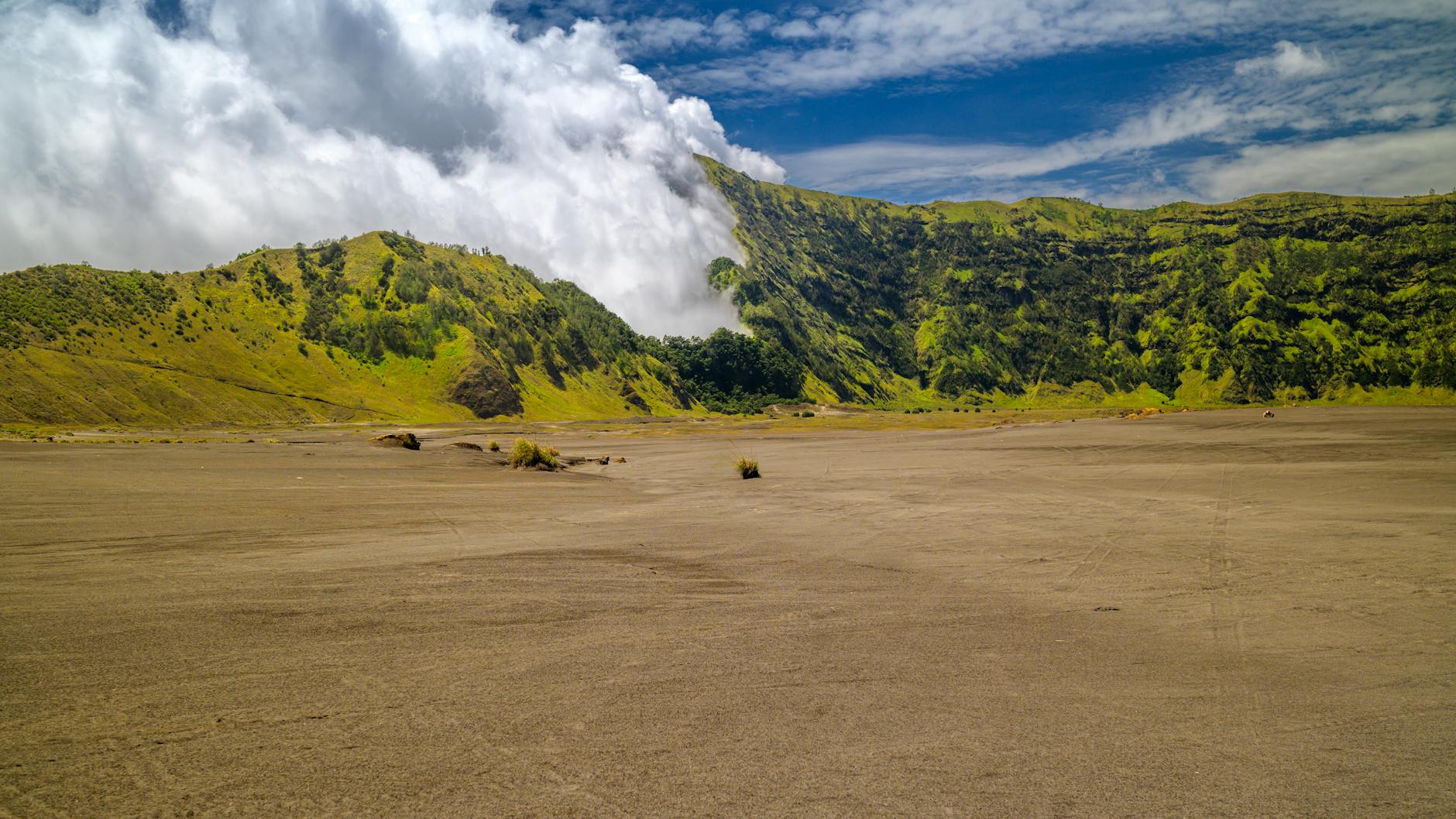
📷 Photos: Daniel Lee (Pexels), Daniel Lee (Pexels)