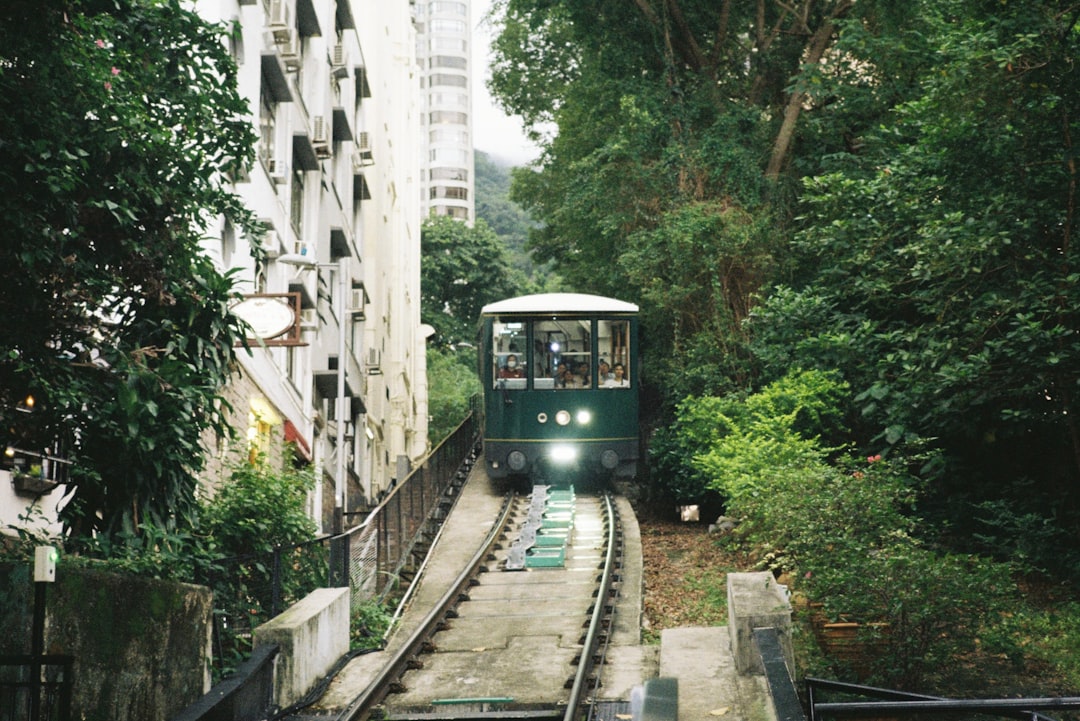
The escalator that carries passengers up through Central to the Mid-Levels is, at nearly any hour, a moving diorama of Hong Kong life. Tourists film the whole ride. Commuters lean against the handrails, scrolling phones. Couples step off at Cochrane Street, at Staunton, at the wrong stop entirely and have to double back. It’s a well-known cinematic landmark—the same stretch where Officer 663, played by Tony Leung, stood waiting near the end of Chungking Express—but the escalator itself was never really the destination. The rooftop was. And finding that rooftop turned out to be a different kind of cinema entirely.
The final scene of Wong Kar-wai’s 1994 film shows Faye, played by Faye Wong, standing on a rooftop overlooking the escalator, holding a folded boarding pass as if it might be a ticket to anywhere. She watches 663 approach, and the camera holds the shot long enough that the whole city seems to hang in the balance. It’s the kind of sequence that makes viewers want to stand on that exact spot themselves, even twenty-plus years later. The trouble is, the film gives almost nothing away. No street signs. No building numbers. Just a wide sky and a railing and the escalator sliding below.
For years, a handful of dedicated film fans debated the location. Some pointed to the Mid-Levels escalator’s upper reaches, near the junction with Conduit Road. Others argued for a residential building on Shelley Street. The forums turned over the same few grainy screenshots again and again, each crop suggesting a different angle, a different roofline. Nobody seemed to have actually gone up there and confirmed it—or if they did, they weren’t sharing.
The building sits at the corner of Staunton Street and Shelley Street, just where the escalator takes a brief pause before continuing its climb. From street level, it’s unremarkable: a midrise residential block with a convenience store on the ground floor and a row of awnings in faded blue. The entrance is narrow, tucked between a Chinese pharmacy and a shop selling dried seafood in glass jars. The smell hits before the door does—dried scallops and fish maw and salt, the kind of scent that tells a visitor what part of town they’re in before a map ever could.
The door requires a resident’s keycard, which seems, at first, like the end of the search. But the building has a service entrance around the back, through a narrow alley that most pedestrians walk straight past. A metal gate, sometimes propped open for deliveries, leads up a concrete staircase that smells of bleach and old newspaper. The stairwell is dim, the light switch a timer that clicks off after thirty seconds. It’s the kind of space designed for nobody to linger. And yet every step up feels like it could be the one that breaks into the open air.
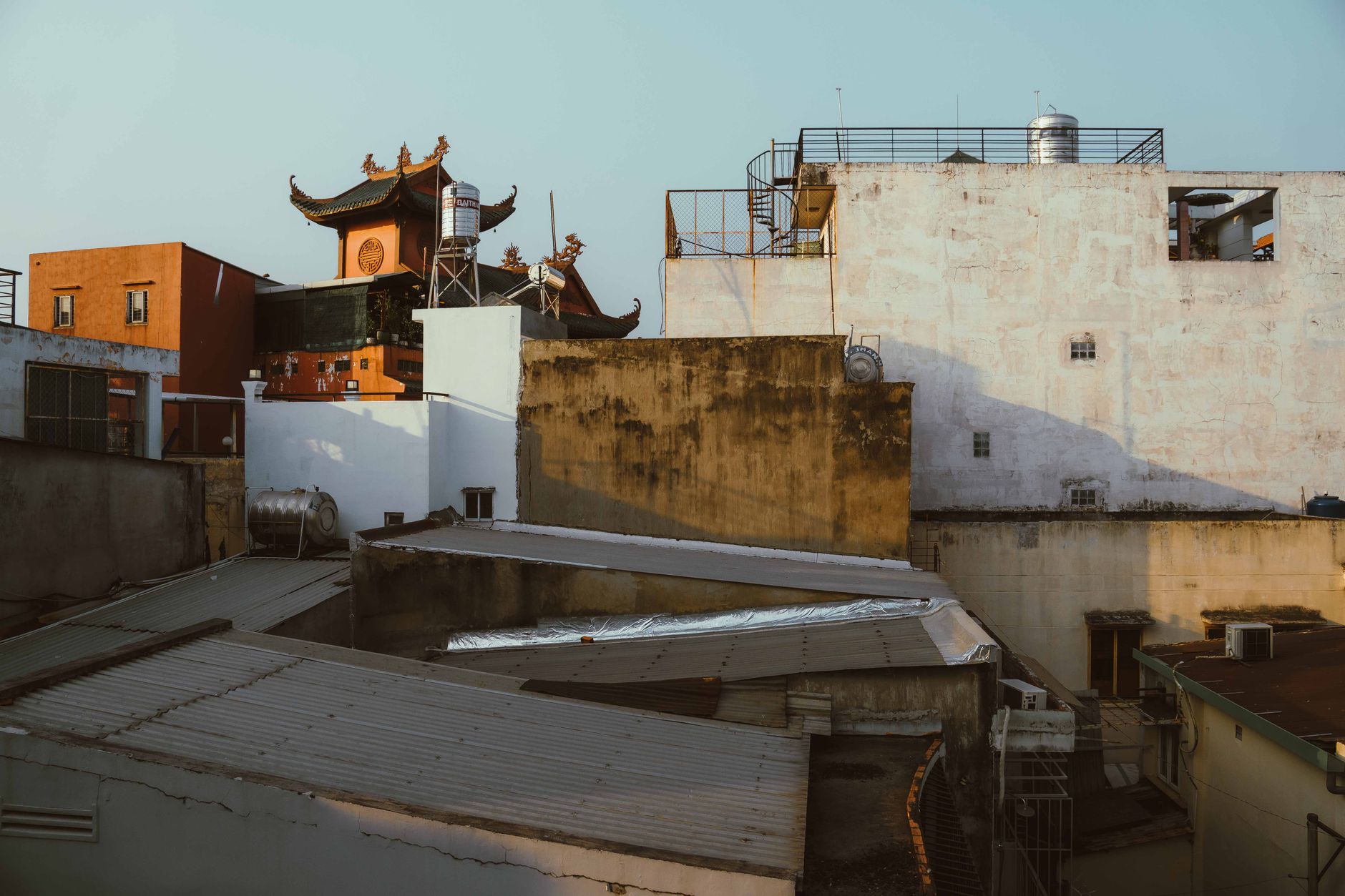
The rooftop itself is not maintained as a viewing platform. There is no signage, no safety railing that would satisfy a modern building inspector. What is there: a concrete floor painted a faded grey-green, a scattering of air-conditioning units, a television antenna bolted into one corner, and a low wall at the edge. From that wall, the view opens exactly as it does in the film. The escalator cuts diagonally across the street below. The buildings across the way rise in a staggered line, some old, some new, some with bamboo scaffolding wrapped around their facades. The mountain looms behind. Everything looks smaller now than it did on screen—real cities always do—but the geometry of the shot is unmistakable.
It is not a place designed for tourists. There are no markers, no plaques, no explanation of why this particular patch of concrete matters. The only evidence that anyone else has made the same discovery is a small faded sticker, half peeled away, stuck to the base of the antenna pole. It looks like it once held a film frame, but the image has long since washed out. Locals who live in the building tend not to know what the rooftop is famous for. “I don’t go up there,” one resident said through the crack of a doorway. “Too hot, or something like that.” The rooftop’s anonymity, it turns out, is part of its charm. It doesn’t need to be discovered. It just is.
Timing matters. The escalator runs in one direction until 10:30 AM—downhill—and then switches to uphill for the rest of the day. The film sequence takes place in late afternoon, when the light is low and the shadows stretch across the pavement. That’s the best time to stand on the rooftop, too. The sun, sinking behind the Peak, casts the whole Mid-Levels in an amber that makes even the air-conditioning units look cinematic. The escalator below carries its steady load of passengers, most of whom never look up. One or two do. On the roof, it’s hard not to feel like a figure in a frame.
The search for the rooftop yields no museum, no gift shop, no photo op with a cutout of Faye Wong. What it offers instead is a recalibration—the chance to stand in a space that cinema transformed into something mythic, and see that the mythic was always just a quiet rooftop above a fish-smelling alley. The city, from up here, is not a movie set. It’s a place where people light up cigarettes and argue on the phone, and somehow that prosaic everydayness is exactly what makes it worth finding.
Across town, the Chungking Mansions—the other half of the film’s title, a labyrinth of guesthouses and electronics stalls and curry houses—is a different kind of pilgrimage entirely. The Mansions are chaos and noise and the smell of frying garlic and the clatter of money changing hands. The rooftop is its opposite: still, quiet, a space for watching rather than participating. Together, they make up the city that Wong Kar-wai captured on film—not an either/or, but a both/and.
A six-dollar MTR ride from Tsim Sha Tsui to Central, then a walk through the escalator’s mechanical lung, and suddenly the search is not academic anymore. It is a hot concrete slab underfoot and the sound of a delivery truck double-parking below and the slow realization that the film’s final image came from somewhere real, somewhere that still exists, somewhere that doesn’t know it’s famous.
Months later, the people who make this trip tend to say the same thing: it’s not the destination but the looking for it. The alley behind the building. The stairwell timer. The moment the keypad beeps and the door doesn’t open.

📷 Photos: Theodore Nguyen (Pexels), Pixabay (Pexels)