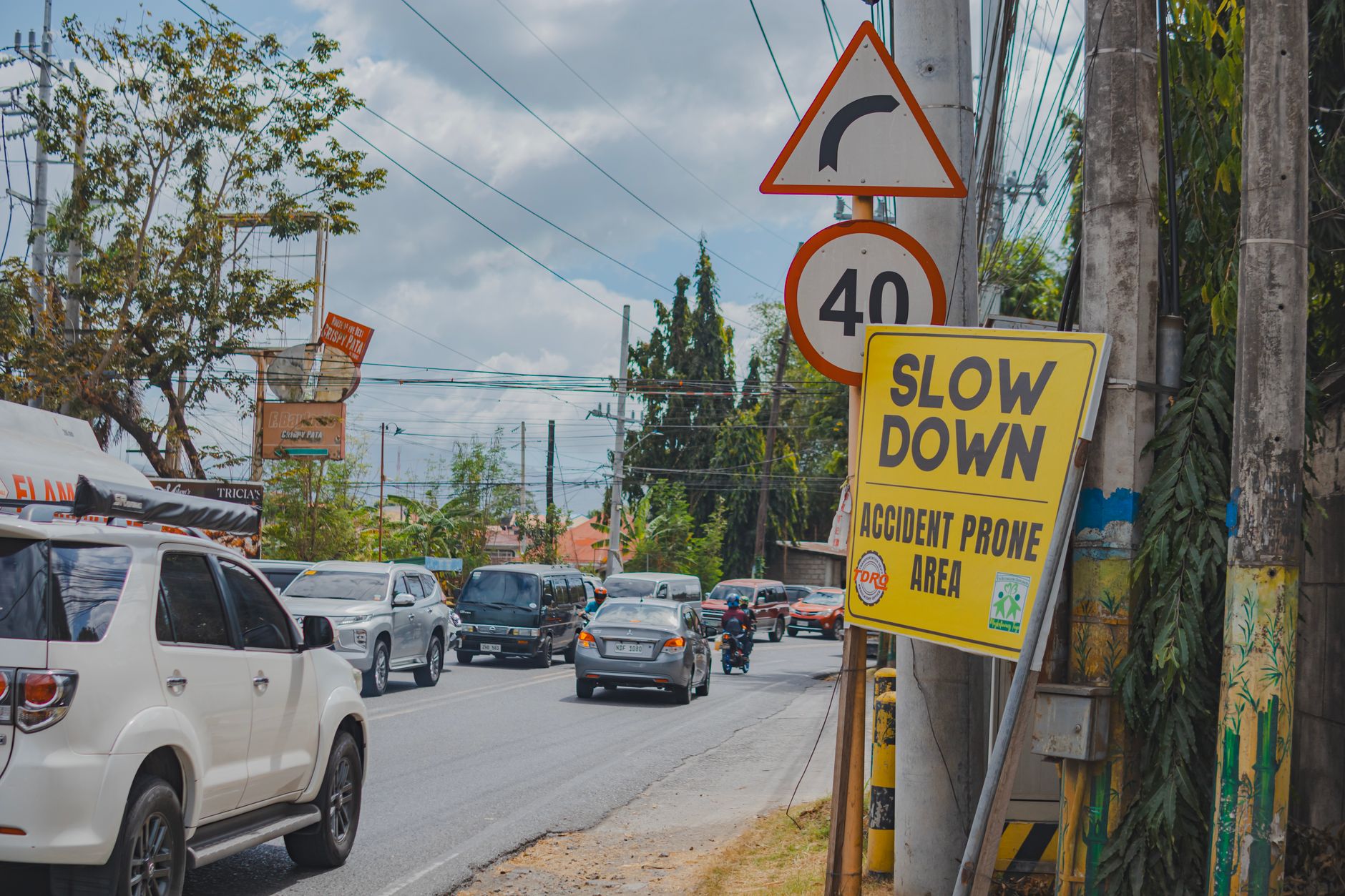
I was three hours out of Manila when the driver pulled over at a roadside stand selling roasted chicken and something that looked, from the window, like purple rice wrapped in banana leaves. The air smelled of charcoal and diesel and the sweet rot of overripe mangoes piled in a plastic crate. A woman in a straw hat was fanning smoke away from her face with one hand and waving cars in with the other. I bought two of the rice parcels—they turned out to be suman, sticky and faintly coconut-sweet—for thirty pesos each, less than a dollar. I ate one standing in the gravel and watched a jeepney behind me unload what looked like ten people’s worth of luggage from a vehicle built for maybe six. Nobody seemed to notice or care. The road ahead curved up into clouds.
Manila to Banaue is roughly nine hours if the traffic cooperates and the driver doesn’t stop twice. Mine stopped three times, and I was grateful for each one. The first was that chicken stand. The second was at a viewpoint just past the town of Bambang, where a man was selling cups of ube ice cream from a cooler strapped to the back of a motorcycle. The third was in the middle of a stretch of road under construction, where we sat for twenty minutes while a bulldozer pushed gravel across the asphalt in what seemed like a spontaneous decision. Nobody honked. Nobody got out to argue. The bulldozer operator got down, lit a cigarette, and stood looking at his work for a while. Then he climbed back up and finished. We drove on.
What I didn’t expect about the drive is how the landscape changes not gradually but in chapters. For the first four hours, it’s the lowlands: rice paddies flat as a table, carabaos standing in mud up to their knees, towns where every other building sells the same brand of gas and the same cell phone load cards. Then the hills start, and the road narrows, and the bamboo groves close in on both sides until you feel like you’re driving through a tunnel of green. Then the switchbacks begin, and the driver downshifts, and the air gets cooler in a way that takes you a few minutes to notice. By the time you reach the final stretch, the mountains are visible ahead—not in the distance but right there, filling the windshield—and the rice terraces appear as faint lines on the slopes, like contour lines drawn by hand.
I checked into a guesthouse in the town of Banaue just before dark. The room was basic: a bed, a fan, a window that looked out onto a corrugated metal roof and, beyond it, a hillside that caught the last light. The owner, a woman named Mei Ling, brought me a plate of fried chicken and rice without my asking. “You eat now,” she said. “Tomorrow you walk.” I asked her what time I should start for the rice terraces. She thought about it for a moment. “Seven is good,” she said. “Nine is okay. The light is best at ten.” I took the advice but woke up at six anyway, out of habit, and sat on the guesthouse steps drinking instant coffee and watching the mist lift off the mountains. A rooster somewhere was alarmingly enthusiastic about it. Dogs barked at each other across the valley. A sari-sari store opened at exactly ten past seven, the metal shutter rolling up with a sound that carried across the whole town.
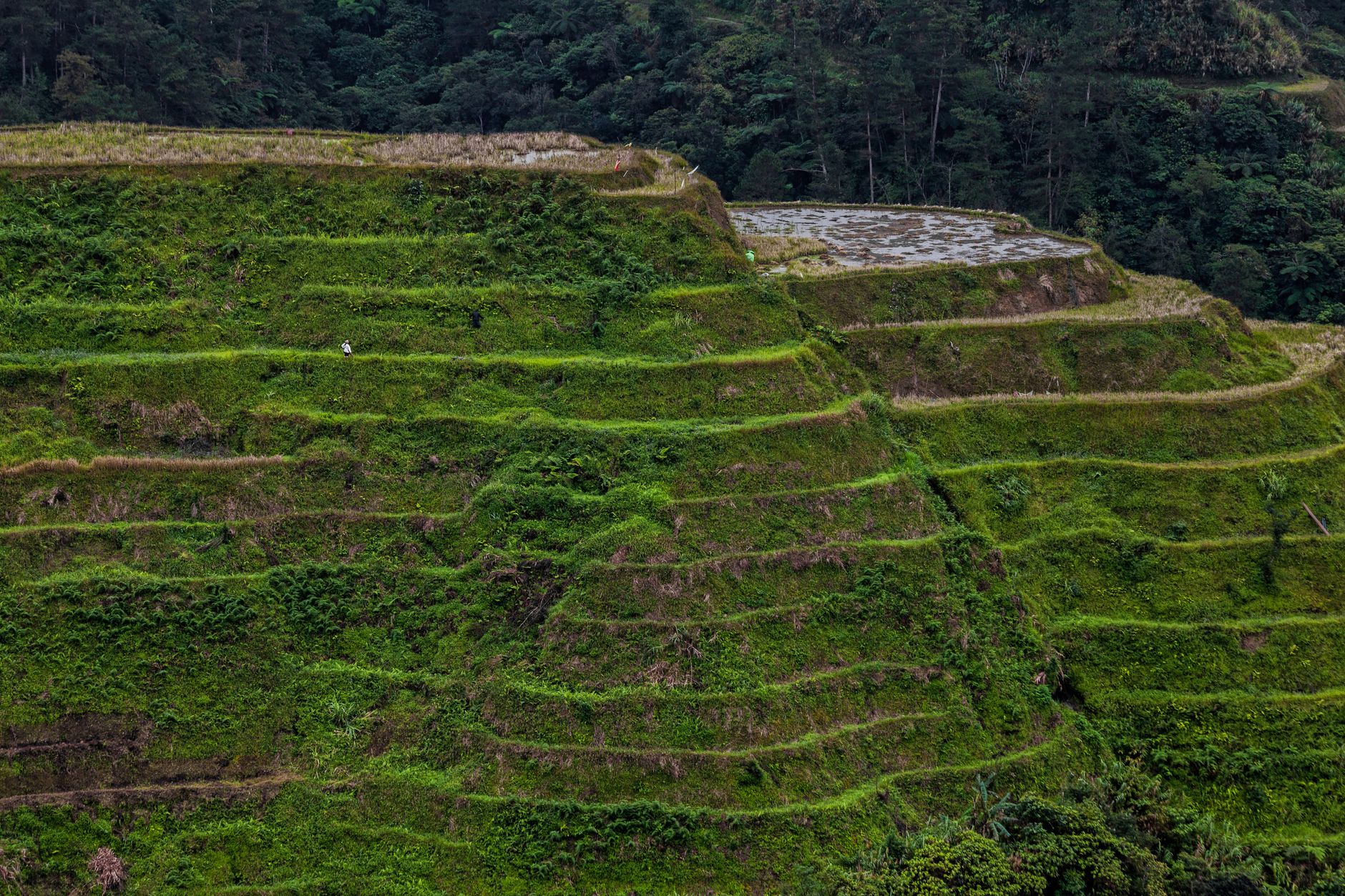
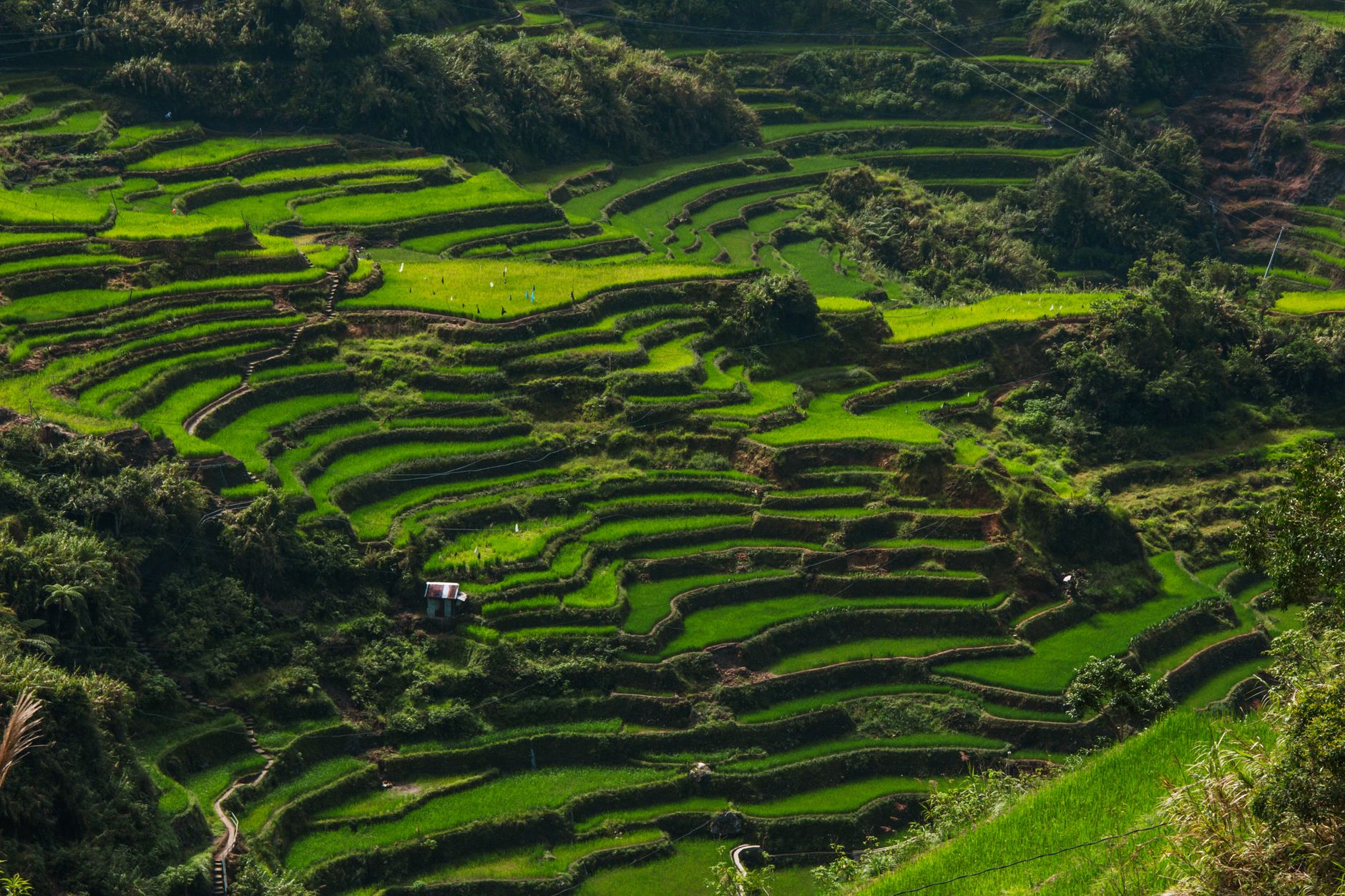
The viewpoint just outside town has a concrete railing and a sign in English and Japanese explaining the terraces’ age—roughly 2,000 years, the sign said, though the exact date seems to be something researchers still argue about. From here, the terraces look exactly like the photographs: sweeping, layered, impossibly steep. The rice paddies catch the light at different angles depending on the time of day, and the stone walls between them are so old they’ve taken on the same green-black patina as the rock they’re built from. I walked there that first morning, past a school where children were already in uniform playing basketball in a dirt court, past a row of souvenir stalls that were still shuttered, past a man sweeping his front step with a broom made of twigs. A local guide named Felix approached me as I stood at the railing. He was maybe sixty, with a face that looked like it had been carved by the same wind that shaped the mountain. “You want to see the real ones?” he said. “These are nice. But the real ones are the ones you walk through.”
He meant Batad. Batad is about a 45-minute drive from Banaue over a road that doesn’t so much wind as it clings, and then a 40-minute hike down to the village itself. The rice terraces at Batad are different from the ones at the viewpoint—older, steeper, less restored. UNESCO has designated them as a World Heritage site since 1995, but the designation doesn’t change the fact that the irrigation channels need to be cleared by hand every rainy season, or that the stone walls collapse sometimes during typhoons and need to be rebuilt by the local community, stone by stone, using techniques passed down through generations. I went with Felix the next morning. He carried a walking stick and a plastic bag with two bottles of water and some bananas wrapped in newspaper. I carried my camera and a growing sense that I was about to do something much harder than I’d prepared for.
The hike down into Batad is not technically difficult, but it is relentless. The path is stone steps—some cut into the mountain, some laid centuries ago, some recently replaced with concrete—that descend for about forty minutes with almost no flat sections. The steps are uneven. Some are ankle-high; some are knee-high. The locals walk them barefoot or in rubber sandals, carrying sacks of rice on their backs or bundles of firewood balanced on their heads. I passed a woman in her seventies climbing up from the village with a basket of vegetables, moving faster than I was going downhill. She smiled at me as she passed—not a pitying smile, not a condescending one—and said something in Ilocano that Felix translated as “Slow and steady.” I took her advice and focused on not tripping.
The village of Batad is a collection of houses with thatched roofs and wooden walls, clustered on a narrow ridge between two slopes of terraced rice paddies. It looks, from above, like a village that was dropped here by accident—a human settlement in a landscape that was not designed for settlements. But the terraces are older than almost anything else in the Philippines. They were built by the Ifugao people, whose ancestors migrated to these mountains centuries ago and carved the slopes into arable land, using only hand tools and local stone. It’s the kind of thing that makes you reconsider what “infrastructure” actually means. There is no road to Batad—the path I came in on is the only connection to the outside world. Supplies come in on foot or by the occasional motorized tricycle that someone has somehow managed to bring down the trail. Electricity arrived in the village about fifteen years ago, according to Felix, and the schoolhouse—a concrete structure with a corrugated iron roof—was rebuilt after a landslide in 2012. “We are not poor,” Felix said, as if reading my thoughts. “We just live far from everything.”
The trail to the waterfall starts at the far end of the village, past the last house and through a gap in the trees. It’s not marked. If you didn’t know it was there, you wouldn’t find it. The trail drops down into a ravine—more steps, muddy this time—and follows a small stream that gets louder as you go. The waterfall, when I reached it, isn’t spectacular in the way I’d imagined. It’s maybe fifty feet tall, falling into a pool of green water surrounded by moss-covered boulders. There’s no dramatic plunge, no rainbow in the spray. It’s just a steady column of water hitting a pool with a sound like rain on a tin roof. A couple of local teenagers were already there, swimming in the pool and shouting to each other in a language I didn’t understand. I sat on a boulder and ate one of the bananas Felix had brought. It was warm from being carried, and it tasted better than any banana I’d eaten in Manila. A dragonfly landed on my knee and stayed there for what felt like a full minute before deciding I wasn’t interesting and flying off.
On the hike back up, I made a mistake. I took what I thought was a shortcut—a smaller trail that branched off from the main path just past the village—and ended up on a route that was steeper, narrower, and grown over with ferns. It was, in hindsight, obviously not a shortcut. But from that trail, the terraces opened out in a way they don’t from the main path—a full, unobstructed sweep of green and brown and gold, layered like a staircase to the sky. I stopped and watched a farmer walking along the top of a stone wall, carrying a grass knife and wearing a hat made of woven palm. He didn’t look at me. He just kept walking, one foot in front of the other, balanced on a wall that was maybe eight inches wide. The most normal thing in the world to him.
The drive back to Manila the next day was all downhill, but it took longer than the drive up because of rain. The road turned slick and the switchbacks became exercises in trust. The driver, a younger man named Tobias who drove with one hand on the wheel and one hand eating dried fish from a plastic bag, seemed unbothered. “This is nothing,” he said, when I asked if the road was dangerous in the rain. “In typhoon season, the road closes for weeks. Then it opens, and we fix it, and we go again.” The rain stopped just past Bambang, and the last few hours of the drive were golden-lit and almost Mediterranean in the quality of the light. I bought another parcel of suman at the same chicken stand—different woman this time, same straw hat—and ate it watching the sun set over the flat paddies of the lowlands. It cost thirty pesos again.
I was back in Manila by dinner time, sitting in a restaurant in Makati that served the same fried chicken I could have gotten anywhere, paying three hundred pesos for a meal that cost a tenth of that in Banaue. The air smelled like exhaust and roasting peanuts from a street vendor outside. A waitress asked if I wanted a second beer. I said yes, and I thought about the dragonfly landing on my knee, and I wondered if the waterfall at Batad ever had a moment when nobody was there to see it.
📷 Photos: Max Mishin (Pexels), Jairus Abiasen (Pexels)