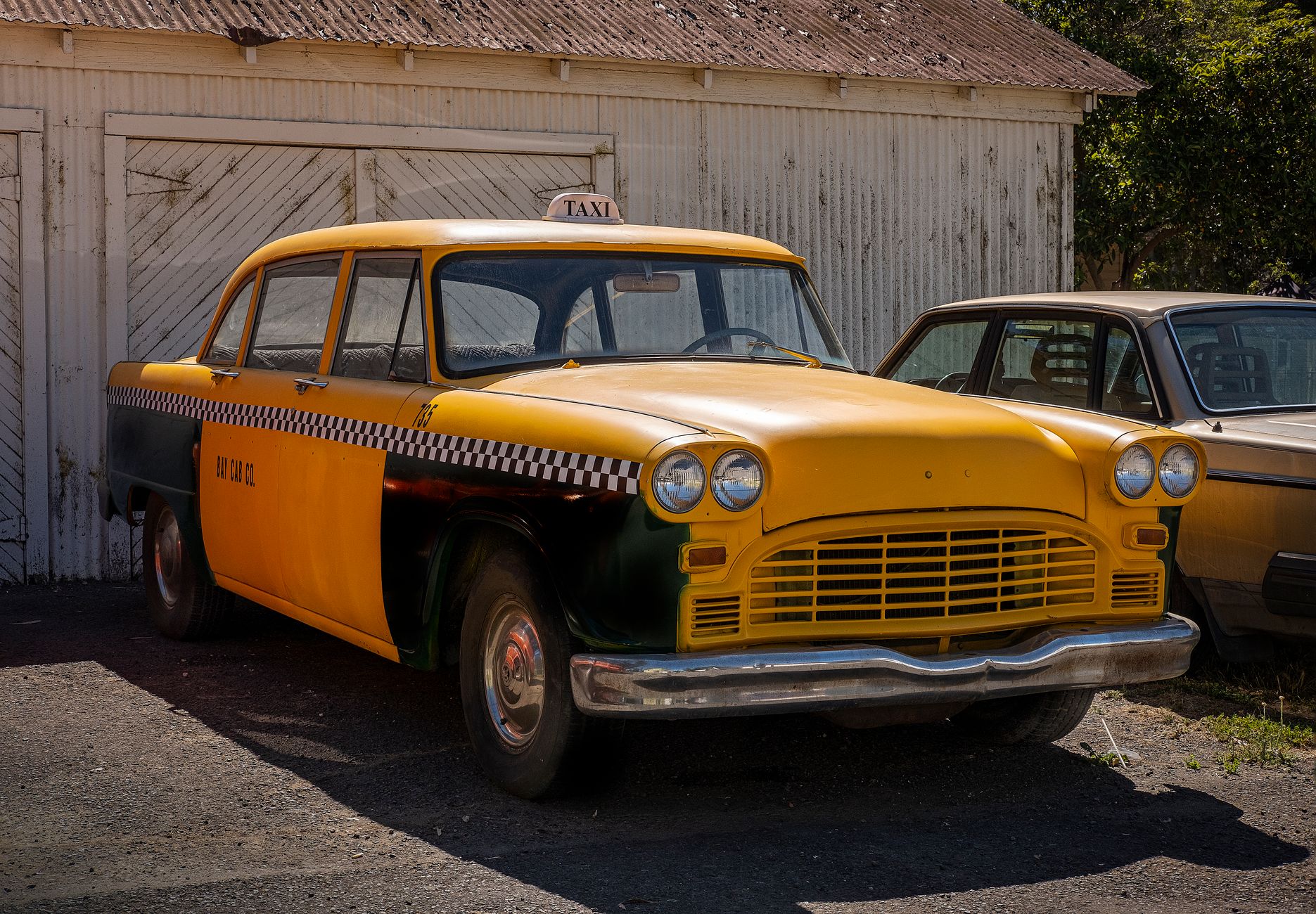
The taxi was parked under a persimmon tree, surrounded by a low stone wall and the kind of quiet that settles over the southern coast of Jeju in late autumn. It was a 1976 Hyundai Pony — boxy, beige, with rust blooming along the rear wheel arch like a geographic map of the island’s humidity. Someone had converted the back seat into a wooden platform with a foam mattress, installed a small solar panel on the roof, and painted the doors a shade of faded orange that didn’t quite match anything else on the car. It wasn’t trying to look good. It was trying to look like someone’s weird, sincere project that had ended up here, at a retro-themed rest stop called Gasi-ri Jumak, where the Olle Trail goes winding past citrus groves and volcanic rock walls toward the sea.
We’d booked it through a small guesthouse operation that runs three converted vehicles — the taxi, an old postal truck, and what looked like a late-80s Daewoo sedan that had been turned into a tiny mobile library. The website showed nothing but blurry photos and a phone number. The reservation was handled entirely through text messages in Korean, with a lot of smiley-face emojis and one message that read, “No heat but many blankets. Okay?” It was okay.
The rest stop itself is the kind of place that exists on Jeju mainly because someone with a strong opinion about nostalgia decided to build it. There’s a small cafe selling sweet potato lattes and rice cakes, a shelf of used books in a glass case, and a collection of old oil lamps and farming tools hung on the walls. A plastic sign out front lists the menu in Korean and a stab at English: “Memory Ramen,” “Grandmother’s Omija Tea,” “Happiness Fried Rice.” It’s touristy, but in a way that feels handmade rather than corporate — like the owner made every decision based on what she remembered from childhood rather than what a consultant told her would sell.
We arrived late in the afternoon, after a long stretch of walking the Olle Trail’s Route 10 section from the coast near Hado-ri. The trail had been mostly empty that day — a few hikers with wooden walking sticks, an older woman collecting mugwort from the roadside, and a man on a bicycle who stopped to ask if we needed water. The path ran along cliffs, through pine groves, past abandoned fish farms and into small fishing villages where laundry hung on lines above concrete walls. By the time we reached Gasi-ri, our legs had that particular fatigue that comes from eight hours of walking on volcanic rock — not painful, just heavy, with a slight throb in the arches.
The taxi’s interior smelled like dried persimmon and old fabric. The mattress was firmer than expected, covered in a cotton sheet and two heavy wool blankets that smelled faintly of mothballs and lavender. There was a small camping lantern, a USB charging port powered by the solar panel, and a cardboard box containing earplugs, a travel-sized shampoo, and a handwritten note in English: “Welcome to our strange house. Breakfast is at 8. Please leave key in ashtray. — Hye-ja.”
The platform had been built with care — shimmed level, with a thin layer of memory foam atop the mattress. The car windows had been fitted with blackout curtains made from what looked like old hanbok fabric, patterned with cranes and clouds. By 7 p.m., it was dark enough that the outside world felt distant, muffled by the car’s thin metal skin and the low murmur of wind through the persimmon tree.
Dinner was at the rest stop’s cafe. The owner, a woman in her sixties named Hye-ja, brought out bowls of doenjang jjigae with clams and a plate of battered, fried squash. She didn’t ask what we wanted. She just smiled, set it down, and said, “You walked today. Eat.” The soup was deep and nearly black with fermented soybean paste, the clams still releasing steam into the broth. We ate at a low wooden table facing the window, watching the sky fade from violet to indigo as the last light left the volcanic cone of Seongsan Ilchulbong in the distance.
Hye-ja sat down after we’d finished and poured herself a small glass of makgeolli from a ceramic bottle. Her English was limited, but she’d spent time in Los Angeles in the 1990s, working at a Korean restaurant in Koreatown. “I came back,” she said, gesturing vaguely at the rest stop, the car, the whole valley. “Better air. People are slower. In LA, I slept four hours. Here, I sleep eight. And I drink more.” She laughed, raised her glass, and refilled it. She told us the taxi had belonged to her uncle, who drove it on Jeju for thirty years before retiring. “He died in 2019. The car was in his yard for three years. My nephew and I fixed it. We thought, why not let people sleep in it? Better than rust.” She had a way of saying it — like it was the most natural idea in the world.
The Rooster at 2 a.m.
Night in the taxi was not silent. The car’s thin walls and single-pane windows did nothing to block the sounds outside. A rooster crowed at 2 a.m. from somewhere nearby — not a gentle, distant call but a loud, insistent one, as if standing directly outside the driver’s door. The wind rustled the persimmon tree’s leaves in irregular gusts, and around 4 a.m., a dog barked for ten straight minutes at something we never identified. The earplugs helped, but not entirely. By dawn, we’d slept maybe six hours in total, in segments. Not terrible. Not great.
Morning revealed a detail we’d missed the night before: the taxi had a small, handwritten decal on the dashboard that read “Gasi-ri Express — Route of Memories” in cursive, with a cartoon persimmon next to it. A child’s drawing, likely. Hye-ja’s grandchild, or something like that.
Breakfast was at a communal table outside, under a canvas awning. Rice, grilled mackerel, kimchi, pickled radish, and a bowl of seaweed soup so light it was almost transparent. Hye-ja’s husband, a quiet man in a straw hat whose name we never caught, brought out fresh tangerines from a basket. “From our trees,” he said. “Not for sale. Just eat.” The tangerines were warm from the sun, the juice sharp and sweet in a way that supermarket citrus never is.
We walked the rest of Route 10 after breakfast, heading toward Seongsan-ri. The morning was cool, with a low mist hanging over the fields. The trail passed through a tunnel of bamboo, then opened onto a stretch of coastline where the water was a shade of turquoise that looked fake, like a color you’d only trust in photographs. A small fishing boat was anchored offshore, its hull painted the same faded orange as the taxi’s doors. We wondered if it was intentional. Probably not.
The biggest inconvenience of the taxi stay — aside from the rooster — was the lack of a bathroom. The rest stop’s facilities closed at 10 p.m., and the nearest public toilet was a five-minute walk down a dark, unpaved road with no lighting. A headlamp became essential gear we hadn’t thought to pack. The rest stop had a portable chemical toilet behind the cafe, but using it at night involved stepping through a patch of weeds and a lot of hoping the motion-sensor light would actually trigger. It worked, but it wasn’t pleasant. Trail regulars tend to carry small LED lanterns and plan their bio breaks before dusk. A detail only experience teaches.
On our last morning, we sat on the rest stop’s wooden deck, watching the sun rise over the orchard. Hye-ja was already up, sweeping the cafe’s porch with a bamboo broom. She waved without looking up. The persimmon tree cast a long shadow across the grass, and the taxi sat there, patient and absurd, a monument to one family’s decision to make something strange out of something ordinary.
We put the key in the ashtray, left a note thanking her, and walked back onto the trail. The road ahead was empty. The sea was still. And somewhere behind us, a rooster crowed again, marking the start of another day in the life of a 1976 Hyundai Pony that had become, improbably, a place to rest.
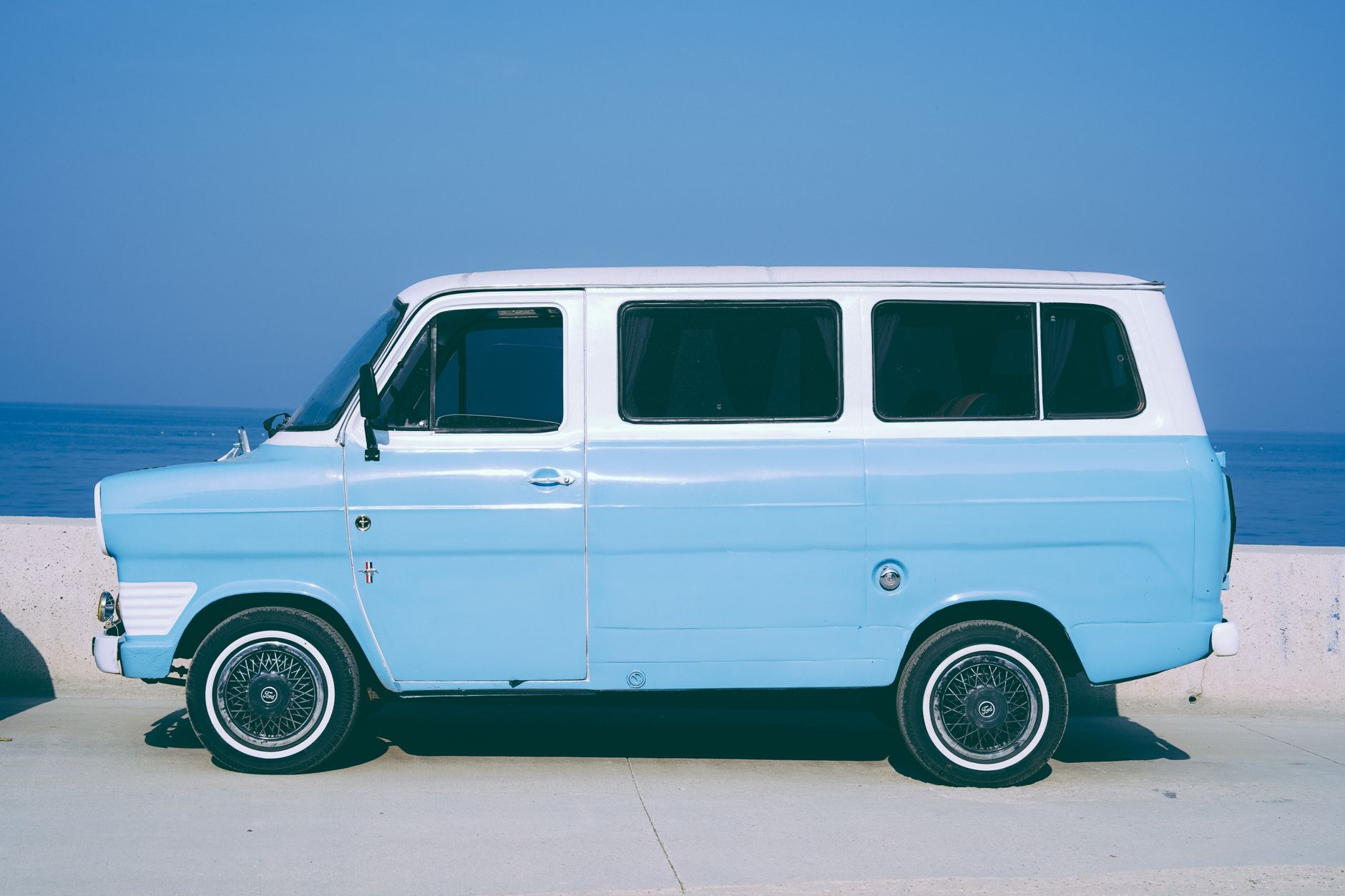
📷 Photos: David McElwee (Pexels), Sezer Ünlü (Pexels)