I picked up the campervan from a lot near Seoul Station on a Tuesday that felt more like early spring than late March. The agent handed over the keys with a laminated checklist and a piece of advice I hadn’t asked for. “The GPS will try to take you on the expressway everywhere,” he said. “Don’t let it.” I took the keys, the checklist, and the advice, and drove straight into a neighborhood of narrow streets in central Seoul where the van’s side mirrors scraped against overhanging branches.
Gyeongbokgung Palace sits at the northern end of a city that has built itself upward and outward, but the approach from the west side still passes through older blocks where buildings stay low and the light falls differently. I parked near the information center, walked through the main gate, and found myself in a courtyard where ground-level fog from earlier in the day had mostly burned off but still clung to the shaded corners. The palace is a reconstruction — the original was burned multiple times, and the current version dates mostly to the 1990s — but that fact matters less when you’re standing in front of the Geunjeongjeon throne hall and watching how the afternoon sun cuts across the stone platform. A group of schoolchildren in matching uniforms sat in rows on the ground, sketching the building’s double roof line. One of them had abandoned his drawing entirely and was trying to catch a dragonfly with his hat. That felt more honest than any of the guidebook descriptions I’d read.
Bukchon Hanok Village, later that same day, is a different kind of reconstruction. The traditional Korean houses here aren’t museum pieces; people still live in them, which means you’re walking through a neighborhood that happens to look like a postcard, not a postcard that happens to have a neighborhood attached. The streets slope steeply between the houses, and the alleyways are narrow enough that two people passing each other have to turn sideways. I climbed to one of the higher observation points — a small platform wedged between two private homes — and watched a woman hang laundry on a roof terrace while tourists photographed the clay roof tiles below her. She didn’t seem to notice them. That was the whole tension of the place, right there: a living neighborhood trying to ignore the fact that it had become a destination.
I ate dinner that night at a small restaurant near the Anguk Station exit, where the menu was written in chalk on a board propped against the doorframe. The owner, an older woman who gestured more than she spoke, served a bowl of kalguksu — hand-cut noodles in a broth that tasted of anchovy and sesame — and a side of kimchi that had been fermented long enough to develop a serious bite. I ate alone at a counter facing the kitchen, watching steam rise from a pot the size of a car tire. The noodles were uneven in thickness, which meant some were softer and others had more chew, and I found myself eating around the thinner ones to save the thicker ones for the last few bites. You have to be there, hungry and alone, with nothing else to do but pay attention to a bowl of noodles.
I woke early the next morning in the campervan’s parking spot — a designated overnight lot near the Han River that came with access to a basic bathroom and a coin-operated shower. The van had a small propane stove and a sink, and I made instant coffee while sitting on the step outside the sliding door, watching a heron stand motionless at the water’s edge. The drive to Andong took about three hours on secondary roads, because I’d taken the agent’s advice seriously. The expressway would have cut that time nearly in half, but I would have missed the stretch of road that runs through the Sobaeksan foothills, where the highway follows a river valley and the tunnels are short enough that you’re never in the dark for more than a few seconds. I pulled over once at a rest stop that wasn’t in any guidebook — a concrete building with a convenience store and a small stall selling dried persimmons. I bought a bag of them and ate three while standing next to the van, looking at a mountain that I couldn’t name. The persimmons were chewy and sweet, with a slight crystallization of sugar on the surface. They lasted the rest of the drive.
Hahoe Folk Village, when I reached it, was quieter than I’d expected for a UNESCO World Heritage site on a weekday. The village sits in a bend of the Nakdong River, and the approach requires crossing a bridge that’s closed to cars, so I walked from a parking area about half a kilometer away. The houses are preserved in the style of the Joseon Dynasty, with thatched roofs and earthen walls, and the layout follows Confucian principles that I didn’t fully understand until I talked to a woman sweeping the dirt path in front of one of the larger homes. She was a resident, not a staff member, and she explained — in a mix of Korean and English, with occasional gestures toward the roofs — that the placement of each house was determined by its relationship to the river and the surrounding hills. “The wind must flow around, not through,” she said, making a curving motion with her hand. “That is the old way.” I walked through the village for an hour, past a mask museum and a pavilion overlooking the river, and I noticed that none of the houses had fences. The boundaries between properties were marked by subtle changes in ground level or by the placement of trees. It was a society organized around trust, or at least around a shared understanding of where one thing ended and another began. I found that more impressive than any single building.
The Andong Soju Museum is housed in a modern building that doesn’t try to blend in with the traditional architecture around it, which I appreciated. Inside, the history of the region’s distilled spirit is told through photographs, ceramic vessels, and a reconstruction of an old distillery. The guide — a young man with a precise, almost academic manner of speaking — explained that Andong soju is made from fermented rice and a traditional yeast called nuruk, and that the process takes longer than the mass-produced version most Koreans drink. He poured a small sample for me at the end of the tour. The alcohol was warm and slightly sweet, with a floral note that I hadn’t expected. “This is not for getting drunk quickly,” he said, or something very like it. “This is for tasting slowly.” I bought a bottle from the gift shop and stored it in the van’s overhead compartment, where it rattled against the plastic casing for the rest of the trip. I never opened it, but I liked knowing it was there.
Day three took me to Gyeongju, the ancient capital of the Silla Kingdom, and the drive from Andong crossed a landscape that shifted from farmland to low forest and back again. The roads were mostly empty, and I made good time despite stopping to photograph a field of bright green barley that stretched all the way to a distant ridgeline. Bulguksa Temple, when I reached it, was undergoing restoration work on one of its main halls, which meant scaffolding and tarpaulins covered part of the facade. But the stone pagodas — Seokgatap and Dabotap — were fully visible, and they had the kind of weathered surfaces that photographs always make look smoother than they are. Up close, the granite was rough, marked by centuries of rain and wind, and the edges of the carvings had softened into curves that felt organic rather than deliberate. The temple complex is built on a series of stone terraces, and climbing from one level to the next requires navigating staircases that have been worn into shallow depressions by the feet of a thousand years of visitors. I ran my hand along the railing of one staircase and felt the smoothness that comes from generations of palms, not from any polish.
The Seokguram Grotto is a twenty-minute drive from Bulguksa, up a winding road through a forest of pine and oak. Inside, the Buddha sits on a lotus pedestal, surrounded by relief carvings of bodhisattvas and guardian figures. The lighting is dim, and you can’t take photographs, which means you have to actually look at the thing instead of preparing to reproduce it later. I stood in the grotto with a handful of other visitors, and the silence was the kind that makes you aware of the sound of your own breathing. A woman next to me was crying silently, tears running down her face without any accompanying sound. I pretended not to notice and focused on the Buddha’s expression — calm, distant, not quite looking at anything in the room. I stayed for maybe ten minutes, then walked back down the tunnel into the afternoon light, blinking.
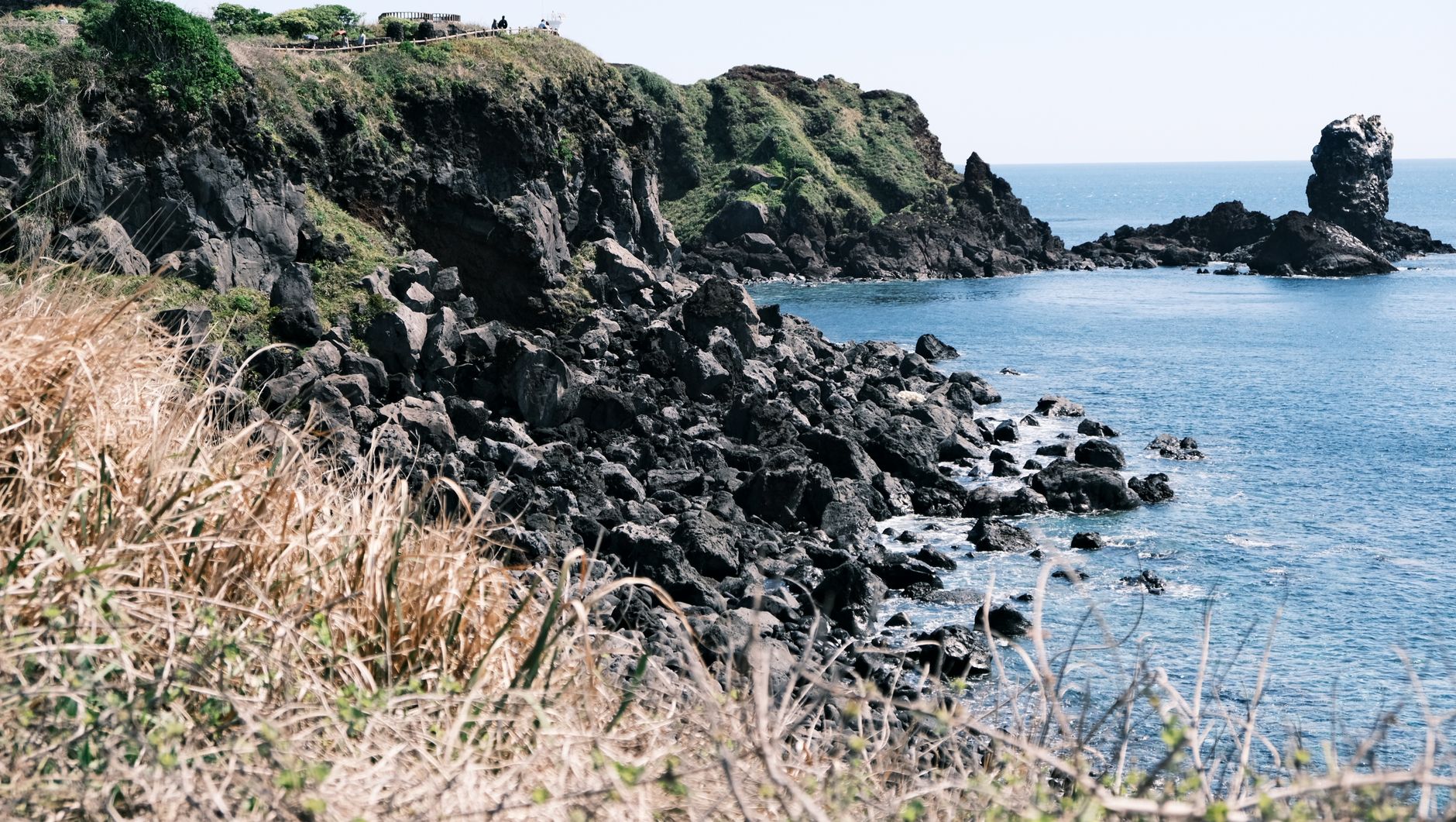
Ulsan, on day four, is a city that most international visitors skip. It’s an industrial port, known for shipbuilding and petrochemical plants, and the guidebook I’d picked up in Seoul devoted exactly two paragraphs to it. But Daewangam Park, on the city’s eastern edge, is a stretch of coastline where volcanic rock formations meet the sea in a way that feels older than any human settlement. I parked the van near the lighthouse and walked along a boardwalk that follows the cliffs, watching waves break against columns of black basalt that rose from the water like the fingers of some buried giant. The wind was strong enough that I had to lean into it, and the spray from the waves reached the boardwalk even at high tide. A fisherman was casting a line from a rock formation about fifty meters out, and I watched him for a while, trying to understand how he could stand in one place so long without moving. He didn’t catch anything while I was watching. He didn’t seem to mind.
Taehwa River Grand Park, later that afternoon, was the opposite of the coast — a wide, manicured green space along the river, with bicycle paths and picnic areas and a large artificial lake. I walked along the river for about an hour, following a path that passed under a bridge and then opened onto a view of the distant industrial skyline. The contrast between the natural and the manufactured was stark and unapologetic. I sat on a bench and watched a cargo ship move slowly up the river, its hull painted a deep red that matched nothing else in the landscape. It felt like a place where the city and the river had agreed to coexist without pretending to be the same thing.
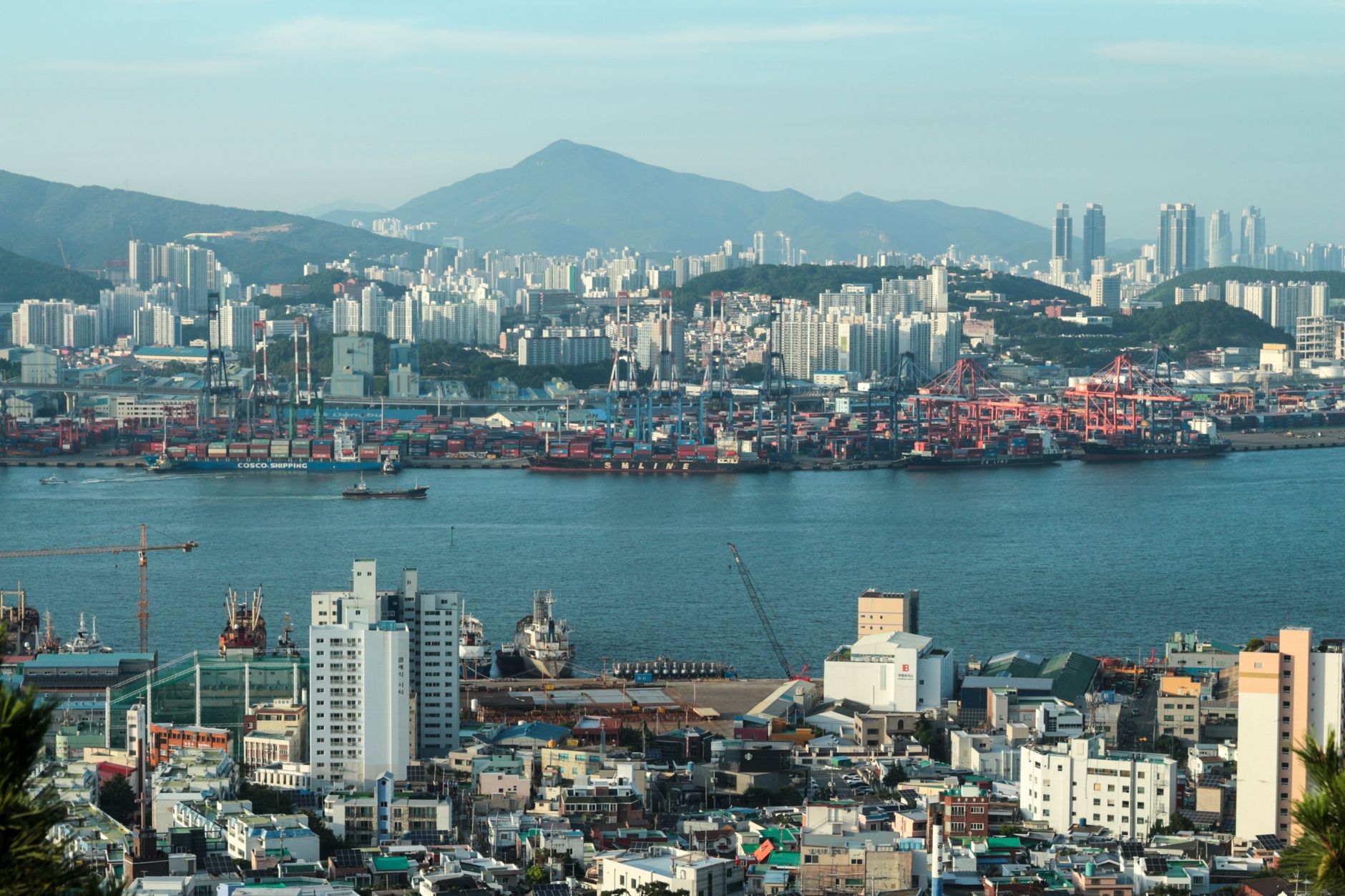
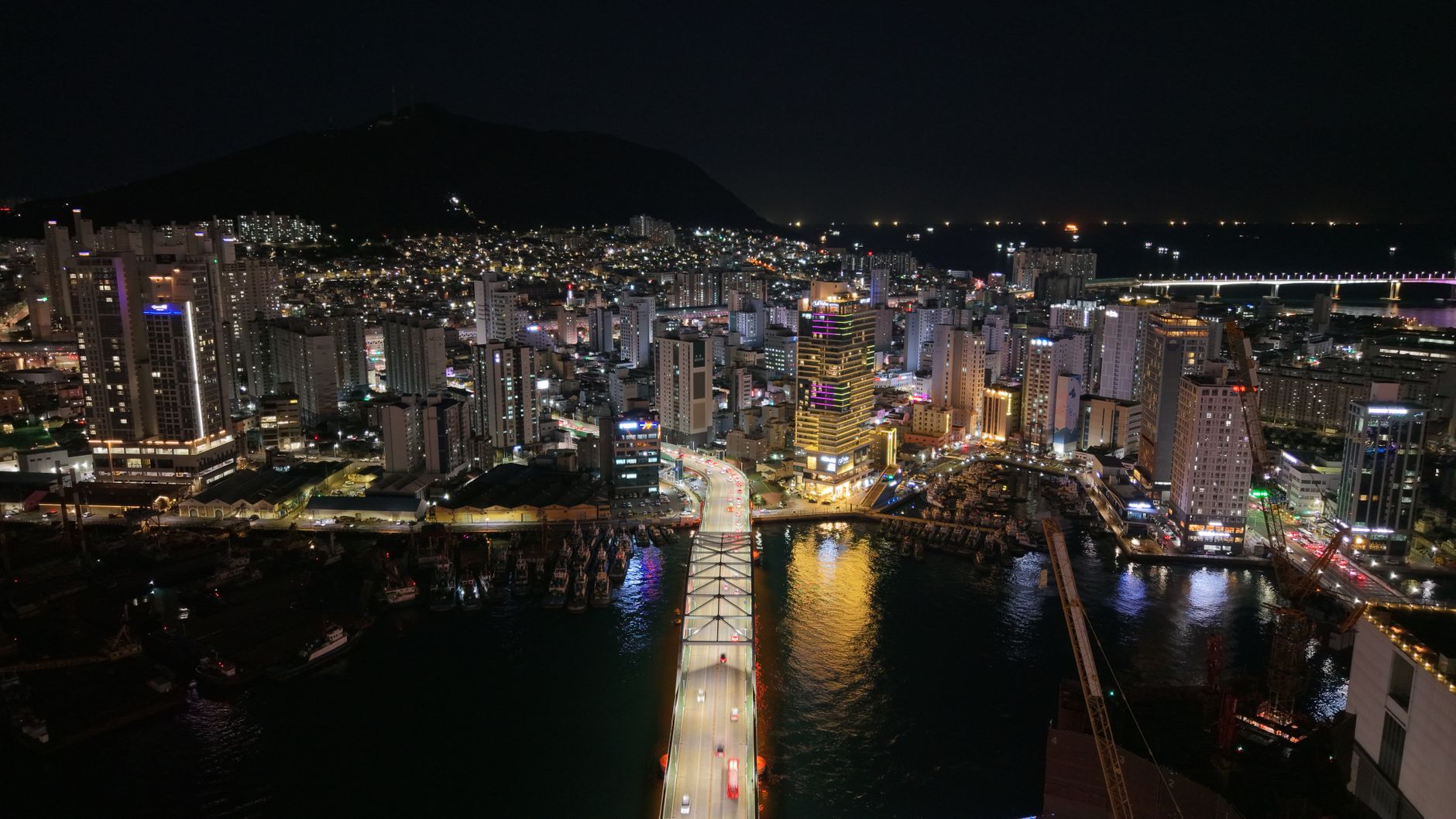
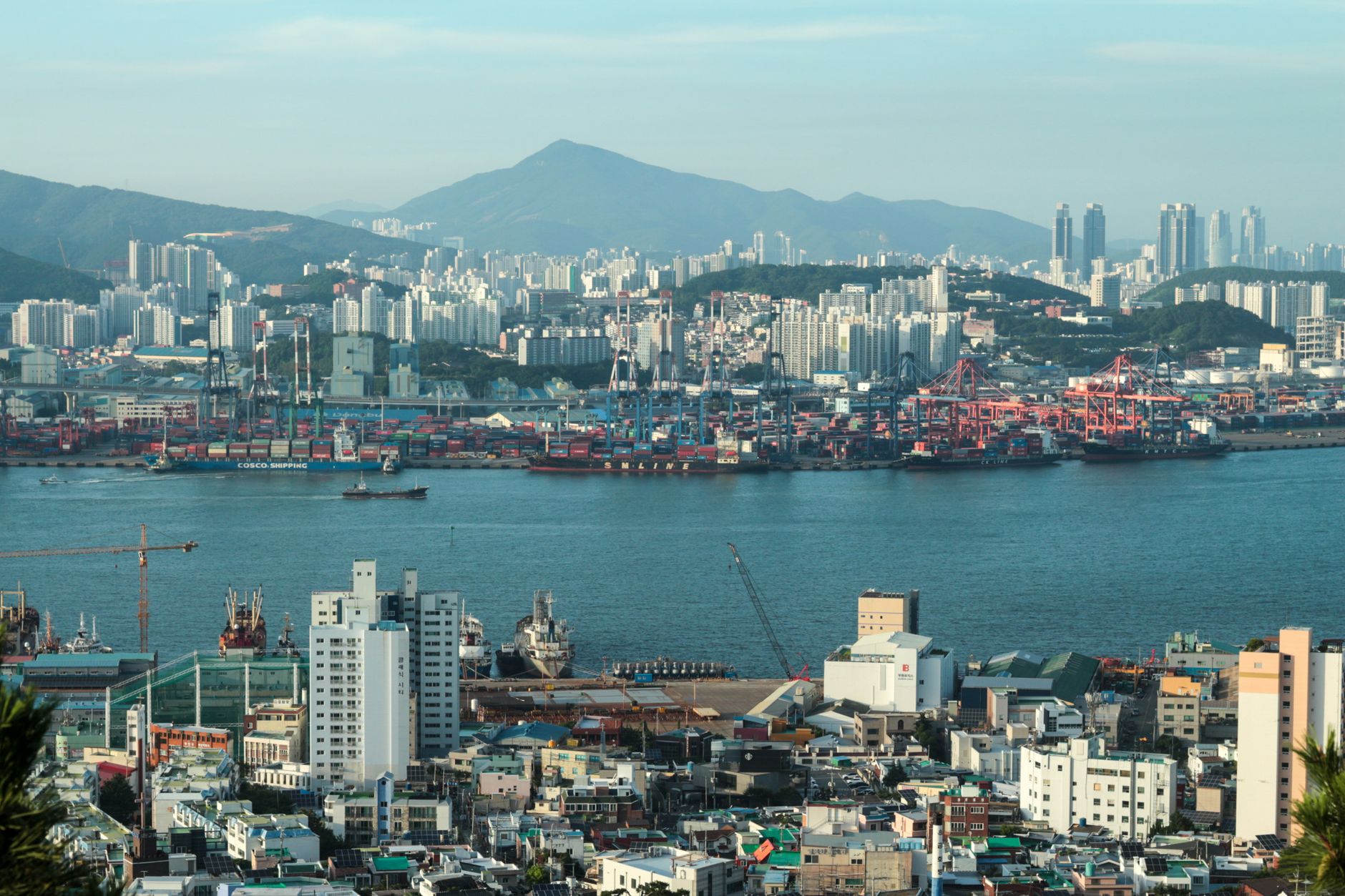
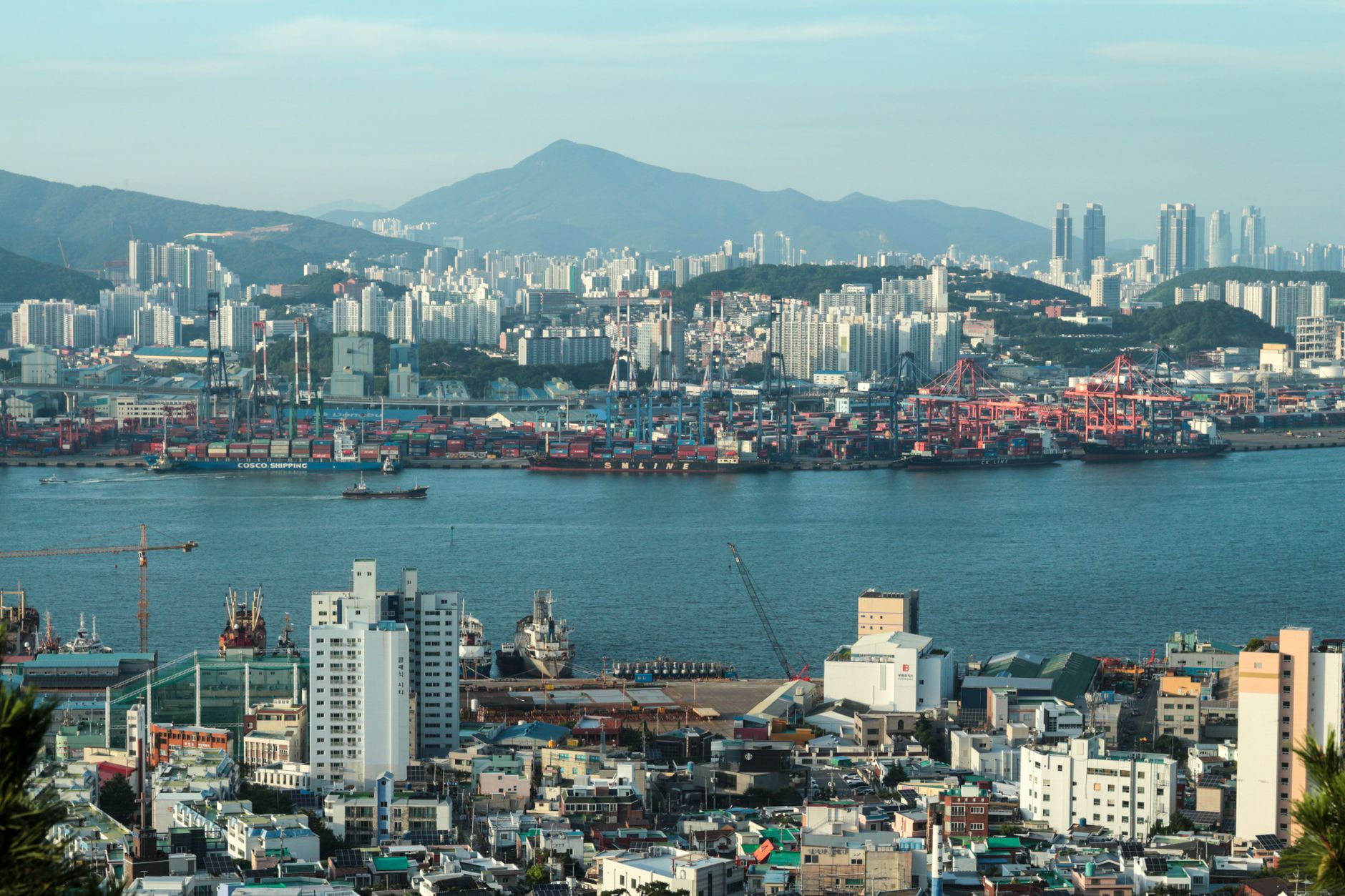
The final drive, from Ulsan to Busan, is short enough to feel like an anticlimax if you let it. I took the coastal road — Route 14, which winds through small fishing villages and past beaches that were mostly empty in late March — and arrived in Busan by mid-afternoon. Gamcheon Culture Village is built into the side of a mountain, a maze of narrow alleys and brightly painted houses that has become one of the most photographed spots in the city. I parked at the bottom and walked up, following signs that pointed toward observation decks and art installations. The village was crowded even on a weekday, and the narrow streets made the flow of foot traffic feel like a river at rush hour. I ducked into a side alley to escape the crowd and found a small staircase that led to a rooftop with a view of the harbor. A mural on the wall next to me showed a fish swimming through a sky full of stars. I stood there for a few minutes, letting the noise of the main street fade.
Haedong Yonggungsa Temple, the next morning, sits on the coast north of Busan, and the approach involves walking down a long staircase that passes under a stone arch and then follows the cliffs. The temple is built right up against the water, and the sound of waves hitting the rocks below mixes with the chanting from the prayer halls. I arrived early, before the tour buses had started arriving, and I had the main courtyard almost to myself. A monk in gray robes was sweeping the stone path with a broom made of twigs, moving slowly and deliberately, the way someone moves when there is nothing else to do that day. I sat on a bench near the temple’s main hall and watched the sweep, the stones, the sea beyond. A seagull landed on the railing next to me, looked at me with one eye, and flew off again.
📷 Photos: Nezaket (Pexels), Nezaket (Pexels)