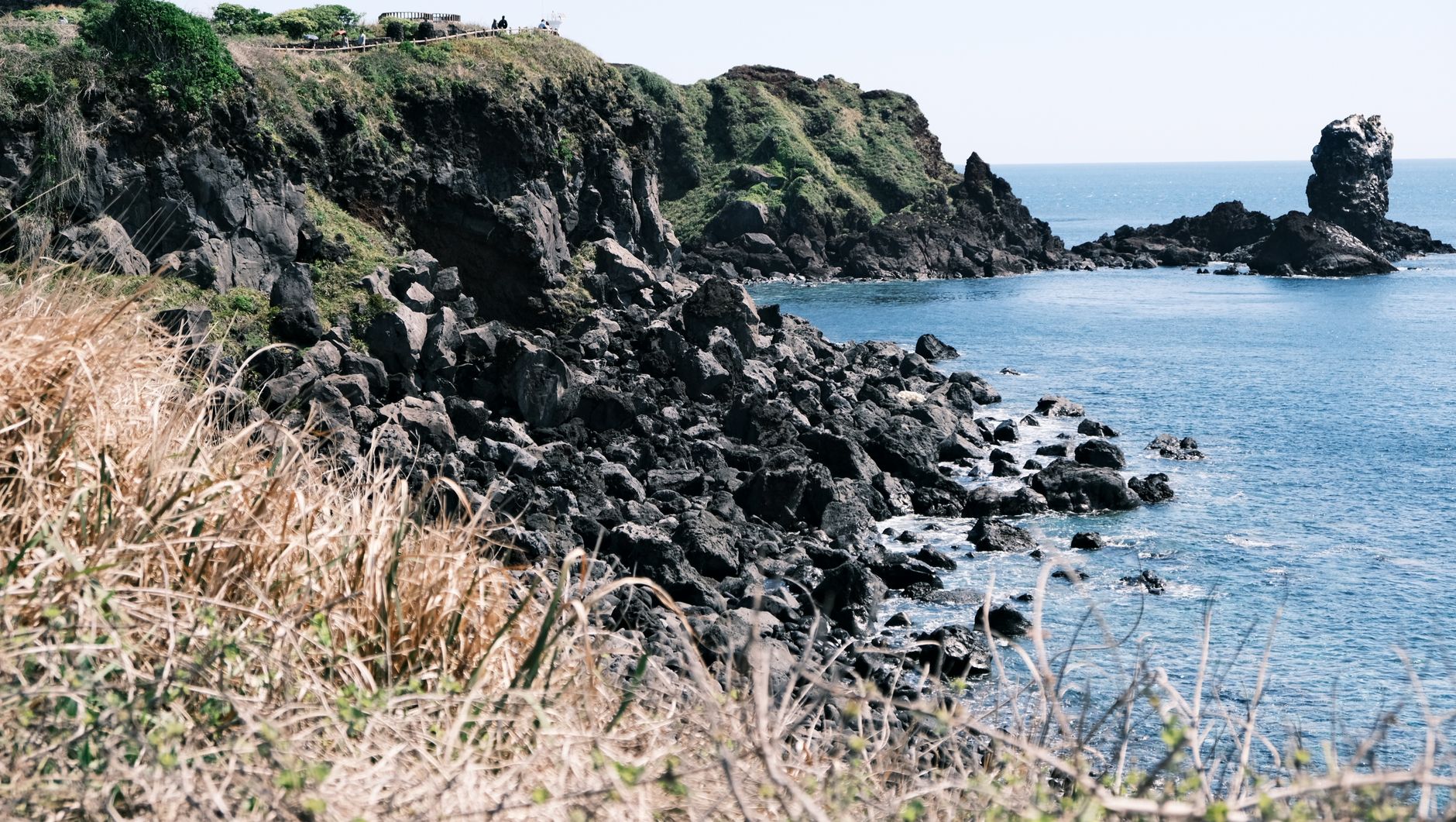
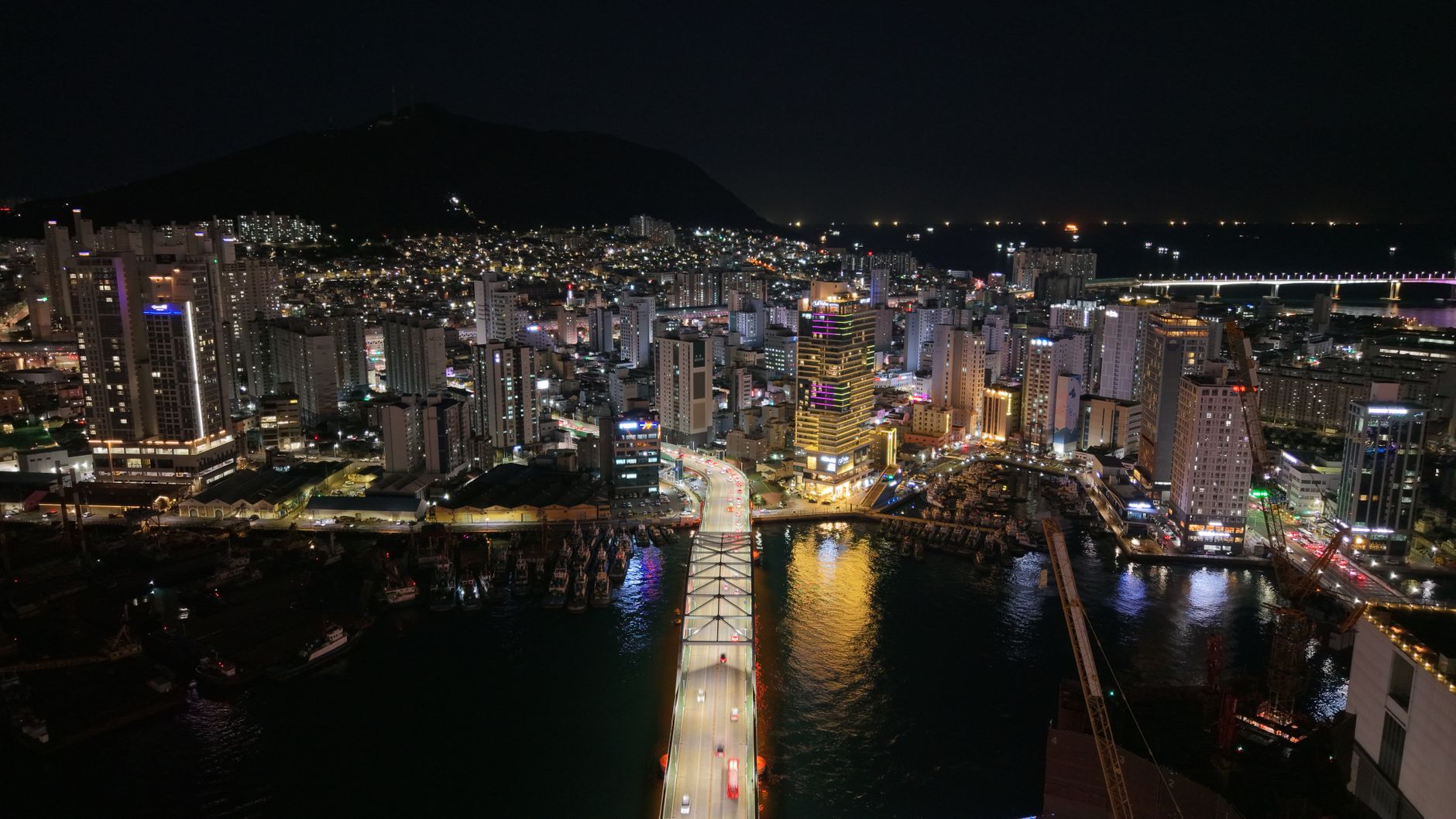
The road from Busan curves southwest along the coast like it’s in no hurry to get anywhere, and I wasn’t either. By the sixth day of a campervan trip that had started in Seoul and threaded through a dozen smaller towns, the rhythm of driving and stopping and walking had become its own kind of language — one I was finally beginning to speak without thinking about it. The van had developed a faint rattle in the back panel somewhere around Gyeongju, and by the time I reached the outskirts of Tongyeong that rattle had become a companion, a kind of percussion marking the miles.
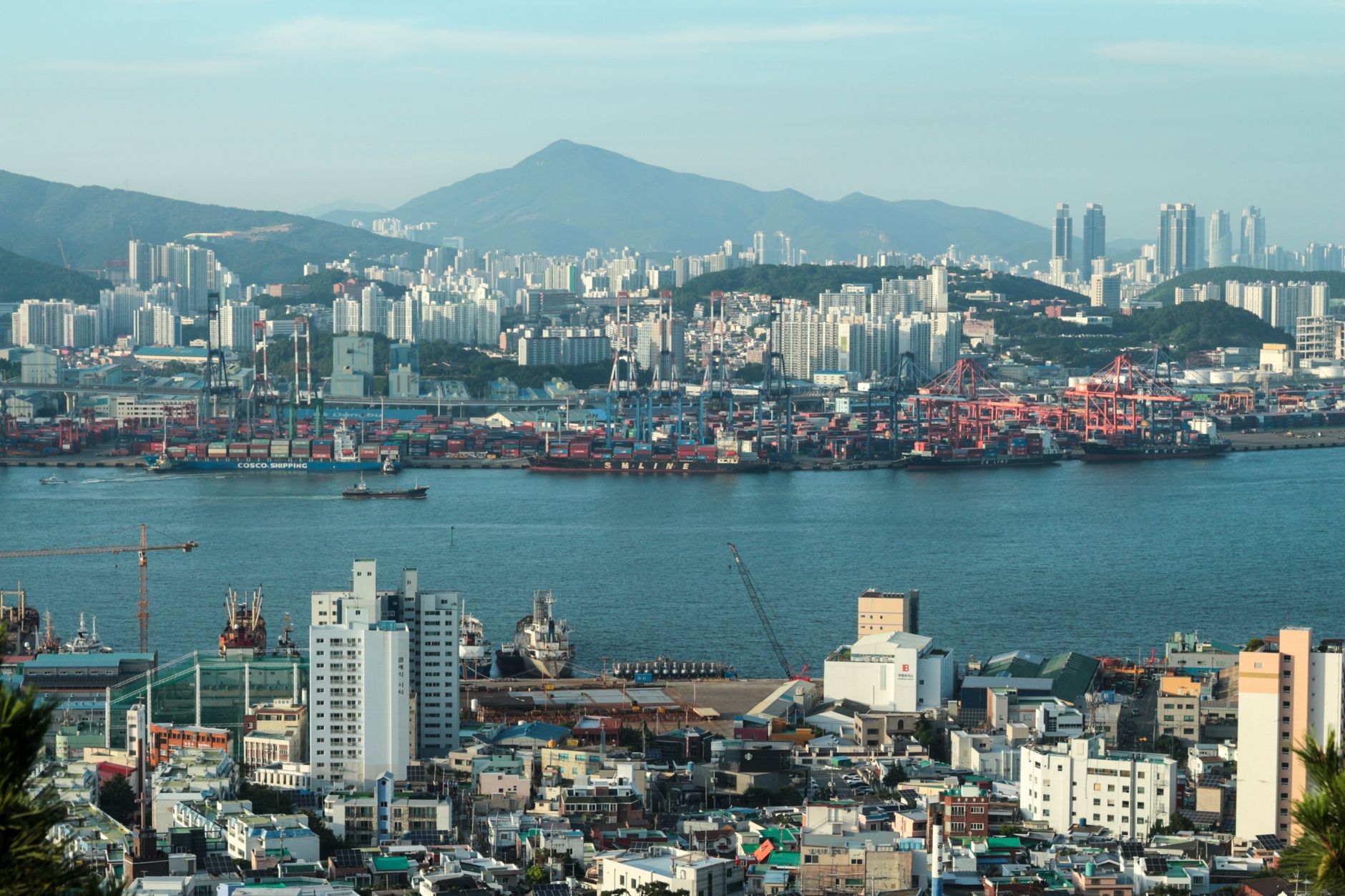
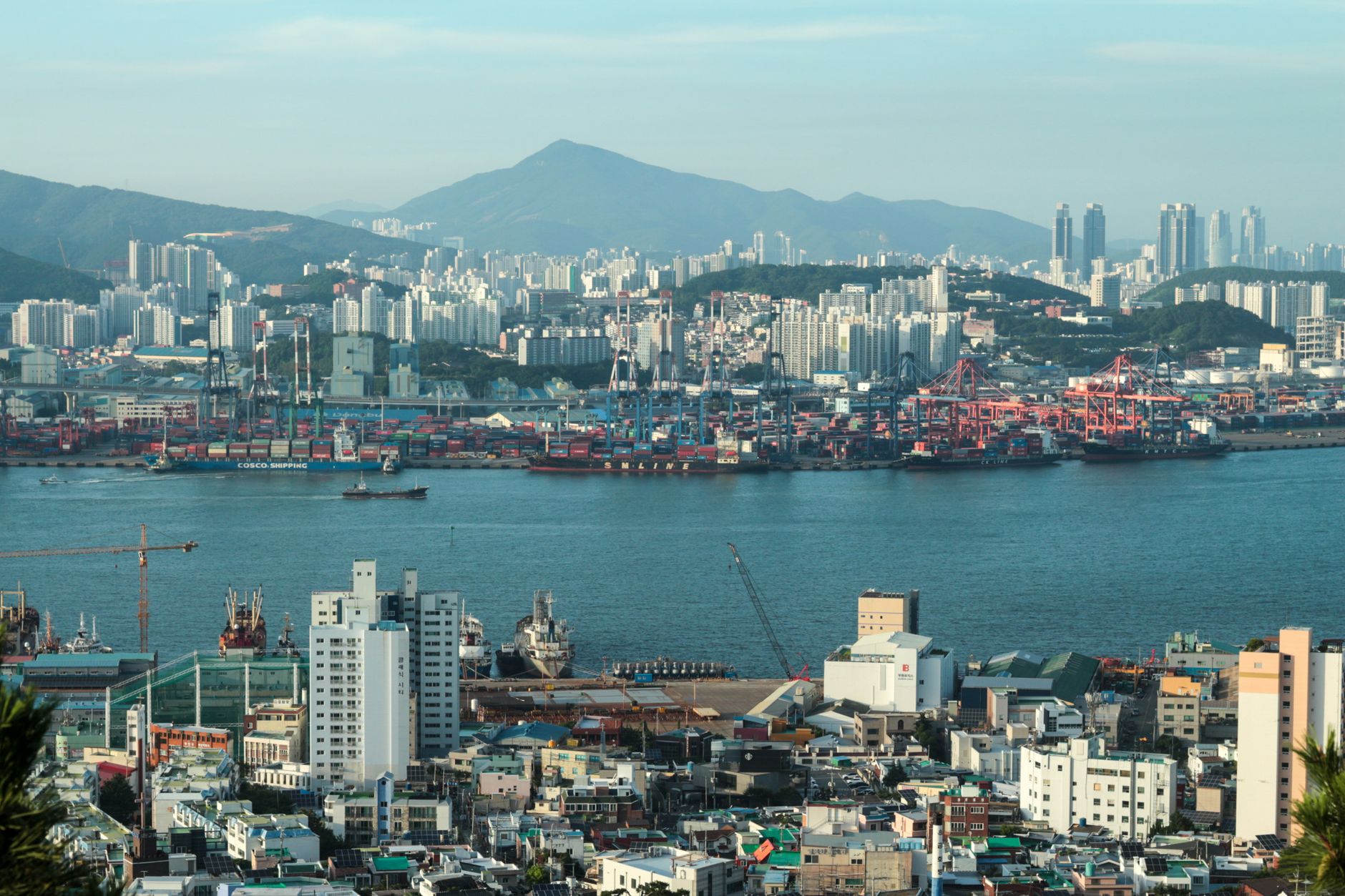
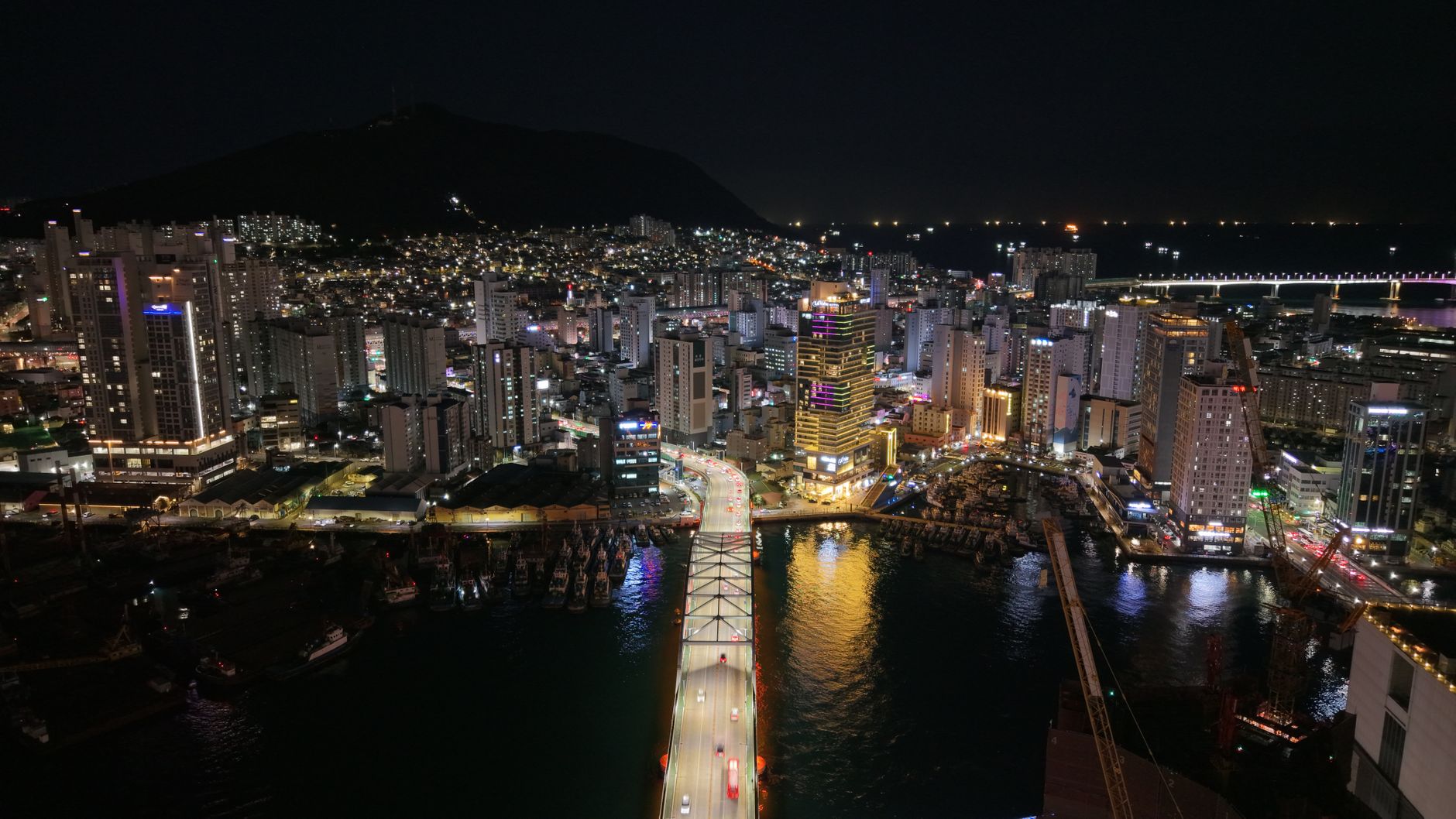
Tongyeong sits on a collection of islands and peninsulas so intricately arranged that the city seems to have been poured into whatever space the sea left behind. The waterfront is lined with fishing boats painted in blues and whites that match the sky on a clear day, and on that day in late autumn the light fell at an angle that made everything look like it had been dusted with something fine. I parked the van near the base of Mireuksan and walked toward the cable car station, which sat at the edge of a small plaza filled with the smell of grilled fish and sesame oil.
The cable car lifted slowly, clearing the treeline, and suddenly the whole of Tongyeong unfolded below — the harbor with its ferries, the islands scattered like debris from a giant’s game, the bridges connecting pieces of land that looked too small to hold a road. A woman beside me, Korean, in her sixties maybe, had her phone pressed flat against the glass, recording the whole ascent without once looking at the screen. That struck me as the right way to do it — not watching through a lens, but holding the lens up and watching with her own eyes.
At the top, the observation deck offered a 360-degree view that made the effort of getting there feel almost incidental. I stood for a while watching the wind work across the water, creating patterns that shifted and dissolved before I could quite register them. The temperature dropped noticeably at that altitude, and I wished I’d brought a jacket. A group of university students had set up a small picnic on one of the benches, passing around containers of kimbap and talking with the kind of easy laughter that comes when exams are still far away. I sat on a different bench and ate a poached egg I’d bought from a convenience store at the base. It tasted better than it had any right to.
The descent was quicker than the ascent, or felt that way. Back at the van, I checked the map for the next day’s route and found myself tracing a finger along the southern coast, past small inlets and islands I hadn’t known existed until that moment. That’s the thing about a campervan — you carry your home with you, but the map keeps getting bigger.
Day seven began with fog so thick I could barely see the bonnet. Suncheon is about a two-hour drive from Tongyeong, and the coastal road that morning was a study in grey — grey sky, grey water, grey asphalt disappearing into grey air. I pulled over at a rest stop near Gwangyang to make coffee on the van’s portable stove, and the steam from the kettle mixed with the fog in a way that felt like I was brewing something from another dimension. The campervan’s interior smelled like instant coffee and damp wool, which is not an unpleasant combination when you’re warm and the world outside is wet.
Suncheon Bay Wetland Reserve is the kind of place that forces you to slow down whether you want to or not. The boardwalks stretch out over the reeds, and the reeds stretch out to the horizon, and the whole scene is so flat and open that the sky becomes the main event. I arrived around mid-morning, when the fog had lifted to a thin haze, and the light was the soft grey of a studio photographer’s diffuser. The reeds were in their late-autumn brown, and they rustled with a sound like paper being crumpled somewhere far away.
A pair of older men stood at the edge of one of the observation platforms, each holding a pair of binoculars. They were watching for birds — cranes, mostly, which migrate through the wetlands in November. I didn’t have binoculars, but I watched them watch, and after a few minutes one of the men lowered his glasses and pointed toward a patch of water I hadn’t noticed. A white heron stood there, motionless, so still it could have been a sculpture left behind by the tide. We stood in silence for maybe five minutes, the three of us, watching a bird do nothing at all.
Naganeupseong Folk Village sits about half an hour from the wetlands, and the drive there takes you through small farming towns where cabbage fields stretch between houses and elderly women sit on plastic chairs outside general stores, watching the road. The village itself is a preserved Joseon-era settlement, with thatched roofs and dirt paths and a wall that encircles the whole thing. I arrived in the early afternoon, when the light had shifted from grey to a pale gold that made the thatch look almost luminous.
The village is still lived in — people go about their daily routines alongside the tourists, hanging laundry, tending gardens, cooking lunch over wood fires. I walked past a house where a woman was making kimchi in a large clay pot, her hands moving with a practised economy. She didn’t look up, and I didn’t linger. The beauty of a place like Naganeupseong is that it doesn’t perform for you — it simply exists, and you’re allowed to witness it.
A narrow path led up the hillside behind the village, and I followed it past terraced fields and an old well until I reached a small pavilion overlooking the whole settlement. From up there, the village looked like a model of itself — tiny houses with smoke rising from their chimneys, the wall curving around the perimeter, fields beyond that, and then mountains. I sat on the pavilion’s wooden floor for a long time, not thinking about anything in particular, just watching the light change as the afternoon moved toward evening.
Damyang, on day eight, is a forty-minute drive north from Suncheon through a landscape that gradually shifts from coastal flatlands to low hills. The bamboo forest there is one of those places that photographs cannot prepare you for — not because it’s more beautiful in person, but because the experience is fundamentally sensory in a way that images can’t capture. The sound, for one thing. Bamboo makes a particular noise when the wind moves through it — a creaking, clicking, almost musical sound that has no real analogue. I stood at the entrance for a full minute before walking in, just listening.
The path through the forest is straight and narrow, flanked by bamboo so tall it blocks out most of the sky. The light filters through in columns, and the ground is covered in dry leaves that crunch underfoot. I walked slowly, stopping every few metres to look up at the way the stalks converged overhead like a green ceiling with gaps. The air smelled of earth and dry vegetation, and it was noticeably cooler inside the grove than outside — a natural air conditioning that felt earned, not mechanical.
Gwanbangjerim Forest is a short drive from the bamboo grove, and it’s a different kind of green entirely. Where the bamboo forest is uniform and vertical, Gwanbangjerim is chaotic and sprawling — a stretch of ancient trees along a riverbank, their roots exposed and twisted, their branches reaching in every direction. I walked along the riverside path, passing couples and families and an old man who had set up a small easel and was painting the scene in watercolours. His brush moved in quick, confident strokes, and I stood behind him for a moment, watching him turn a complicated tangle of branches into something simple.
The river was low that day, exposing rocks that were covered in a thin layer of moss. I sat on one of the larger rocks and ate a lunch of convenience-store rice balls and a can of iced coffee, watching the water move. A group of children were further downstream, skipping stones, their laughter carrying across the water in a way that seemed to belong to a different time.
Jeonju on day nine was the first city of real size since Busan, and the transition felt abrupt. The hanok village there is famous — deservedly so — and it was crowded in a way that the coastal towns and forests hadn’t been. I arrived mid-morning and found a parking spot a few blocks away, then walked through the narrow streets, past hanok houses that had been converted into tea shops and galleries and guesthouses. The tiled roofs curved upward at the corners, and the walls were a warm, earthy tone that caught the midday light.
The bibimbap in Jeonju is the city’s culinary claim to fame, and I’d heard about it from at least three different people during the trip — a truck driver at a rest stop near Daegu, a hostel owner in Gyeongju, and a woman selling dried squid at a market in Tongyeong. Each one had said the same thing: Jeonju bibimbap is different. I found a restaurant down a side street, the kind of place with a wooden sign and a curtain over the door and no English on the menu. The owner, a woman in her fifties with a calm, efficient manner, brought out a stone bowl so hot it was still sizzling, with rice at the bottom and vegetables arranged on top in neat sections — spinach, bean sprouts, carrots, zucchini, mushrooms, a raw egg yolk in the centre. I mixed it with a dollop of gochujang and a drizzle of sesame oil, and the heat from the bowl cooked the egg as I stirred. The rice at the bottom turned crisp and golden, and each bite had a different combination of textures — soft, crunchy, chewy, tender. It was the best meal of the trip, and it came from a place I couldn’t point to on a map if I tried.
I spent the rest of the afternoon wandering the village, ducking into a small brewery that made makgeolli and a paper workshop where an old man was making hanji by hand, his hands stained with dye. He didn’t speak English, and I didn’t speak enough Korean to ask a proper question, but he showed me how the paper was made — the mulberry fibres soaking in a vat, the screen lifted to catch them, the sheet pressed and dried. He handed me a small sample, still warm, and I folded it carefully and put it in my jacket pocket. Still there, months later.
Daejeon, on the final day of this leg, felt like the beginning of the return journey. The National Science Museum there is a sprawling complex of exhibition halls and outdoor installations, and I arrived on a Tuesday morning to find the place nearly empty. A school group moved through one of the halls in an orderly line, their uniforms a matching shade of navy, but otherwise I had the building to myself. I walked past displays on robotics and space exploration and climate science, stopping longest at an exhibit on traditional Korean astronomy, which featured a replica of a 15th-century observatory that looked like something from another world.
Yurim Park, a short drive from the museum, is the kind of urban green space that makes you forget you’re in a city. A stream runs through the centre, and the path follows it under bridges and past small pavilions. I walked for about an hour, watching ducks paddle against the current and families cycle past on rented bikes. The air smelled like damp earth and fallen leaves, and the light was the low, golden light of late autumn that makes everything look like a painting someone has just finished.
I sat on a bench near the stream and ate the last of my supplies — a slightly squashed banana and a granola bar that had been rattling around in the glove compartment for a week. The van was parked nearby, and I knew I’d be driving it back toward Seoul the next day, but for that moment I was content to sit and watch.
📷 Photos: Jhany Blue (Pexels), Jhany Blue (Pexels)