The floor radiates heat upward in a slow, even pulse — not the aggressive blast of a forced-air system but something deeper, more patient. By ten p.m., the ondol beneath us had been warming for nearly six hours, and the stone-and-paper room felt less like a bedroom and more like a kiln that had cooled to exactly the right temperature for sleeping. Outside, the November air in Bukchon had dropped to near freezing. Inside, the floor read warm enough that lying on it for more than a few minutes made a person want to roll over, the way you do on a beach towel when one side gets too hot.
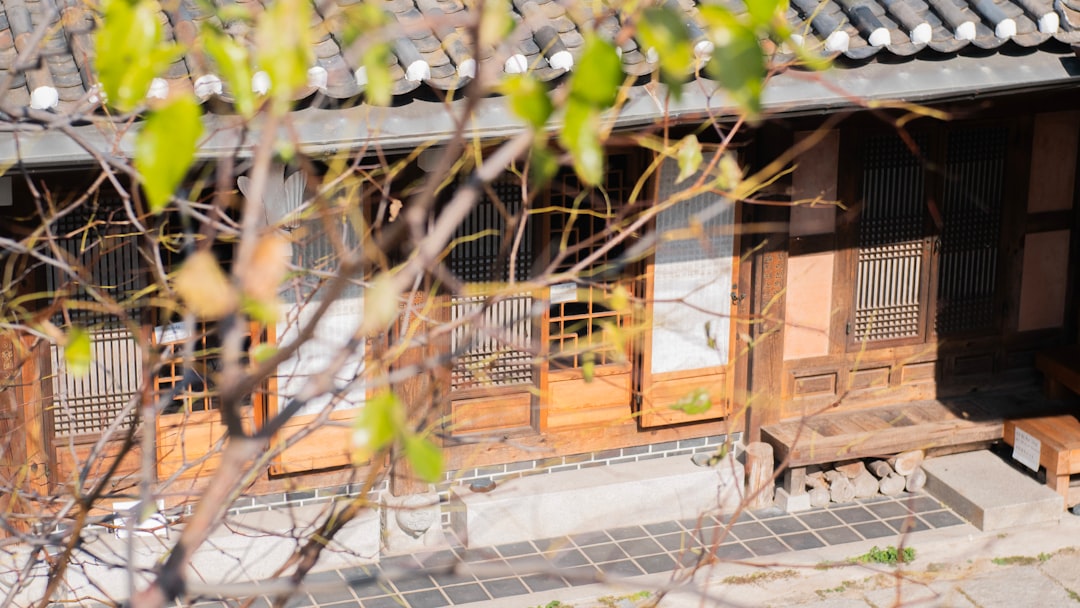
The hanok that held this room was one of maybe two hundred still occupied in the neighborhood, tucked down an alley so narrow that two people couldn’t walk abreast. Its owner, a former curator at a small ceramics museum in Gangwon, had bought it seven years ago, when Bukchon was cheaper and quieter, and spent two years restoring it. The sloping clay-tile roof, the latticework doors, the paper windows that diffuse light like a soft-focus filter — all of it had been rebuilt using traditional joinery, not nails. The ondol system, too, followed the original principle: hot water circulates through pipes embedded in a stone-and-clay subfloor, which then radiates heat into a layer of oiled paper called hanji. No thermostat. No digital controls. A small boiler in the utility room, fired by gas, sends heat through channels laid by hand.
The room itself was modest — maybe eight pyeong, which is about twenty-six square meters — and sparsely furnished. A low table of polished chestnut sat near the window. A single cushion rested against the wall. On the far side, a slim cabinet held a tea set: a celadon pot, five small cups, a wooden scoop, a canister of ujeon — the first green tea harvest of the year, picked before April. The bed was a thick yo, a traditional quilted mat, rolled up in the corner during the day and laid directly on the warm floor at night.
We had arrived in Bukchon around four that afternoon, after the worst of the day-trip crowds had thinned. The neighborhood is famous for its preserved hanok village — six hundred traditional houses spread across the slope between Gyeongbokgung and Changdeokgung palaces — and during peak hours, the main thoroughfares feel less like a living district and more like an open-air museum with a bottleneck problem. Groups of tourists in rented hanbok shuffle between photo spots. Vendors sell skewered tteok and cinnamon punch from carts. It’s a scene that can feel heavily managed, a curated version of traditional Seoul.
But Bukchon operates on a different rhythm once you leave the main strips. The alley behind the hanok was silent except for the hum of a neighbor’s television, muffled by thick clay walls. A cat — gray, missing half its left ear — sat on a stone step, watching us without moving. Above the rooftops, the N Seoul Tower caught the last of the light, a pale silver needle against a darkening sky.
Inside, the host — a man in his early sixties who introduced himself only as Mr. Goh — asked if we wanted tea. The question was rhetorical. Tea, in a traditional Korean house, is not an optional add-on; it is the reason the room exists. He brought the celadon pot to the low table and sat across from us, his movements unhurried, almost ritualistic. He heated water in a small iron kettle, swirled it through the pot to warm the ceramic, then discarded it. He measured leaves by eye, not by spoon, letting them settle in the pot’s base before pouring the hot water in a slow, circular stream.
The tea was pale green, almost clear, with a grassy aroma that filled the room in about thirty seconds. “First flush,” Mr. Goh said, meaning the earliest harvest. “The plant puts everything into these leaves. After this, the flavor changes.” He poured three cups in succession, a thin stream from the spout, and did not speak again until we had each finished the first round. The quiet was not awkward. The room itself seemed to demand it — the low ceiling, the soft paper windows, the floor’s steady warmth all conspired to slow everything down.
This, it turned out, was the real experience of staying in a restored hanok: not the Instagram-ready angles of the courtyard or the vintage tiles, but the enforced stillness of a space that has no room for distraction. No television. No Wi-Fi, or only a weak signal that reaches the front room but not the bedroom. The walls are thick enough that phone calls from the narrow alley outside arrive as muffled murmurs. The ondol heat discourages rushing. Once you’re lying on the floor, warm from below, cold air from the window pressing gently against your face, the impulse to check a phone or plan the next day’s itinerary fades.
By six-thirty, full dark had settled over Bukchon. A few lights came on in nearby houses — warm, yellow bulbs visible through hanji windows. Someone was cooking nearby, the smell of doenjang jjigae drifting through the gaps in the walls. Mr. Goh had retired to his own quarters on the other side of the courtyard, leaving us alone in the tea room. We brewed a second pot, this time a darker, roasted hwangcha — yellow tea — which had a nutty, almost caramel note that the green tea lacked. The floor was still warm. The wind outside had picked up, rattling the paper windows.
Sleeping on an ondol floor has a learning curve. The yo mat is thin — maybe three inches of cotton batting — and the stone floor underneath is unyielding. People used to spring mattresses may find the first night uncomfortable, waking every few hours to adjust position. The heat, too, can be uneven: the area near the room’s center, where the pipes converge, stays noticeably warmer than the edges near the outer wall. After midnight, we found ourselves migrating toward the center of the room like cold campers edging closer to a fire. It was not a restful sleep in the Western sense. But it was a deep one, the kind where you surface slowly in the morning, unsure of the hour.
Dawn came through the hanji windows as a pale, diffuse glow, not quite light but no longer dark. The ondol had cooled overnight, and the room was just above chilly — the floor still faintly warm to the touch but losing heat by the minute. Mr. Goh appeared at the door with a tray: barley tea, a small bowl of songpyeon — half-moon rice cakes stuffed with sesame and honey — and a plate of pickled radish. “Breakfast is simple here,” he said, setting the tray on the low table. “The house does not need much to be happy.”
We spent the morning walking through Bukchon before the crowd returned. The alley outside the hanok was empty. A delivery scooter buzzed past, its engine echoing off the stone walls. At the top of the slope, near the Bukchon Observatory, the view opened up across the tiled roofs of the neighborhood, chimney pots venting steam from breakfast fires, the blue-gray mountains beyond the city. It was the same view seen in a thousand photographs, but standing there in the cold, with the memory of the warm floor still in our legs, it felt different — less like a vista and more like a room we had just left.

📷 Photos: Andy Wang (Unsplash), Andy Wang (Unsplash)