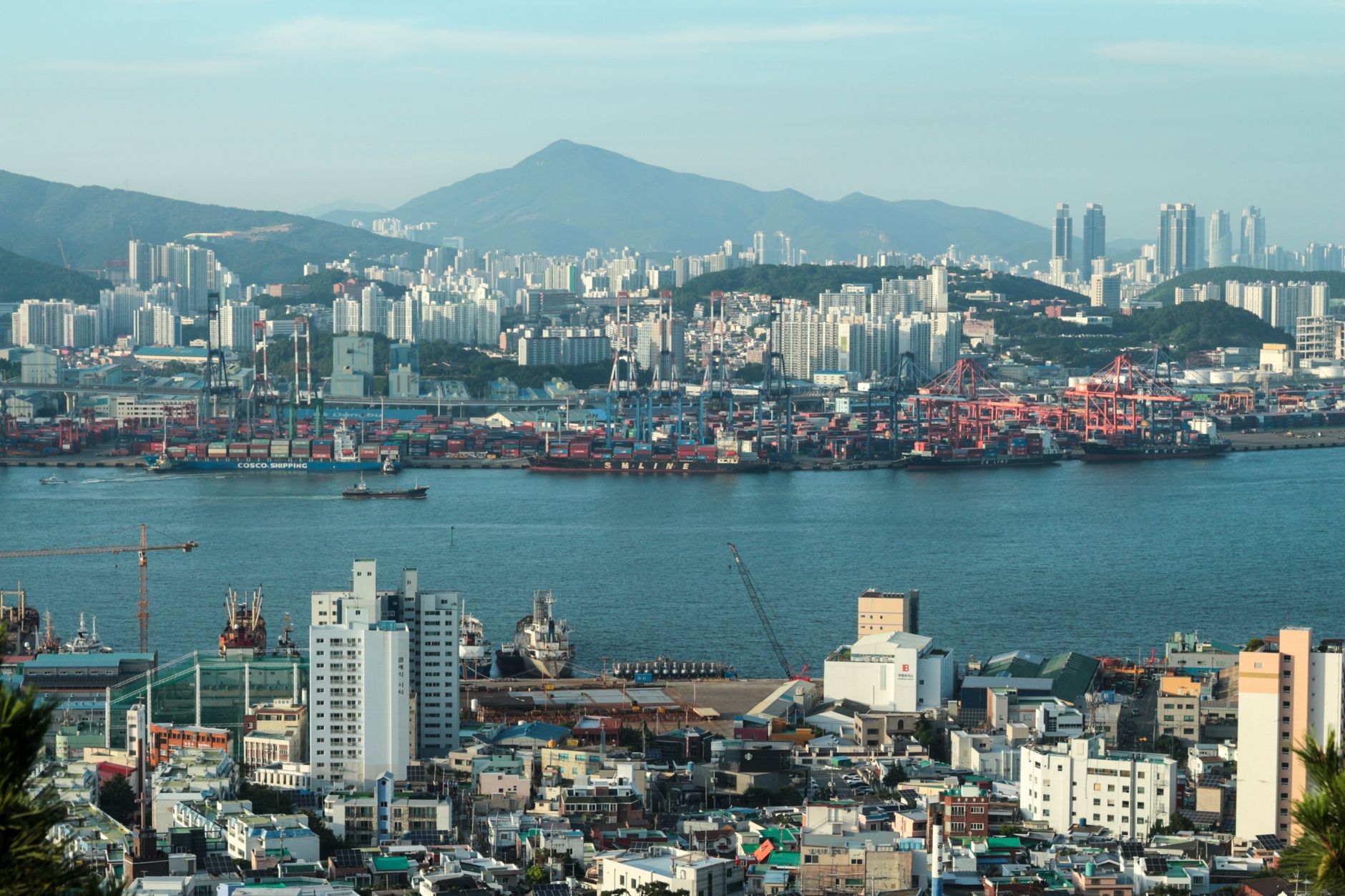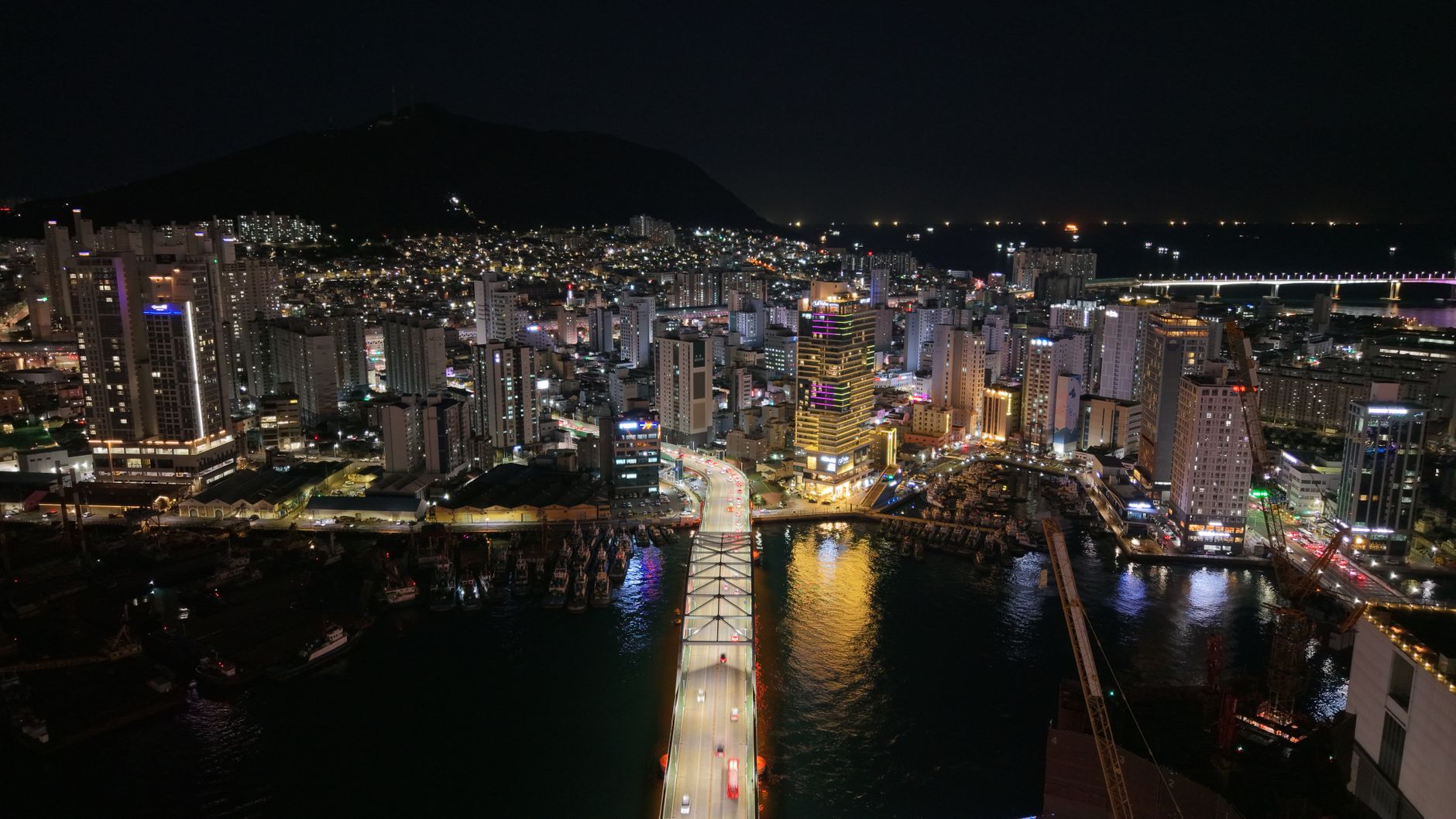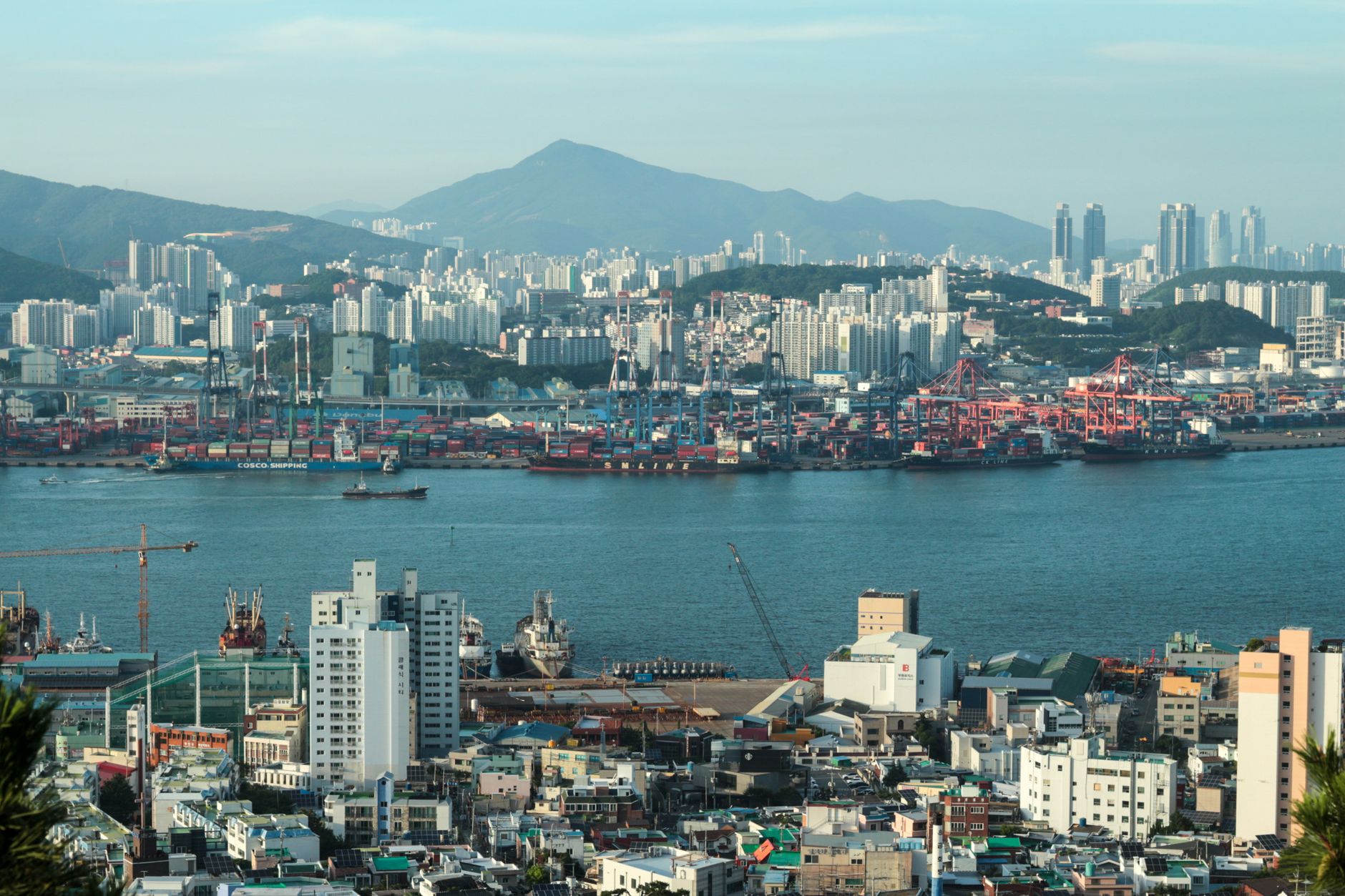
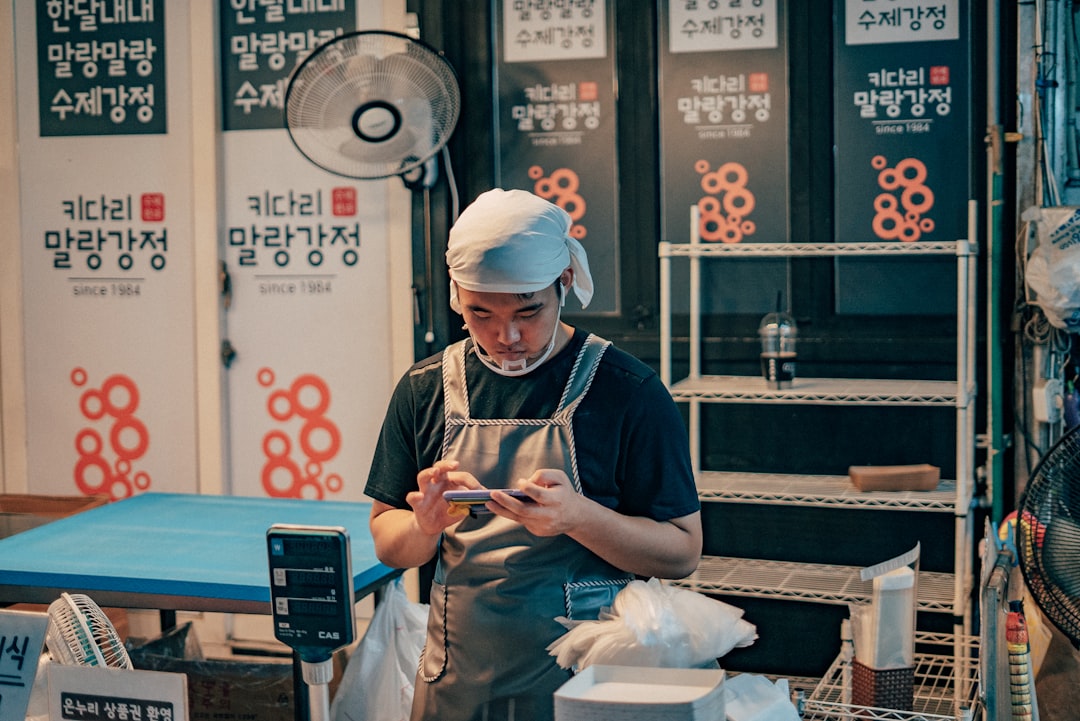
The alley that runs behind Busan’s Jagalchi Market doesn’t announce itself. There’s no sign, no English translation, no photograph of a smiling chef taped to a wall. What there is, at around four in the afternoon, is a smell that cuts through the fish-market air like a blade — sesame oil, hot and nutty and old in a way that suggests it’s been doing this for decades, not years. I followed it one humid October afternoon, past a stack of Styrofoam boxes and a man scraping scales from a flatfish, and found a woman who looked to be in her late seventies working over a single portable gas burner.
Her name, I learned later from a regular who stopped to pick up an order, is Mrs. Hwang. The stall has no name. It occupies a space that’s really just a recessed doorway, maybe four feet wide, with a tarp strung above it to keep the rain off the shirtsleeves of customers. She sells exactly one thing: mussel-jeon, the savory Korean pancake made with fresh mussels, scallions, and a batter so thin it’s almost translucent. The difference is the oil — not the kind of difference a food blogger manufactures to get clicks.
She uses sesame oil from a single supplier in Andong, a city known for its sesame cultivation, and she’s been using that supplier since 1956. The recipe came from her mother-in-law, who ran a stall in the same spot after the Korean War, when the market was little more than a collection of tarps and packing crates. The war ended in 1953, and by 1956, the family was frying. I stood in the alley for twenty minutes watching oil temperature and listening to her talk about her mother-in-law in the clipped, affectionate way people do when the person is long gone and the argument is finally settled.
The batter is flour, water, a single egg per batch, and salt. That’s it. No baking powder, no soda water, no rice flour, no chef-ified twist. The mussels are debearded and shucked on a board so old the grain has worn smooth, like a river stone. The scallions are cut into two-inch lengths and mixed into the mussel meat. The batter coats just enough to hold the ingredients together — this isn’t a thick pancake, it’s a lacy, crisp-edged disc that shatters when you bite into it. The sesame oil gives it that color, a deep amber you don’t get from the pale stuff in supermarket bottles. That color is the first sign you’re eating something made from a different set of rules.
The oil behaves differently in the pan. Commercial sesame oil, the kind most restaurants use, has a low smoke point. It burns quickly, turns bitter, and needs to be cut with neutral oil to make it practical. Mrs. Hwang’s oil doesn’t burn. It shimmers, releases a cloud of aroma that smells like a cupboard being opened after years of neglect, and holds steady at a temperature that produces a crust in exactly ninety seconds per side. I timed it, not out of journalistic rigor but because I was standing there waiting for my order and had nothing else to do. Ninety seconds on the first side, a flip that looked effortless, and ninety more on the second. She didn’t use a timer. She knew.
The mussels come from the morning’s catch, delivered by a fisherman who works out of a boat moored maybe two hundred meters from where she stands. In Busan, that’s not a selling point — it’s logistics. Most of the seafood in Jagalchi came from within a few kilometers that same day. What matters is that she gets her mussels before they’ve been refrigerated, before they’ve lost the briny, almost metallic flavor of live shellfish that’s been out of the water for less than six hours. The texture is different. The meat is firmer, more defined, and it doesn’t weep liquid into the batter the way pre-shucked, refrigerated mussels do. I asked her about this, or tried to — my Korean is functional but not nuanced — and she nodded and held up three fingers. Three batches a day, at eleven, two, and four. Each batch uses mussels that arrived that morning. The afternoon batch is the last, and by four-thirty, the mussels that didn’t sell go into a stockpot for the soup she gives away to the fishmongers who work late.
Most people who visit Jagalchi do the same thing: they walk through the main hall, gawk at the live octopus, take a photo of the haejang-guk stall that was on a Netflix show, and leave. They never go behind the market. They don’t know about the alley. And even if they did, they wouldn’t know about Mrs. Hwang unless someone led them there, because she doesn’t advertise and she doesn’t need to. Her customers are the people who work in the market — the fishwives, the porters, the old men who sit on upturned crates and drink soju from green bottles. They’ve been eating her jeon for forty years. A few of them, the very oldest, have been eating it for sixty.
The first time I tried it, I bought two orders — one to eat immediately, standing in the alley with juice running down my wrist, and one to take back to my room. The second one never made it to the room. I ate it on the walk back, crossing the bridge over the channel, watching the late-afternoon light turn the harbor from gray to copper. It was still warm. The sesame oil had soaked through the paper napkin she’d wrapped it in, leaving a translucent stain on the napkin — proof that this was a different kind of frying oil, one that coats rather than greases.
The recipe, as far as I can tell from talking to people who’ve tried to replicate it, is not replicable. It’s not the ingredients alone — the Andong sesame oil is available online, the mussels can be sourced from any coastal market, the technique is straightforward — it’s the accumulation of small decisions made over a lifetime. The oil temperature that she adjusts by feel, based on the humidity of the day and the freshness of the mussels. The batter consistency that changes subtly depending on how much water the scallions release. The pan, which is not a griddle at all but a cast-iron pan that’s been seasoned for so long that its surface is as black and slick as obsidian. She told me she’s never cleaned it with soap. She wipes it with a cloth and a little salt, and that’s been enough since 1956.
There was a moment, standing in that alley as the afternoon crowd thinned and the temperature dropped, when I understood why food writing about Korea tends to fixate on the big cities and the big names. It’s easier. Seoul has Michelin stars and tasting menus and chefs who give TED Talks. Busan has a woman in a doorway who makes one thing, for people who know her, and doesn’t care whether you find her or not. The best thing I ate in Busan was not the multi-course meal at a restaurant overlooking the harbor. It was a pancake, fried in oil older than I am, eaten while a fishmonger hosed down the pavement next to me and the last of the day’s light turned the alley into a place that felt less like a market and more like a kitchen that had never stopped operating, even for a minute, since the day it opened.
The stall operates from eleven to five, more or less. She takes Sundays off, and the first week of August, when the heat makes standing over a burner unbearable. If you go, bring cash — small bills, because she doesn’t keep much change — and don’t ask for modifications. Mussel-jeon with cheese, which you’ll find on menus all over Seoul, is not a thing here. It’s not a thing anywhere, as far as Mrs. Hwang is concerned. She’ll look at you with the same expression she’d give a customer who asked for ketchup, and she’ll fry your order in the exact same oil she’s been using since before most of the people in the market were born.
The market is famous, but fame is a poor map of what actually matters. What matters is the alley, the smell, the woman who knows how long a pancake needs to fry without looking at a clock. What matters is the sesame oil, and the fact that nobody in the main hall uses it. They can’t. It’s too expensive, it burns too easily, and most of their customers wouldn’t notice the difference anyway. Mrs. Hwang’s customers notice, and they’ve been noticing for six decades.

📷 Photos: Daniel Bernard (Unsplash), Markus Winkler (Unsplash)