I found my way there on a Tuesday afternoon in early November, when the ginkgo trees along the street had turned the color of old brass and the air carried that particular Seoul chill that feels like it’s testing you. The address I had was incomplete — just a building number and the phrase “basement level, look for the blue sign” scrawled in a notebook from three years prior. I’d been warned by a friend who used to live in the neighborhood that the sign might not even be blue anymore. “It’s been faded for a decade,” she’d said. “Look for the door that’s more worn than the others.”
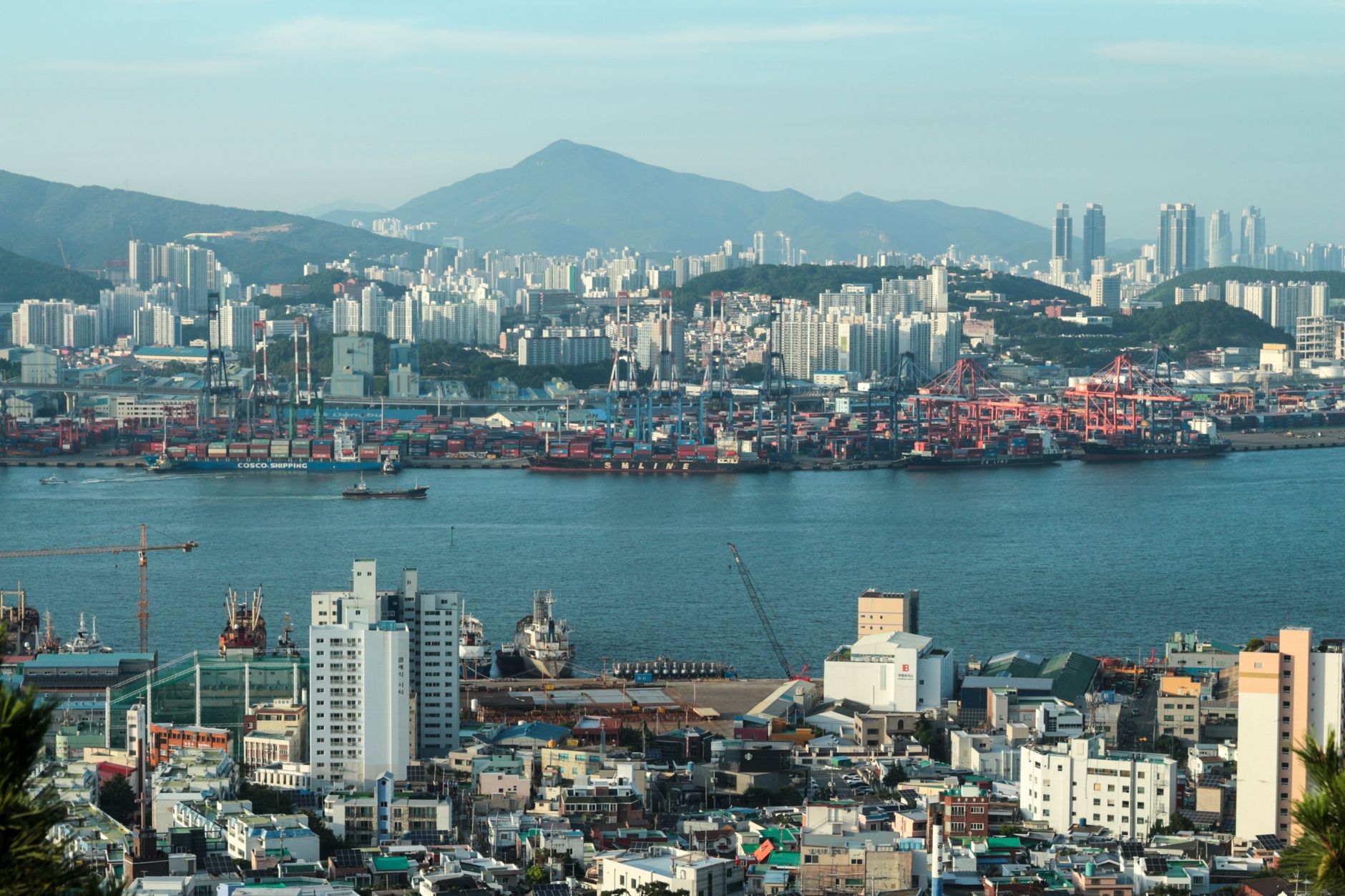
The block was in Jongno, one of those older districts where the city’s rapid redevelopment feels like a slow-motion demolition derby. On one side, a gleaming twenty-story office tower with a Parisian bakery on the ground floor. On the other, a row of buildings that seemed to sag under the weight of their own history, their facades a patchwork of decades-old signage and peeling paint. In between, a narrow alley that opened into a small courtyard where three women sat on plastic stools, peeling garlic into a shared bowl. The smell hit me before I registered what I was looking at — a deep, fermented pungency that was unmistakably the work of someone who had been making kimchi-jjigae for longer than I had been alive.
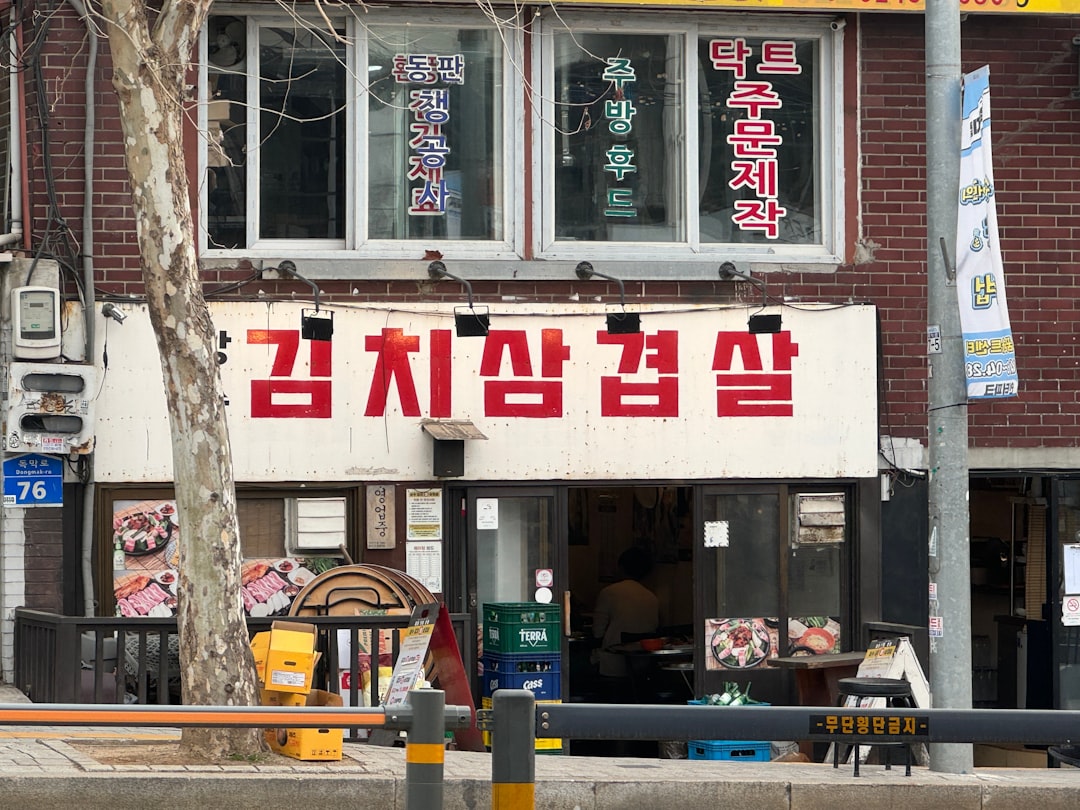
The restaurant was called something different on the menu than what locals called it. Officially, it was registered as “Seoul Sundubu” — a name that suggested soft tofu stew, the more commercially friendly cousin of what they actually served. But everyone I’d spoken to called it Kim’s Place, or sometimes just Madame Kim’s, after the woman who had been cooking there since 1982. The discrepancy was the first clue that this place operated on its own terms. A restaurant with a generic name and a specific reputation is usually one that doesn’t need to advertise.
I pushed open the door, which stuck halfway and required a shoulder to finish the job. Inside, the room was smaller than most studio apartments — maybe six tables, each one topped with a laminated sheet that had once been white but had yellowed to the color of old newspaper. The walls were covered in a patchwork of handwritten notes, business cards, and Polaroid photographs that had been pinned up over the decades, some so faded the subjects were barely visible. A small television mounted in the corner was playing a rerun of an old drama, the volume turned down so low it was almost inaudible over the bubbling of stockpots.
Madame Kim herself was at the stove, her back to the room, stirring a large pot with the kind of focused attention that suggested she had been doing this exact motion for forty years and had no intention of stopping. She was shorter than I expected, barely reaching the counter, and wore a white apron that had long since taken on a permanent stain pattern across the front. When she turned, she didn’t smile, but she nodded once — a gesture that seemed to say, “You found the place, so you must know what you’re here for.”
I ordered in Korean, or tried to. My Korean is functional but clumsy, and I stumbled over the word for “extra spicy.” Madame Kim just looked at me, then said in English, “You want spicy? I make spicy.” It wasn’t a question. She ladled a portion into a small stone pot, added a spoonful of something dark and aromatic from a container I couldn’t see, and set it on the burner with a practiced flick of her wrist.
While I waited, I studied the room more carefully. The other customers — three men in their sixties at a corner table — were eating in the kind of silence that comes from long familiarity. They didn’t look at their phones. They didn’t talk much. They just ate, occasionally dipping their spoons into the communal banchan dishes that were replenished without anyone asking. One of them, a man with a salt-and-pepper beard and a cap that read “Jeju 1998” in faded embroidery, caught me looking and raised his spoon in a brief salute. I raised mine back. That was the extent of the interaction.
The kimchi-jjigae arrived with a sound — a low, continuous sizzle that carried the promise of something that had been cooked at high heat and served immediately. The broth was a deep, almost brick-red, with large chunks of pork belly that had been rendered soft enough to break apart with a chopstick. The kimchi itself was clearly aged, the kind that had been fermenting for months, not weeks — sour in a way that made the back of my jaw tighten, with a heat that built slowly rather than arriving all at once. A single green onion floated on top, and a raw egg sat in a small dish on the side, meant to be broken into the stew at the diner’s discretion.
This was not the kimchi-jjigae served in most restaurants in Seoul. That version, the one tourists and younger Koreans are more likely to encounter, tends toward a milder, sweeter profile — almost approachable. Madame Kim’s was something else entirely. It was aggressive. It demanded attention. Every spoonful carried the weight of ingredients that had been chosen and prepared with an eye toward intensity rather than accessibility. I ate quickly, sweating, pausing only to drink water and catch my breath. The three men at the corner table watched with what seemed like approval.
After I finished, Madame Kim came out from behind the counter and sat down at the table next to mine, a cup of barley tea in her hands. She didn’t ask if I enjoyed the meal — I suspect she already knew. Instead, she gestured vaguely at the room and said, “This building, they want to tear it down. Maybe next year. Maybe sooner.” She said it with the same tone someone might use to mention the weather — a fact, neither happy nor sad, simply true. I asked if she planned to relocate. She shrugged. “I’m seventy-three. Maybe I’ll just stop.”
The conversation drifted. She told me she had learned to cook from her mother-in-law, who had run a similar restaurant in the same spot before the building was rebuilt in the 1970s. “It was a different kitchen then,” she said. “Wood fire. No gas. Everything took longer.” She remembered when the neighborhood was mostly residential, before the offices moved in, when her customers were the people who lived upstairs and she knew most of them by name. “Now,” she said, “I don’t know anyone. They come and go. They eat and leave.” She didn’t sound bitter about it. Just observational.
A detail I noticed while she was talking: her hands were stained a faint orange-brown from years of handling gochugaru, the Korean red pepper powder that formed the backbone of nearly everything she cooked. It was the kind of wear that couldn’t be washed off, a permanent marker of the trade. I’ve seen similar stains on the hands of bakers who handle turmeric dough and on fishermen who work with net-dyed materials, but on Madame Kim, it looked less like residue and more like a badge of authenticity.
Another customer came in while we were speaking — a woman in her thirties who seemed to be a regular. She greeted Madame Kim by name and ordered without looking at the menu. “Same as always,” she said, and Madame Kim nodded and stood up to prepare it. The interaction was efficient, almost wordless, the kind of shorthand that develops between people who have been doing business long enough to skip the formalities. I asked the woman, whose name turned out to be Soo-jin, how long she had been coming here. “Since I was in university,” she said. “So, about fifteen years.” She worked in a nearby office and came at least once a week, sometimes more. “It’s the only place left that still makes it the old way,” she said. “Everyone else has changed their recipes. Too sweet. Too expensive. Not this one.”
She asked if I had noticed the wall of photographs. I had, but I hadn’t looked at them closely. Soo-jin pointed to a particular Polaroid near the door — a group of five young people in early-1990s fashion, arms around each other, standing in front of what appeared to be the same restaurant. “That’s me,” she said, pointing to a woman in the photo who looked nothing like her. “And that’s my husband. We met here.” She explained that the restaurant had been a gathering point for her friend group during their college years, a place where they could afford to eat properly on a student budget. “A bowl of jjigae and rice was maybe three thousand won back then,” she said. “We would stay for hours. Madame Kim never kicked us out.”
The redevelopment plans, she told me, had been in motion for years. The building had changed hands twice in the past decade, and each new owner had tried to buy out the remaining tenants. Most had already left. The dry cleaner next door had closed in 2021. The stationery shop on the second floor had been empty for even longer. Only Madame Kim’s and a small convenience store on the ground floor remained. “It’s a ghost building,” Soo-jin said. “You can feel it when you walk through the hallway.”
She was right. On my way out, I took the stairs instead of the street exit, just to see the rest of the structure. The second floor was dark, the windows papered over. The third floor had a single door that looked like it had been locked for years, with a faded sign that read “Hair Salon — Please Ring Bell.” The hallway smelled of dust and the particular mustiness of unoccupied spaces. At the end of the corridor, a small window looked out onto the courtyard where the women had been peeling garlic earlier. They were gone now, replaced by a single man sweeping leaves into a pile with a bamboo broom.
I spent the rest of the afternoon walking the surrounding blocks. A block away, a new residential tower was under construction, its facade already clad in glass and steel. Across the street, a traditional hanok house had been converted into a coffee shop that served pour-overs for 8,000 won. Three blocks south, a historic market had been renovated into a food hall that featured artisanal kimchi at prices that would have been unthinkable a decade ago. The city was evolving in real time, and places like Madame Kim’s were being squeezed — not because they were bad at what they did, but because the economics of the neighborhood no longer supported them.
That evening, I returned for a second bowl. This time, I didn’t order — Madame Kim simply brought out the same dish, with the same level of spice, and set it down without a word. I ate more slowly than I had at lunch, trying to pay attention to every element: the way the broth had thickened slightly after cooking down, the texture of the kimchi when it was fully softened, the saltiness that was balanced by the neutrality of the rice.
I asked if I could take a photograph of the restaurant. She hesitated, then said, “No photos of me. But the room is fine.” I took one shot of the wall of photographs, the faded Polaroids and handwritten notes that told the story of everyone who had passed through this space over the past four decades. It wasn’t a great photo — the lighting was poor and the frame was cluttered — but it was accurate. That mattered more.
As I paid and stepped back out onto the street, the temperature had dropped further, and the ginkgo leaves were rustling in a wind that had picked up from the north. The blue sign — faded, as predicted — creaked on its hinges. I stood there for a moment, watching the light through the restaurant’s small window, where Madame Kim was clearing my table. The building looked fragile, almost temporary, as if it might collapse under the weight of its own history at any moment. But inside, the jjigae was still bubbling, and the television was still playing the same drama, and for now, that was enough.
A few weeks later, I heard from Soo-jin — she had sent a message through a mutual acquaintance — that the demolition date had been moved up. The new owner wanted the site cleared by spring. Madame Kim had apparently told her regulars that she would keep cooking until the very last day, and that anyone who wanted a bowl should come before the end of February. I checked my calendar. It was already December.
I still think about that second bowl. Not because it was the best I’ve ever had, but because of something Madame Kim said when I asked why she had never changed her recipe, even as the neighborhood around her transformed. She looked at me with an expression that could have been amusement or exhaustion or both, and said, “The recipe is fine. The problem isn’t the soup.” She didn’t elaborate, and I didn’t ask her to.

📷 Photos: Suzi Kim (Unsplash), Suzi Kim (Unsplash)