The air in Kowloon City’s wet market at first light is a physical substance, not a collection of scents. It lands on the skin cool and damp, carrying the smell of wet concrete, crushed ice, and the faint, almost metallic tang of fresh blood that hasn’t yet been hosed away. By 6:30 AM, the fluorescent lights inside the covered arcades flicker to full brightness, lighting up a world already in full, frantic motion.
This is the hour of the wholesale buyers. Men in rubber boots and long-sleeved shirts move with the practiced efficiency of people who have done this for decades. They don’t browse. They scan, they point, they nod. A transaction for fifty kilograms of bok choy takes less than ten seconds. A crate of live chickens — stacked three high, their heads poking through the wire — gets lifted onto a handcart without a word exchanged. The negotiation, if it could be called that, happened the night before, over a phone call or a shared meal.
But it’s not the produce or the poultry that draws the curious. It’s the neon. Or rather, what remains of it.
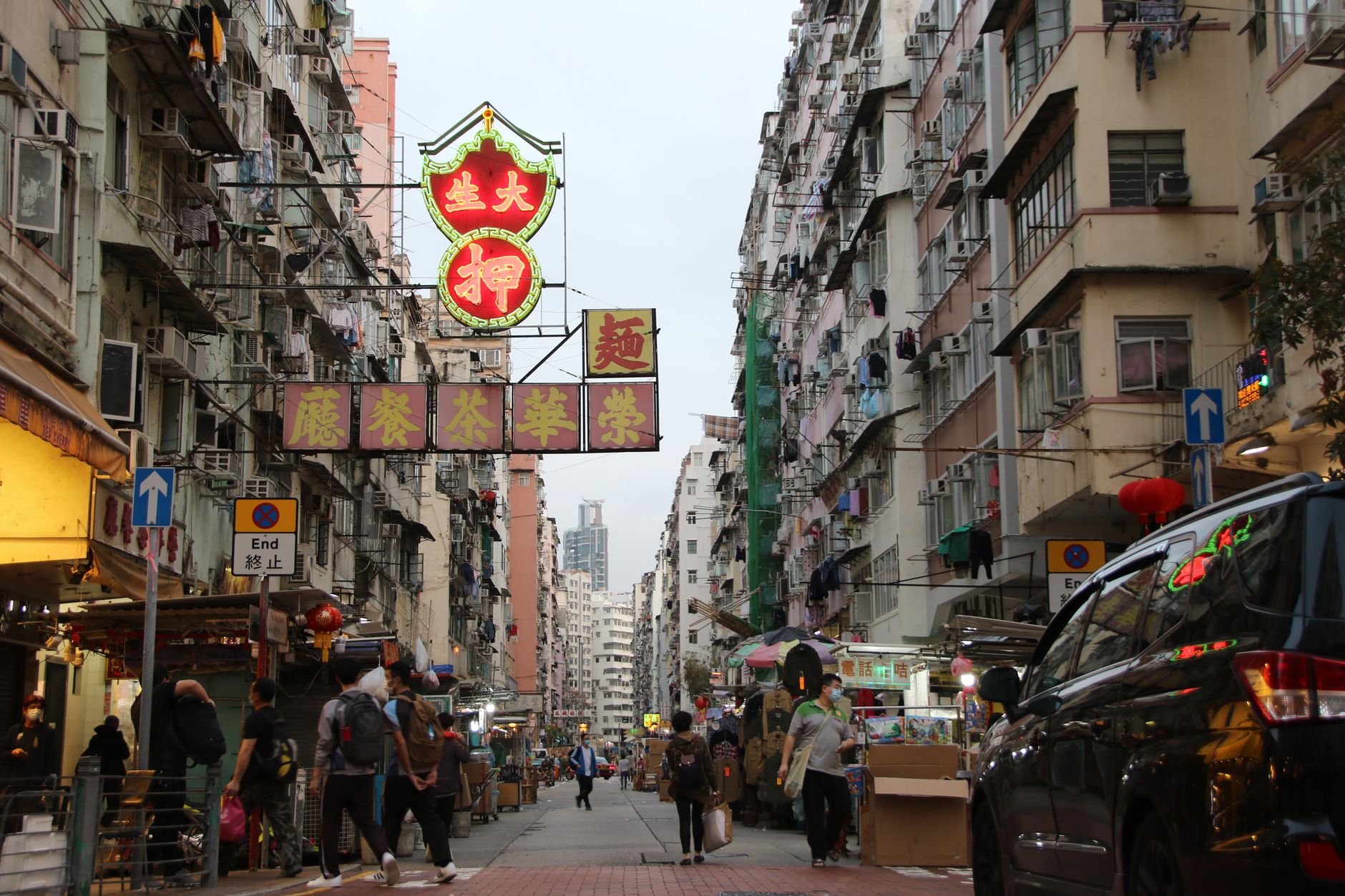
Barely visible in the morning’s full glare, the neon signs that line the outer stalls of the market are a secret language written in light — but one that only speaks after dark. By day, they’re just hollow tubes of faded pink and green, looking exhausted and apologetic, like a stage set after the audience has gone home. But the night before, between 8 PM and 10 PM, these same tubes blazed. “Fresh Fish,” one read, the characters drawn in a looping, hand-bent script that seemed to dance. “Best Quality Pork,” declared another, the neon pig silhouette beside it grinning with a mouthful of electric blue.
That’s the window. A tight, two-hour window, from roughly 8 PM to 10 PM, when the market’s neon soul is at its most visible. And then, by 10 AM the next morning, it’s as if it never existed at all.
The reason is prosaic, not poetic. The neon signs are not decorative. They are functional, designed to be seen from the street after dark, when the market’s secondary business — the late-night food stalls and the occasional back-alley wholesale deal — takes over. By 10 AM, the sun is high enough to wash them out completely. The street-level action has moved indoors, into the permanent, covered stalls that are their own universe of noise and steam.
One regular, a man who has been buying his vegetables at the same stall for thirty-seven years, explained the rhythm over a cup of scalding milk tea at a nearby cha chaan teng. The stall’s owner, a wiry woman in her sixties named Mrs. Lau, didn’t look up from slicing a kilogram of pork belly with a cleaver that seemed to have its own gravitational field. “The lights are for the night crowd,” the man said, gesturing with his chin. “Wholesalers, the restaurant buyers, the guys who run the dai pai dong. They come after dark. We come in the morning. Two different markets, same place.”
And that’s the key to understanding the place. Kowloon City’s wet market is not one market. It is two, layered on top of each other like a palimpsest, sharing the same physical space but operating on different schedules. The morning market is for the home cook, the family, the person who wants a single, perfect fish for dinner. The evening market is for the professionals, the ones who need a hundred kilograms of something by midnight.
The neon is the boundary between them.
Visitors who arrive expecting the famous neon signs to be blazing at noon are often disappointed. They stand at the entrance, cameras dangling, squinting at the pale, unlit tubes. Some take a photo anyway, hoping the contrast can be pulled up in post-processing. Most just shrug and move on, heading deeper into the covered market, where the real action — the shouting, the haggling, the impossible array of produce — is still in full swing.
What they miss is the transformation. To see it, one must be there at dusk, around 7:30 PM, when the first signs begin to flicker back to life. It happens stall by stall, like a wave of light moving through the market. A dim hum fills the air. Then a flash of pink. Then green. Then a deep, liquid blue. The effect is not kitschy or nostalgic. It’s functional, almost aggressive. The neon doesn’t say “visit me.” It says “I have what you need, and I’m open.”
By 9 PM, the market’s outer ring is a strip of pure electric color. The neon pigs, the neon fish, the neon calligraphy spelling out the names of long-forgotten wholesalers — all of it is back, rendered in bright, unwavering lines against the dark street. The temperature has dropped by several degrees. The humidity that clings to the skin during the day has receded, replaced by a cooler, drier air that carries the smell of frying garlic from the food stalls that have set up on the pavement. A single skewer of grilled squid costs twelve Hong Kong dollars. A plate of cheung fun, the silky rice noodle rolls, is eighteen. The transaction is cash only, no receipt, no questions.
This is the market the neon was built for. And it lasts only as long as the lights stay on.
The signs themselves are a dying art. The craftsmen who can bend a tube of glass into a perfect, fluid curve are fewer than a handful left in Hong Kong. One of them, a man named Mr. Tang who still works from a tiny, cluttered shop on the edge of the district, said he could count the number of active neon benders in the city on one hand. “They want LED now — I don’t know, maybe it’s just the way things go,” he said, with a shrug. “It’s cheaper. It lasts longer. But it doesn’t feel the same.” He gestured to a finished sign leaning against his wall — a dragon rendered in red and gold, its scales a series of interlocking loops. “This is art. The LED is just… advertising.”
The wet market’s neon has survived longer than most because it is not seen as art. It is seen as infrastructure. The sign for the pork stall is not there to be photographed; it’s there to be read from three blocks away by a restaurant owner driving a delivery truck at 2 AM. That utilitarian purpose is exactly what has preserved it. Nobody thinks to replace something that still works, even if it’s fifty years old.
But the preservation is fragile. A single broken tube, a single faulty transformer, and a sign goes dark. The owner of the stall, who might be in his seventies and whose children have no interest in the business, might not have the budget or the will to fix it. Another sign, another piece of the city’s nocturnal language, disappears. The market’s neon is not being deliberately preserved. It’s simply being outlasted.
A photographer who has been documenting the signs for years favors a specific time and condition for seeing the full effect: around 9:30 PM, on a night with a bit of drizzle. “The rain makes the neon reflect off the wet pavement,” he said, “and it doubles the light. The whole street becomes this blur of color — or something like that.” He noted that the best shots are not of the signs themselves, but of the signs reflected in puddles, or in the wet surface of a truck’s windshield, or in the eyes of the cats that slink between the stalls.
By 11 PM, the action shifts. The neon is still on, but the crowd has thinned. The wholesale buyers have come and gone. The dai pai dong are winding down, their proprietors hosing down the pavement and stacking plastic stools. The neon signs, left on for the cleaning crew and the stray dogs, have become a sort of after-hours decoration. A few stubborn customers remain, eating bowls of noodles in the colored light, but the energy has leaked out.
And then, by 5:30 AM, before the sun has even thought about rising, the cycle begins again. The hoses are turned on the pavement, washing away the residue of the night before. The first delivery trucks rumble down the narrow streets. The fluorescent lights inside the covered market click on, one by one. The neon, having done its job, retreats back into invisibility, waiting for the next evening.
The neon doesn’t advertise a place. It announces a time. And that time, every single day, ends by 10 AM.
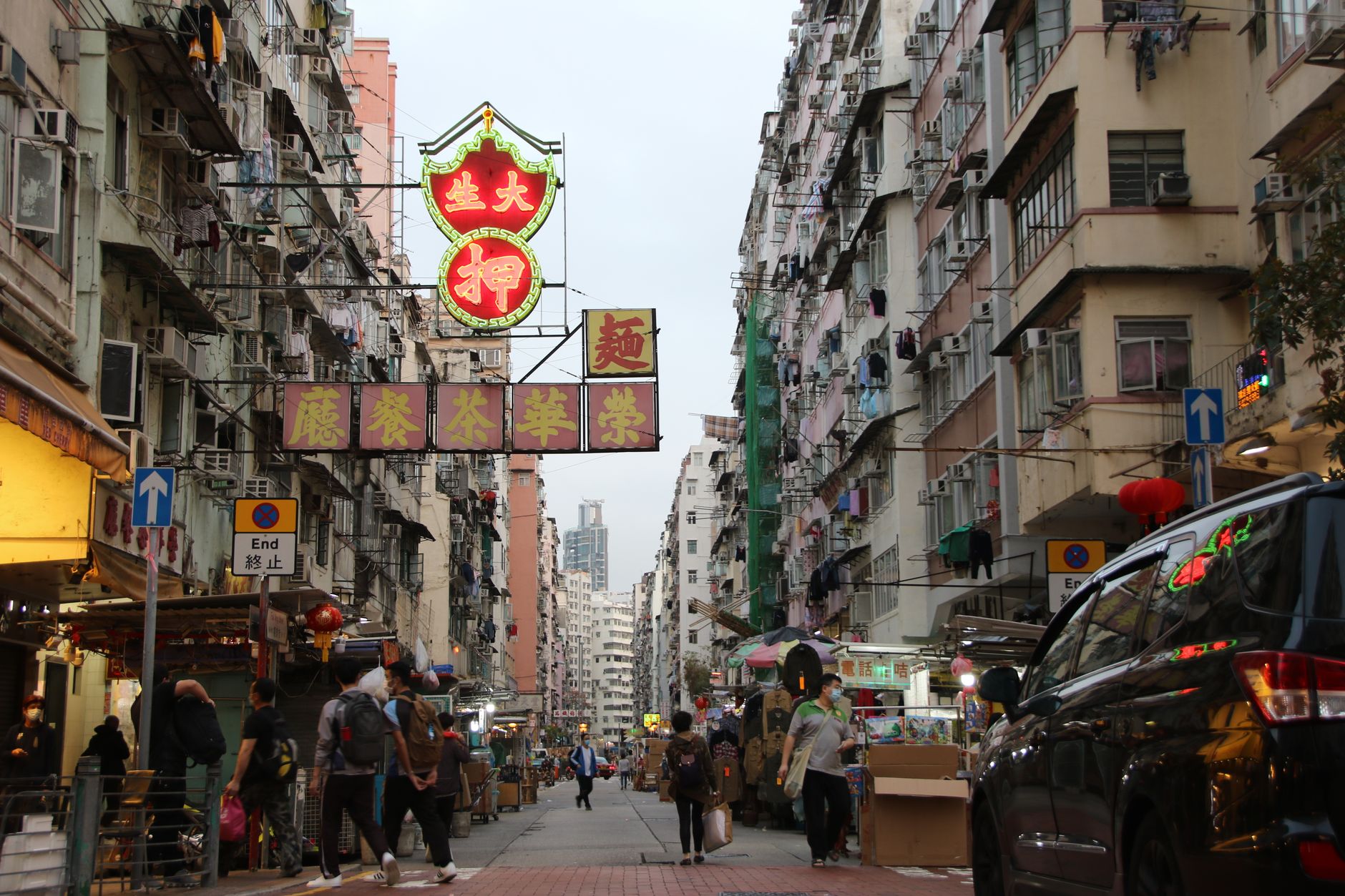
📷 Photos: Oscar Chan (Pexels), Oscar Chan (Pexels)