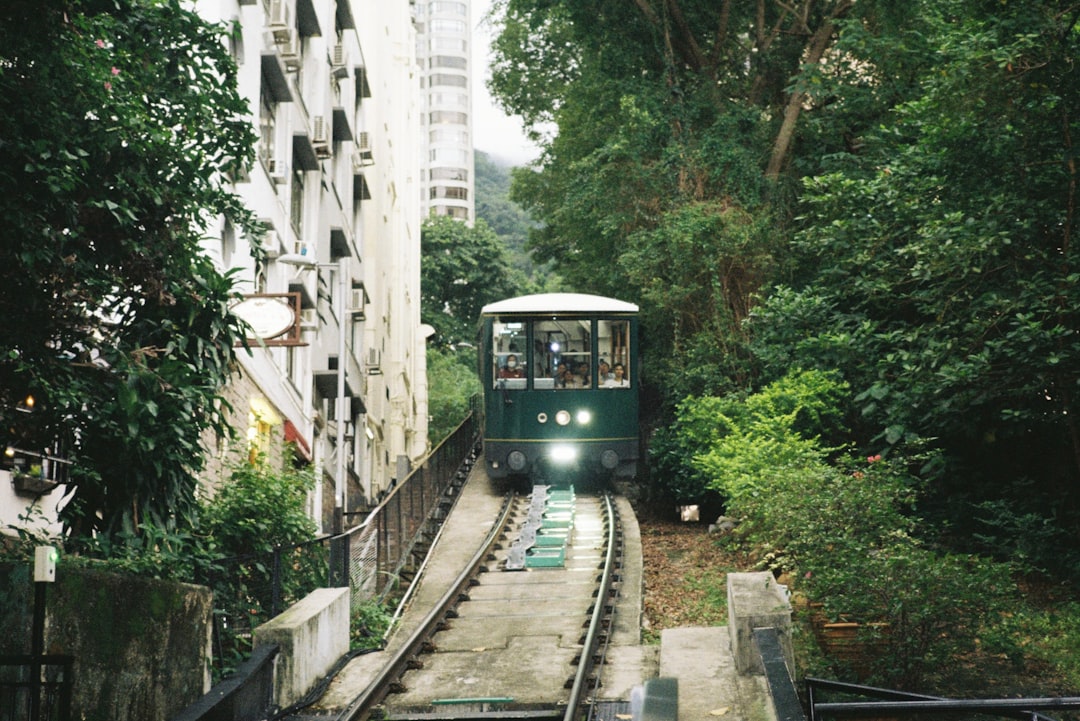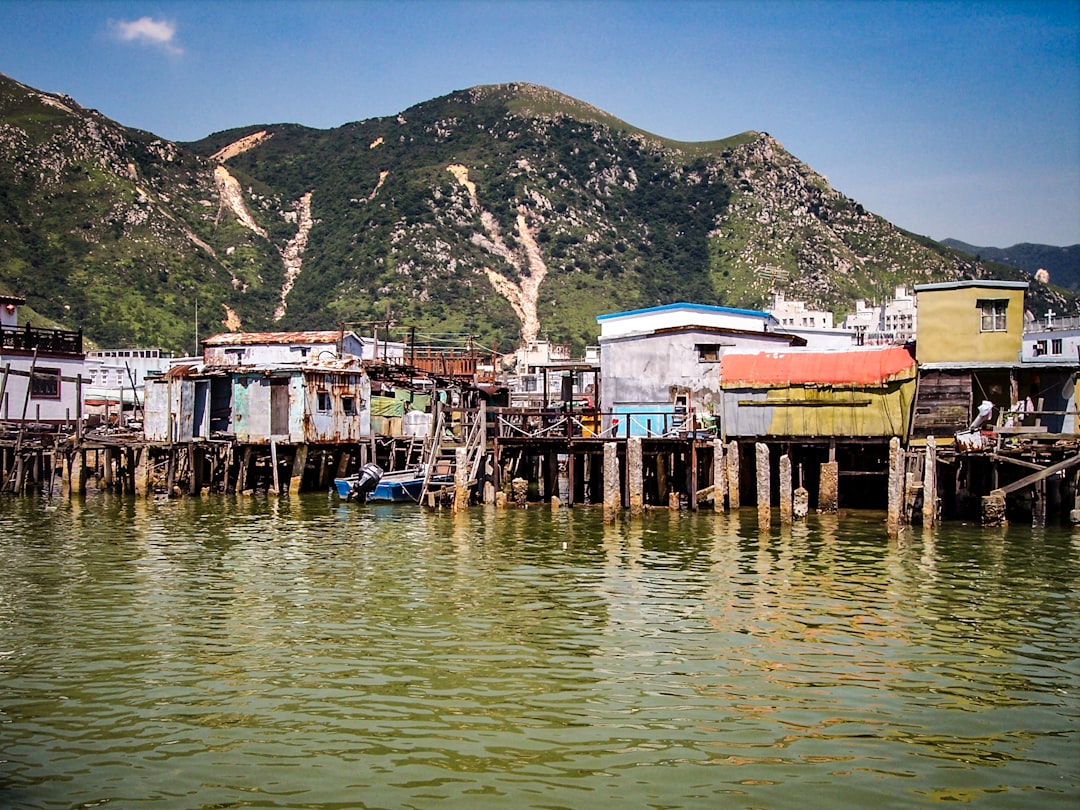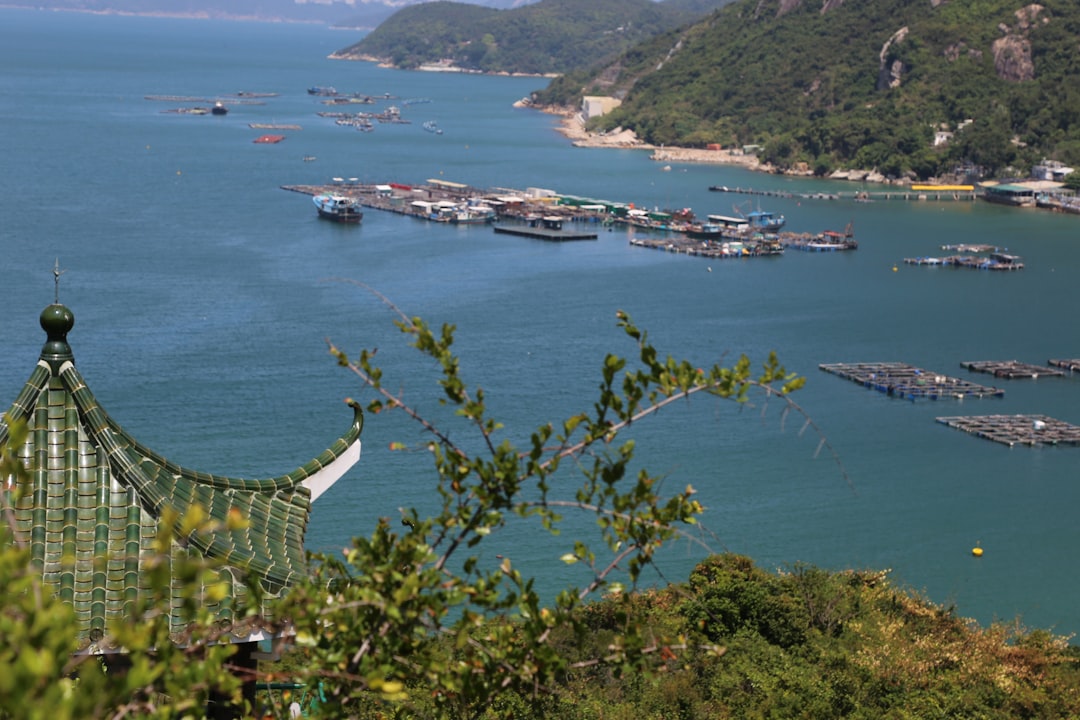

From the MTR exit at Shau Kei Wan, the air changes. Down at the tram terminus and the fishmongers on Nam On Street, the city is all wet concrete and diesel and the insistent clatter of produce crates being unloaded before the lunch rush. But the moment a visitor turns up the hill past the old tenement blocks, something shifts. The humidity stays the same, but the noise drops by three distinct notches. The smell is the first thing—not garbage or exhaust, but damp stone and moss and the faint sweetness of somebody’s cooking oil drifting out of a fourth-floor window that hasn’t been opened properly since the 1980s.
The path that leads to what’s left of the last hilltop village on Hong Kong Island doesn’t announce itself. There’s no signpost, no heritage trail marker, no friendly arrow pointing the way. What there is, instead, is a narrow gap between two apartment buildings that looks like it leads to somebody’s parking spot. It doesn’t. It leads to a set of stone steps that have been worn smooth by a century of feet, then abandoned by municipal attention, then reclaimed by the kind of moss that grows in deep, patient green layers when nobody’s around to scrape it off.
These aren’t the famous steps. The famous steps are on Lantau, or up at the Peak, or along the Dragon’s Back, and they come with railings and drainage and the occasional bench. These steps are the opposite of famous. Some of the stones have cracked right through, and the gaps between them vary from comfortable to ankle-threatening. The handrail, where one exists, is a pipe that looks like it was last painted when Hong Kong was still a British colony.
But they lead up. That’s the thing. They lead up, and at the top, through the overgrown branches of a banyan tree that has clearly decided this corner of the city belongs to it, a structure appears. Not a temple, not a mansion, not a tourist attraction with a gift shop. A village house. A real one, with real laundry hanging from a second-floor window and a real elderly woman sitting on a plastic stool in the shade of a corrugated-iron awning, fanning herself with a newspaper. She doesn’t look surprised to see a visitor. She looks like she’s been expecting this exact moment all afternoon, and has decided it’s not interesting enough to warrant getting up.
Lei Tung Uk—or what remains of it—sits on a ridge that catches the breeze from the harbour on one side and the exhaust from the highway on the other. The village was once a substantial settlement of Hakka farmers who worked the terraced slopes that are now buried under apartment complexes and shopping malls. The stone steps were the main artery, connecting the village to the market at the waterfront below—a journey that would have taken the better part of an hour on foot, carrying baskets of vegetables or bundles of firewood.
Today, the same walk takes about twelve minutes, assuming a visitor doesn’t stop to stare at the way the light filters through the ferns growing out of the retaining wall. The village itself has shrunk to perhaps a dozen structures, some of them clearly inhabited, others boarded up with plywood that has gone grey and warped in the humidity. A rooster struts across the path with the confidence of a property owner who hasn’t paid rates in decades. A cat watches from a windowsill, its expression suggesting it has seen generations of curious hikers come and go and found none of them memorable.
The question that hangs in the air is why this place still exists at all. Hong Kong is a city that demolishes its past with remarkable efficiency—old buildings, old streets, old neighbourhoods cleared for the next tower, the next mall, the next MTR line. The land this village sits on would be worth a fortune. Developers have surely looked at it. Surveyors have surely walked these same steps with clipboards and measuring tapes. And yet the village remains.
Part of the answer is access. The stone steps make it difficult to bring construction equipment up. The slope is steep enough that building a road would be a major engineering project, and the surrounding development has hemmed the site in so tightly that there’s no easy way to approach it from above or below. The village exists in a kind of geographic loophole—too inconvenient to develop, too awkward to demolish, too high up to bother with.
Another part of the answer is that people still live here. Not many. Maybe a dozen households, scattered across the surviving structures. They’re mostly older—retirees, or people who work in the neighbourhood and have no interest in modern high-rise living. One resident, a man in his seventies who identifies himself only as Mr. Lau, has lived in the village since he was a child. “This was the whole world,” he says, gesturing at the narrow lane. “Everything was here. The school was at the bottom. The farm was up there. You didn’t need to go anywhere else.” He pauses, then adds, “Now I don’t need to go anywhere else either. But for different reasons.”
The village has no shops, no restaurants, no café where a hiker might stop for a cold drink. The nearest convenience store is a ten-minute walk back down the hill. That absence of commerce gives the place a strange, suspended quality. It feels less like a living community and more like a museum that somebody forgot to finish setting up. The difference is that the exhibits in this museum are still cooking dinner and watching TV and hanging their laundry out to dry.
What draws people here isn’t the destination itself—the village is small, and there’s not much to do once you arrive—but the journey. The stone steps are the attraction. They force a pace that the rest of Hong Kong doesn’t allow. Nobody hurries up these steps. It’s impossible. The uneven surfaces, the steepness, the humidity that makes every breath feel like inhaling someone else’s bathwater—all of it combines to slow a visitor down, to make them pay attention to where they’re putting their feet and what’s growing in the cracks between the stones.
Regulars on this route tend to have a favourite spot about two-thirds of the way up. It’s not marked, not special in any obvious way, but there’s a bend in the steps where the angle of the sun hits just right in the late afternoon, and the moss on the retaining wall turns a particular shade of bright, almost electric green. A brief pause here reveals the sound of the city filtered through distance and foliage—the beep of a reversing truck, the announcement from a bus intercom, the shout of a fishmonger. None of it urgent. None of it demanding attention. Just the city, happening somewhere else.
The path continues past the village and up toward a small park that offers a view of the harbour and the distant outline of Kowloon. From up here, the skyline looks like a geological formation—towers rising in clusters, cranes hovering over construction sites, the harbour flat and grey beneath a haze of humidity and smog. It’s a view that puts the village in context. This pocket of old Hong Kong is surrounded on all sides by new Hong Kong, but it hasn’t been swallowed yet.
The question of how much longer that will last is one that nobody seems willing to answer directly. City planning documents mention “redevelopment potential” in the area. Property listings for nearby buildings describe the neighbourhood as “rapidly transforming.” The village exists on borrowed time, and everyone who visits knows it. That knowledge gives the place a particular intensity—the feeling of seeing something that won’t be here forever, and maybe won’t be here next year.
One Tuesday afternoon, a hiker described the sensation as “preemptive nostalgia, or something like that.” She said, “You feel like you’re looking at the city from inside its own past. Like if you stood still long enough, the rest of it would fade away and this would be all that was left.” She wasn’t sad. She was just aware that she was experiencing something that would eventually exist only in photographs and memories.
Back down is trickier than the way up. Gravity works against the knee joints, and the worn stone steps demand careful foot placement. A visitor who came up too fast finds themselves taking the descent at a cautious shuffle, one hand on the dodgy railing, eyes fixed on where each foot lands. It’s the kind of walking that forces a different kind of attention—not the expansive gaze of discovery, but the narrow focus of survival. Small details emerge. The way the stone has been polished to a smooth grey by decades of footsteps. The tiny orange centipedes that scatter when a shadow falls across them. The smell of wet earth where a drainage pipe has cracked and leaked into the hillside.
In a city known for its escalators and its elevators and its high-speed trains, there’s something almost subversive about a route that refuses to be convenient. These steps serve no modern purpose. They’re too steep for delivery scooters, too narrow for two people to pass comfortably, too slippery after rain to be safe. They exist because they’ve always existed, and nobody has gotten around to removing them. That neglect has become, over time, its own kind of value.
Down at the bottom, back on Nam On Street, the fishmongers are still shouting and the trams are still clattering and the city is doing what cities do—moving forward, building upward, forgetting backward. The stone steps are just a few hundred metres away, but they might as well be on a different continent. A visitor who stands at the entrance to the gap between the apartment buildings can barely see them. They’re hidden. They’re waiting. They’ll still be there next week, and the week after, and probably for as long as nobody decides to pave them over or build a road or finally figure out what to do with that inconvenient patch of hillside.
Mr. Lau, the man who has lived here since childhood, shrugs when asked about the future. “I’ll be here until I’m not,” he says. It’s not a statement of confidence or defiance. It’s just a fact, delivered the way a farmer might talk about the weather. Unchangeable. Obvious. Not worth getting worked up about.
Would most visitors who make the climb say it’s worth it? The answer depends on what they came looking for. If the goal was a sweeping vista or a heritage plaque or a photo that will light up the algorithm, there are better places in Hong Kong for all of those things. But if the goal was to understand how the city used to work—to touch a piece of its fabric that hasn’t been rewoven into something more profitable—the stone steps deliver something that no guidebook can sum up. One last climb. And a quiet reminder that not everything worth finding has been found yet.

📷 Photos: Tim Durgan (Pexels), Tyler Zhang (Unsplash)