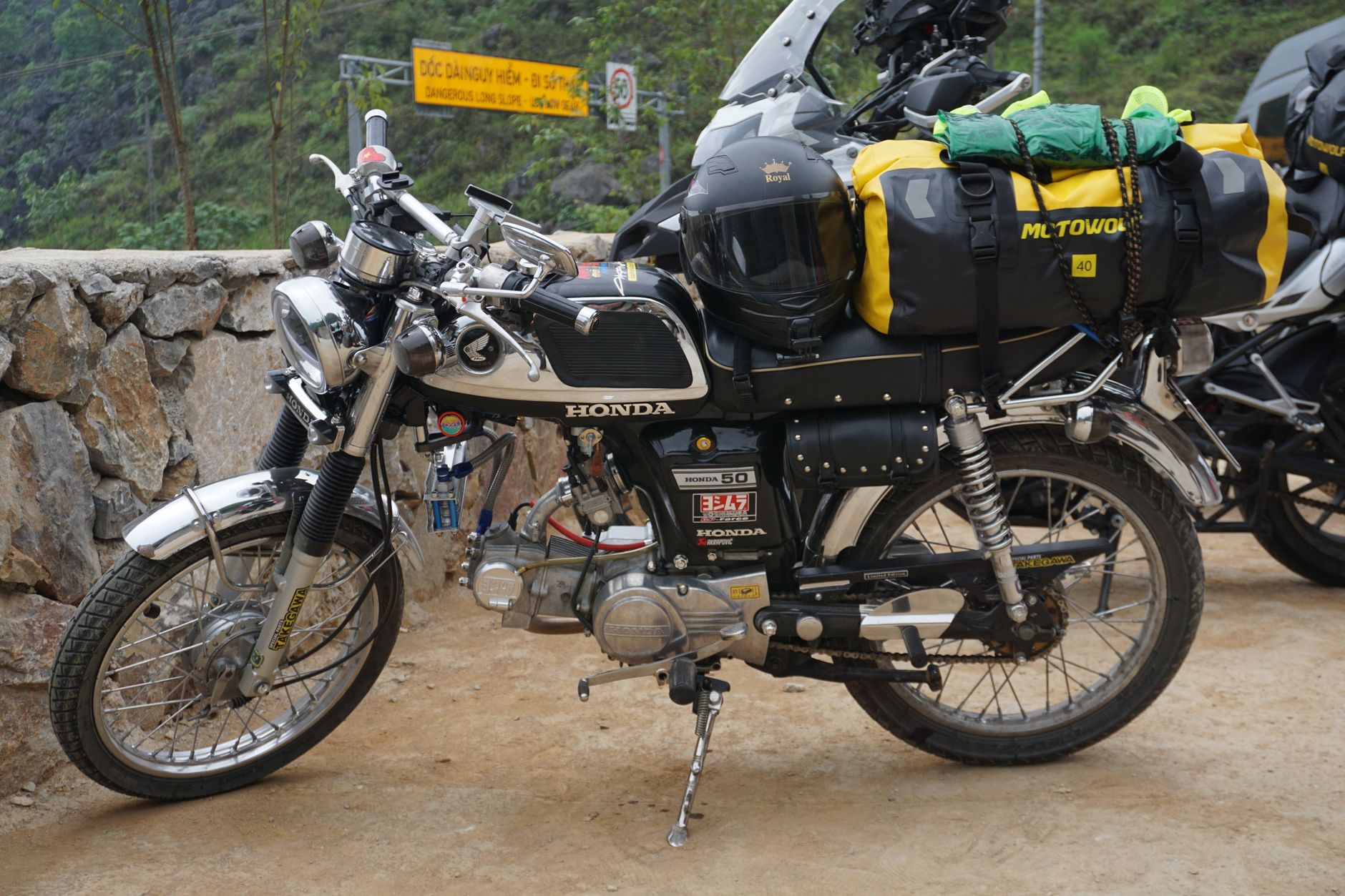
The man at the rental shop in Ca Mau City didn’t ask where we were going. He looked at the bike — a Honda Win with mismatched tires and a speedometer that hadn’t moved in years — and handed us a single tool wrapped in a rag. “If it makes a noise,” he said, in Vietnamese that was neither fast nor slow, “hit it here.” He pointed to a spot near the carburetor. Then he walked back inside.
We stood on the street for a moment, two people who had read guidebooks and memorized routes and felt, suddenly, that none of that had prepared us for this particular transaction. The bike had 110cc and no horn. The tool was a wrench. The rag smelled like diesel and fish.
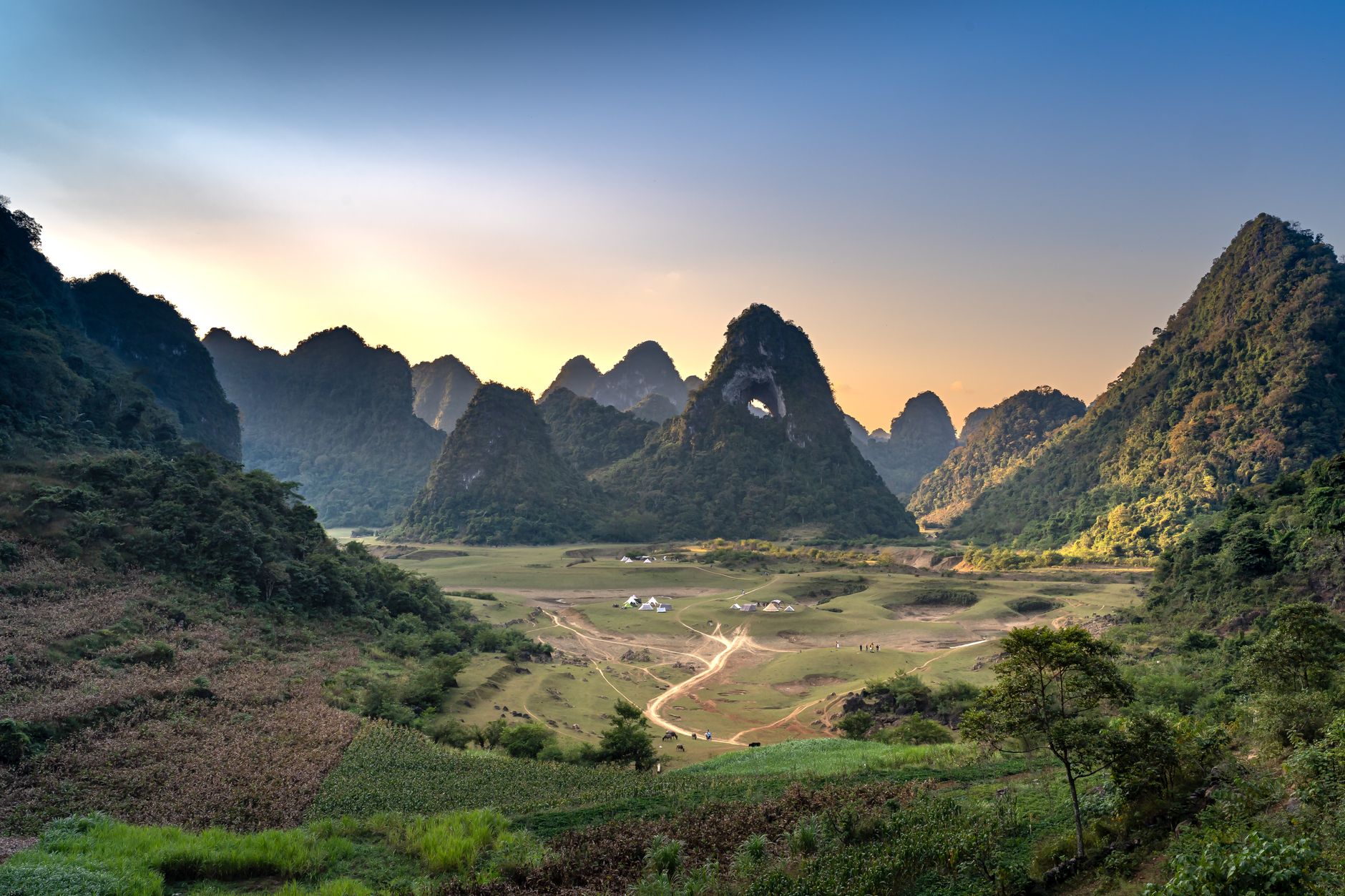
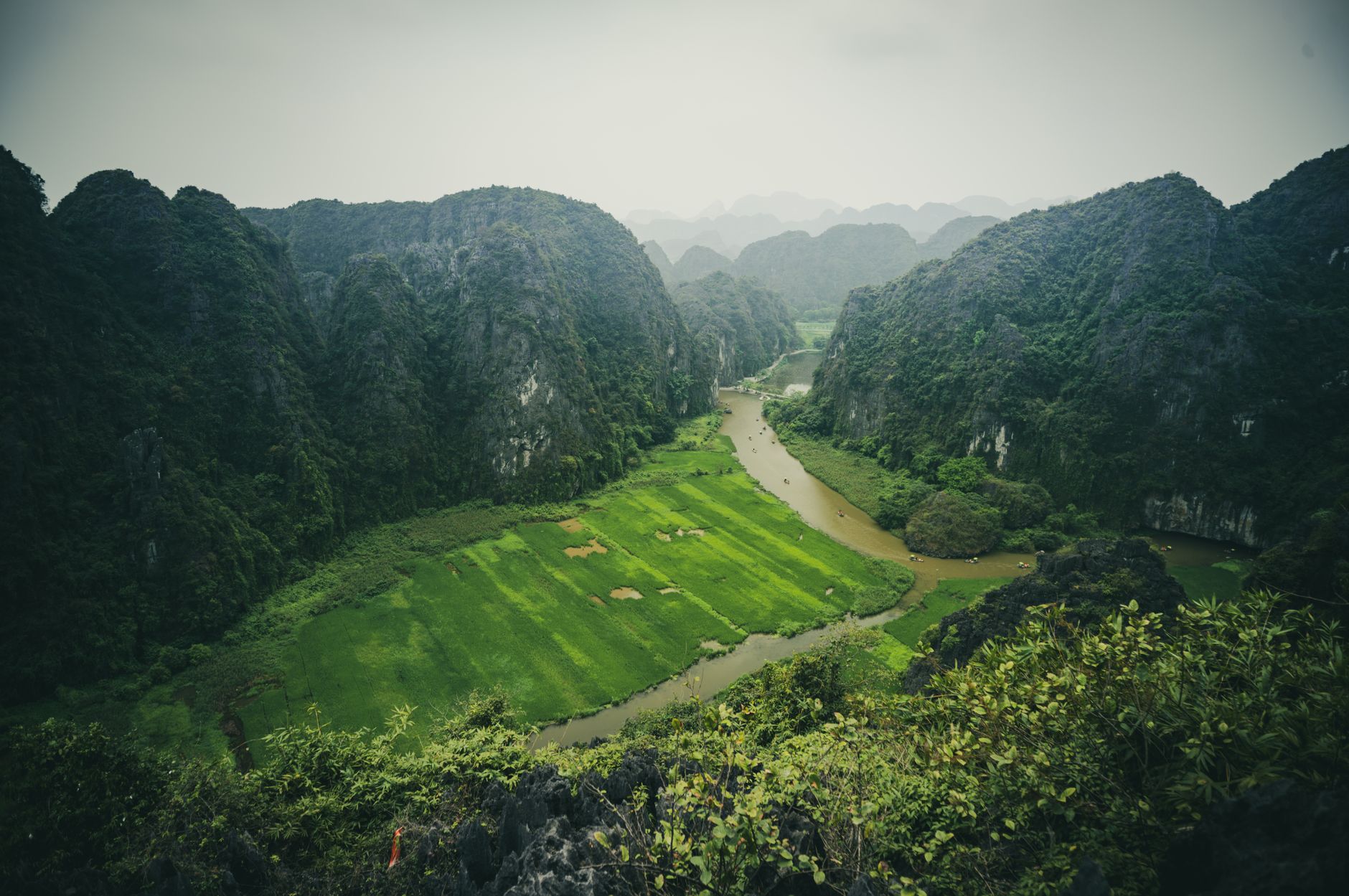
The plan was a loop — three days through the mangroves of Ca Mau province, down to the southernmost point of Vietnam, where the Mekong River meets the sea and the land simply stops. No more road after that, only water and the silt-brown expanse of the Gulf of Thailand.
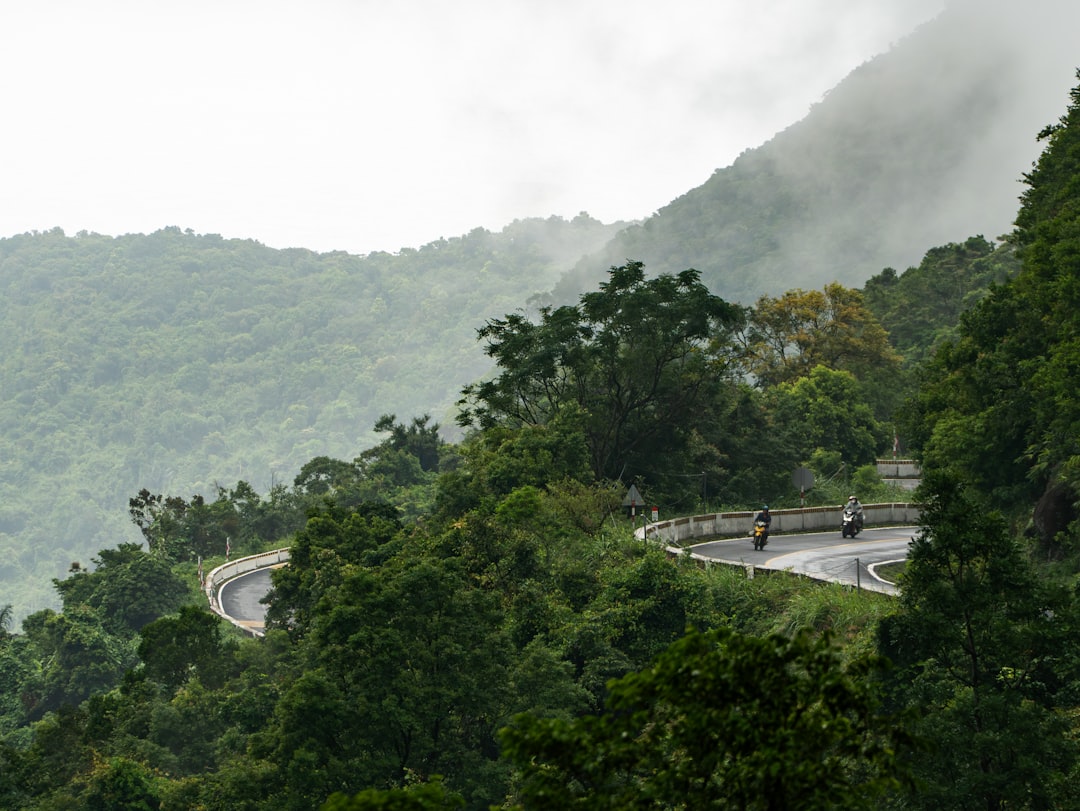
We left Ca Mau City in the late morning, which was already a mistake. The heat was wet and heavy, the kind that sits on your chest and makes the air feel thick enough to chew. The road out of town was paved and straightforward at first — flat concrete lined with shops selling gasoline in repurposed water bottles and plastic chairs where men sat watching motorbikes pass. But within fifteen kilometers, the pavement began to crack and then to disappear entirely, replaced by a dirt track that ran between two channels of dark, still water.
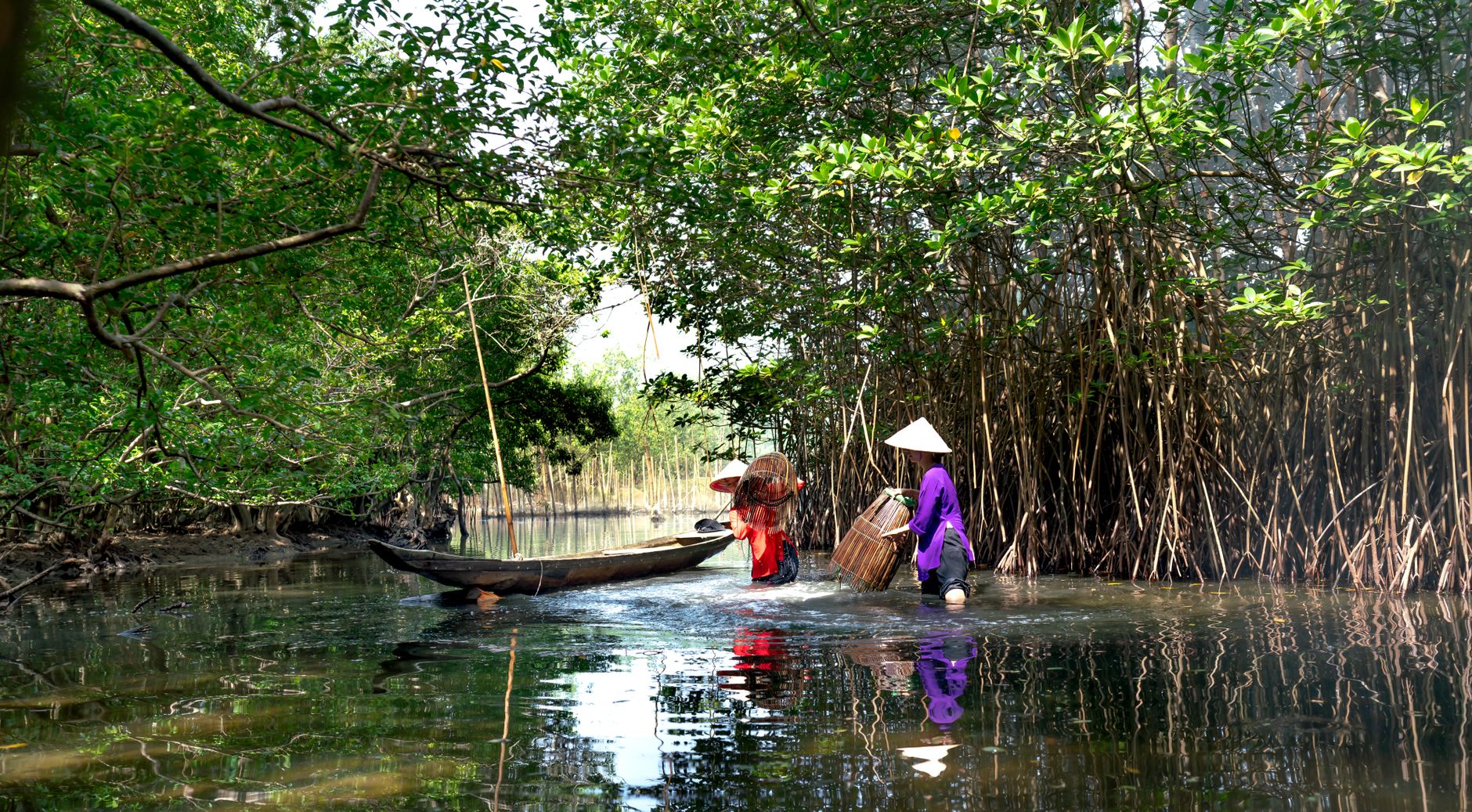
The mangroves started without ceremony. One moment we were riding past houses on stilts; the next, the trees closed in on both sides, their roots rising out of the water like gnarled fingers. The air changed — cooler, saltier, full of the smell of mud and rotting leaves. The road narrowed to the width of a single bike, and the only sounds were the engine and the splash of something unseen slipping into the canal.
Every few kilometers, we passed a small settlement: a cluster of wooden houses, a floating shop, a woman washing clothes on a concrete step that led directly into the brown water. The children waved. The dogs did not. At one point, a water monitor — easily a meter and a half long — crossed the track in front of us with the unhurried confidence of something that owned the place. We stopped and watched it disappear into the roots. It did not look back.
By midafternoon, the track had become a series of decisions. The path would split without warning — two directions that looked equally plausible, equally muddy, equally likely to lead nowhere. We made choices, corrected ourselves, made more choices. At one fork, we took the left and ended up at a dead end where a man was mending a fishing net. He looked up, said nothing, and pointed back the way we’d come. We turned around. The bike did not make the noise the rental man had warned us about, which felt like a small miracle and also like borrowed time.
It’s worth saying something about the mangroves that guidebooks don’t always capture: the silence is not peaceful. It’s watchful. The water doesn’t move unless something is moving in it. The trees don’t sway. The absence of birdsong, or any sound that suggests a normal ecosystem, gnawed at us long after we left.
We reached the first homestay — a house on stilts owned by a woman named Hien — just before the sun started to drop. The place was basic: a concrete floor, a mosquito net, a fan that sounded like it was about to take flight. Hien brought out bowls of bun ca — fish noodle soup made with whatever had been caught that morning — and set them on a low plastic table. The fish was white and flaky, the broth sharp with tamarind and chili. We ate without talking, because talking felt like extra effort in the heat.
A man arrived on a motorbike after dark. He was a researcher from Can Tho University, here to study the water levels in the mangrove canals. He spoke English with the careful precision of someone who had learned it from books. “The mangroves are disappearing, but not in the way people think,” he said. “The trees are not being cut down as much as they used to be. The problem now is the salt. The sea is rising, and the freshwater trees cannot survive.” He paused, ate a spoonful of soup, added: “The government says they are monitoring it. But the government also says the land is stable, and the land is not stable.”
We asked him what he thought of the loop we were attempting. He shrugged. “It’s possible. The roads are not good, but they are roads. The problem is the rain. If it rains, the track becomes mud, and mud is not a road.” He looked at the sky, which was clear and full of stars. “Tomorrow, it will not rain.”
He was right about that part.
The next morning, we woke before dawn. Hien had left out a thermos of coffee and a plate of baguettes — the Ca Mau version of a French colonial legacy, crispy on the outside, dense and chewy inside. We ate standing on the porch, watching the light come up over the mangroves. The water had changed color overnight, from brown to a pale, milky green. A kingfisher sat on a branch ten meters away, its blue feathers visible even in the dim light.
The second day of the loop was longer — about ninety kilometers to the southernmost point, with no guarantee of fuel or food along the way. The track was better in some sections and worse in others. At one point, we crossed a bridge made of planks laid across two metal pontoons. You had to trust that the planks would hold. The planks shifted under the weight of the bike. The water below was deep enough to swallow a person. We crossed slowly, one foot on the ground, the bike wobbling, the planks creaking. On the other side, we stopped and did not look back at what we had just done.
Around midday, we hit a section where the track was flooded — not deep enough to be impassable, but deep enough to be a problem. The water came up to the bike’s exhaust pipe. We stopped, debated turning back, then watched a local rider approach from the other direction on a bike that looked like it had survived a war. He didn’t slow down. He rode straight through, the water splashing up to his waist, the engine note changing but not faltering. He was gone in ten seconds.
We followed his path. The water was warm. The bike sputtered once, then caught again. We made it through, and the engine did not die, which was more luck than skill.
The mangroves began to thin out around two in the afternoon, replaced by low scrub and then by open sky. The air changed again — drier, saltier, the wind carrying the smell of the sea. The road turned into a concrete causeway that ran straight for five kilometers, and at the end of it was a small structure: a flagpole, a concrete platform, and a sign marking the coordinates of the southernmost point of Vietnam.
There was a woman selling coconuts from a cart. There was a man taking photos of his family. There was a dog sleeping in the shade of the flagpole. That was it. No crowds, no ticket booth, no souvenir shop. Just the water stretching out to the horizon, brown and endless, and the knowledge that the next stop south was somewhere in Malaysia, then Indonesia, then nothing but ocean until Antarctica.
We stood at the edge for a long time. The water lapped at the concrete. The wind was steady and warm. A fishing boat moved slowly along the horizon, too far away to make out any detail. The man with the family asked if we wanted a photo. We said no. He nodded, as if he understood.
The ride back to Ca Mau City the next day was anticlimactic in the way that all returns are anticlimactic. The same road, the same mangroves, the same forks in the track. We didn’t get lost this time. We didn’t break down. The bike made a noise near the end — a knocking sound from somewhere deep in the engine — but we hit it where the rental man had shown us, and the noise stopped.
We returned the bike. The rental man looked it over, found nothing wrong, and shrugged. “No problem,” he said, or something like that. He took the wrench back, wrapped it in the rag, and put it on a shelf. Then he turned and walked inside again, and we were left standing on the street in Ca Mau City, two people who had been to the end of the country and back, and who still didn’t know what to make of it.
📷 Photos: Duong Nguyen (Pexels), Quang Nguyen Vinh (Pexels)