The road from Hanoi to the north doesn’t ease you into what’s coming. For the first hour out of the city, the landscape stays stubbornly flat — rice paddies, billboards for instant noodles, the occasional water buffalo standing in a ditch so still it could be cement. Then, just past the turnoff for Vĩnh Yên, the limestone starts rising. Not dramatically at first, just a few bumps on the horizon that could be hills or could be clouds. Another twenty minutes and the road begins to tilt upward in earnest, and you realize the flat part was a head fake.
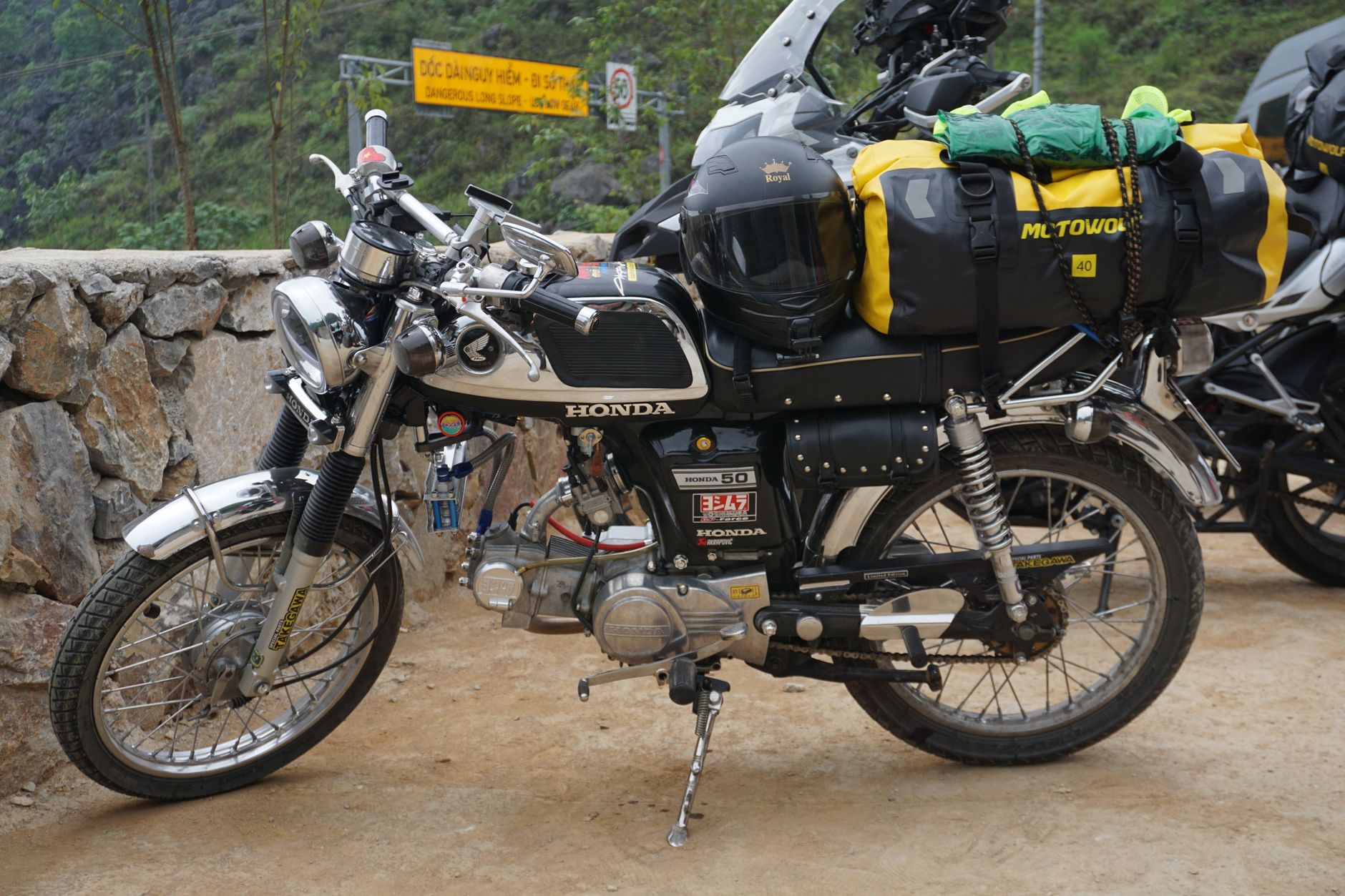
We’d rented the motorbikes from a shop in Hanoi’s Old Quarter, two Honda XR150s that had clearly seen more of the north than most tour guides. The owner, a man named Hùng who ran the shop with his teenage son, spent forty minutes walking us through the route with a pen on a napkin. “Don’t take the highway out of Hà Giang city,” he said, drawing a wavy line that looked more like a heartbeat than a road. “The new tunnel is faster, but you want the old pass.” He was right about that, as we would learn three days later. He was less right about the XR150’s fuel gauge, which turned out to read optimistically in a way that cost us two hours and a liter of roadside petrol from a woman selling it in repurposed water bottles near Km 17 — or something like that. Might’ve been a bit less.
That first day’s drive to Hà Giang city is about 300 kilometers, which sounds manageable until you factor in the trucks. The QL2 highway is a two-lane artery shared by buses, livestock transports, and the occasional family of five on a single scooter. The trucks don’t slow down for corners, and the corners are everywhere once you leave the Red River Delta. We pulled over at a roadside café in Tuyên Quang around noon, ordered bowls of phở that came with a whole leg of chicken each, and watched a man repair a tire by setting it on fire. No one at the table seemed to find this unusual.
The homestay in Hà Giang city that first night was a wooden house perched above a stream, run by a woman named Nhung who spoke no English but communicated through gestures and the occasional improvised drawing. She served us a dinner of steamed bamboo shoots, grilled pork that had been marinated in something that tasted like lemongrass and fish sauce and maybe a third thing we couldn’t identify, and a soup made from wild greens she’d gathered that morning. The meal cost 50,000 dong per person — about two dollars. We were the only guests. Around nine o’clock, Nhung brought out a bottle of rice wine and poured shots into small ceramic cups. We drank them. She refilled them. We drank those too. The next morning, we woke to the sound of a rooster that seemed to be standing directly inside the room, and the sight of Nhung already outside, washing vegetables in the stream, wearing the same conical hat she’d had on at dinner.
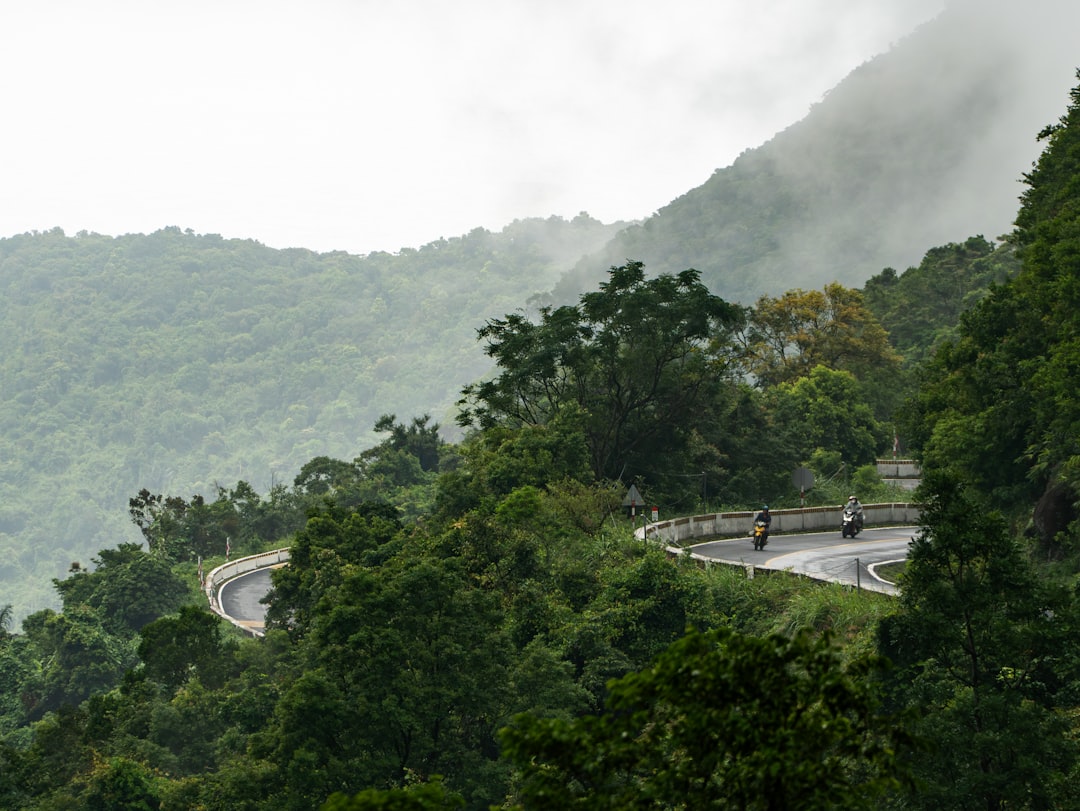
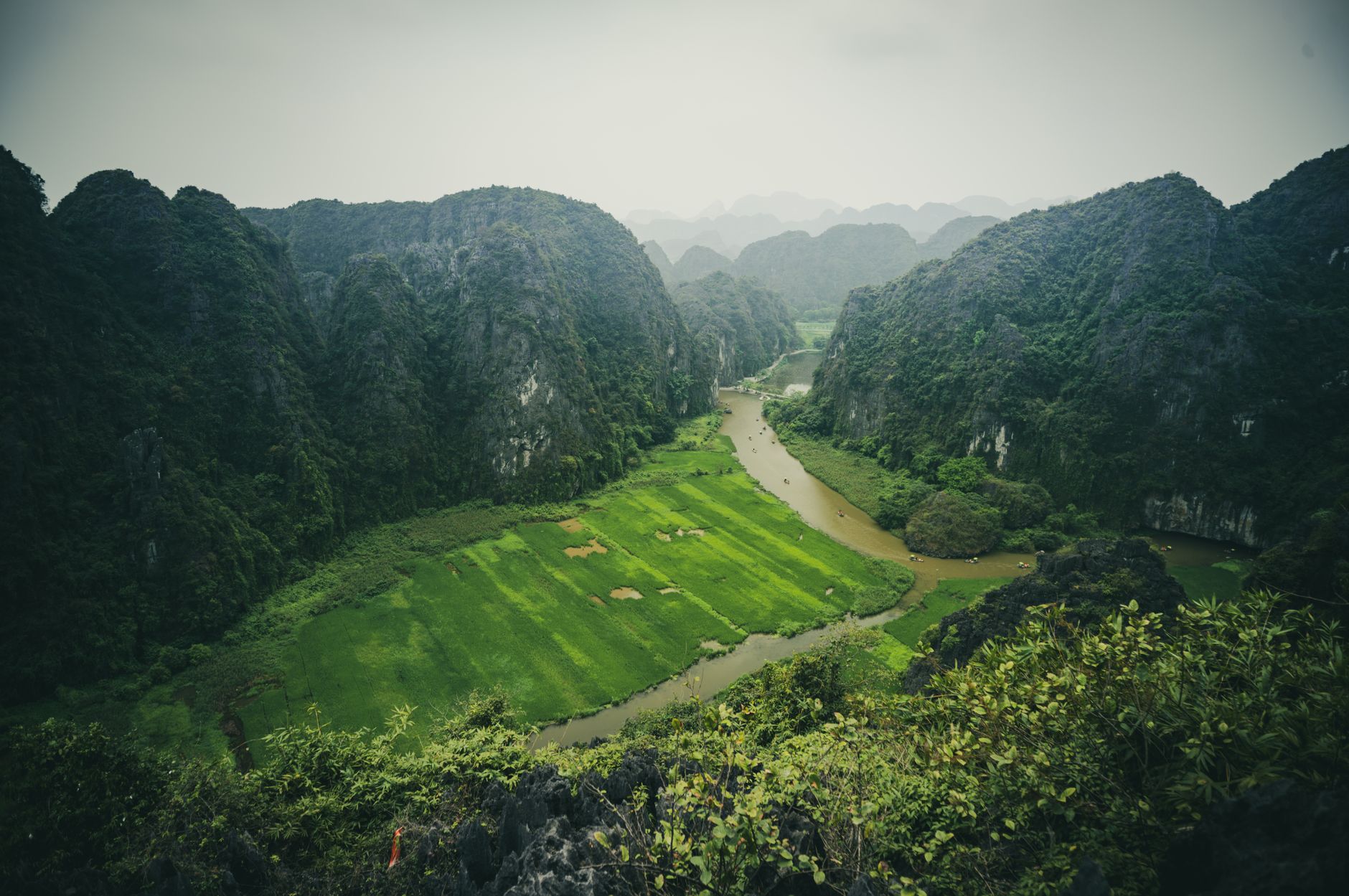
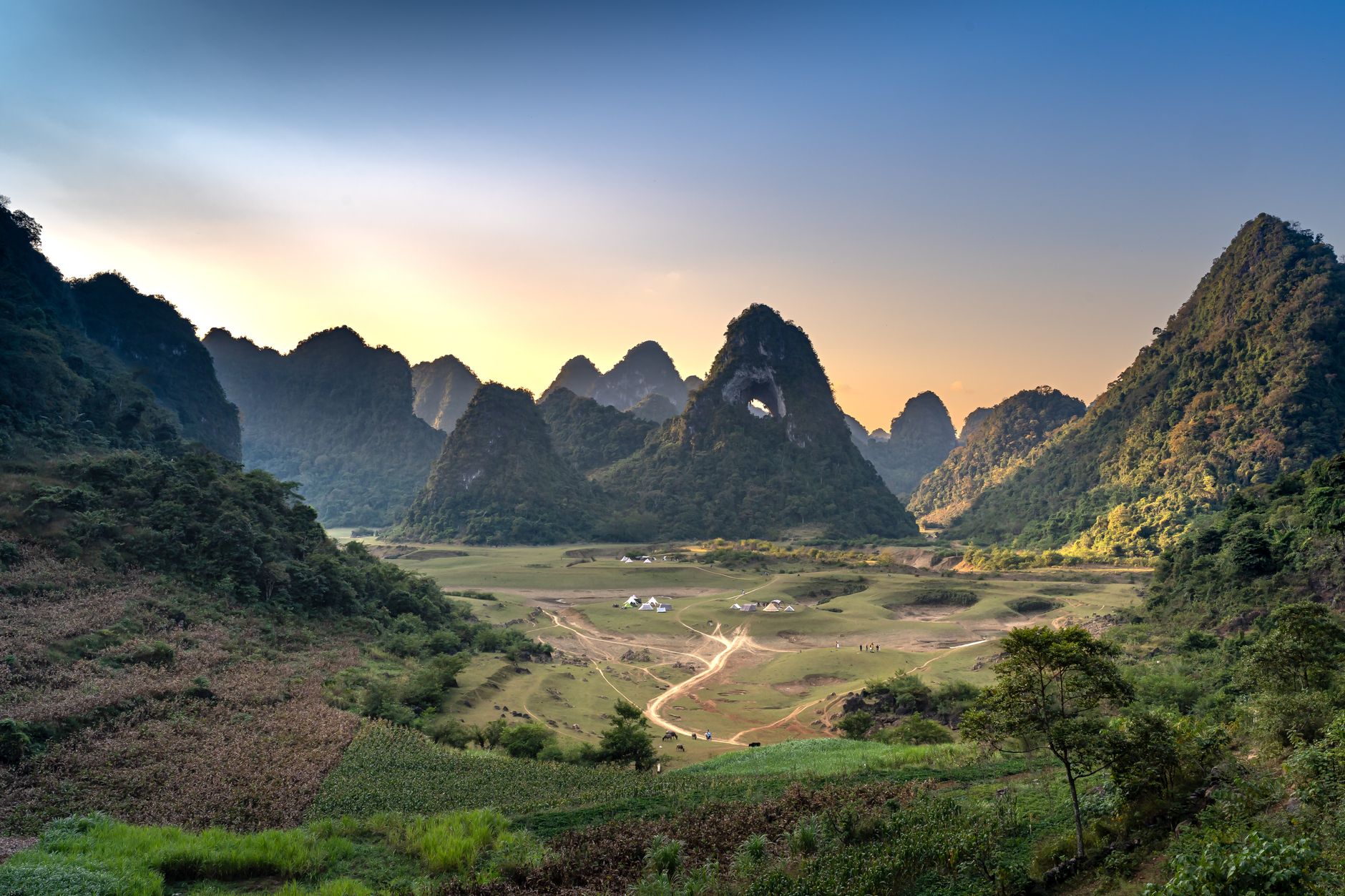
The real climbing begins on day two, once you leave Hà Giang city on the QL4C toward Quản Bạ. The road turns to switchbacks almost immediately, and the motorbike engine starts working hard in a way that makes you pay attention to every gear change. Hùng’s napkin had a star at Quản Bạ, which turned out to be a valley ringed by karst peaks that looked like they’d been dropped from a great height and stuck where they landed. We stopped at a viewpoint that wasn’t marked on any map — just a pull-off where a woman had set up a small table selling bottles of water and bags of dried persimmons. She told us, through a combination of Vietnamese and hand signals, that the fog usually lifts by eleven. It was already past noon. The fog stayed.
That afternoon we made a wrong turn. The road through the Quản Bạ pass splits off into a smaller track that the map showed as a dashed line, and we took it thinking it might be a shortcut to Yên Minh. It wasn’t. The track narrowed to a single lane of packed dirt, then to a path that looked like it was used more by goats than vehicles. We rode for forty minutes before the path ended at a village of about ten houses perched on a hillside. An old man sitting on a stool outside one of the houses watched us approach without changing his expression. When we stopped and showed him the map, he pointed back the way we’d come and made a sweeping gesture that we interpreted as “long way around.” Then he pointed at the sky, which was turning a gray that suggested rain within the hour. We turned around.
The detour cost us two hours and nearly the rest of the daylight, but it also brought us through a village we never would have found otherwise — a cluster of traditional H’Mong houses with rammed-earth walls and roofs of corrugated iron weighed down by stones. A woman was weaving fabric on a loom set up under the eaves of her house, the threads bright blue and red against the muted brown of the wall behind her. She waved as we passed, not stopping her work, and we waved back and kept moving. The whole exchange lasted maybe four seconds. We reached Yên Minh just before dark, checked into a homestay run by a family of the Tày ethnic group. The house was built on stilts, with the living space on the second floor and the ground level open for livestock and storage. Our room had a mattress on the floor, a single lightbulb, and a window that looked out onto a valley that was already disappearing into darkness. The family offered to cook us dinner — a pork and vegetable hotpot with a broth that had been simmering all afternoon — and we ate with them around a low table, using chopsticks that were longer and thinner than any we’d seen in Hanoi. The grandmother, who must have been in her eighties, watched us eat with an expression of polite concern, occasionally pushing more vegetables into the pot with a gesture that clearly meant “eat more.” We did.
Day three is the one people talk about. The road from Yên Minh to Đồng Văn runs through the Mã Pí Lèng pass, which is the kind of landscape that makes you pull over every few minutes even though you’re already running behind schedule. The pass winds along the edge of the Nho Quế River gorge, the road cut into the cliff face at an angle that feels wrong until you get used to it. At the highest point, the valley floor drops away more than a thousand meters below. We stopped at a viewpoint where a group of French tourists were taking selfies and a local man was selling honey from jars with handwritten labels. He told us, in English he’d clearly practiced, that the river below was the same color as the sky — it was, a deep green-blue that didn’t look real — and that the best time to see it was late afternoon, when the sun hit the water at an angle that made it glow. It was eleven in the morning. We bought some honey anyway.
Đồng Văn town itself is small and functional, a collection of concrete buildings that serve as the administrative center for the karst plateau. The plateau proper, a UNESCO Global Geopark, stretches for miles in every direction, and the town exists mostly to support the people who live on it. We spent the afternoon walking through the local market, which was more geared toward locals than tourists — bins of dried herbs, stacks of woven baskets, a man sharpening knives on a foot-powered grinding wheel. A woman sold us grilled corn on the cob that had been cooked over charcoal and brushed with something salty and sweet. We ate it standing in the street, watching a group of children chase a chicken through the market stalls.
The homestay that night was in a village called Lũng Cú, about twenty kilometers north of Đồng Văn, close to the Chinese border. The house belonged to a family of the Lô Lô ethnic group, one of Vietnam’s smallest minority populations. They had built a small guest room attached to the main house, with two beds and a bathroom that had a bucket for showering. The son, a boy of about twelve, spoke enough English to tell us that his father had built the room himself last year, using stone from the hillside. He showed us the view from the back window — a dry valley where corn grew in terraces that climbed up the hillsides, the border marker visible as a white dot on the ridgeline in the distance. “China,” he said, pointing. “Very close.”
That evening, the family prepared a meal of thắng cố, a H’Mong stew made from horse meat and organs, cooked with herbs that gave it a flavor somewhere between medicinal and deeply savory. We’d read about it before the trip — it’s a dish that divides travelers, some finding it a cultural highlight, others struggling with the texture and the strong gamey taste. We fell somewhere in between. The meat was tough and the broth had a bitterness that took some getting used to, but the family’s hospitality was so warm that refusing seconds felt impossible. We ate it with sticky rice and a plate of raw herbs — mint, perilla, and something that tasted like coriander crossed with basil — and drank cups of green tea that the grandmother refilled every time we set a cup down.
Day four was the return leg, back through the pass and down to Hà Giang city, then the long highway ride to Hanoi. We’d planned to take it slow, but a storm rolled in around midday, turning the road slick and forcing us to pull over under a bus shelter for nearly an hour. The rain came in sheets, reducing visibility to a few meters, and we sat on our bikes watching the water pour off the roof and wondering if the road would flood. It didn’t, but the delay meant we hit Hanoi’s evening rush hour, which is its own kind of obstacle course. We returned the bikes to Hùng, who inspected them with a flashlight and handed back most of our deposit. “You didn’t drop them,” he said, which seemed like as high a compliment as we were going to get.
The morning we left, Nhung had pressed a plastic bag of dried persimmons into our hands before we got on the bikes. We didn’t open it until we stopped for lunch in Tuyên Quang, and by then the fruit had absorbed enough heat and humidity to become something between a dried snack and a paste. We finished the bag on the highway, passing it back and forth between riders, the sugar giving us just enough energy to make it through the last hundred kilometers. The persimmons lasted until the outskirts of Hanoi. The dust from the QL4C took two washes to get out of our jackets.

📷 Photos: Quang Nguyen Vinh (Pexels), Michael Lock (Unsplash)