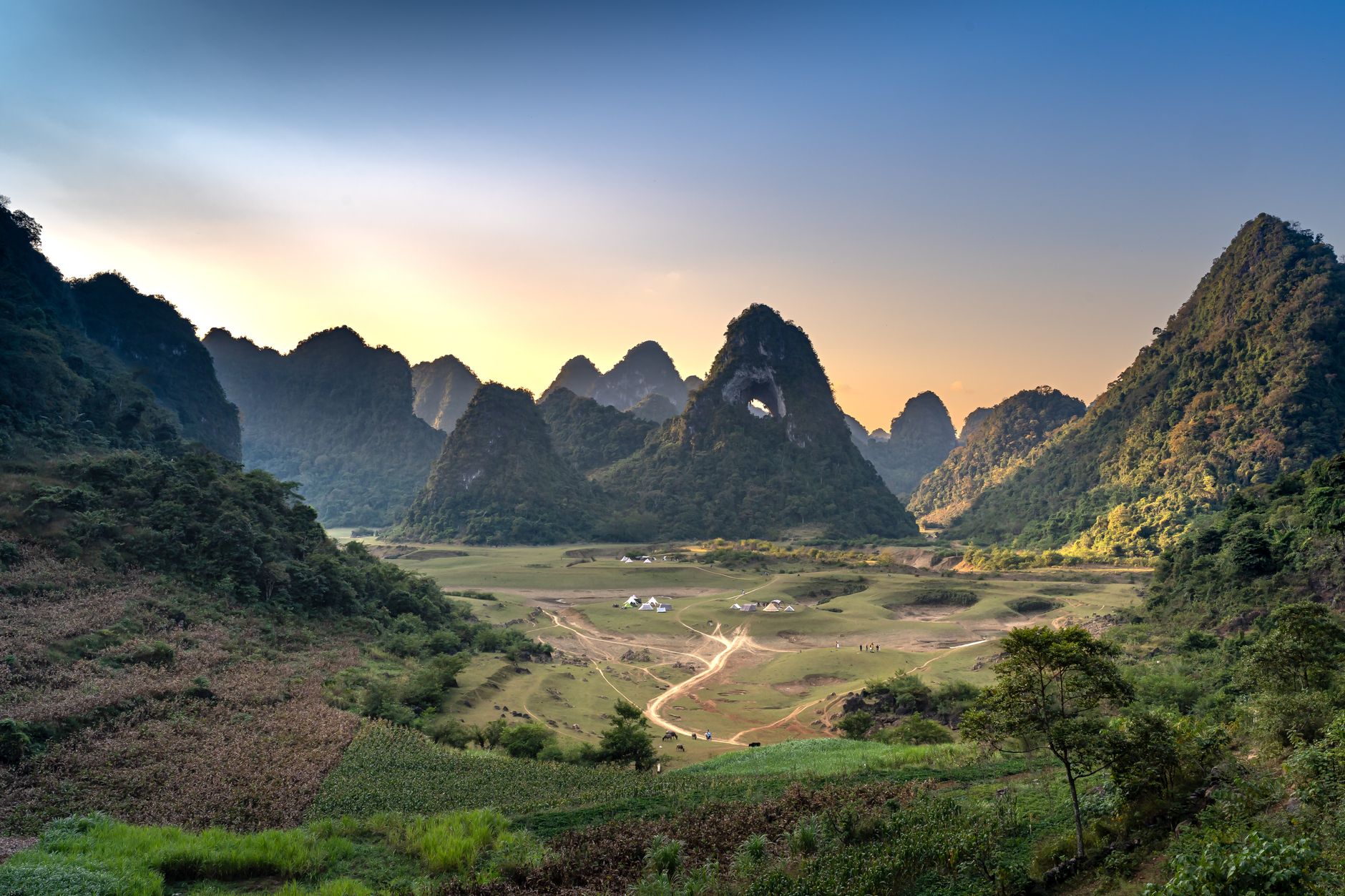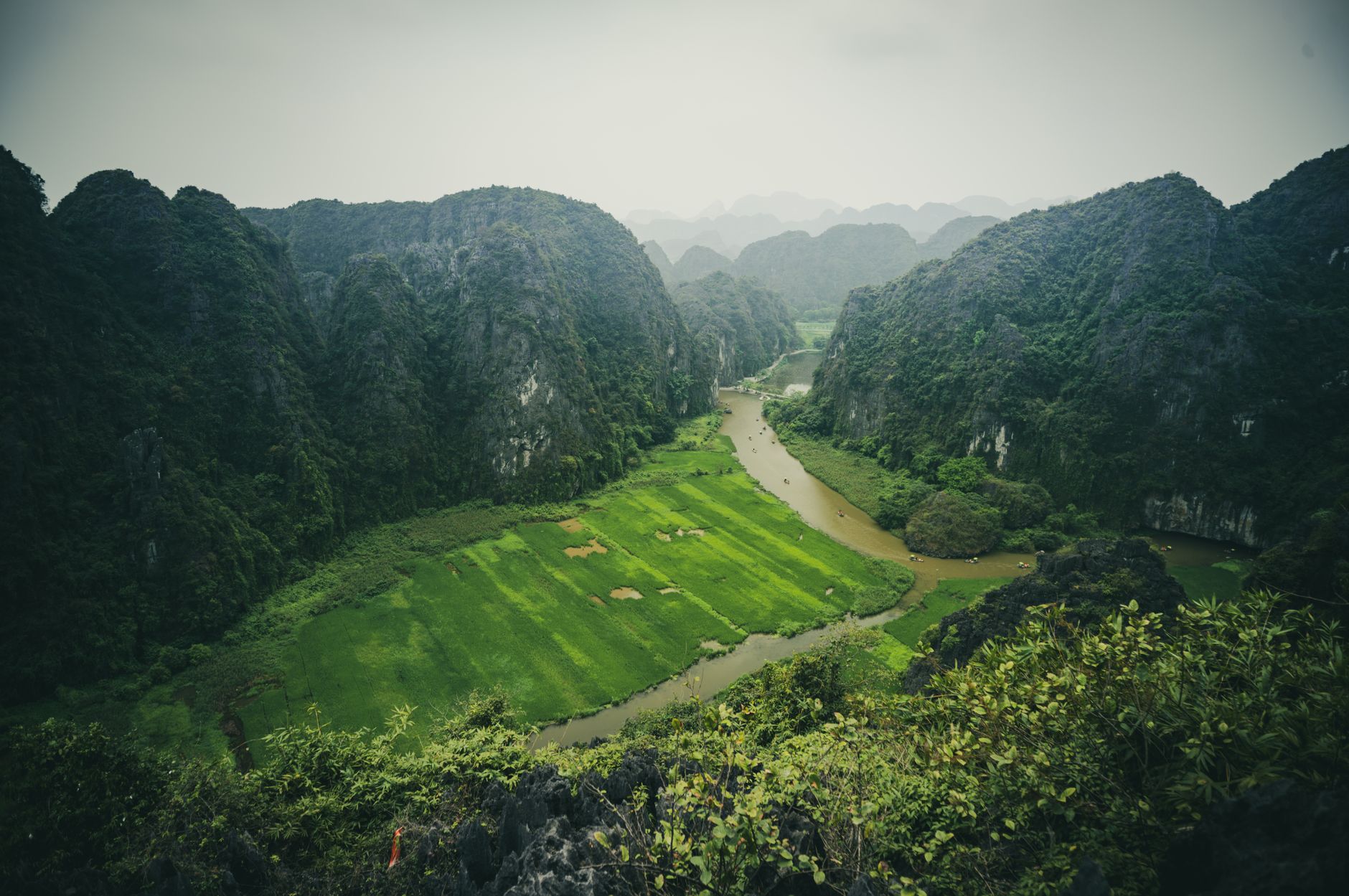
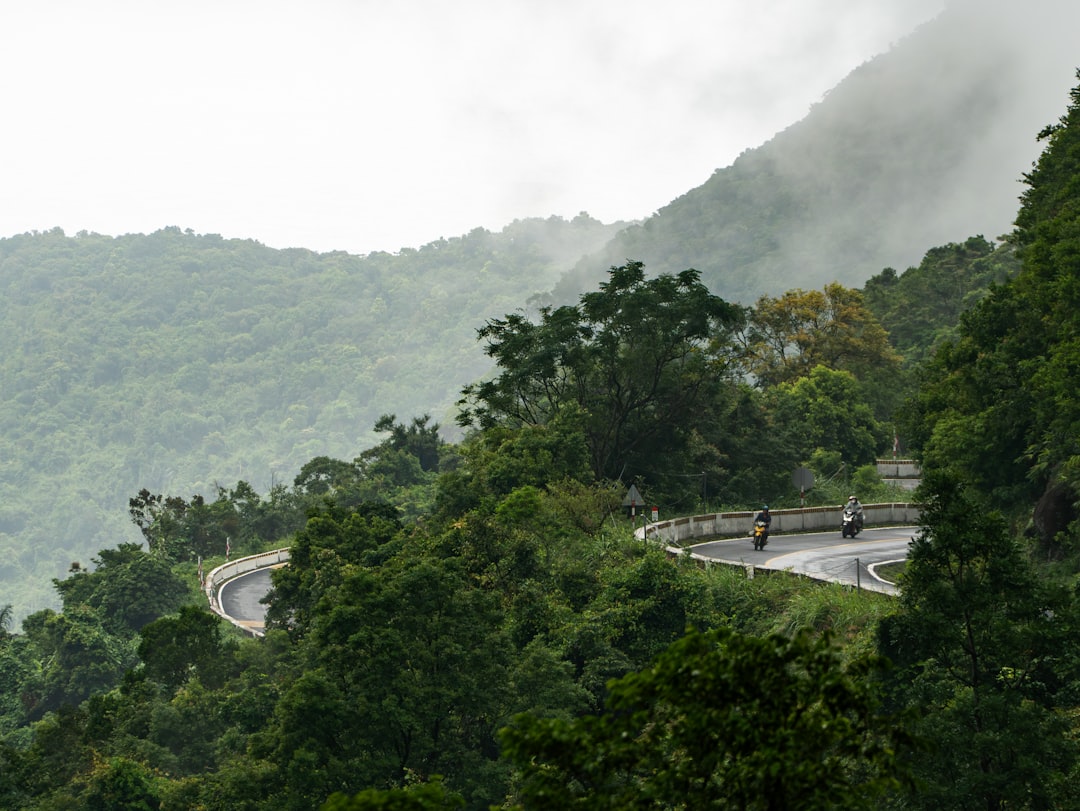
The fog didn’t lift so much as it thinned, one layer at a time, like sheets pulled off furniture in a house nobody had visited for months. I was fifteen minutes north of Lăng Cô, stopped at a bend where the guardrail had been replaced with concrete blocks painted red and white, and the air smelled of wet earth and something sweet — probably the jackfruit someone was unloading from a motorbike a few hundred metres back. The Hai Van Pass, in most of the coverage I’d read before leaving Da Nang, is presented as a stretch of road to be conquered: fifty switchbacks, a summit at 496 metres, the obligatory photo of the bay from the old French fortifications. What nobody mentions is how the fog behaves at dawn — that it doesn’t arrive as a wall but as a series of drafts, each colder than the last, and that it sits in the valleys like something that has decided to stay.
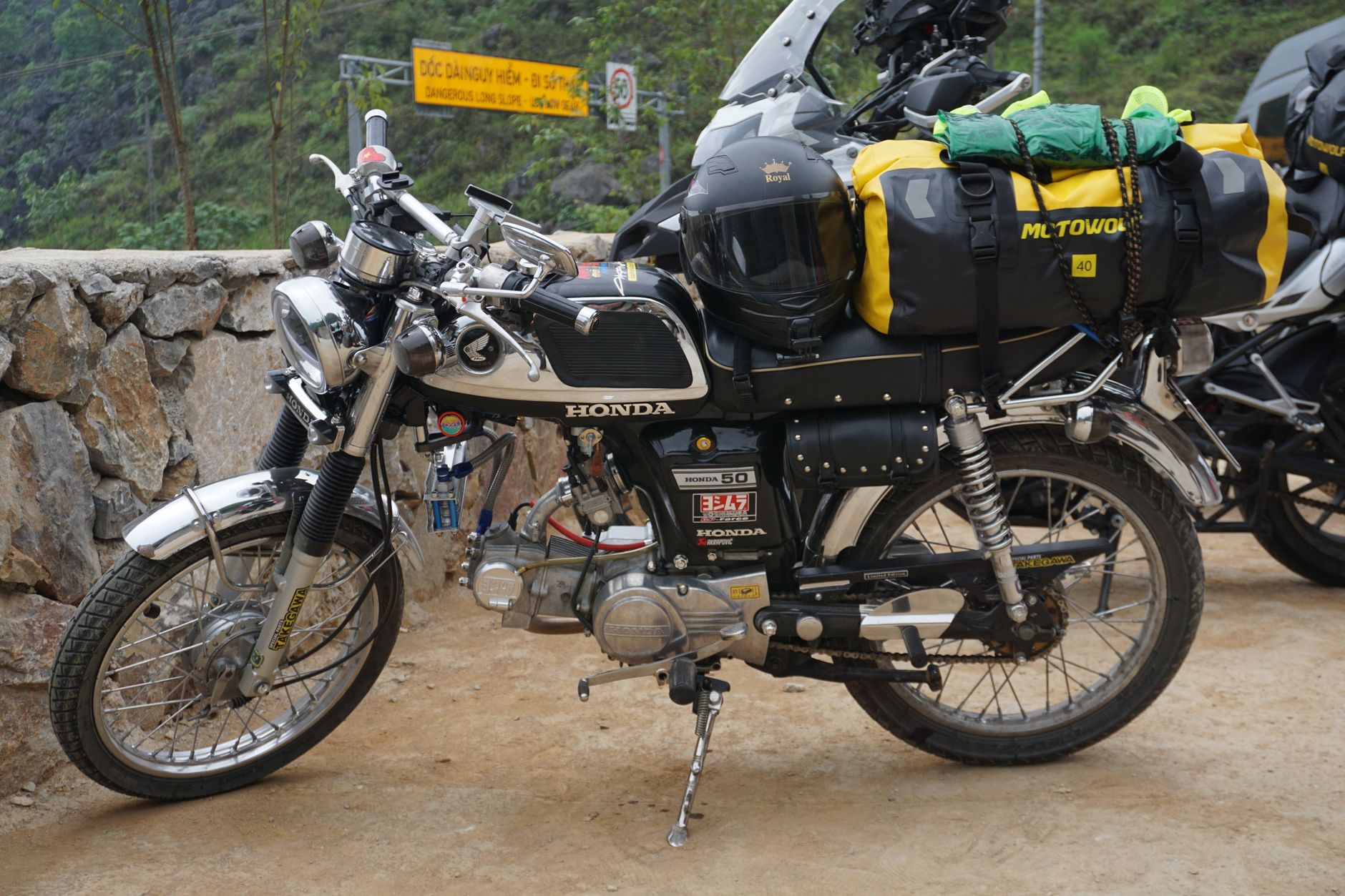
I’d left the hotel at 4:30, which felt reasonable until I hit the first real climb out of Da Nang and realised the scooter’s headlight was lighting up only about six metres of asphalt. The road was empty except for a single truck carrying PVC pipes, its load shifting audibly on every turn. A local driving a Wave Alpha passed me on a blind corner, his taillight disappearing into the grey like a firefly swallowed by milk. I slowed down. There’s a kind of driving that happens on the Hai Van Pass where your attention narrows to the immediate — the next metre of road, the sound of your own engine, the temperature change as you cross a stream you can’t see. It’s not scenic in the way the postcards suggest. It’s tense, and that tension is the thing most coverage misses entirely.
By 5:20 I was at the summit, or near enough. The old French bunkers are hard to miss — they sit on the left, above a parking area paved with cracked concrete and scattered with the kind of litter that accumulates at viewpoints everywhere: water bottles, cigarette packs, a single flip-flop. A woman had set up a coffee stall under a blue tarp, the sort of operation that consists of a camping stove, a pot of condensed milk, and a battered tin kettle. She was already pouring when I arrived, and I drank the coffee standing up, watching the fog churn in the gap between two hills. It was the best coffee I had in Vietnam, and I say that having done the rounds in Hanoi’s Old Quarter and the cafés of District 1. The difference is that this coffee wasn’t trying to be good. It was just hot, sweet, and available, which at that hour and that altitude is exactly what you need.
The coffee cost 15,000 dong, which is about sixty US cents. I paid with a 50,000 note and she handed back the change without counting it, her eyes fixed on something in the middle distance. I asked, in my halting Vietnamese, if she came up every morning. She nodded and said something I didn’t fully catch — later, a friend translated it as “before the sun has decided.” I’ve thought about that phrase a lot since. There’s a rhythm to the Hai Van Pass that has nothing to do with tourists. The trucks start running at four. The coffee stalls open by five, serving drivers who know the road by its potholes rather than its viewpoints. The first tour van from Hue doesn’t arrive until nearly eight, and by then the fog has usually burned off, the light has flattened, and the pass becomes a different thing entirely.
I don’t think the pass is best at dawn because of the light, though the light is fine. It’s best at dawn because of the absence of performance. Nobody is posing for a photo at 5:30 in the morning. The few people you encounter — the coffee lady, a man checking the oil on his motorbike, a truck driver eating instant noodles from a foam cup — are just living their routines in a place that happens to be unusually beautiful. That distinction matters more than I expected. A viewpoint built for tourists, like the one at the summit with its souvenir stalls and its neatly paved walking path, is a stage. The rest of the pass — the sections between the named viewpoints, the turns that don’t appear on any map — is just a road, and a road that happens to function as somebody’s daily commute has an authenticity no staged experience can touch.
About halfway down the southern slope, I pulled over at a spot that had no clear reason for being a pull-over. A small concrete platform, maybe three metres square, jutted out over a drop that fell into a valley so deep I couldn’t see the bottom. A plastic chair sat on the platform, faded to the colour of a dust storm. I sat in it for ten minutes, not doing anything. A motorbike passed, slowed, and then continued. A bird I couldn’t identify called from somewhere below. There was no view of the ocean from that spot — just trees, fog, and the sound of water moving underground. It’s the kind of place you only find by stopping at a random point, not because a sign told you to, and it left a stronger impression than the official lookout at the top, which by that point was filling up with a Korean tour group whose guide was explaining something into a microphone in a tone of practiced enthusiasm.
The descent into Lăng Cô is the part of the pass that feels most like a road built before anyone worried about safety standards. The hairpins are tighter than they look in videos, the gradient steeper, and the surface varies unpredictably — smooth asphalt for a stretch, then a section of patched concrete that catches your tyres at the wrong angle. A group of French cyclists passed me on the way down, moving cautiously, their disc brakes making a rhythmic squeal on each turn. One of them, a man in his sixties with a handlebar moustache, nodded as he went by. I caught up with them at the bottom, where they’d stopped at a roadside stall for sugarcane juice, and he told me he’d ridden the pass three times over the past decade. “It’s different every time,” he said, wiping sweat from his forehead. “The fog, the trucks, the condition of the road. You never get the same pass twice.” He was right. The real pass is a negotiation with weather and timing and other people’s schedules.
I made one more stop before reaching Lăng Cô proper, at a cluster of houses about halfway down the eastern side. A woman was sweeping her porch with a broom made of bound twigs, and two children were playing badminton with a net strung between a power pole and a guava tree. Neither child was particularly good, and the shuttlecock spent most of its time on the ground. I watched for a while, and one of the children — a girl of maybe eight, wearing a pink dress over jeans — waved at me. I waved back. That’s the whole interaction. There’s no lesson in it. It was just a moment of being seen by someone who lives on a road that people travel from around the world to drive, and who treats that road as the unremarkable backdrop of a Tuesday morning.
The pass, for all its reputation, is not especially long — somewhere around sixteen kilometres between the ticket gate and the summit, another twelve or so down to Lăng Cô. At a normal pace, with stops, it takes about two hours. But the coverage tends to frame it as a discrete experience: drive it, photograph it, check it off. What I didn’t expect is how much the pass resists that framing. The fog that refused to lift until nearly seven. The coffee that came in a scratched metal cup. The plastic chair at the unmarked pull-over. These aren’t the details that make it into the Instagram posts. The pass isn’t a monument to scenery. It’s a road that people still use to get places, and the beauty of it is inseparable from that use — from the truck drivers who treat it as an inconvenience, the coffee sellers who depend on its traffic, the old woman sweeping a porch in the shadow of a mountain that tour buses photograph every hour of the day.
On the way back to Da Nang that afternoon, the fog had burned off completely. The sun was high and the road was crowded with rented scooters and the occasional convertible with plates from Hanoi or Saigon. The pass looked exactly like the postcards. And it was fine — pleasant, even — but it wasn’t anything special. The special version had happened eight hours earlier, when the only light was the uncertain grey of early morning and the only sound was my own engine echoing off a hillside I couldn’t see. The postcard version is available to anyone who shows up between nine and three. The other version requires an alarm clock, a willingness to be cold, and the understanding that the best thing on the pass isn’t a view at all but a series of moments you won’t think to photograph until they’ve passed. I haven’t been able to get the colour of that plastic chair out of my head.

📷 Photos: Juup Schram (Unsplash), Immo Wegmann (Unsplash)