“You know this one doesn’t go to the summit?” he said. I told him yes, that was the point. He shrugged and handed back the paper. Most people who make the six-hour drive from Manila to the ranger station at the base of Mount Pulag are there for one thing: standing above the clouds at sunrise, watching the light spread across the sea of white that fills the valley below. I’d seen the summit on every blog and every travel show, and it looked exactly like the kind of thing I wanted to avoid.
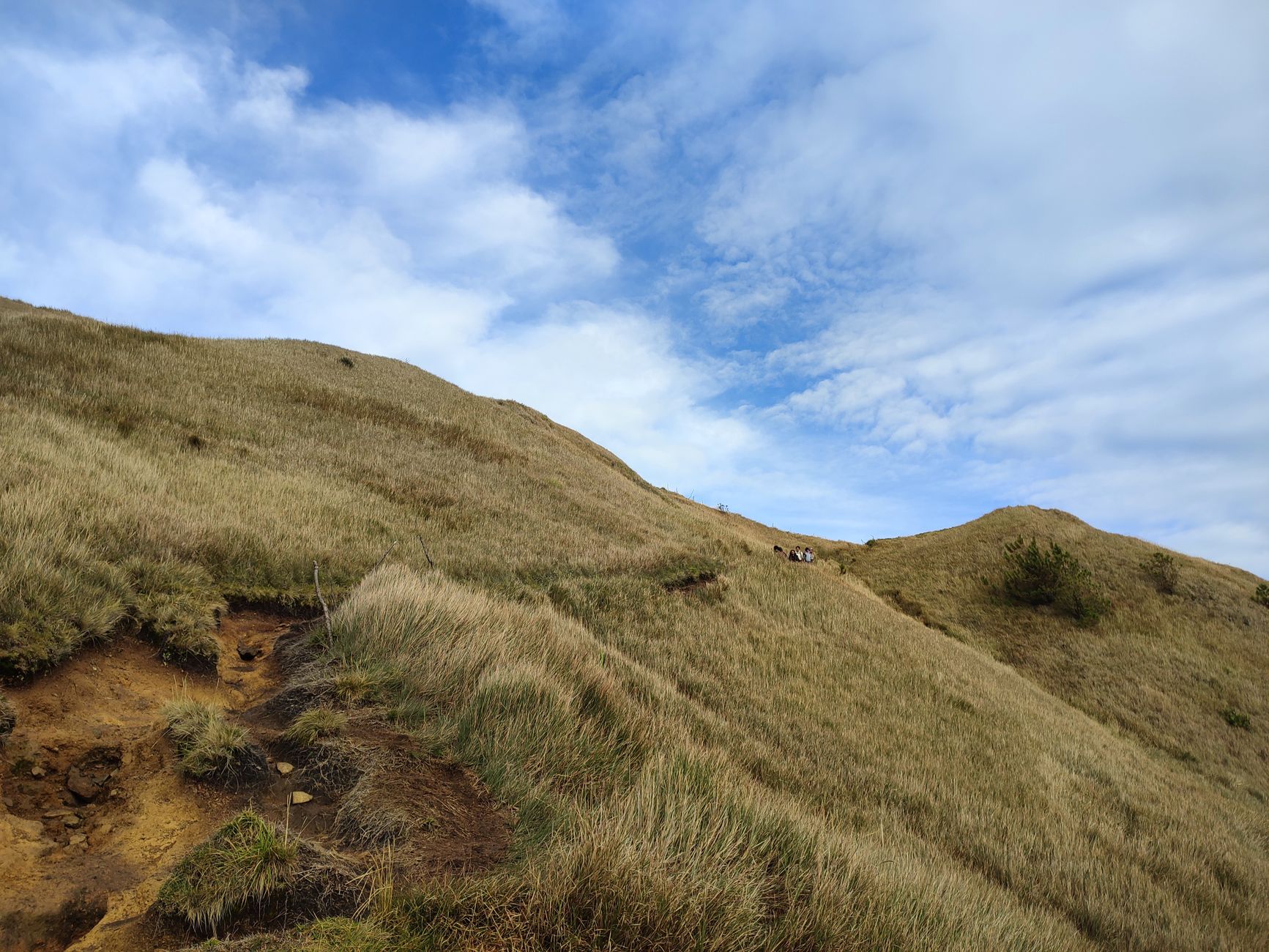
The mossy forest trail is not secret. It’s just not what anyone comes for. The guidebooks mention it briefly, usually in the context of “alternative routes” or “for experienced trekkers only,” but the logistics of getting there make it a harder sell. The standard summit hike from the ranger station takes about four hours up and three down, depending on your pace. The mossy forest trail, the one that follows what locals call the Spanish-era path, takes closer to seven hours each way and never breaks above the tree line. You don’t get the famous sea of clouds. You don’t get the sunrise photo. What you get is a forest that feels like it hasn’t changed in centuries, and almost no one else on it.
I’d arranged a guide through a contact at the DENR office in Baguio, a man named Rogelio who’d been working the mountain for fifteen years. We met at the ranger station at ten in the morning, which already felt late for a trek. Most groups start at two or three in the morning to reach the summit by dawn. Starting at ten felt almost disrespectful, like showing up to a party after the food was gone. Rogelio didn’t seem to mind. He carried a small backpack with water, rice, dried fish, and a machete that looked older than I was. “The trail is overgrown,” he said. “Not many people use it anymore.”
The first hour was easy. The path followed a mostly gravel road through the pine forest that surrounds the lower slopes, the same road that summit trekkers use. We passed a few groups coming down, their faces tired and satisfied, and I felt a small twinge of doubt. They’d done the thing. I was going to spend the day walking into a forest and then walking back out again. Rogelio walked a few paces ahead, not saying much, which I appreciated. I’d had guides before who filled every silence with facts and figures, as if the experience needed narration to be real. Rogelio just walked.
Then the gravel road ended and the mossy forest began. The transition was abrupt, like stepping through a door. The pine trees stopped and the oaks and rhododendrons took over, their branches thick with moss and lichen. The air changed too — cooler, wetter, heavier. The trail narrowed to the width of a single person, and the ground turned to mud that sucked at my boots. Rogelio stopped and pointed at a pile of stones beside the path. “Spanish,” he said. “They built this trail to connect the settlements on the other side.” The stones were rough and uneven, not the kind of thing a modern trail crew would build, but they’d held for over a hundred years. I stepped on one and felt it shift slightly under my weight.
Within another hour, the trail had become something else entirely. The moss was everywhere — on the ground, on the trees, on the rocks, on branches that hung low enough to brush against my face. It wasn’t the thin, dry moss you find on a sidewalk crack. It was thick and spongy, sometimes six inches deep, and it covered everything so completely that the forest looked like it was wearing a green coat. The light changed constantly as the canopy closed and opened above us, and the only sounds were my breathing and the occasional bird call and the wet squelch of boots in mud. I stopped to drink water and noticed that my hands were trembling slightly, not from exertion but from the strangeness of the place. It felt old in a way I couldn’t quite describe — not haunted, but aware, as if the forest was watching to see what I would do.
Rogelio pointed to a tree off to the left, a massive oak with a trunk so wide I couldn’t see around it. “That one is maybe four hundred years,” he said. “Before the Spanish. Before anyone.” I walked over and touched the bark, which was soft with moss, and tried to imagine the tree standing there while conquistadors and revolutionaries and loggers and tourists all passed by. The tree had been there for all of it. The trail had been there for most of it. I was just the latest thing to come through, and I’d be gone in a few hours.
The mistake came around the third hour. I’d been so focused on the forest around me that I hadn’t been paying attention to the trail itself, which had become steeper and more eroded. The stones that formed the path were loose, and my boots slipped on the wet moss that covered them. I was looking up at a particularly dense patch of rhododendrons when my left foot slid out from under me and I landed hard on my hip, my arm catching the edge of a rock. The pain was sharp and immediate, and I sat there in the mud for a moment, swearing quietly. Rogelio turned around and walked back to me, expressionless. “You’re okay?” he asked. I told him I wasn’t sure. He waited while I stood up, tested my weight on my left leg, and found that it held. My hip would be bruised for a week, but nothing was broken. The real cost was the time. I’d lost about twenty minutes recovering, and the fall had shaken my confidence. I started walking more carefully, which meant I moved slower, which meant we’d be coming back in the dark.
I’d packed a headlamp in my bag at the hotel in Baguio and then taken it out at the last minute, thinking the hike would be done by late afternoon. That was stupid — the kind of stupid that comes from not taking a trail seriously because it isn’t the famous one. I’d spent so much energy not being a tourist that I’d forgotten to be a prepared hiker. Rogelio had a small flashlight in his pack, but its beam was weak and yellowed, the kind you’d use to find a dropped key under a car seat, not to light up a mountain trail at night. I told myself we’d make it back before sunset, but I knew even as I said it that I was wrong.
We reached the highest point of the trail around two in the afternoon, a small clearing where the forest opened up enough to see the mountains in the distance. The summit of Pulag was visible to the west, a bare peak rising above the tree line, and I could see the white wisps of clouds beginning to form around it. Rogelio sat down on a fallen log and pulled out the dried fish and rice. We ate in silence, watching the clouds build. I asked him how many times he’d been up here. “Too many,” he said. “I stop counting.” He offered me some of the fish, which was salty and tough, and I took it gratefully. The air had turned colder, and the clouds were moving faster now, streaming across the summit like smoke.
The hike back was worse than the hike up. The trail had been muddy in the morning, but by late afternoon it was nearly impassable in sections. The moss that had seemed strange and dense a few hours earlier now felt treacherous, hiding rocks and roots and loose stones. I slipped twice more, catching myself both times, but the second fall jarred my wrist and I felt a small stab of pain that would become a dull ache by the next morning. The light began to fade around four, and by four-thirty we were walking in the dim twilight of the forest, the canopy blocking what little light remained. Rogelio clicked on his flashlight, and the beam barely reached ten feet ahead. We walked single file, him in front, his machete now in his hand to clear branches that I couldn’t see in the dark.
It took us until nearly seven to reach the ranger station. The gate was locked when we arrived, and I had to call the number on my permit to have someone come and let us out. The man who opened the gate looked at me with the kind of tired irritation that comes from dealing with unprepared hikers on a regular basis. “Next time bring a light,” he said. I told him I would, and I meant it. Rogelio collected his fee — eight hundred pesos, which I’d agreed to beforehand — and walked off into the dark without saying goodbye. I stood in the parking lot, muddy and sore, my wrist throbbing, and watched the stars come out over the mountain. The summit was a dark silhouette against the sky, and I thought about all the people who’d been up there that morning, standing in the sunrise, taking their photos. I wondered if any of them had fallen.
Back in Baguio that night, I ate dinner at a small restaurant near the market, the kind of place that serves the same thing every day and doesn’t bother with a menu. The woman who ran it saw my muddy clothes and asked where I’d been. When I told her, she laughed. “You went the wrong way,” she said. “Everyone goes to the top.” I told her I knew that, and she laughed again and brought me a bowl of soup that burned my tongue and tasted of ginger and chicken and something I couldn’t identify. It was the best thing I’d eaten all week.
Months later, I still think about that trail. I remember the exact shade of green the moss turned in the late afternoon light, a color that doesn’t have a name in English. I remember the way the stones felt under my boots, shifting and unreliable, and the sound of Rogelio’s machete cutting through a branch in the dark. I remember the moment in that small clearing, watching the clouds build over the summit, knowing I wouldn’t see the sunrise but not caring, because I’d seen something better — a place that didn’t care whether I was there or not, that had been there before anyone thought to build a trail and would be there long after the last permit was filed.

📷 Photos: Elly Mar Tamayor (Pexels), Nick Aguilos (Unsplash)