I found myself standing in a narrow alley in southern Seoul, not far from the express bus terminal, watching a middle-aged man in a leather jacket peel a faded decal off a window. Behind him, through the glass, I could see the remnants of a lobby that had once been lacquered in gold and pink — a reception desk shaped like a half-shell, a mirror with cherubs painted around the frame, a chandelier wrapped in plastic sheeting. The whole place smelled like carpet cleaner and old cigarette smoke, but underneath that, something else: a faint sweetness, like cheap perfume left too long in a closed drawer.
The man caught me looking and shrugged. “All this stuff goes in the dumpster by Friday,” he said, gesturing at the cherubs. “New owner wants it to look like a hotel chain. Gray walls. Glass doors. The works — or something like that.” He didn’t seem particularly sad about it, just tired. This was his last week managing the place, and I gathered he’d been managing it for seventeen years.
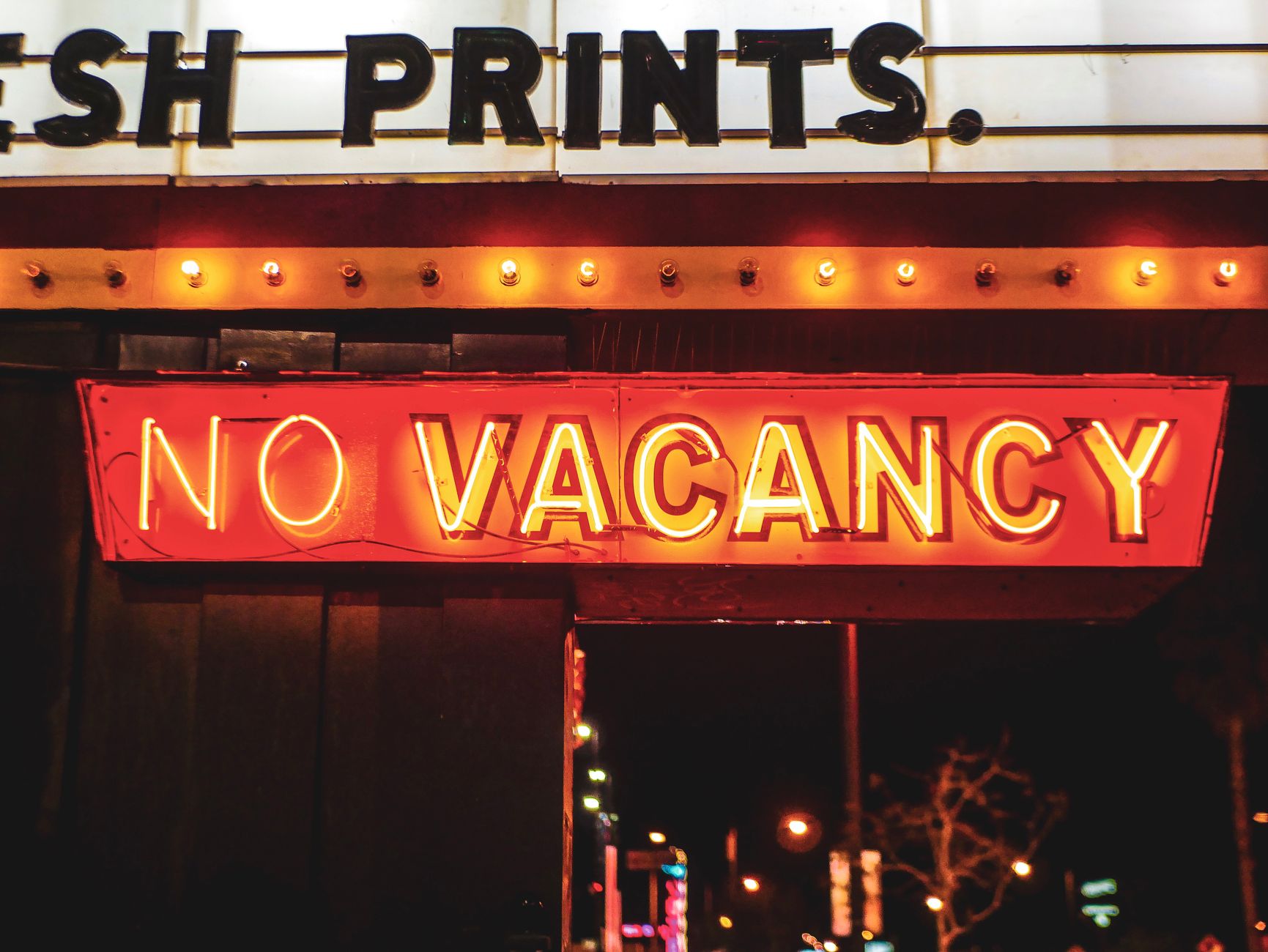
Seoul’s “motel jungles” — those clusters of love motels, budget hotels, and short-stay lodgings that sprouted across the city in the 1970s and 1980s — are disappearing faster than most visitors realize. The buildings themselves are often still standing; what’s vanishing is the architecture that made them distinctive: the neon signs in cursive and script, the turrets and castle facades, the lobbies decorated like Las Vegas chapels, the windows shaped like portholes. Urban renewal, in the form of hotel chain expansions and stricter sign ordinances, has been chipping away at them for years, but the pace accelerated noticeably around 2019. A few districts still have clusters of these buildings intact, though even those feel fragile. Like a conversation that could end any minute.
I had come to Seoul specifically to photograph these places before they changed. Not as a project with an organized plan — more as a kind of restless curiosity, the sort that sends you down side streets at nine in the evening when you should be eating. The city’s motel jungles don’t appear on tourist maps, and they’re not listed in guidebooks under “architecture worth seeing,” which is precisely what made them worth seeing. They belong to a different Seoul than the one marketing campaigns promote — a city of provisional spaces, half-legal arrangements, and buildings designed to be noticed but not studied.
The most concentrated area I found was in Gwanju-dong, a neighborhood that sprawls across a hillside southeast of the Han River. I arrived there on a Tuesday afternoon in October, during that brief window when the air is dry and the light cuts sideways through the streets. From the main road, the motel jungle looks like a tiered cake of signs — pink, turquoise, yellow, purple — stacked one above the other, each one competing for the attention of drivers passing below. Up close, the effect is less gaudy than melancholy. Many of the signs are dead, their tubes cracked or missing, leaving ghostly outlines of letters that no longer light up. A few buildings have been repurposed entirely: one motel had become a storage facility, its former lobby stacked floor to ceiling with cardboard boxes of instant noodles. Another had been converted into a church, its neon cross hung crookedly over the entrance.
Walking those streets, I noticed a pattern I hadn’t expected. The motel jungles weren’t random. They were built along specific transit corridors — the express bus routes, the Subway Line 2 circuit, the major arterial roads that connect the satellite cities to central Seoul. Their locations were a deliberate response to the city’s rapid expansion in the 1970s and 1980s, when millions of people moved into newly built apartment complexes on the periphery but still needed places to stay when they visited the center. The love motels filled that gap — cheap, anonymous, and clustered where the buses stopped. An urban design consultant I spoke with, a former planner who had worked in the city’s development office for decades, explained it to me over coffee near his old office in Jongno. “The motels weren’t competing with hotels,” he said. “They were competing with the last train. The whole logic was about convenience and anonymity. Nobody was trying to be beautiful.”
And yet they were beautiful, in the way that functional things often become beautiful once their function becomes obsolete. The neon script on a motel called “Paris” in Nonhyeon-dong curved across the facade in elegant looping letters that must have been commissioned from a proper sign painter, not a digital printer. The roofline of another, “New York,” was topped with a miniature Statue of Liberty whose torch flickered weakly, the only working bulb among a dozen dead ones. A motel in Sindang called “Cinderella” still had its original glass-brick entrance and a mural of dancing mice, badly faded but still visible. These details felt less like marketing than like genuine attempts to create something memorable within strict budget constraints — a form of folk architecture, made by people who couldn’t afford architects.
The problem, as several people pointed out, is that the economics have shifted. The motel jungles thrived on a business model that combined low land costs with high turnover. As land values in Seoul have risen — particularly in neighborhoods near new subway lines or redevelopment zones — the math no longer works. A motel that could break even on short-stay guests two decades ago now struggles to compete with the budget hotel chains that offer consistent branding, online booking, and clean corporate aesthetics. “The owners are getting old,” the planner said. “Their children don’t want to run the business. The building needs major repairs. And a developer is offering three times what the property is worth.” He took a sip of his coffee and added, “Every time one of these signs goes dark, it’s because someone did the math and decided not to pass it on.”
I spent one afternoon in Suwon, a city just south of Seoul that once boasted one of the densest concentrations of motel jungles in the metropolitan area. The main strip near Suwon Station used to have forty-five — somewhere around forty-five — motels within a half-kilometer radius. I counted the remaining ones walking from the station exit to a convenience store at the far end of the street: eleven. Of those, only four still had neon signs that worked. The others had replaced theirs with LED panels displaying the same generic sans-serif typeface — “MOTEL,” “HOTEL,” “INN” — in clinical white lettering. One building had been converted into a co-living space targeted at young workers, its formerly lurid pink exterior repainted a tasteful gray. A sign on the door read “SUWON 1ST HUB — SMART LIVING FOR SMART PEOPLE” in English, the kind of phrase that seemed designed to reassure investors rather than residents.
That same evening, I took the subway back to Seoul and got off at Sillim, a neighborhood I’d been told still had a functioning motel jungle. Sillim’s version is different from the ones further south — more compressed, darker, wedged between a university and a red-light district that has been shrinking for years. The motels here cater to a different clientele: students, seasonal workers, people passing through. The signs are smaller, often just a single word written in neon against a black metal frame. I walked past a place called “Diamond” that had a working sign but a lobby that was half-demolished, the floor covered in dust and empty soju bottles. A woman sitting on a plastic chair outside another motel — “Blue Star” — told me the place had closed three months earlier. “The owner said it wasn’t worth fixing the sign,” she said. “Cost more to repair than the building was earning in a month.” She didn’t seem to have any particular attachment to the sign. She was just someone who lived nearby and noticed when things changed.
There is a tension in photographing these places that I didn’t fully appreciate until I’d been doing it for several days

📷 Photos: Prime Cinematics (Pexels), Ori Song (Unsplash)