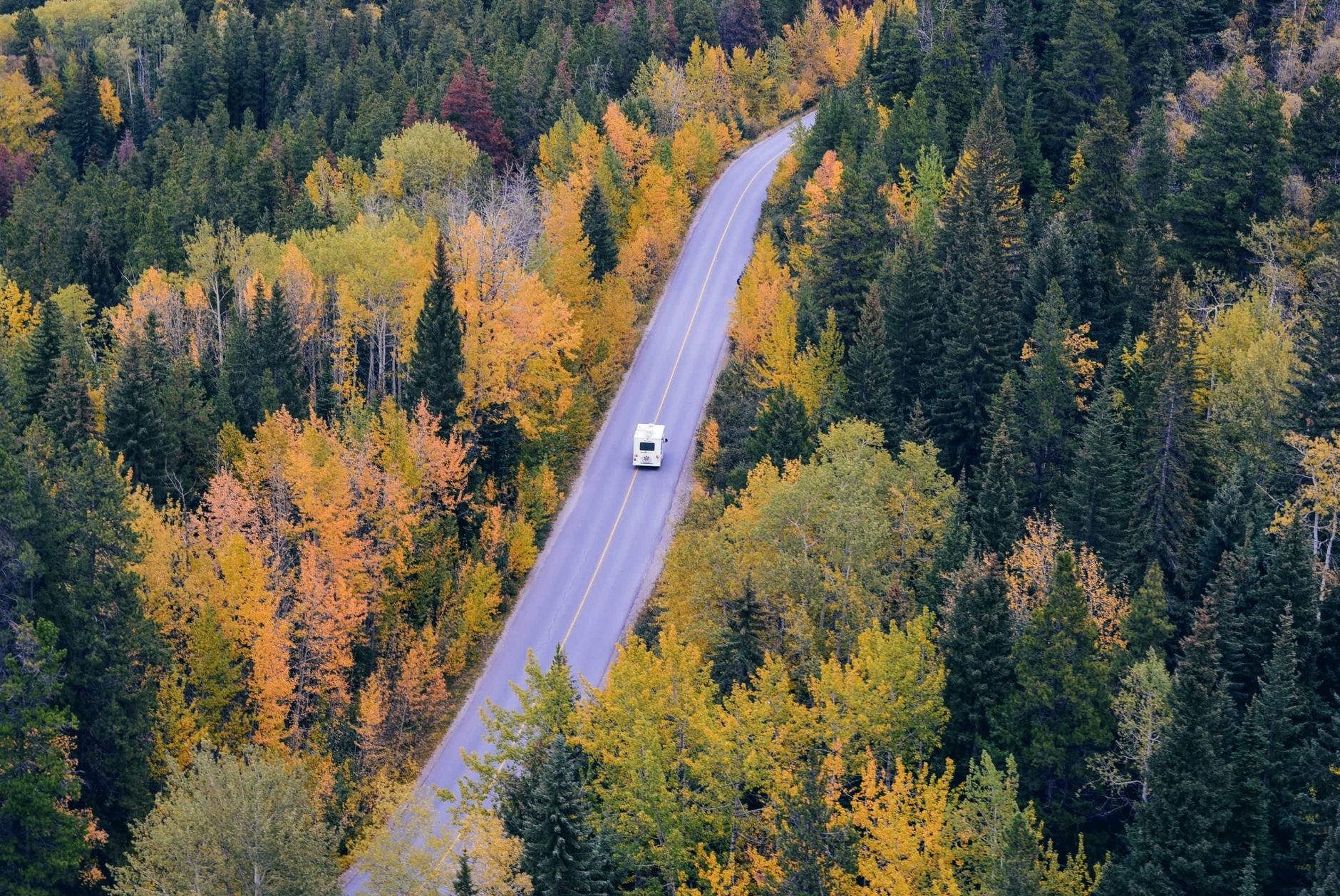
The road from Kuala Kubu Bharu to Fraser’s Hill is forty-one kilometres long, and the first thirty are uneventful in a way that tempts you into forgetting what comes next. I had driven it once before, years ago, in a rented Myvi, and remembered it mostly as an afternoon of mild switchbacks and the occasional need to downshift. What I failed to remember, or had chosen not to, was which end of that forty-one kilometres the real work began. My campervan, a converted Toyota Hiace that I had optimistically named Bunga, discovered the gradient about eleven kilometres before I did.
It was a Tuesday in late March, which meant the road was not busy but was not empty either. The air was dense in that particular Fraser’s Hill way — heavy with the kind of moisture that makes everything feel a little too damp to be comfortable. I had left Kuala Lumpur at nine in the morning, which was already a mistake. A more sensible plan would have been to arrive at the base of the hill at dawn, when the road would have been empty and the engine cool. Instead, I had insisted on stopping for roti canai in Rawang, then again for petrol in Batang Kali, and by the time I reached the base of the climb at the Gap, it was nearly eleven and the temperature was climbing past thirty-two degrees.
The campervan was not designed for this. That is the first thing I should have admitted to myself before attempting it. A Hiace is a van, not a climbing vehicle, and mine was carrying roughly fifteen hundred kilograms of living equipment — a mattress, a camping stove, two full water tanks, a folding table, a bag of clothes I had not worn since January, and approximately four kilograms of instant noodles purchased in a moment of nutritional pessimism. The engine was a 2.5-litre diesel, which is adequate on flat ground and optimistic on anything steeper than four percent grade. The road to Fraser’s Hill averages eight percent for the last eleven kilometres, with sections that reach twelve. I knew this. I had looked it up. I had chosen to proceed anyway.
The first hairpin, about halfway up the steep section, revealed the problem immediately. I had approached it in second gear, which was fine, but the van had lost momentum through the corner and the revs had dropped below two thousand. When I tried to accelerate out, nothing happened. The engine did not stall. It simply declined to produce more power. The van rolled backward about a metre before I caught it with the handbrake, and I sat there for a moment, the air conditioning useless, the windows fogged with my own breathing, trying to remember whether the handbrake start technique I had learned in a driver training course twelve years ago would actually work on a gradient this steep.
It did. Barely. I let the clutch out slowly, fed it throttle, and the van lurched forward enough to clear the apex. I did not make the same mistake on the next corner. I took every subsequent hairpin in first gear, the engine running at what I estimated to be a very healthy four thousand rpm, the gearbox making sounds that were probably not normal. A Proton Saga behind me pulled over to let me pass, which was generous, because I was not going fast enough to pass anything.
I made it to the top in forty-five minutes. Not impressive. But I made it. The van was hot — the temperature gauge had crept up to about three-quarters of the way into the red zone — and I let it idle in the parking area near the town centre for ten minutes while I sat on a bench and stared at the dashboard. A man in a blue shirt who was washing his Perodua in the adjacent lot came over and told me, unprompted, that the road was worse coming down because of brake fade. He said it with the tone of someone who had seen this exact scene before. I thanked him. I did not tell him that I was planning to come down the same road in two days, which seemed like a distant problem.
Fraser’s Hill itself, when you finally arrive, is not what anyone expects. The guidebooks describe it as a colonial-era hill station, which is true in the sense that the buildings are old and the air is cool, but what they leave out is the overall sense of having arrived at a place that was built for a purpose that no longer exists. The clock tower is real. The mock-Tudor cottages are real. But the town itself feels like a diorama of a British hill station that someone forgot to dismantle after the colonial period ended. It is not charming in the way that the Cameron Highlands are charming. It is odd. The golf course is still there, and so is the little police station, and the post office, and the row of shophouses that sell essentially the same five things — magnets, keychains, packaged biscuits, instant coffee, and a local brand of strawberry jam that I bought three jars of without tasting first. I do not regret it. The jam is fine.
I parked the van at what I believed was a legal spot near the clock tower, which turned out to be correct only because the parking enforcement officer was having lunch and did not ticket me. I set up my camp chair next to the van, opened a can of iced coffee that was no longer iced, and watched the afternoon pass. A group of cyclists came down the main road, sweating heavily. A couple with two small children sat at a picnic table and ate fried chicken from a plastic container. The air smelled like wet leaves and someone’s wood fire.
The next morning, I woke at six and drove to the start of the Pine Tree Trail, which is the main hiking route on the hill. The trail is about three kilometres one way to a viewpoint called Mager’s Peak, and the first section passes through a pine forest that was planted in the nineteen-twenties. The trees are tall and evenly spaced, like something deliberate, and the ground is covered in a thick layer of pine needles that muffles every footstep. I walked for about twenty minutes before I passed anyone, and that person was an elderly Chinese man with a walking stick who was coming down the trail at what I would describe as a brisk pace. He was wearing a polo shirt and dress shoes. He nodded at me, said something in Cantonese that I did not understand — just a few words, probably a greeting or something like that — and continued down the hill without breaking stride.
The viewpoint at Mager’s Peak opens onto a valley that was completely socked in by low cloud when I arrived. I sat on a rock and waited for twenty minutes. The cloud thinned, briefly, and I saw a ridge of forested hills receding into a pale grey distance. Then the cloud closed again, and I sat for another ten minutes looking at nothing. The hill station operates in its own weather system, and the weather system does not care whether you came up the hill in a campervan that was fundamentally unsuited to the task.
Driving down was, predictably, worse. The man in the blue shirt had been correct about brake fade. I used engine braking in first gear for the entire descent, which kept the speed low but did nothing for the smell of hot brakes that filled the cabin. At one point, a motorcycle overtook me on a straight section and the rider, a young man with a red helmet, turned around and gave me a thumbs up. I do not know what he was acknowledging. Perhaps the absurdity of the situation. Perhaps the determination. Either way, it helped.
I stopped at a roadside stall about halfway down and bought a bag of local rambutans from a woman who was reading a Chinese-language newspaper. She did not ask where I was going or how the drive was. She took my money, gave me the fruit, and went back to her newspaper. The rambutans were excellent. I ate them sitting on the tailgate of the van, the engine ticking as it cooled, the road below me visible through the trees as a thin grey line that snaked its way down the valley.
Months later, I still think about that gearbox complaint at the first hairpin. It was not a mechanical failure. It was a communication. The van was telling me something I already knew but had chosen to ignore: that some roads are not designed for the vehicle you bring to them, and that the fact you can force your way through does not mean you should have. If you drive a campervan up Fraser’s Hill, do it on a cool morning, with a full tank, an empty water tank, and a willingness to accept that you will be the slowest thing on the road. And bring rambutans.
📷 Photos: Tim Gouw (Pexels), Damir K . (Pexels)