
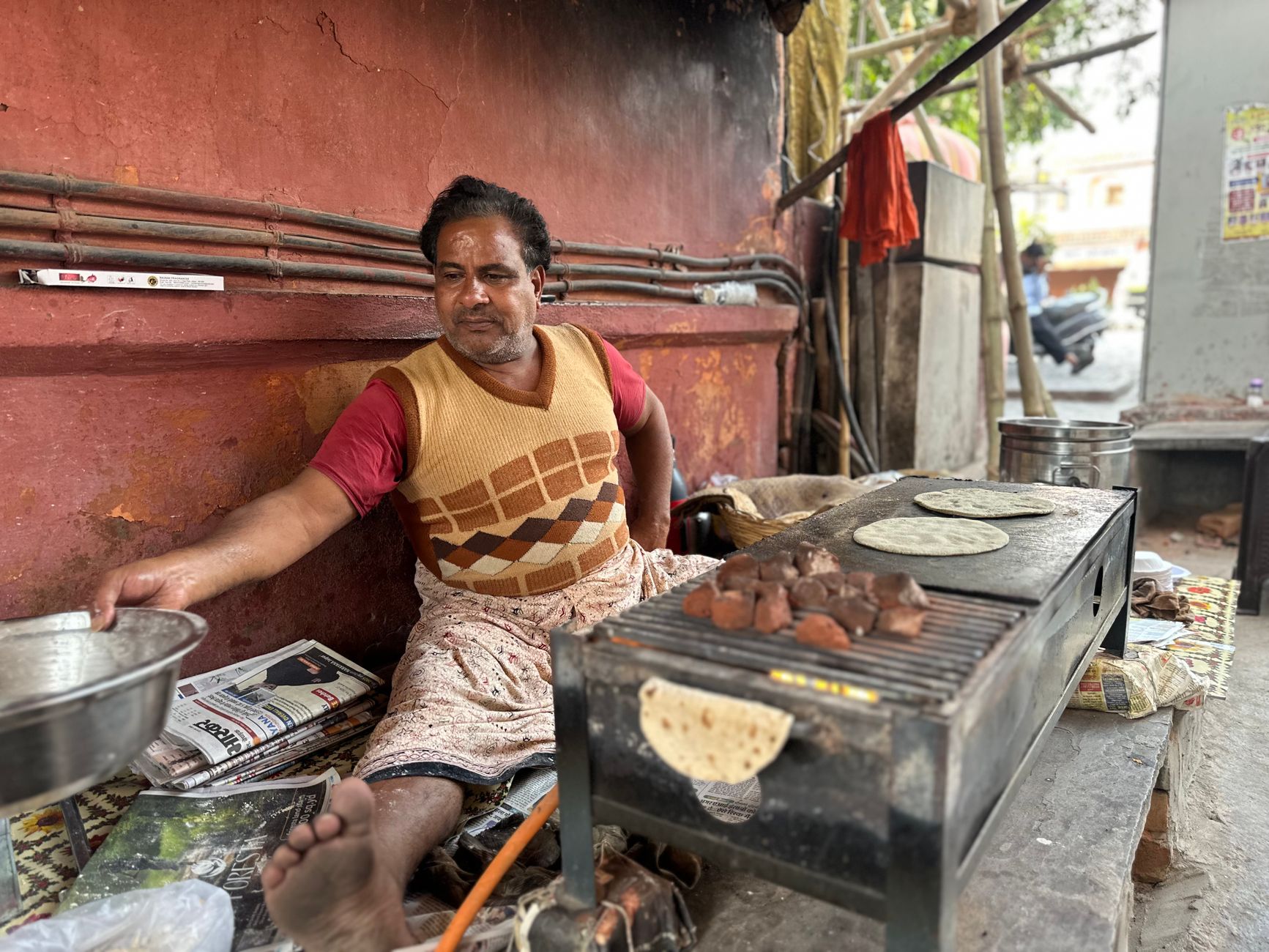
The roti canai that matters most in Kuala Lumpur isn’t the one you eat at breakfast. It’s the one you’re eating at 1:47 a.m. when the air has finally stopped holding the day’s heat and the only other people at the table are a Grab driver on his last trip and a woman who works the night shift at a 7-Eleven two blocks away. This is the city’s second culinary life, the one that doesn’t appear in guidebooks or on food-tour itineraries. It runs on a different logic entirely.
I’d been in KL for two weeks before I stumbled onto it by accident. My hotel was in Bukit Bintang, and I’d gone out for a walk at midnight because the air conditioning in my room had a rattle that sounded like something dying. I wasn’t hungry. I was just trying to exhaust myself enough to sleep. Then I turned a corner onto Jalan Alor and found something I hadn’t expected: the street looked dead — most of the tourist barbecue stalls were closing up, chairs stacked on tables — but a single gerai on the far end was packing a crowd at that hour, and the crowd was almost entirely Malaysian.
The stall was called Roti Canai SS2, though it wasn’t in SS2. The owner, a man named Yusuf who had been making roti for twenty-three years, told me that the name was left over from an earlier location. “I moved here six years ago, or something like that,” he said, slapping a ball of dough onto the counter with a sound like a wet hand hitting tile. “People found me anyway.” He worked fast, not hurried — there’s a difference — stretching the dough into a thin sheet, folding it, tossing it onto the griddle. The motion looked rehearsed, almost bored, but the result was anything but. The roti came out crisp on the edges, soft in the middle, with a slight chew that meant it had been cooked exactly long enough. The dhal was thin, almost watery, and aggressively spiced with cumin and chili. It wasn’t what I would have chosen. It was exactly what the dish should be.
That first night, I ordered two roti kosong and a teh tarik, and I sat there watching Yusuf work while the street slowly emptied around us. A man in a food delivery vest pulled up on a scooter, ordered four roti without getting off his bike, ate two of them standing up, and left with the other two in a plastic bag. Nobody took photos. Nobody lingered. This was just food, eaten by people who needed to eat, at an hour when most kitchens are closed.
The next week, I made a project of finding others. I asked everyone I met — hotel staff, taxi drivers, the woman who sold me a SIM card at the mall — where they went for roti after midnight. The answers were specific and contradictory. “Don’t go to the one at the market,” a hotel bellman named Razak told me. “That one’s for tourists. Go to the one behind the old cinema in Chow Kit.” Another driver, a man named Liam who had been driving nights for eleven years, disagreed completely. “The Chow Kit one is good but the one at Kampung Baru is better,” he said, and then he drew me a map on a napkin that I kept folded in my pocket for three days.
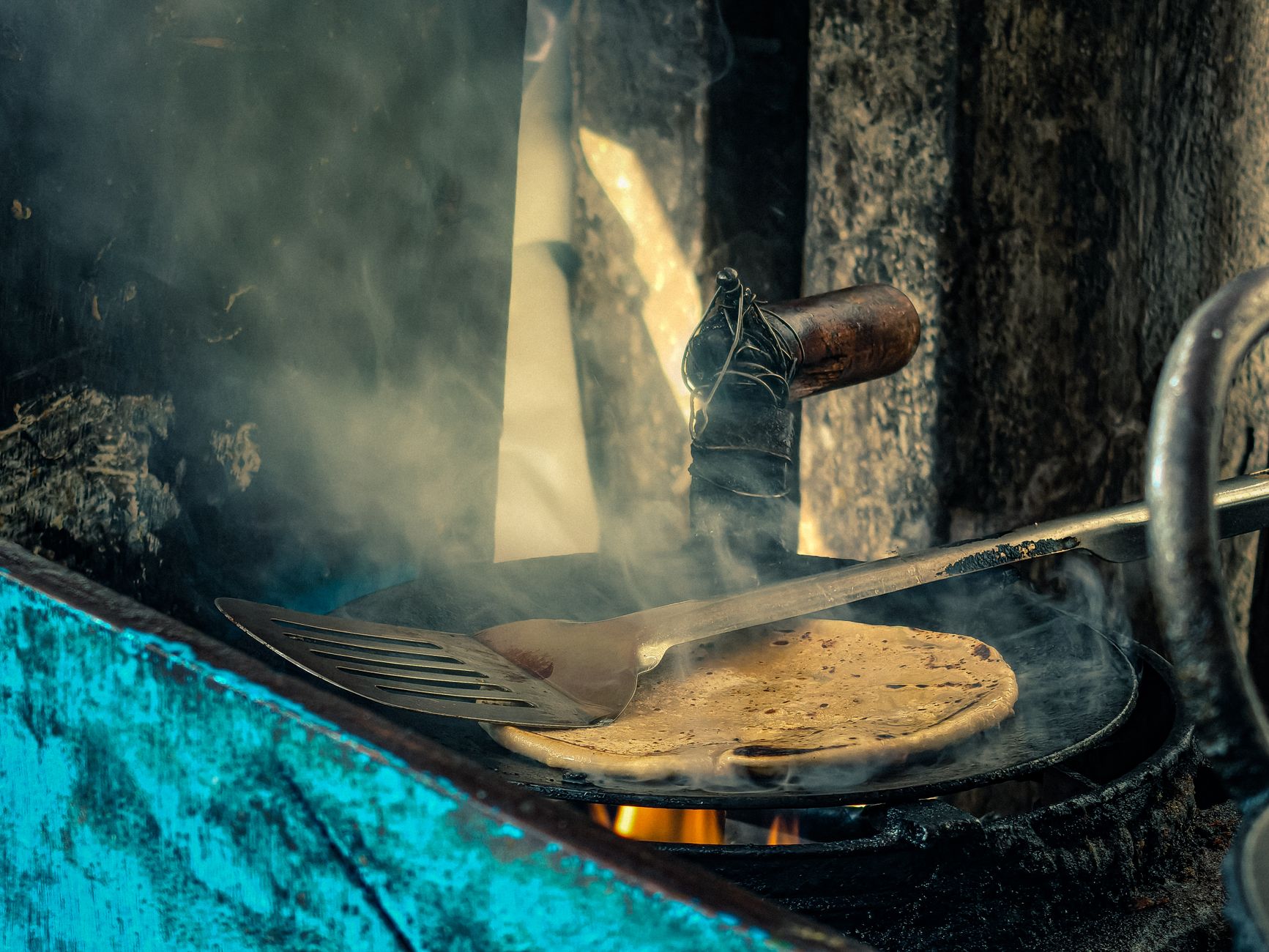
I started with Razak’s recommendation. The stall behind the old cinema in Chow Kit doesn’t have a name. It operates out of a metal cart with a single gas burner and a griddle that’s been seasoned to a deep, almost black patina. The man running it — I never got his name — worked alone. He made three things: roti kosong, roti telur, and roti pisang. That was it. No murtabak, no roti tissue, no variety for the sake of variety. The roti kosong was the simplest I’d had in the city — just dough, oil, heat — and it was also the best. The texture was different from Yusuf’s: flakier, almost like a croissant in the way it broke apart, but denser, more substantial. The dhal was thicker here, with visible pieces of lentil. I ate two and felt full in a way that surprised me.
The Kampung Baru stall that Liam had mentioned ran by a family — three generations, from what I could tell — and they served not just roti but nasi lemak, mee goreng, and something called roti john that I’d never encountered before: a split baguette filled with minced meat, egg, and chili sauce, then fried on the griddle until the bread turned almost crunchy. It was a mess. It was also delicious. But the roti here was the weakest of the three I’d tried — thicker, less delicate, the dough cooked through but not quite light. I wondered if the problem was that the family was stretched too thin, trying to offer too many things at once. The midnight roti business works best when it’s focused.
The stall at Jalan Masjid India sits across from a 24-hour laundromat. The clientele is almost entirely people waiting for their laundry: a man in a sarong reading a newspaper, a woman with a baby who couldn’t sleep, a teenager who had clearly been out too late and was trying to sober up before going home. The roti here was good — not great, but good — and it was less than three ringgit. The owner, a woman in her fifties, told me she used to run a stall in the day but switched to night because “the day market is too competitive.” She said it flatly, without complaint, as if describing a fact of physics.
The dough recipes varied noticeably from stall to stall: some used more oil, some less; some folded the dough more times, creating more layers; some cooked the roti longer for extra crispness. The dhal was even more variable. One stall’s was thin and sour, heavy on tamarind. Another’s was thick, almost like a stew, with whole chickpeas swimming in it. A third stall used a sweet version that I didn’t like at all — it felt wrong against the savory roti — but it had its regulars, which told me I was the one missing something, not them.
The logistics of finding these places are harder than they should be. Many of them don’t appear on Google Maps. Some don’t have signs. A few operate without permits, and the owners are careful about who they serve and when. I found one stall only because a taxi driver pulled over unprompted, pointed at a dim light under a tarpaulin, and said “there” before driving off. The roti there was served on a piece of newspaper, and the owner offered me a choice of two sambals — one red, one brown — but wouldn’t tell me what was in either. “Just try,” he said. I tried the red one first. It was aggressively spicy, the kind of heat that builds slowly and then doesn’t leave. The brown one was milder but funkier, almost fermented. I ate both and sweated through my shirt.
The stalls don’t all open at the same time. Some start at 11 p.m. and close by 3 a.m. Others begin at midnight and run until dawn. A few are unpredictable — open some nights, closed others, with no schedule posted anywhere. I learned to check the ground near the stall: if there were cigarette butts and oil stains, the spot was active; if the area looked clean, it was probably closed for the night. This method failed me exactly once, when I arrived at a spot in Pudu that looked perfectly clean and found a stall operating anyway, tucked behind a parked van. The owner, a young guy named Aiko who was running his father’s cart while the father recovered from surgery, laughed when I told him about my system. “We clean up before we start,” he said. “The city fines us if there’s a mess.”
Aiko’s roti was worth the failed system. His father had been making roti for thirty-four years, he told me, and had taught him a technique that involved letting the dough rest for exactly forty-five minutes before stretching. The result was a roti that was almost impossibly thin — transparent in places — but somehow held together through the cooking process. The edges turned crisp and bubbled, the center stayed soft, and the whole thing had a buttery richness that felt decadent even though Aiko insisted there was no butter involved. “Oil,” he said. “Just oil. The technique makes it taste like butter.”
Most of the customers are alone. They eat quickly. They don’t make small talk. The camaraderie that exists at a lunchtime hawker center, where groups share tables and argue about whose food is better, is entirely absent here. Midnight roti is a solo activity. The exception, I found, was the stalls that served alcohol — the ones with a cooler of beer and a sign advertising cheap Tiger. Those stalls had a different energy: louder, looser, with groups of friends who had been out drinking and needed to soak up the alcohol before going home. The roti at those places was usually worse — cooked fast, sometimes burned, the dough rushed — but the atmosphere was better. I ate at one of them and found myself in a conversation with a man named Felix, a sound engineer who had just finished a recording session and was eating his third roti telur. “Day roti is for tourists. Night roti is for people who actually live here.” He wasn’t being pretentious about it. He was just describing his city.
By the end of my third week, I had eaten at twelve different midnight roti stalls across KL. I had a favorite — the nameless one in Kampung Baru, run by the woman who had switched from day to night — and a least favorite, a stall near the Central Market that catered almost exclusively to tourists stumbling back from bars, where the roti was pre-made and reheated on the griddle. I had also developed a small obsession with the sambal variation, which seemed to follow no pattern I could discern. Some stalls used fresh chili. Some used dried. Some added belacan, some didn’t. A few sweetened theirs. One stall in Brickfields served a sambal that was almost entirely vinegar-forward, the kind of sharp acidity that woke you up better than coffee. I asked the owner what was in it. “Secret,” he said, and smiled.
The best meal I had wasn’t at any of the stalls I’d sought out. I’d taken the wrong bus — the 180 instead of the 181, though I still don’t know why that mattered — and ended up in a neighborhood called Taman Wahyu, which I later learned is mostly residential and not particularly known for food. I was walking back toward a main road when I saw steam rising from behind a row of shophouses. A generator hummed. A single fluorescent light flickered. Underneath it, a stall was serving roti to a line of about fifteen people, which at 1 a.m. on a Tuesday was a significant crowd. The roti here was unlike anything I’d had before: the dough was laminated, almost like puff pastry, with visible layers that separated as you pulled the roti apart. The texture was simultaneously light and greasy, crisp and tender. The owner, a man named Priya who had been at this location for eight years, told me he’d learned the technique from his mother, who had learned it from her father, who had run a stall in Penang in the 1960s. “It’s not the fastest way to make roti,” he said. “But it’s the best.” He wasn’t wrong. I ate three.
I took a bus back to my hotel that night feeling full and slightly ridiculous — a grown man, in a foreign country, chasing roti across neighborhoods he couldn’t name, at hours that made no sense. I never found the best roti in KL. I don’t think I was supposed to. The search itself was the point. You just keep eating, and the city keeps showing you another corner you hadn’t noticed before.
📷 Photos: Abhishek Shekhawat (Pexels), Trishik Bose (Pexels)