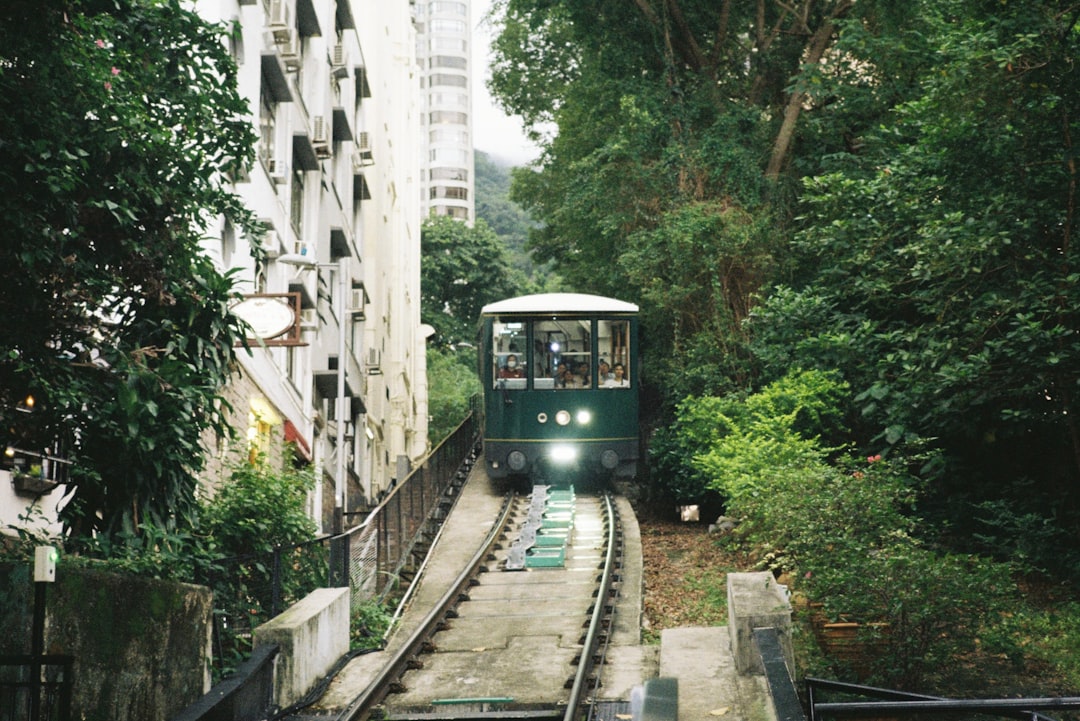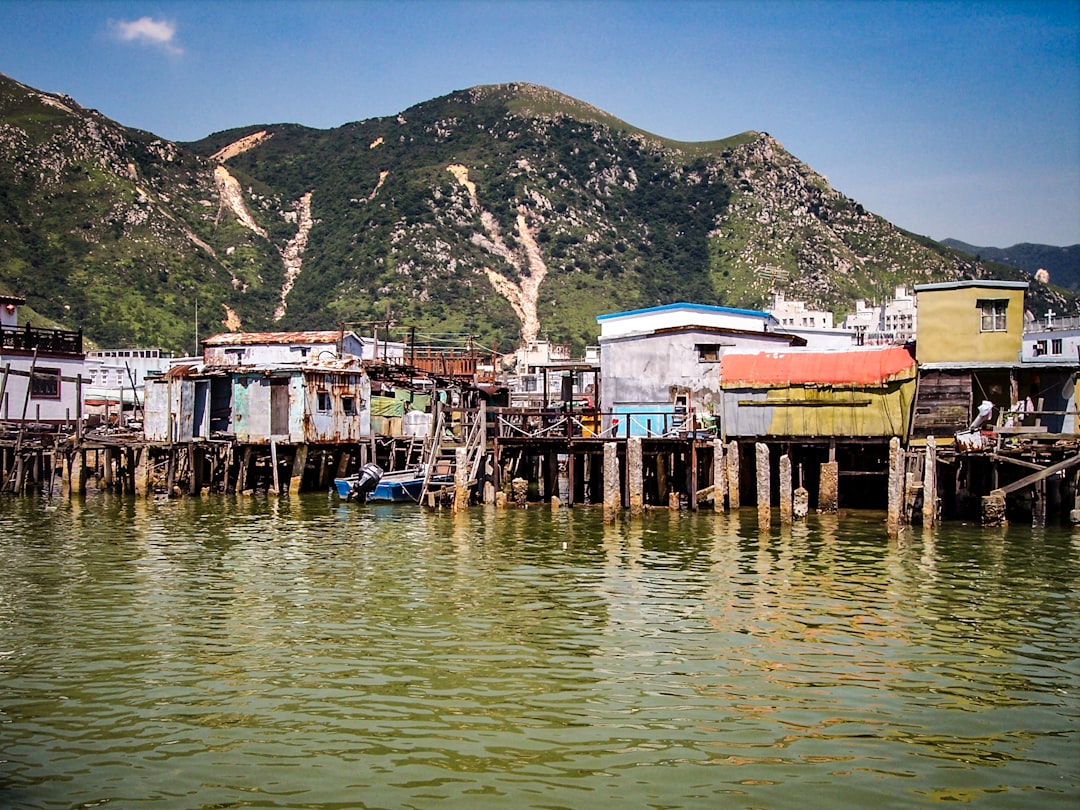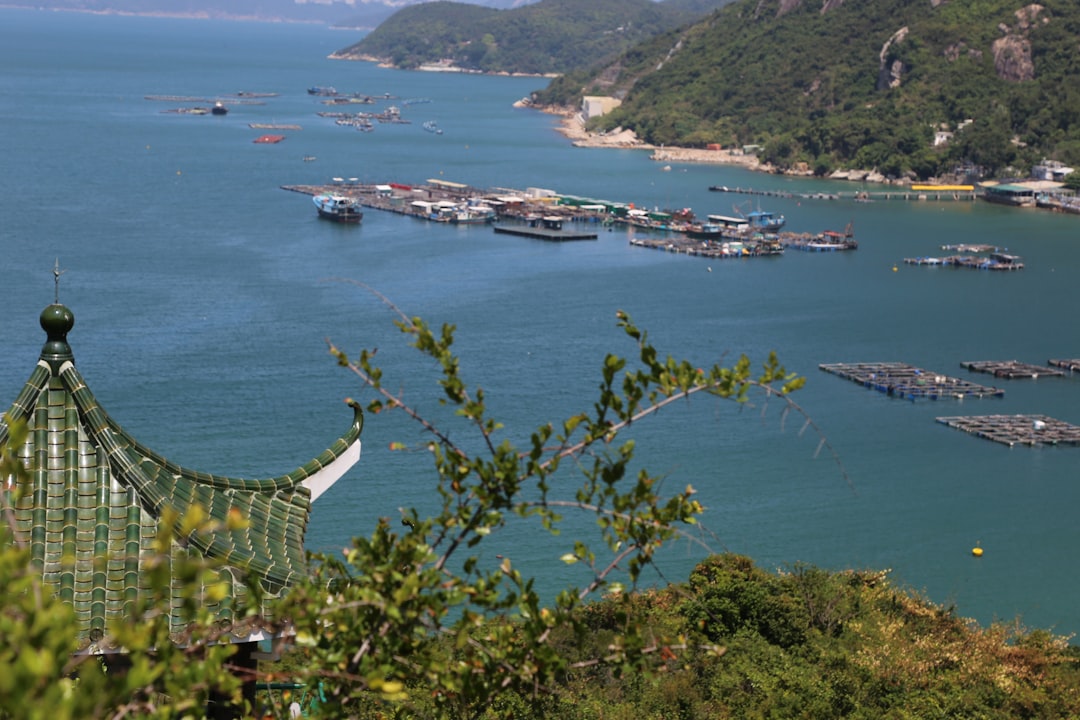
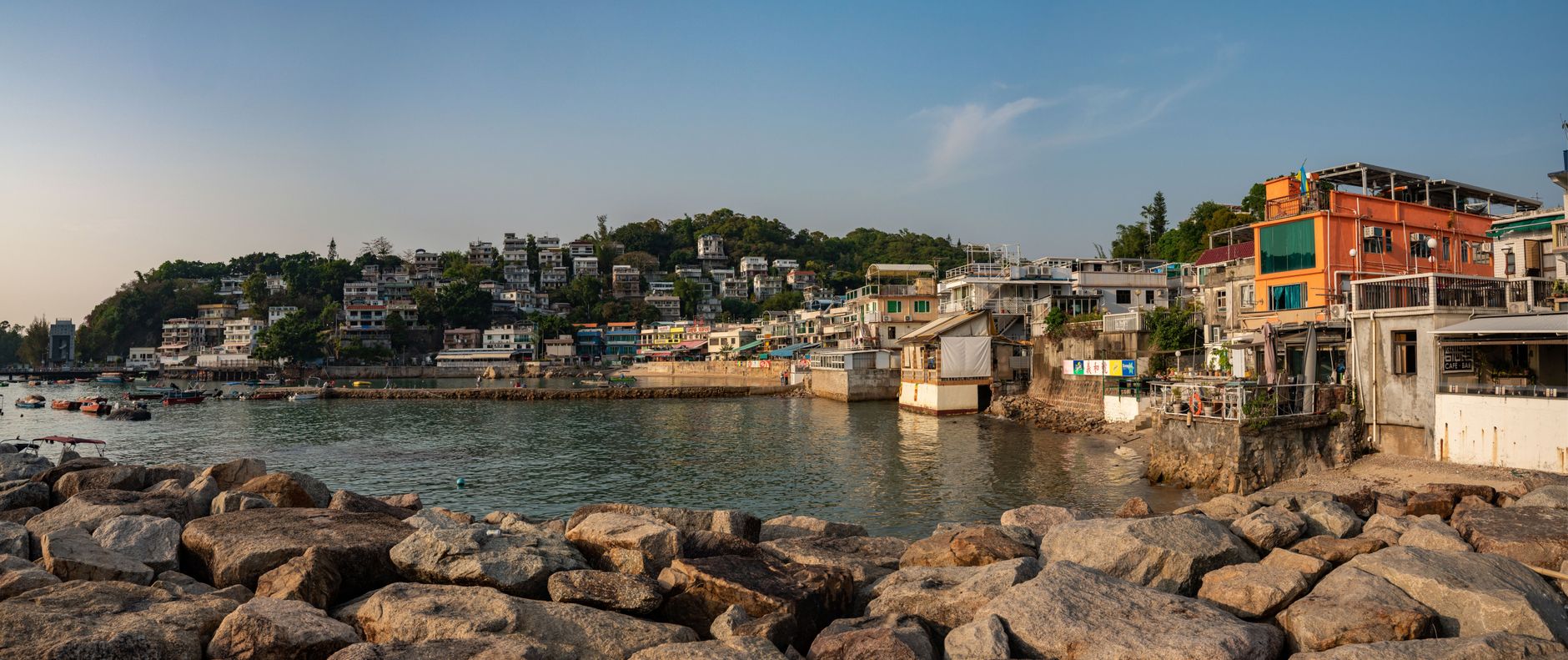
The ferry from Central to Yung Shue Wan is inexpensive — twenty-five Hong Kong dollars, the fare hasn’t changed much in years — and it deposits you in a place that feels more like a Southeast Asian fishing village than part of one of the world’s densest urban centers. Lamma Island’s Sunday market doesn’t bill itself as a destination for porcelain. Most visitors come for the seafood restaurants along the waterfront, or for the hike across the island to the power station’s viewing platform, or for the vague sense of having escaped. The market, when they stumble into it, looks like a jumble of secondhand clothes, handmade jewelry, and the kind of crafts that accumulate in expatriate living rooms over decades. The porcelain is easy to miss.
I’d been told about it by a ceramicist in Shek O, months before, who mentioned that some of the older fishermen’s families on Lamma had been storing pieces for generations — plates and bowls brought over from Jingdezhen or Chaozhou, sometimes as dowries, sometimes as cargo on trading junks. “They don’t put them in a market,” she’d said. “They put them on a blanket next to the vegetables and you have to know what you’re looking at.” That warning turned out to be the most useful piece of preparation I received.
The market runs along the main pedestrian path through Yung Shue Wan, starting around mid-morning and thinning out by late afternoon. The first few tables I passed sold exactly what the guidebooks mentioned: tie-dye shirts, stainless steel straws in muslin pouches, candles that smelled of lemongrass and sandalwood. A woman in her seventies sat behind a folding table covered in what looked like scrap metal and old cutlery. I almost walked past. At the back edge of her table, propped against a cardboard box, was a small celadon bowl with a crack running through one side, repaired with gold lacquer. I asked to see it. She handed it to me without saying anything and returned to the book in her lap.
The gold repair was kintsugi, which meant someone had considered this bowl worth keeping after it broke. The celadon was a pale olive green, not the jade tone of high-end Korean pieces but something muddier, with a faintly uneven glaze that pooled slightly at the rim. I turned it over. No mark on the base. That didn’t mean much — many provincial kilns never stamped their work. I asked how much. “Three hundred,” she said, in the flat tone of someone who expected me to bargain.
I didn’t. Three hundred Hong Kong dollars for an antique bowl with professional kintsugi repair was reasonable even before the bargaining started. But I’d learned something from that ceramicist in Shek O: never accept the first price, not because the seller expects you to haggle, but because the act of negotiating is itself a form of conversation. She told me a story once about a dealer in Yunnan who wouldn’t sell to anyone who paid full price without asking. “He thought they weren’t serious,” she said. “He thought they were tourists.”
So I put the bowl down and picked up a small covered box from the same cardboard box — roughly the size of a teacup’s saucer, painted with a loose floral pattern in underglaze blue. The painting was less careful than the bowl. The brushstrokes were quicker, more confident. I asked where it was from. She shrugged. “My mother’s family. Fujian, maybe.” I offered two hundred for both pieces. She looked at the bowl, then at the box, then back at me. “Two-fifty, and you take the ugly vase too.” She pointed to a narrow celadon vase behind her, about eight inches tall, with a chip in the lip. I took it.
That first transaction set the rhythm for the rest of the afternoon. The market has no fixed layout — vendors come and go depending on the weather and their own schedules — but the porcelain tends to cluster in the middle section, where the path widens into a small square shaded by banyan trees. Two or three families who live year-round on the island set up tables there most Sundays. One of them, a man I’d guess to be in his late sixties, had a collection of blue-and-white pieces spread across a canvas tarp on the ground, each one wrapped in newspaper. He unwrapped them one by one as I crouched beside him.
There was a plate with a crackled glaze and a painted scene of two figures in a garden — possibly a scholar and his attendant, possibly a scene from a folk opera. The brushwork was delicate but not fussy. There was a small teapot with a missing lid and a leaf-shaped dish that seemed to have no practical purpose. I picked up the plate. The underside had a six-character mark in underglaze blue, which I couldn’t read. The man took it from me gently and turned it toward the light. “Not old,” he said. “Nineteen sixties. Commemorative.” He pointed to a small cartouche at the rim that I hadn’t noticed. The characters were simplified, the kind used in the mainland after the language reforms. I’d have paid for it as an antique. He was telling me it was a souvenir.
That honesty was the thing I came to trust most about the Lamma market. The vendors weren’t trying to pass off modern reproductions as Ming dynasty. The prices were low enough — usually between fifty and five hundred dollars — that the transaction didn’t feel predatory on either side. The haggling was more like a game of mutual assessment: the seller figuring out how much you knew, you figuring out whether the piece was worth carrying back on the ferry.
I bought a small bowl with a celadon glaze and a crab painted inside the well, the lines so fine they looked like they’d been drawn with a single hair. The seller, a woman in her forties with a young child sleeping in a stroller beside her, asked for one hundred and fifty. I offered one hundred. She considered it, then said, “Give me one of your mangos.” I had bought a bag of mangos at a fruit stall near the ferry pier — three for twenty dollars. I handed her one. She laughed and gave me the bowl.
That kind of trade — goods for goods, not goods for cash — happened twice more over the course of the afternoon. A fisherman selling dried squid and small painted dishes from a cooler accepted a bottle of soy sauce I’d bought at a shop on the way. A man who’d set up a table of nothing but blue-and-white shards — broken pieces he’d collected from construction sites and beach cleanups — traded me a piece with a partial dragon motif for a paperback novel I’d finished reading on the ferry. I didn’t ask where the shards had come from. He said he’d been collecting them for twenty-three years. I believed him.
The air in the market smells of frying garlic from the nearest restaurant, mixed with the sweet rot of overripe fruit and the mineral damp of the stone path after a morning rain. The temperature is always a few degrees cooler than in Central, because of the sea breeze, but the humidity sits in your clothes like a weight. By one in the afternoon, the crowd has thickened to the point where you move shoulder to shoulder, and the sound is a layered hum of Cantonese, English, Tagalog, and the occasional burst of a language I couldn’t identify — something from the eastern Indonesian archipelago, maybe, or the Sulu Sea.
Most visitors pass through the market in less than an hour. They eat a fish ball on a stick, glance at the tables, and continue toward the beach or the hiking trail. The people who stop and engage — who ask questions, who handle the pieces carefully, who offer a price and wait for a counteroffer — those are the ones who end up with the things that matter. I watched a young couple walk past a table of small celadon cups without slowing down. The cups were priced at forty dollars each. The glaze had a subtle crackle that only showed in direct sunlight. The couple was looking at their phone, navigating to a restaurant. I bought two of the cups after they passed.
Not everything I brought back was a success. A small plate with a painted chrysanthemum pattern turned out to have a hairline crack that split completely during the ferry ride back to Central. The crack had been there when I bought it — I’d seen it, dismissed it as part of the age. The seller hadn’t hidden it. I’d simply chosen to ignore a visible flaw because I wanted the piece. That plate sits now on my bookshelf, held together by a strip of washi tape. I don’t regret buying it.
What surprised me most was how few serious collectors seemed to be working the market. Hong Kong has a thriving antiques trade — Hollywood Road, the auction houses, the specialist galleries in Sheung Wan — but the Sunday market on Lamma exists in a different economy entirely. The pieces there aren’t curated or appraised. They’re heirlooms, leftovers, things that didn’t make it into a family’s suitcase when someone moved to Canada or Australia. The sellers aren’t dealers. They’re people clearing out a cupboard, or settling an estate, or simply making enough to cover the week’s groceries.
That changes the dynamic of the exchange. There’s no pretense of expertise. When I asked one seller about the age of a small blue-and-white jar, she said, “I don’t know. My grandmother had it. She died.” She named a price. I paid it. I still don’t know how old the jar is. It sits on my desk, and when I pick it up, I think about a woman I never met, who kept it on a shelf somewhere in a village in Fujian, and then brought it to an island in Hong Kong, and then passed it to someone else.
The last piece I bought was the most expensive: a large celadon charger, maybe twelve inches across, with a faintly crazed glaze and no decoration at all. The seller — the same older woman from the first table, the one with the kintsugi bowl — asked for six hundred. I offered four. She said five. I paid it. As she wrapped it in newspaper, she said something in Cantonese that I didn’t fully understand. A man standing next to me translated: “She says you are the only person today who looked at the dishes instead of the clothes.” I thanked her. She nodded once and turned back to her book.
I took the ferry back to Central as the sun was setting, carrying a bag full of newspaper-wrapped porcelain that clinked with every step. The other passengers were mostly day-trippers returning to the city, tired and sunburned, carrying bags from the same seafood restaurants I’d walked past. Nobody else was carrying porcelain. The ferry pitched slightly as it rounded the headland, and I heard the faint scrape of ceramic against ceramic from inside the bag. I held it tighter. Nothing broke.
The pieces I bought that day cost less than a meal at a mid-range restaurant in Central. The celadon bowl with the kintsugi repair sits on my shelf next to a vase from a Tokyo flea market and a stoneware cup from a kiln in the mountains of Jeju. They don’t match. The Lamma market doesn’t sell matched sets. It sells the things that one person decided to keep, and another person decided to let go, on a particular Sunday afternoon when the tide was low and the banyan trees cast long shadows across the concrete path.

📷 Photos: Jimmy Chan (Pexels), Alicia Christin Gerald (Unsplash)