Sleeping in a Converted Kei Truck at the Foot of Mount Fuji During Autumn Foliage Season: Why This Is the Most Ambitious, Most Rewarding, and Most Miserable Camping Idea You’ll Ever Have
As in so commonly seen on Youtube: a tiny, boxy Japanese mini-truck, its back transformed into a cozy micro-camper, parked with Mount Fuji rising impossibly large behind it, the foreground a blaze of red and orange maple leaves. It’s the ultimate Instagram dream, and you’ve decided you want to live it. Good for you. But let’s be honest about what you’re actually signing up for. This isn’t a glamorous glamping experience with a built-in espresso machine and a memory-foam mattress. This is a logistical puzzle, a test of your spatial reasoning, and a cold-weather survival challenge, all wrapped in the most vivid scenery you will ever wake up to. You will make mistakes. You will freeze. You will lose things in the dark. And you will still, somehow, fall completely in love with the whole ridiculous ordeal.
The key is understanding that a converted Kei truck is not a campervan. It’s a car with a sleeping bag in the back. The magic is entirely in the location and the attitude you bring to it. Here’s how to actually pull it off without wanting to cry into your thermos of instant miso soup.
A Glorified Toolbox on Narrow Roads
First, you need to understand the obsession. A Kei truck is a Japanese micro-truck, built for narrow streets and light cargo. They’re tiny, cheap, and surprisingly robust. The conversion is usually a DIY affair: a wooden platform over the flatbed, a foam mattress, some curtains, and maybe a small battery-powered light. That’s it. There is no toilet. There is no kitchen. There is no heating.
Why do it? Because it gets you into places a full-sized RV cannot. The parking lots at the base of Mount Fuji are small. The roads leading to the best autumn foliage spots are narrow. A Kei truck can squeeze into a spot that a Toyota Hiace would struggle with. It also means you’re not paying for a massive, fuel-guzzling vehicle you’ll only use for sleeping. The trade-off is that you’re trading every conceivable comfort for total location flexibility. You win the ability to park fifty meters from a reflective lake at sunrise, but you lose the ability to stand up to put your pants on. You are sleeping in a glorified toolbox.
The Northwest Shore of Lake Saiko at Dawn
You will not be sleeping anywhere near the main tourist hubs of Kawaguchiko. Those are for day-trippers. Your domain is the quieter corners of the Fuji Five Lakes region, specifically the shores of Lake Saiko and Lake Shojiko. These are the spots where the autumn foliage hits hardest and the crowds thin out after 5 PM.
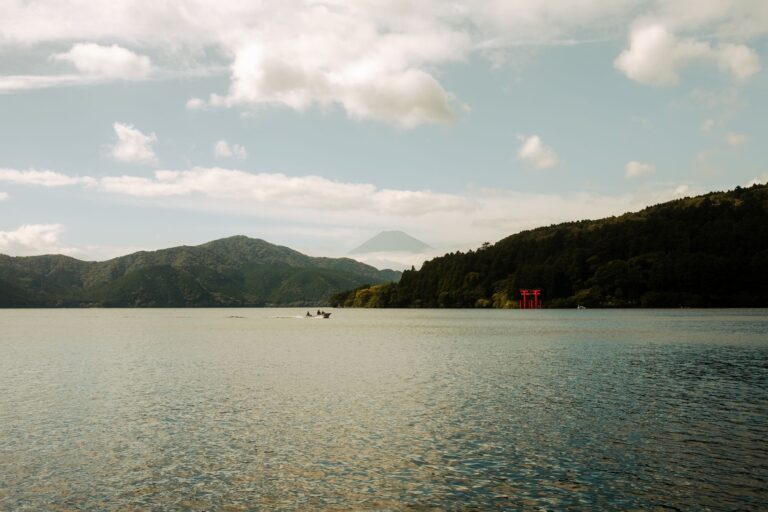
You’ll want to scout your parking during daylight. Look for small roadside pull-offs, the edges of prefectural roads that are wide enough for a few cars, and the parking areas near trailheads that aren’t gated overnight. The Japanese are very strict about where you can sleep, but they are also very polite about not bothering you if you’re clearly just parking. The trick is to arrive late (after sunset) and leave early (before 7 AM). You are not camping; you are “resting” in your vehicle. The official rest stops (Michi-no-Eki) are your safest bet, but they’re often full of other travelers and lack the privacy you want. The best spot you’ll find is on the northwest shore of Lake Saiko, where the road curves and you can park facing the lake. The reflection of Fuji in the still water at dawn, framed by the orange leaves of the maple trees lining the shore, is the entire reason for this trip. You’ll crave it.
Metal Box, Single-Pane Windows, Near-Freezing Nights
Let’s be direct about this: autumn nights at the base of Mount Fuji are not romantic. They are cold. You are in a metal box with single-pane windows. The temperature can drop to near freezing, even in late October. You will need to manage your expectations and your gear.
Your number one purchase is not a cute camping stove. It’s a serious winter sleeping bag rated to at least -5°C (23°F). A down bag is ideal because it compresses small, but a synthetic one is fine if you’re worried about moisture. You will also want a foam sleeping pad underneath it, not just an air mattress. The cold comes up through the floor of the truck. That metal flatbed is a heat sink. You need insulation between you and it. A second layer of foam or a reflective emergency blanket under your pad makes a shocking difference.
You will also want a hot water bottle. Fill it with boiled water (you’ll need a small gas stove for this) and shove it into the foot of your sleeping bag 20 minutes before you climb in. It’s your single greatest source of nighttime comfort. And do not underestimate the value of a good wool hat and thick socks. You will wear them to sleep. You will not care what you look like.
The 3 AM Run to the Lawson Restroom
This is the question everyone avoids, and it’s the one that will ruin your trip if you don’t plan for it. You have no toilet. You are sleeping in a truck. What do you do when nature calls at 3 AM?
You have a few options, and none of them are glamorous. The most reliable is to identify a 24-hour convenience store (konbini) or a public restroom near your parking spot before you settle in for the night. The Lawson or FamilyMart in the town of Fujikawaguchiko is open 24 hours. It’s a 15-minute drive from the lakeshore, but it’s a lifeline. You will develop a very specific relationship with that convenience store’s restroom.
The other option is to bring a portable toilet. There are simple, foldable bucket-style toilets that use disposable bags with absorbent gel. You can set it up inside the truck or outside behind the vehicle. It’s not pleasant, but it’s better than squatting in the dark with Fuji looming above you. The key is to have a plan and to execute it before you are desperate. You will learn to schedule your drinks and your bathroom breaks with military precision. You will become weirdly intimate with your own hydration and digestive schedule, or something like that.
Instant Ramen on the Tailgate at Sunset
You do not have a kitchen. You have a small camping stove that you will use outside, because using it inside the truck is a recipe for carbon monoxide poisoning and a very bad time. So you need to be strategic about what you cook.
The best meal for this situation is something that cooks quickly, uses minimal dishes, and is warm and filling. Think instant ramen with a soft-boiled egg added, or a packet of pre-cooked rice with a pouch of Japanese curry. You can also buy pre-made onigiri (rice balls) from the konbini and heat them on the stove in a pan with a little butter. It’s surprisingly gourmet when you’re sitting on the tailgate of your truck, watching the sunset paint the maple leaves gold.
You also need to accept that you will eat cold breakfasts. Granola, milk from a small carton, and a banana. Or a pre-made sandwich from the konbini. You will not be whipping up a full English breakfast. The stove is for the evening meal and for boiling water for your hot water bottle and your morning coffee. You will become very good at making excellent pour-over coffee with a simple dripper and a kettle. It’s the one luxury you should absolutely not skip.
Maple Corridor Before the Tour Buses Arrive
The autumn foliage (koyo) around Mount Fuji is world-class, but it is also fickle. The best time is generally the last two weeks of October through the first week of November. But it depends on the altitude and the weather that year. You need to check the official koyo forecast online before you go, and you need to be flexible.
The absolute best spot for the Kei truck experience is the Maple Corridor (Momiji Kairo) on the shores of Lake Kawaguchiko. During the day, it’s a zoo of tourists taking selfies. But at dawn, before the tour buses arrive, it’s yours. You can park your truck nearby (the small lot near the Kubota Itchiku Art Museum is a good bet), and you can walk the path with only the sound of the lake water and the rustling leaves. The red and orange of the maple trees against the dark blue of the lake, with the white-capped peak of Fuji in the background, is worth every single uncomfortable night.
Another hidden gem is the Oshino Hakkai village, a small settlement of thatched-roof houses fed by eight clear spring ponds. The autumn leaves reflected in the impossibly clear water are a photographer’s dream. The parking is a challenge, but your tiny truck will fit where others won’t. You’ll feel like you’ve discovered a secret.
The Headlamp, the Rain, and the Tailgate Coffee
You will lose your phone, your keys, and your dignity in the dark without a headlamp. The sound of rain on the canvas roof of your converted truck bed is the most peaceful thing on earth, until you realize you have to go to the bathroom and it’s still raining. The quiet moments—sitting on the tailgate with a cup of coffee, watching the mist lift off the lake, knowing that thousands of other people are crammed into buses and cars while you are here, in this tiny, ridiculous, perfect little box on wheels—are what make the whole thing hold together, despite the cold toes, the instant miso soup, and the toilet logistics.

📷 Photos: PJH (Unsplash), PJH (Unsplash)