Steam on the Nakagawa: Two Nights at Fukuoka’s Yatai
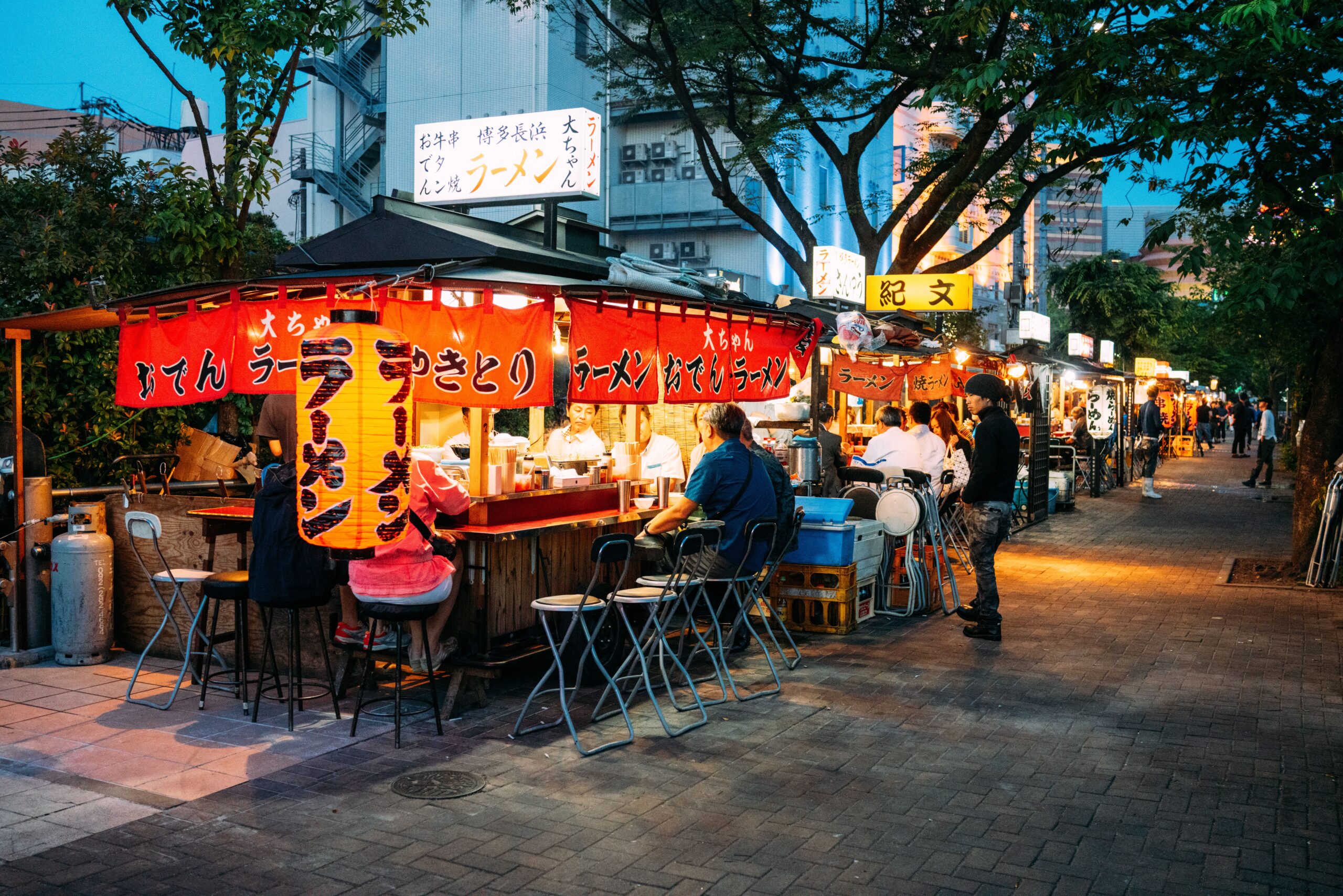
Steam rising into a cool evening, the clatter of chopsticks on ceramic bowls, the murmur of conversations happening shoulder-to-shoulder under a warm glow. That’s Fukuoka’s yatai culture — a constellation of mobile food stalls that appear at dusk along the Nakagawa River and in scattered pockets across the city. These aren’t tourist traps; they’re an institution, a living, breathing part of the city’s soul that’s been simmering since the postwar years. Over 48 hours, you can do more than just dip a toe in — you can crawl through them with intention, slurping your way from one stall to the next, learning the rhythms and unwritten rules that make this one of Japan’s most electrifying food experiences.
Your first evening is about orientation — the lay of the land, the etiquette, and that first perfect bowl. Head to the Nakasu district as the sun starts to dip, when the blue of the sky meets the orange glow of lanterns strung along the river. The stalls here cluster in a tight row, each one a tiny mobile kitchen with seating for maybe eight to twelve people. Pull up a stool and watch the master work: a single burner, a pot of broth that’s been simmering for hours, a tangle of noodles fished out with practiced precision. You’ll order with a simple point and a nod, or by saying “tonkotsu ramen” if you want the classic — a thick, creamy pork bone broth that’s the city’s signature. The stall keeper will slide a bowl toward you, and you lift it with both hands — the local way — and take that first sip. The broth is velvety, rich, with a depth that comes from hours of bones bubbling away, and the noodles are thin, straight, and firm enough to stand up to the liquid. A splash of garlic oil, a sprinkle of sesame seeds, a slice of char siu that melts on your tongue. You finish in five minutes flat. You’re already planning your next stop.
But the real art of this crawl is knowing when to linger and when to move. The pace is yours to set — there’s no rush, no pressure. After your first bowl, step back from the stall for a moment and breathe the air thick with broth and charcoal smoke, the river lapping against the banks, the buzz of conversations in Japanese and English and Korean blending into a single hum. The second stall of the night could be just a few meters away, serving something different: perhaps gyoza — pan-fried dumplings with a crisp bottom and a juicy pork filling that bursts when you bite, or yakitori — skewers of chicken thigh and spring onion grilled over charcoal, the skin crackling and sticky with tare sauce. Some stalls specialize in oden — a winter warming stew of daikon radish, fish cake, and hard-boiled egg simmered in a light soy broth, each ingredient soaked through with that gentle, savory warmth. You’re not just eating; you’re sampling the full breadth of what yatai culture can offer, each stall a tiny stage for its owner’s craft.
Come morning, you’ll want to recalibrate. Fukuoka’s ramen scene doesn’t sleep, but the yatai themselves do — they pack up around midnight and reappear at dusk, so your daylight hours are best spent on reconnaissance. Spend the morning walking the Nakasu area, noting which stalls are parked where, which ones had the longest lines the night before. The locals know that certain stalls are famous for certain things: one might be known for its spicy miso ramen, another for its mentaiko (spicy cod roe) topping that adds a briny kick to the tonkotsu base. Talk to the stall keepers if you can — a simple “oishikatta desu” (it was delicious) the night before can open doors. They’ll remember you, and on your second evening, you might find yourself with a warmer welcome, an extra topping, a knowing nod.
By your second evening, you’re ready to go deeper. This time, skip the Nakasu main drag and venture into the side streets off Tenjin, Fukuoka’s shopping and entertainment district. The yatai here are fewer, more spaced out, each one a secret you feel you’ve discovered. One tucked under a railway bridge might have a handwritten menu taped to its side, the prices slightly lower, the atmosphere more intimate. You sit down, and the stall keeper is a grandmother who’s been working this spot for forty years. She doesn’t speak much English, but she nods at you and gestures for you to sit. You order the ramen, and as she works — her hands moving with the economy of decades of practice — you notice the details: the way she rinses each bowl with hot water before filling it, the way she wipes the counter with a cloth between each customer, the way she checks the noodles with a fork, pulling them up to test the bounce. This is craftsmanship you can only appreciate up close, in the tight space of a yatai, where you share the counter with a salaryman finishing his third beer and a couple of university students laughing over a shared plate of gyoza.
The real puzzle of this crawl is timing. The yatai start serving around 6 p.m. and the early birds — tourists and families — grab the first seats. By 9 p.m., the crowd shifts: younger, louder, more boisterous as the beer and shochu flow. If you want a quieter experience, come at 6:30; if you want to feel the pulse of the city at play, come at 10. The best strategy is to do both: an early bowl to warm up, a break for a walk along the river, then a late-night return for a final bowl, this time perhaps with a side of sake. The temperature drops, the air feels sharper, and the steam from your bowl rises with extra drama.
Don’t forget the rules: no smoking unless the stall owner does, no photography of other customers without asking, and always leave your bowl empty. The etiquette is part of the experience — it’s how you show respect for the craft and the community. And tip your stall keeper with a round of drinks? That’s the local way to say thank you. A beer or a glass of shochu placed on the counter for them, a nod, and you’ve made a friend.
As your forty-eight-hour window closes, you’ll find yourself back at one stall — the one where the broth was just right on the salt, where the noodles had the perfect chew, where the owner smiled at your first attempt at Japanese. You’ll order one last bowl, and this time you’ll eat it slowly, savoring each slurp. The city hums around you, the river glitters. You leave the yatai at midnight, full, the stall keeper waving as you walk away.