We were on the 7:15 ferry out of George Town, which is later than it sounds because the sun was already high enough to turn the Strait of Malacca into something close to a mirror. The deckhands were still untying lines when a man came running down the jetty carrying a plastic bag with something round and heavy in it — a coconut, probably, or maybe a durian that he wasn’t willing to part with. The crew shouted something in Malay and waved him on. He jumped the gap as the boat pulled away, landed badly, and spent the next ten minutes laughing about it with a group of women who’d watched the whole thing from the bench seats. Nobody checked tickets. Nobody asked where anyone was going.
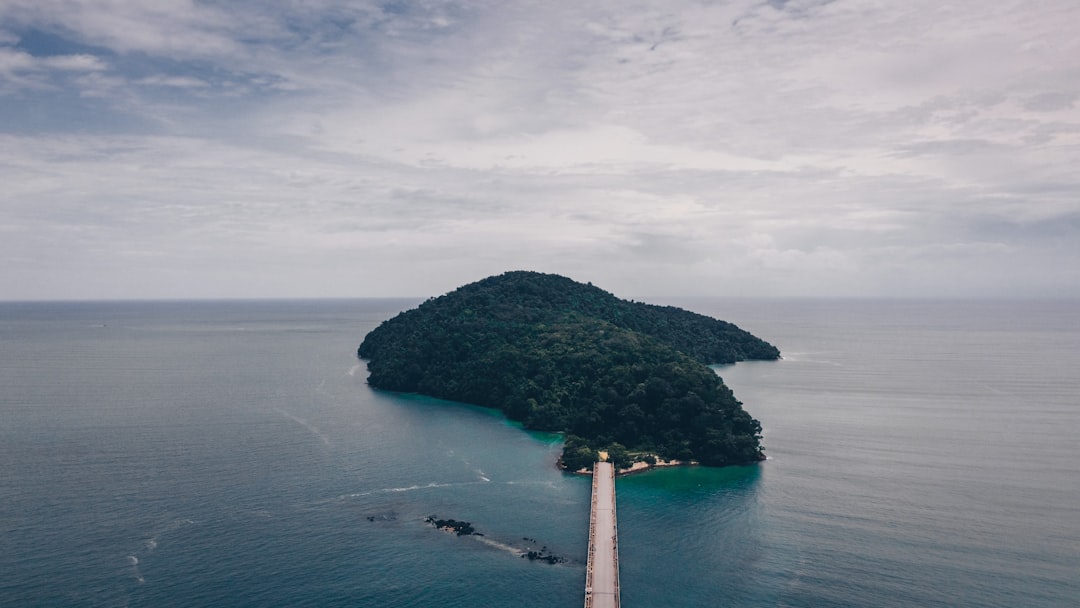
The ferry from George Town to Langkawi takes about three hours, which sounds like a long time for a trip that looks short on a map. But the route cuts through the Langkawi Archipelago, threading between islands that don’t appear on most itineraries — Pulau Songsong, Pulau Dayang Bunting, a dozen others whose names we never caught. The captain took a line closer to the coast than the schedule probably called for, and for long stretches we could see individual trees on shore, fishermen standing in their boats, the white foam of waves breaking on rocks that weren’t on any navigation chart we had access to. A woman next to us was peeling mangoes with a small knife, offering slices to anyone who made eye contact. We accepted one. It was tart, almost sour, and exactly right for the heat.
We had planned this trip around food, which in hindsight was ambitious — not because the food isn’t worth planning around, but because the distances between meals are shorter than you expect, and the temptation to stop at everything means you arrive full at places you’d intended to eat at. George Town had already proven this. We’d spent two days there eating our way through the street stalls of Lebuh Kimberley and Lebuh Chulia, where the char koay teow comes with a wok hei that tastes like the cook has been doing this since before we were born, and the cendol is shaved ice drenched in coconut milk and palm sugar that leaves your hands sticky for the rest of the afternoon. By the time we reached the ferry terminal, our bags were heavier with packets of white coffee and belacan — shrimp paste, wrapped in plastic and then in newspaper — than with clothes.
The ferry itself was basic in the way that Malaysian ferries often are. Plastic seats with foam that had long since given up any pretense of cushioning. A television at the front playing a Malay action movie that nobody watched. An air conditioner that worked too well in some spots and not at all in others. We had chosen the upper deck, where the windows were large enough to see the horizon, and for the first hour we watched the mainland recede and the islands grow larger. A man in a blue polo shirt came around selling packets of nasi lemak wrapped in banana leaf — rice cooked in coconut milk, with sambal, a hard-boiled egg, and anchovies. We bought two. They cost three ringgit each, about seventy cents, and were better than most restaurant meals we’d had in the past month.
Langkawi appeared as a blue shape on the horizon long before we reached it. The island is bigger than most visitors realize — almost 500 square kilometers — and what you see from the ferry is only the eastern edge. The town of Kuah, where the ferry docks, has the feel of a place that exists mainly to process people heading elsewhere. Duty-free shops selling chocolate and liquor. Hotels with pools that face other hotels. We walked through it without stopping, past a row of taxis whose drivers were sleeping in the shade, past a mosque whose loudspeakers were silent in the afternoon lull, and found a minibus heading north toward Pantai Cenang, where the beaches start to feel like beaches and not just coastline.
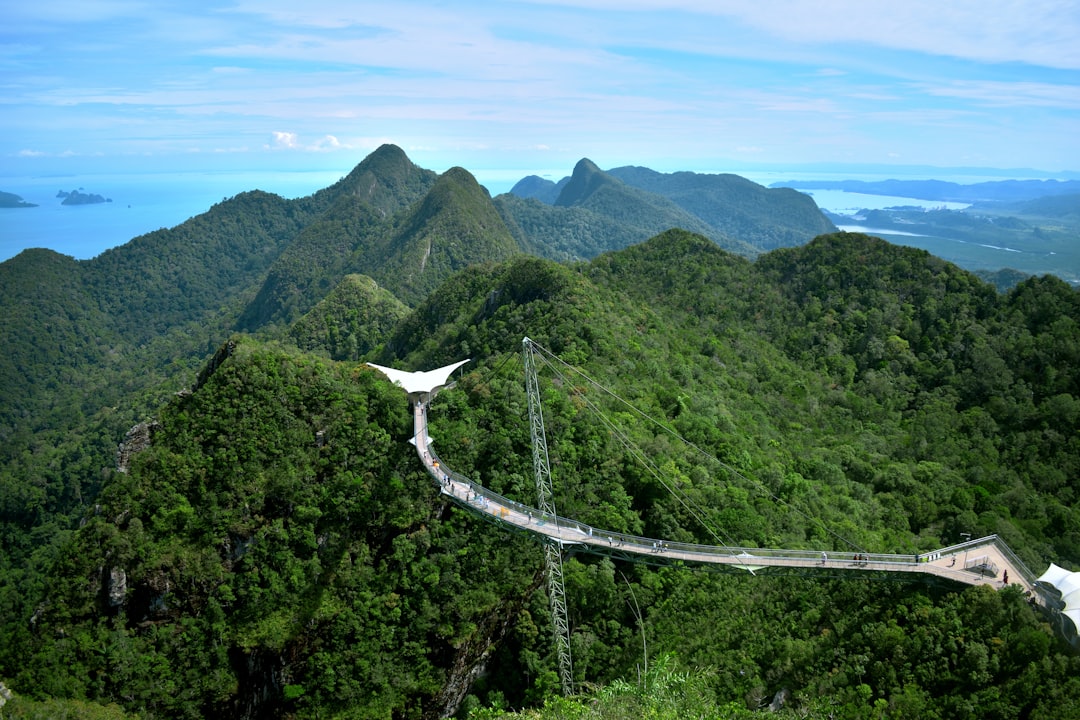
The driver, a thin man in his fifties with a cigarette behind his ear, asked where we were going. We said we didn’t know exactly — somewhere we could camp. He nodded like this was a perfectly normal answer and told us he would drop us at a spot where the tourists didn’t go. We paid him fifteen ringgit each, and he drove for about twenty minutes, past the main strip of Pantai Cenang with its bars and water sports operators, past the turnoff for the cable car, and onto a road that got narrower and more rutted until it ended at a stretch of sand with a single coconut palm and a pile of fishing nets. He pointed. We got out. He drove away.
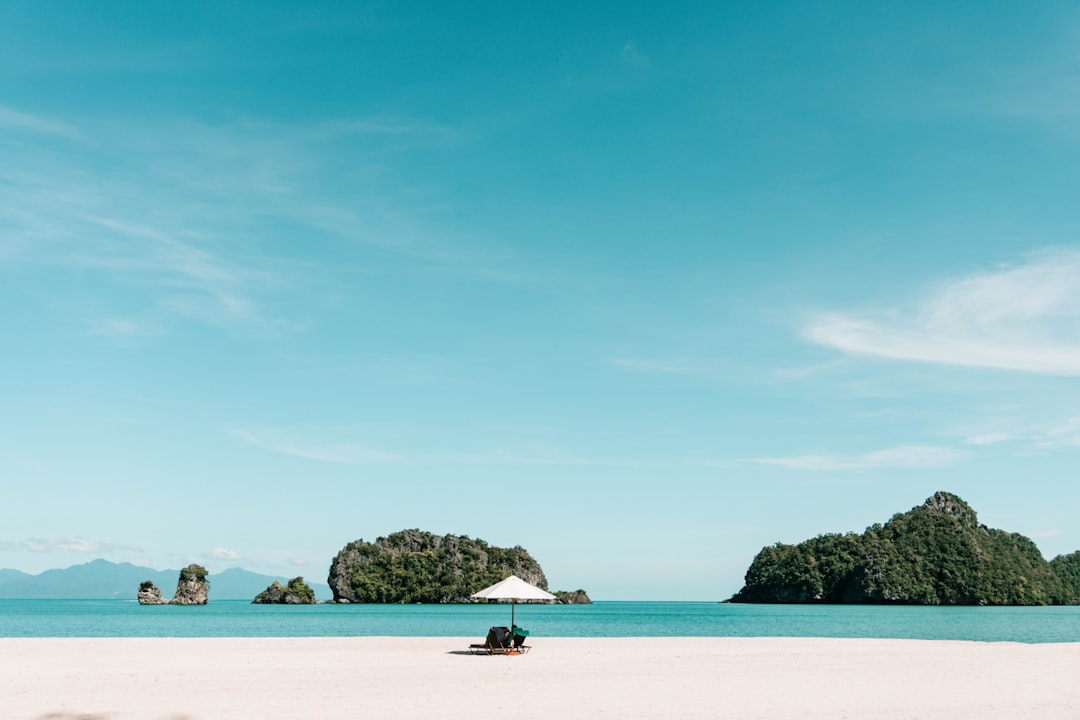
The beach was called Pasir Tengkorak. A man who lived in a house behind the treeline came out to check on us, carrying a machete and a thermos of tea, and seemed satisfied that we were not there to cause trouble. The water was clear enough to see the bottom at chest depth. The sand was coarse and mixed with broken shell, which meant you couldn’t walk barefoot without watching your step, but also meant the beach was largely empty — most people prefer the fine white sand of the resort beaches, where the water is calm and the jellyfish are kept at bay by nets. Here, the waves came in with enough force to knock you off balance, and the undertow was strong enough to feel even in shallow water. We pitched the tent well above the high-tide line, using rocks to anchor the pegs where the sand wouldn’t hold them.
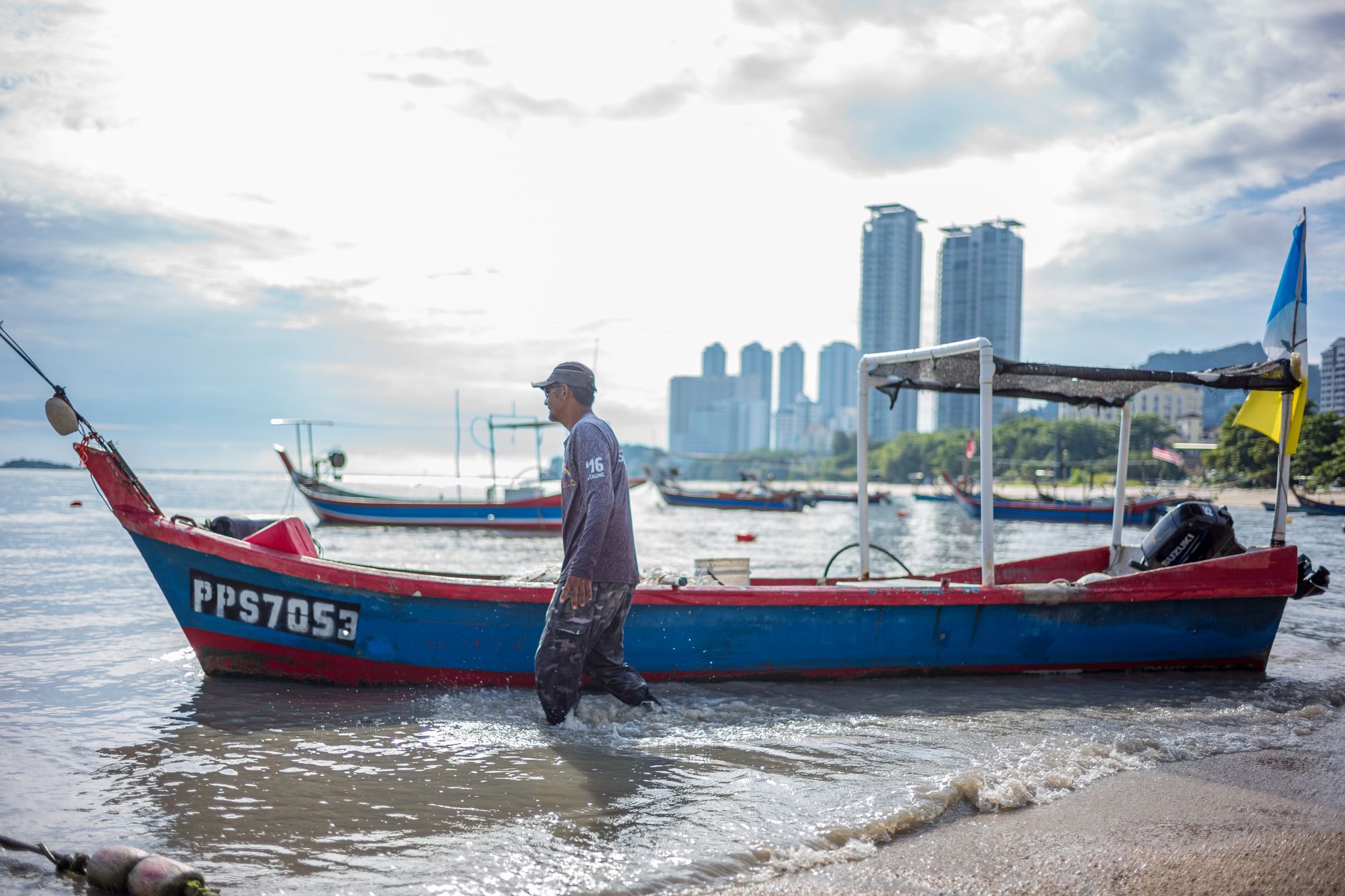
Camping on a beach in Langkawi is not complicated, but the sand gets everywhere. The humidity means nothing ever fully dries. At night, the hermit crabs come out in numbers that feel almost comical — dozens of them, clattering across the tent fabric, their shells knocking against each other like a badly played percussion section. We had brought a small stove and a pot, and for dinner we cooked rice with a can of sardines in tomato sauce — a combination we had learned from a fisherman in Penang who said it was what his family ate when they went out on the boat. It was salty, rich, and exactly what we needed after a day of travel. We ate sitting on the sand, watching the lights of a cargo ship move slowly across the horizon. There was no moon, and the stars were bright enough to cast faint shadows.
The next morning, we woke early and walked north along the beach toward a rocky headland where we had seen a small jetty the evening before. The tide was out, and the exposed reef was full of life — sea cucumbers, small crabs, anemones that closed when our shadows passed over them. We found a man collecting shellfish, his bucket already half full of something that looked like clams but was rounder and darker. He spoke some English, enough to tell us that the best eating was on the other side of the headland, at a beach called Pantai Pasir Hitam, where the sand was black from ancient lava and the snorkeling was better than anywhere on the island. We asked if the ferry went there. He laughed, showing teeth stained red from betel nut. “No ferry. Walk, if you want. Two hours, maybe more.”
We walked. The path was not a path so much as a stretch of coastline that people occasionally walked along — we had to scramble over rocks, wade through patches of water that came up to our knees, and push through sections of scrub where the branches left thin scratches on our arms. The beach, when we reached it, was empty. Black sand, fine and dense, packed hard enough to walk on without sinking. The water was a shade of green that we hadn’t seen anywhere else in Langkawi — not the turquoise of the postcards, but something deeper, more like jade, with visibility that went down thirty feet or more. We swam until our fingers pruned, then lay on the black sand until the sun moved overhead and the heat became too much. The only other person we saw all morning was a woman washing clothes in a freshwater stream that fed into the sea. She waved without looking up.
Getting food on this part of the island required improvisation. There were no stalls, no restaurants, no warungs selling fried bananas and instant coffee. We had brought supplies from Kuah — rice, cooking oil, dried fish, a bag of limes, a bottle of sambal that we had bought from a stall in George Town and had been careful not to spill — but by the second day we were craving something hot and freshly cooked. We found it at a house about a kilometer inland, where a woman and her daughter ran an informal kitchen from their front porch. They served nasi goreng with a fried egg, a piece of fried chicken, and a small dish of pickled vegetables, all for eight ringgit. The rice was cooked over a wood fire and had a smokiness that no restaurant in Kuah could replicate. We ate on plastic stools, using our hands the way the family did, and when we finished, the daughter — maybe twelve years old, with a smile that showed a missing front tooth — brought us cups of teh tarik, pulled tea, that was so sweet it made our teeth ache.
The third day brought a different kind of challenge. A storm came in the afternoon, the kind that arrives without warning and leaves just as quickly — wind strong enough to bend the coconut palms flat, rain that fell in sheets so thick we could barely see the tent from twenty feet away. We had left the tent zipped but not staked well enough, and by the time we got back to it, a corner had come loose and the inside was wet. We spent the evening drying what we could with a towel and accepting that some things — the notebook we had been using to keep track of meals, a bag of rice that had gotten soaked and swelled — were simply gone. We ate the sardines cold, straight from the can, and listened to the rain stop and start again, and then stop for good. By morning, the sand had dried and the sky was clear, but the tide had come up during the night and left a line of debris — driftwood, plastic bottles, a single flip-flop — marking where the water had reached. We packed what was left and started walking back toward Kuah, where a ferry would take us south again, back to the mainland.
The ferry back was the same route in reverse, but everything looked different from the other direction. Islands we had passed on the way north now appeared in a different order. The mainland emerged as a low green line that grew slowly, the way a developing photograph comes into focus. We sat on the same side of the ferry, watching the fishermen still standing in their boats, the trees still recognizable from offshore. A man next to us was eating nasi lemak from the same vendor we had bought from three days earlier. We asked him if the ferry was on time. He shrugged, swallowed, and said that in Malaysia, the ferry is on time when it gets there. This turned out to be exactly right: we docked in George Town twenty minutes late, with the sun already low and the hawker stalls setting up for the evening rush. We walked off the boat with sand still in our shoes, salt on our skin, and the smell of wood smoke and fried garlic following us through the terminal. The notebook was gone. The rice was gone. We still had the belacan wrapped in newspaper, and the taste of that smoky nasi goreng, and no way back to the house inland to thank the woman who made it.

📷 Photos: jefe king (Pexels), Bert Christiaens (Pexels)