Banda Aceh is a city that smells like cloves and wet concrete. The air at the intersection of Jalan T. Panglima Polem and Jalan Teuku Umar carries a mix of diesel exhaust, the sweetness of kretek cigarettes, and something else — a low, constant savory note that drifts from open kitchen doors. It’s a smell that pulls you forward before you’ve even decided where to eat.
I’d come with a single mission. Not to tour the mosques or the tsunami memorials, though those are unavoidable, but to find a specific dish of nasi goreng that, according to a series of fragmented accounts, had survived the devastation of December 26, 2004. The story was that a single family’s recipe — a version of the fried rice seasoned with a paste of dried shrimp, candlenut, and a particular local chilli — had been cooked on the same street for generations, that the street had been swept clean and the house demolished, but the wok had been dug out of the mud and the cooking had resumed within weeks. I wanted to taste whether that was just a story or something a meal could actually confirm.
The heat was punishing. Mid-afternoon in Aceh in late July is not a forgiving time to walk anywhere, and the sidewalks along Jalan T. Panglima Polem are broken in places, forcing pedestrians into the road, where the traffic moves with a kind of patient aggression. I stopped at a small roadside stall to buy a bottle of sweet tea, and the woman running it — her face partially covered by a hijab patterned with small blue flowers — pointed across the street when I said the name of the gorengan I was looking for.
“Ibu Rani,” she said. “Ujung gang. Sebelum tsunami, sudah ada.”
Before the tsunami, it already existed. That phrasing — not was there, but already there — lodged in my head. It suggested a kind of permanence that didn’t quite match the physical reality of the street, which was lined with newer buildings, the architecture generic and functional, nothing older than fifteen years. The old town had been a ten-foot wall of water. What remained was what had been rebuilt, and the rebuilt version of Banda Aceh is a city that has decided not to look backward too much. There are no preserved ruins here like in other cities. The ground was cleared. New things were built.
The alley Ibu Rani had pointed to was narrow, barely wide enough for a single motorcycle, and the concrete walls on either side were stained dark with moisture and grease. About thirty meters in, the alley opened into a small covered courtyard, shaded by a corrugated iron roof that let in stripes of afternoon light. Underneath, a woman sat on a low wooden stool in front of a charcoal brazier, a wok balanced on the coals, a stack of white styrofoam containers at her feet.
This was Ibu Rani herself. She was maybe in her sixties, though it was hard to tell — the salt-and-pepper hair pulled back in a tight bun, the arms wiry and strong from years of lifting woks and carrying bags of rice. A young man who I later learned was her grandson sat off to the side, chopping shallots with a knife that had been sharpened down to a thin crescent of blade.
I asked, in my limited Indonesian, if she still made the same recipe her family had made before the tsunami.
She looked up at me, not with surprise but with the flat, evaluating stare of someone who has been asked versions of this question before. “Resepnya sama,” she said. “Tapi apinya berbeda.” The recipe is the same. But the fire is different.
It took me a moment to understand what she meant. She gestured at the charcoal. Before, she said, the cooking had been done on an open wood fire, using driftwood and scrap timber from the boats. The smoke from that wood, mixed with the sea salt in the air, had given the rice a certain quality — a taste she couldn’t replicate with charcoal briquettes or gas. The wok had survived because it had been in use when the wave hit, sitting on the fire beside the house. When the water receded, she found it sixty meters away, wedged against a collapsed wall, still blackened with the residue of that morning’s batch of sambal.
She didn’t tell this story with any drama. It was just a fact, delivered in the same flat tone she used to tell me the price of a portion: fifteen thousand rupiah — roughly a dollar.
The cooking itself was a fast, almost violent process. Into the hot wok went oil — not a lot, maybe two tablespoons — then the paste she had ground that morning in a stone mortar: shallots, garlic, six or seven small red bird’s-eye chilies, a fist-sized piece of dried shrimp paste, and candlenuts that she crushed until they released their oil. The paste hit the oil and immediately darkened, releasing a smell that was sharp and sweet and slightly funky. She added a scoop of day-old rice — the grains separated and dry, not sticky — and began tossing everything together with a motion that was less a stir and more a continuous, low-energy flip.
A fried egg, fried separately in a smaller pan, went on top. A few slices of cucumber and tomato on the side. A dusting of fried shallots that she made herself every morning, sliced thin and fried in coconut oil until they were the color of caramel.
I sat on a plastic stool at a small folding table and ate it while the sweat ran down my temples. The rice was not spicy in the way that Padang food is spicy — no blinding heat. Instead, the chilies had been ground fine enough that their heat was distributed evenly through every grain, providing a low, constant warmth that built slowly. The shrimp paste gave it that savory depth that makes you want another bite before you’ve finished the first. The fried egg, runny, mixed into the rice and coated everything in a custard-like richness.
It was good. It was very good. But I was also aware that I was eating with the expectation of something transcendent, and that expectation is a trap. The food didn’t need to be the best thing I’d ever eaten. It just needed to be what it was: a direct, unbroken line of technique that had passed through a catastrophe and come out the other side essentially unchanged.
I ate in silence. The grandson kept chopping. A cat walked past, its ribs visible, and settled in a patch of sun that had found its way through the iron roof. Ibu Rani lit a cigarette and watched me eat, occasionally glancing down at her phone, which was older than mine and had a cracked screen held together with clear tape.
After I finished, I asked if she ever thought about changing the recipe. She laughed — a short, barking sound — and said something in Acehnese that the grandson translated loosely as: “Why fix something that isn’t broken?”
I wanted to ask more about the days after the tsunami, about how soon she set the wok to the fire, about what she cooked first. But the practical reality of the language barrier and the fact that she seemed, honestly, a little bored of my questions made me stop. She had been telling this story to curious outsiders for fifteen years. I was not the first person to sit on this plastic stool and ask her to recount the worst day of her life over a plate of fried rice.
I paid, thanked her, and walked back out into the white light of the alley. The sweet tea I’d bought earlier had gone warm and syrupy. I finished it standing on the main road, watching a stream of motorcycles ferry people home from work, the drivers carrying everything from bags of cement to live chickens.
The next morning, I went back. This time, I arrived at the alley around eight in the morning, when the heat was still manageable and the smoke from the charcoal fires had settled into a low haze at eye level.
Ibu Rani was already there, the wok already hot. She acknowledged me with a nod and kept working. The morning light was different — softer, edging in from the east, catching the steam coming off the rice and making it glow for a few seconds before it dissipated.
This time, I watched more closely. The paste, the oil, the rice, the egg — the same sequence, the same economy of motion. She didn’t measure anything. The quantity of paste was a heaped tablespoon, give or take. The heat was judged by the way the oil shimmered. The rice was cooked until the grains began to jump, tiny pops in the hot oil, and then it was done.
I ate two plates. The second one, I let cool slightly before eating, and I noticed something I hadn’t the day before — a faint bitterness in the background, a note that came from the candlenuts being toasted just a shade too long before they were ground. It was a house note, a marker of consistency. Every batch, every day, for decades, that same faint bitterness had been present. It was what made this nasi goreng different from any other.
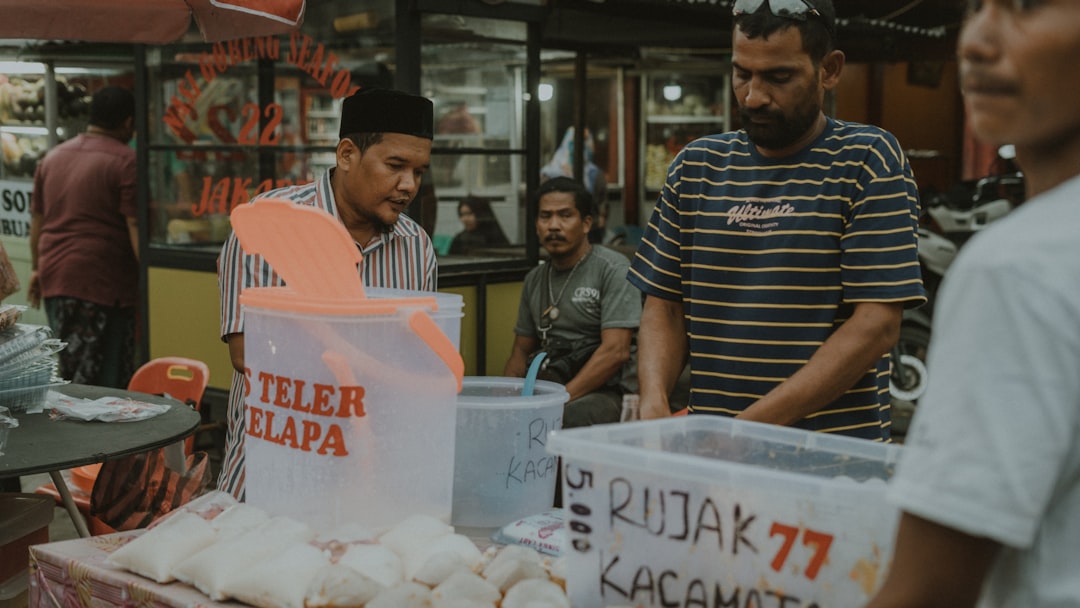
A group of men arrived around nine, construction workers by the look of their boots and the dust on their clothes. They ordered in fast, overlapping Acehnese, and the grandson took over the wok while Ibu Rani sat down to roll cigarettes. The men ate standing up, hunched over the low table, scooping rice into their mouths with plastic spoons. They were back on the street within seven minutes.
This, more than anything, is what a surviving recipe actually looks like. It is not a museum exhibit, displayed under glass and annotated with labels. It is a breakfast option for workers on their way to a job site. It is a woman in a courtyard who has been cooking the same thing for forty years and has no interest in being a tourist attraction. The fact that it survived a wall of water is almost incidental. The fact that it is still being cooked is what matters.
I walked around the city for the rest of the day. The tsunami museum is a strange, beautiful building, its roof shaped like a ship, and the memorial park nearby has a small boat that was carried two kilometers inland by the wave and now sits half-buried behind a house. I saw it, took a photo, and moved on. The whole city is like that — a place where the past is visible but not dwelled upon. People point to a building and say, “That one fell down and was rebuilt,” and then talk about something else.
On my third and final morning in Banda Aceh, I went back to the alley one last time. I wanted to try the nasi goreng cold, the way you sometimes eat leftovers in hotel rooms, to see if the flavors changed as they settled. I asked Ibu Rani to pack one for the road. She wrapped it in a banana leaf and then in newspaper, tying the package with a thin piece of string. It cost fifteen thousand rupiah, same as always.
I ate it three hours later, sitting on a bench at the airport, waiting for the flight back to Medan. The rice was cool, the egg congealed, the sambal paste had bled into the grains and stained them a deeper red. It was better cold. The flavors had had time to merge. The faint bitterness was still there, but it had softened, become part of the background.
Months later, I still think about that bitterness — the note that shouldn’t have been there, the imperfection that made the whole thing real. I could have asked her to toast the candlenuts a little less. She would have looked at me like I was insane. And she would have been right.

📷 Photos: Umar ben (Unsplash), TRI WISNU HADI (Unsplash)