I had been standing on the same patch of mud for nearly forty minutes when a man carrying a bamboo pole and a pair of rubber boots walked past me without slowing down. He was heading up the embankment, away from the direction most tourists were pointing their lenses. I watched him disappear over a small rise, and after a moment of hesitation — the kind where you weigh a good photograph against the possibility of missing the thing entirely — I followed him.
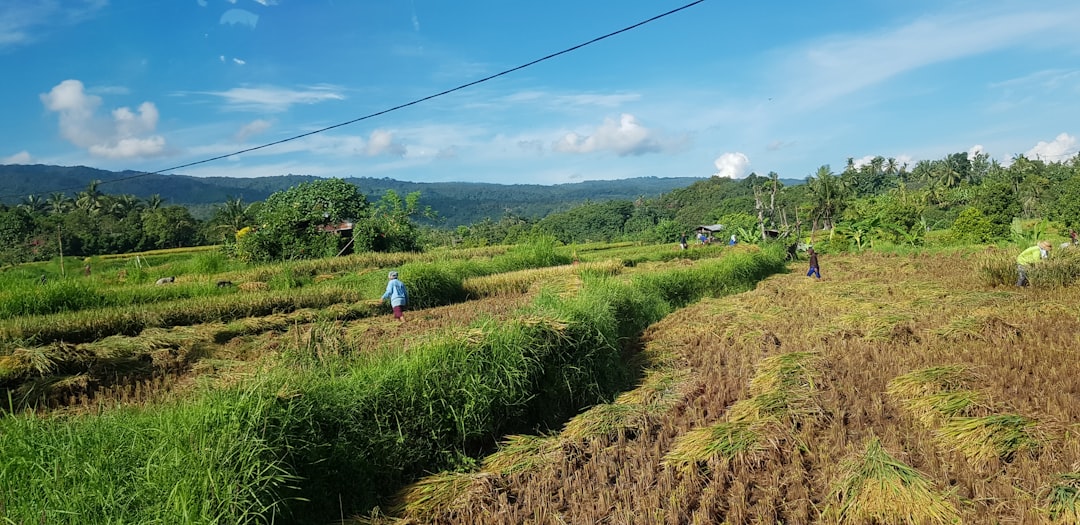
The rice terraces of central Bali are not hard to find. Any driver on the road from Ubud to Tegallalang will pull over at half a dozen overlooks, each one offering the same postcard view: green steps cascading down a valley, palm trees at irregular intervals, a sky that does most of the work at golden hour. What is hard to find is a terrace that still has people in it. Most of the paddies visible from the roadside are either fallow, under maintenance, or being photographed by people who have never seen a rice field before. The actual harvest happens further up, along paths too narrow for a car and too steep for a casual walker.
The man with the pole belonged to a subak — the traditional irrigation cooperative that has governed Balinese rice farming since the ninth century. He was not interested in being photographed. When I caught up to him near a cluster of huts at the top of the ridge, he was already talking to three other men, all of them holding curved knives called ani-ani and smoking the same brand of clove cigarette. One of them gestured toward the valley below, then at the sky. The conversation was in Balinese, which I do not speak, but the meaning was clear enough: the light was going, and there was still a field to finish.
I had arrived in the area that morning, not for the harvest specifically but because the road from Bedugul had deposited me here, and the map showed a network of footpaths that did not appear in any guidebook I had seen. The air at that altitude was cooler than the coast, and the soil underfoot had a particular smell — wet clay and cut grass and something sharper, like green papaya left on a counter. I bought a small bag of roasted peanuts from a woman selling snacks near the parking area. It cost five thousand rupiah, about thirty cents, and she handed it to me without looking up from the phone she was watching.
The harvest itself is not a photogenic event in the way most visitors imagine. There is no single moment when the light hits the grain and everything glows. Instead, it is a slow dismantling: a field of tall green stalks becomes a field of stubble over the course of an afternoon, and the workers move through it in a line, cutting with a rhythm that looks effortless until you try to keep pace with it. The ani-ani is held in the palm, the blade tucked between the fingers, and each stalk is cut individually — not harvested in handfuls, as mechanized farming would do, but one by one. An older woman in a broad straw hat worked her way down the terrace below me, and I timed her. She cut roughly one stalk per second, every second, for the time I watched. She did not look up once.
A man named Ketut — I learned later, when he stopped for water — told me that the subak system is why the terraces hold their shape at all. The water from the volcanic lakes above is channeled through a series of tunnels and aqueducts that were built long before anyone kept written records of such things. Each farmer gets water on a rotating schedule, determined by the priest who manages the temple at the head of the irrigation system. Ketut was in his fifties, with calloused hands and a face that had spent decades in full sun. He said the biggest problem now was not water or pests but the young people leaving. His own son worked in a hotel in Seminyak, driving guests from the airport to the resort. The son had not touched a rice field since he was fifteen.
I asked Ketut if I could come back the next day, before the workers arrived. He shrugged and said the field would be finished by then. If I wanted to see the full harvest, I should have come three days earlier. This was a fact delivered without apology, and I appreciated it. There is something clarifying about being told you have missed the moment, not because you failed to plan but because the rhythm of the harvest follows the rice, not the tourist schedule. The fields do not wait for golden hour. The workers do not hold their pose.
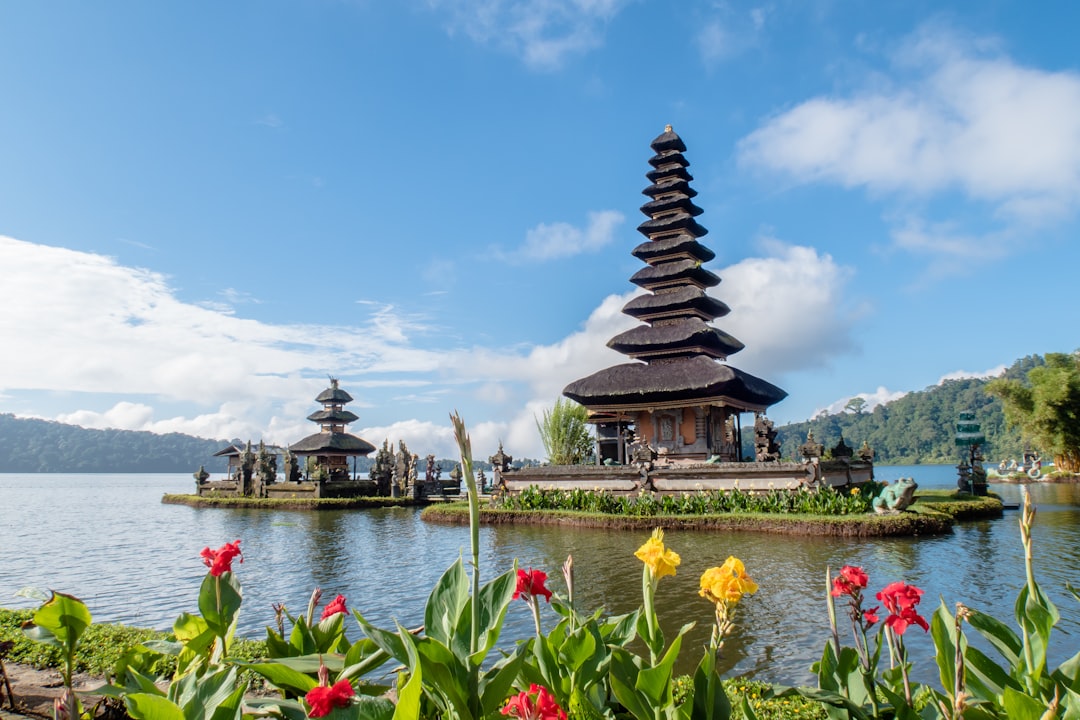
Instead, I found myself walking the path Ketut had pointed out, a narrow trail that ran along the top of the ridge and dropped down into a valley where the terraces were still green. The sun was low, and the light came in at an angle that lit the water standing in the paddies — not golden, exactly, but the color of brass that has been polished and then left out in the rain. I passed a small temple, no bigger than a bus shelter, with a single frangipani blossom laid on the altar. A gecko scrambled across the stone as I stepped past it.
The valley was quiet in a way that the main road never is. There was no traffic noise, no sound of scooters or tour vans. What I heard was the water moving through the irrigation channels — a low, constant trickle that seemed to come from everywhere at once — and the occasional knock of a bamboo wind chime somewhere up the slope. I sat on a stone wall and watched the light change across the terraces. It moved slowly, in increments, the shadows of the palm trees lengthening across the paddies until the water turned dark and the reflections of the sky disappeared.
By the time I walked back, the fields where the men had been working were empty. The cut stalks lay in bundles at the edge of the path, and the tools were gone. The workers had packed up and left, not because the light was good or bad but because the day’s work was done. They had been cutting rice since before dawn, and they would do it again tomorrow, regardless of whether anyone was standing on the ridge with a camera.
On the way back to the car, I stopped at the same snack stall. The woman was still there, still watching something on her phone. I bought a bottle of water and a small packet of fried tempeh. The tempeh was salty and hot, and I ate it standing in the dust as the last of the light drained out of the sky.

📷 Photos: Sua Truong (Unsplash), Didi Suprapta (Unsplash)