Living the ‘Big Lap’ Dream: Sleeping Under the Stars at Lake Eyre After a Dust Storm
You’re zipped inside your swag on the roof of your campervan, the canvas trembling against the last gasp of a howling gale, when the silence arrives. It’s the kind of absolute quiet you only find after chaos — the wind that has been scouring the stark landscape for hours, flinging red grit against your vehicle’s panels, has finally exhausted itself. You unzip the canvas a crack. The world outside is rinsed clean, the air so sharp it almost aches in your lungs. Above you, the Milky Way is a river of light so dense it looks like a spill of diamond dust across black velvet, untroubled by a single man-made glow. This is the moment you came for: the reward after the dust storm, sleeping under the stars at Lake Eyre. It feels less like a destination and more like a secret the outback has only just decided to share with you.
The dust storm itself was a rite of passage, the kind of experience that separates a road trip from a mere holiday. You’d been driving the Oodnadatta Track for two days, following the old Ghan railway line with its rusted sidings and skeletal bridges, when the horizon began to blush a deep, unnerving orange. At first, you mistook it for sunset, but it was only mid-afternoon. Within twenty minutes, the sky had turned the colour of burnt brick, and the air filled with a fine, stinging powder that found its way into every crevice of your campervan — between the window seals, into your water bottle’s spout, through the weave of your shirt. You pulled over, killed the engine, and sat in the cab listening to the sandblast against the windscreen, a sound like a thousand tiny fingers drumming. There’s a particular helplessness to being trapped inside a metal box in the middle of nowhere while the world outside dissolves into a brownout. But there’s also a strange intimacy to it. You make do. You brew a cup of tea on your gas stove, the flame flickering in the dim light, and you watch the storm rage through the glass, knowing it can’t touch you.
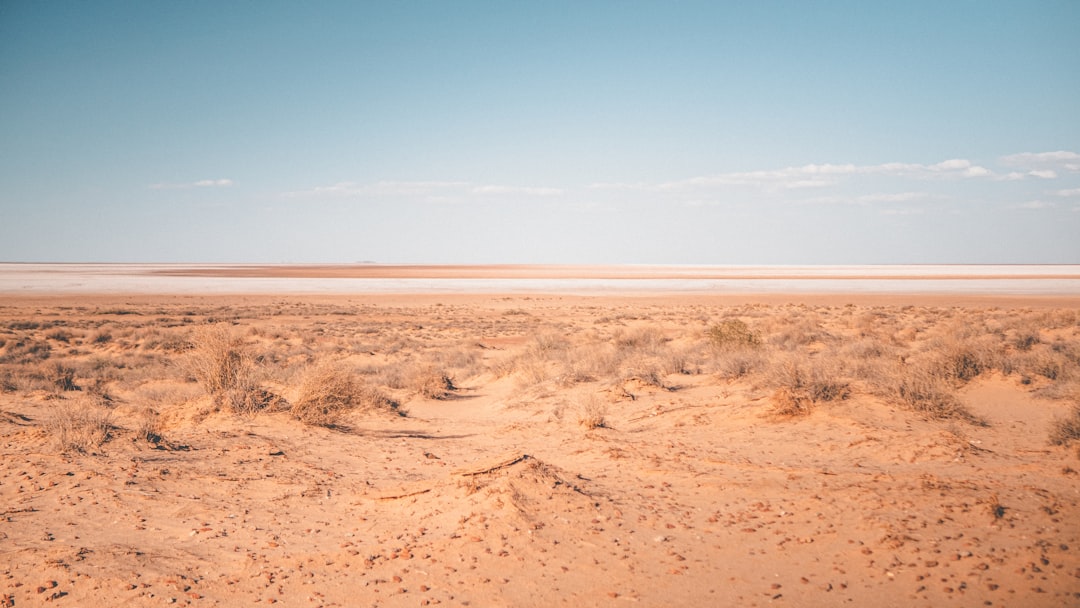
When the sky cleared and you finally rolled into the Lake Eyre National Park, the landscape felt reborn. The storm had scoured the salt crust, leaving it polished and gleaming like a vast, white terrazzo floor. You parked your campervan at the designated site near the lake’s edge — a flat, gravelly spot with nothing but the horizon for company — and stepped out into air so still you could hear your own heartbeat. The lake itself, when you first saw it, was a shock. After the dust storm’s fury, you expected something dramatic: a raging inland sea, perhaps. Instead, you found a mirror. A thin, shimmering layer of water — barely ankle-deep — had been left behind by recent rains, and the sky above was reflected so perfectly you couldn’t tell where the earth ended and the heavens began. You walked out onto the salt crust, your boots crunching softly, and the only sound was the distant cry of a banded stilt. The scale of it almost hurt to look at. It’s the kind of place that makes you feel simultaneously infinitesimal and utterly present, as if you’re the last person on Earth and the first person to ever stand there, all at once.
You’ll want to time your visit carefully, because Lake Eyre is a living thing, not a static postcard. The water comes and goes with the rains, transforming the basin from a blinding white saltpan into a shallow, life-filled lagoon and back again. Summer storms in the north send floodwaters down the Warburton River, and when they reach the lake, everything changes. The water turns pink, then green, then a deep, bruised purple as algae and brine shrimp bloom in the hypersaline conditions. Pelicans arrive by the thousands, their white shapes drifting like clouds across the glassy surface. You’ll want to check the Bureau of Meteorology’s flood updates before you set out, and call the park ranger station at Marree for current conditions. The difference between a dry lake and a wet one is the difference between walking on the moon and stepping into a watercolour painting. Both are extraordinary, but you need to know which one you’re chasing.
Setting up camp for the night required a shift in mindset from the coastal or forest camping you’re used to. There are no trees here, no soft grass, no gentle lapping of waves. Your campervan becomes your entire universe. You parked facing the lake, with your awning deployed to catch the last of the sunset’s warmth, and you cooked a simple meal — pasta with a jar of puttanesca sauce, a splash of cheap red wine — on your single-burner stove. The wind had died completely, and the only light came from your headlamp and the stars. You ate sitting on a camp chair, your plate balanced on your knees, watching the sky deepen from sapphire to indigo to a black so rich it felt solid. Dinner took an hour, not because of the food, but because you kept stopping to look up.
You’ll need to be self-sufficient in a way you might not be used to. There’s no water, no firewood, no toilet block, no bins. You carry everything in, and you carry everything out. Your campervan’s fresh water tank will be your lifeline — you’ll use it for drinking, cooking, washing dishes, and a quick sponge bath that will feel like the height of luxury. The park requires a permit, which you can buy online or at the William Creek Hotel, and there are strict rules about where you can camp and how close you can drive to the lake’s edge. The salt crust is fragile, especially when wet, and your campervan’s tyres can do lasting damage. You park on the designated hard ground and walk the last few hundred metres. It’s a small inconvenience for the privilege of standing in a place that holds so much quiet.
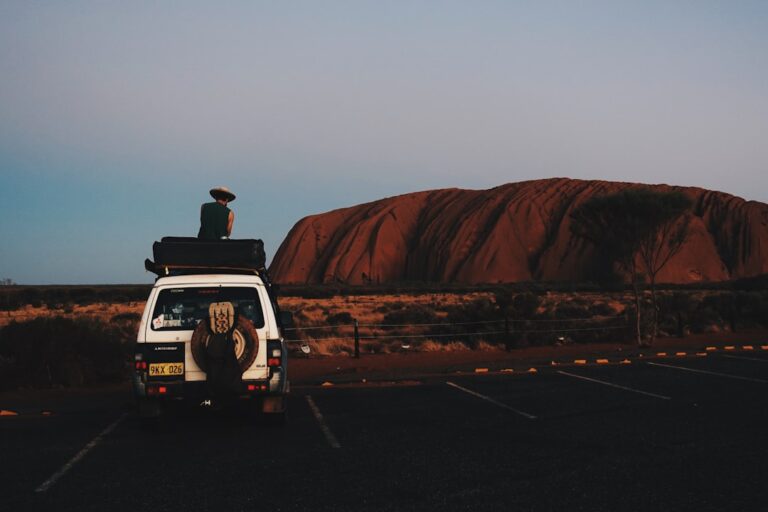
The night itself was the main event. Sleeping on the roof of your campervan is the move — a rooftop tent or a simple swag strapped to the rack — because the view from ground level is good, but the view from four feet up is transcendent. You unfolded your sleeping bag on the foam mattress, left the fly half-open, and lay on your back staring straight up. The stars were so thick they seemed to have texture, like a woven blanket of light. You picked out the Southern Cross, of course, and the two bright pointers, but the rest was a glorious blur, unreadable and perfect. At some point in the night, a dingo howled, a long, mournful sound that carried across the salt flat and faded into nothing. It didn’t feel threatening. It felt like the landscape speaking its own language, and you were just lucky enough to overhear.
Morning came slowly, the light creeping across the lake in shades of rose and gold. You woke to the sound of birds — a chorus of dotterels and avocets feeding in the shallows — and you crawled out of your swag to find the world painted in soft, pastel tones. The water had calmed overnight, and the reflection was even sharper than the evening before. You made coffee on your stove, sitting on the roof of your campervan with the mug warming your palms, and you watched the sun lift the shadows off the salt. You drank your coffee slowly, not wanting it to end.
The practicalities of the Big Lap are what make moments like this possible. You’ve likely planned your route with care, stocked your campervan with enough supplies to be self-reliant for days, and studied the maps of outback roads that are little more than graded dirt. The Oodnadatta Track itself is a 620-kilometre gravel road that connects Marree to Marla, and it’s the backbone of any Lake Eyre adventure. Fuel stops are few — William Creek, Oodnadatta, and Cadney Homestead are your only options — and you’ll want to carry extra jerry cans of diesel as insurance. The road can be corrugated enough to rattle your teeth loose after a few hours, but it’s also one of the most historically rich drives on the continent, passing by the ruins of old telegraph stations and the silent, poignant graves of those who didn’t survive the crossing.
You’ll also want to plan for the weather in ways that feel counterintuitive to a desert trip. Summer temperatures can exceed 50 degrees Celsius in the shade — and there’s no shade — so you travel either in the cooler months of winter (June to August) or in the shoulder seasons of spring and autumn. Winter nights at Lake Eyre can drop close to freezing, and you’ll be grateful for a good sleeping bag rated to zero degrees and a thermal base layer. The dust storm you encountered was a spring event, a reminder that the outback is always in motion, always preparing its next surprise. You check forecasts obsessively, but you also accept that the weather in this part of the world is a force you negotiate with, not control.
The real gift of Lake Eyre is how it strips away everything unnecessary. There’s no phone reception out here, no Wi-Fi, no shops, no distractions. You are alone with the landscape and with the people you’re travelling with — or, if you’re solo, with yourself. The first day without a signal can feel unsettling, like a phantom limb you keep reaching for. By the second day, you stop reaching. You notice the texture of the salt underfoot, the way the light changes at different times of day, the patterns of the clouds. You have conversations that meander and stop and start again, with no deadline or agenda. You read a book by headlamp, cover to cover, in a single evening. You realise, with some surprise, that you’re not bored. You’re present.
When it’s time to leave, you pack up your campervan with a reluctance that feels physical. You do one last walk to the water’s edge, your boots leaving prints that will be erased by the next gust of wind. The lake seems unchanged from the day before, and yet it’s different — the light is different, the birds have moved, the water has evaporated just a fraction of an inch. It’s a place that never stays the same. You climb back into the driver’s seat, start the engine, and pull away, the salt flat shrinking in your rearview mirror. The dust kicks up behind you, a thin plume that traces your path back towards the track. But the quiet stays with you, lodged somewhere behind your ribs, long after the road turns to bitumen and the towns reappear.
The Big Lap dream is made of moments like this: not the grand, photogenic set pieces, but the unexpected stillness that follows the storm. You came for the sensation of sleeping under the stars, a night sky so vast and bright it felt like a physical presence, and you found it. The grit, the wind, the patience, the coffee at dawn, the dingo’s howl, the strange, aching beauty of a salt lake that asks for nothing and offers everything. You’ll want to go back. You probably will.
📷 Photos: Simon Maisch (Unsplash)