Brewing Coffee from a Hand-Grinder While Watching the Sunrise Over Uluru in a Campervan
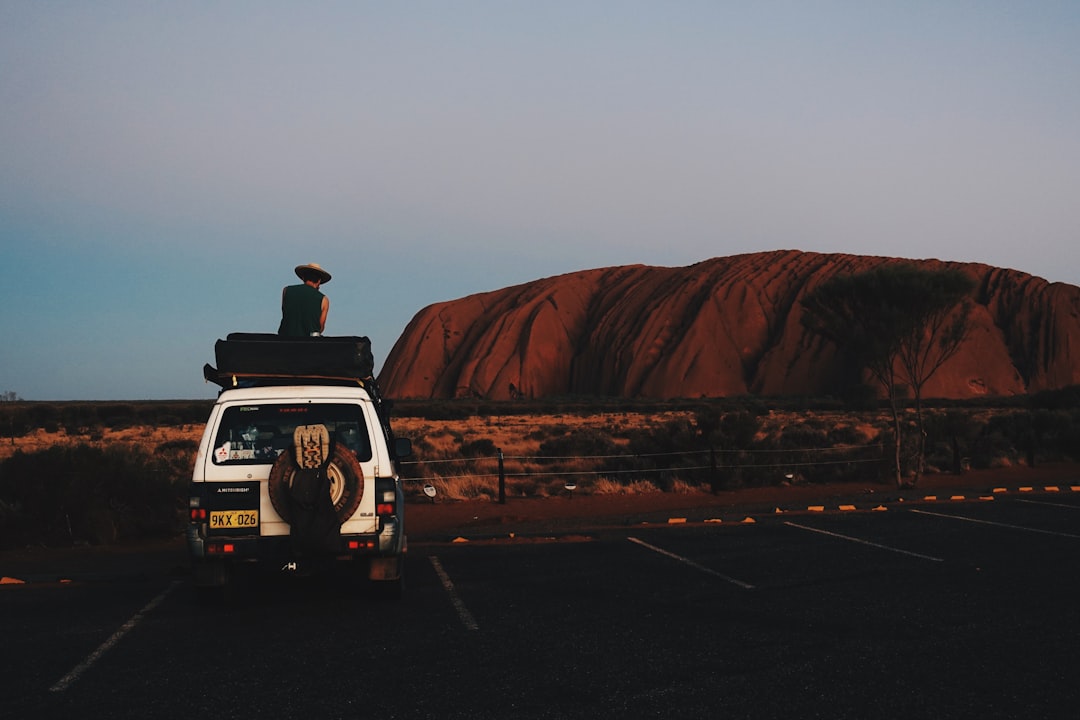
There is a particular kind of quiet that settles over the Red Centre in the hour before dawn. It’s not the silence of absence, but the hum of anticipation — the desert holding its breath. The campervan, parked in the designated section of the Ayers Rock Campground, feels less like a vehicle and more like a capsule suspended between earth and sky. The alarm has been set for 4:30 AM, not because of obligation, but because of what’s coming. The air outside is sharp and cold against the skin as the sliding door cracks open just wide enough to feel the grit of red dust on the fingertips. The stars are still out, impossibly dense, the Milky Way a river of light pouring over the silhouette of Uluru. A down jacket is pulled tighter, and a hand finds the familiar weight of the hand-grinder — a small, cylindrical object that will, in a few minutes, become the centerpiece of the morning ritual.
The best coffee in the Australian outback isn’t ordered from a barista. It’s earned. The night before, 18 grams of beans were measured out — something single-origin from a roaster in Alice Springs, with notes that have already been forgotten but a scent that promises deep, chocolatey warmth. The kettle was filled from the van’s freshwater tank, mindful of every drop, because in the desert, water is a currency not wasted. Now, in the pitch black, cross-legged on the fold-out camping chair placed facing east. The hand-grinder fits snugly between the palms. The crank turns, and the sound is the first thing to break the silence: a rhythmic, satisfying crunch of burrs fracturing beans into grounds, a sound that feels ancient and deliberate. This is not a rushed process. Each rotation is a meditation, a countdown to the light that will soon break over the horizon. You feel every turn.
The act of grinding by hand forces a slowdown. There is no multitasking through this moment. No electric hum, no automated timer. Only the body, the beans, and the steady, patient rotation of the crank. As the grounds collect in the catch cup, a fine dust of coffee settles on the palms, and the hands are brought to the nose for a deep inhale. The aroma is immediate, grounding — notes of dark caramel and cedar that mix with the clean, dry scent of spinifex and desert air. Coffee has been brewed in city apartments, in mountain huts, and by the sea, but nothing has ever felt as intentional as this. Here, one is not a passive consumer. The active participant in the making of the morning sits cross-legged in the dark.
The grounds are transferred into the Aeropress — a lightweight, packable brewer that has become a constant travel companion. The kettle has just reached a boil on the camp stove, and the water is poured in a slow, circular bloom, watching the grounds swell and release carbon dioxide. The steam rises, carrying the scent upward, mingling with the cold air. One stir, once, twice, then presses down with steady pressure. The hiss of the press is the only sound for miles. The coffee drips into an enamel mug, a dark, viscous stream that pools into a liquid as dark as the sky slowly turning violet above.
And then, the first crack of light. It appears as a thin, amber line on the eastern horizon, just behind the bulk of Uluru. The rock, which was a black monolith against a star-filled sky moments ago, begins to change. It shifts from charcoal to deep purple, then to a bruised red, as if someone is slowly turning up a dimmer switch on the entire world. Hands cup around the warm mug, the ceramic radiated heat seeping into the palms, and the first sip is taken. The coffee is strong, slightly acidic, with a finish that lingers on the tongue. It is perfect. A taste that feels so much like a moment — a liquid capture of this exact latitude, this exact temperature, this exact light.
The campervan has been parked with the sliding door facing east on purpose, a trick learned from seasoned travellers who know that the view from a mobile home is as important as the destination itself. The bed is still rumpled behind, the duvet spilling out of the cab, and the small fold-out table beside holds a jar of honey bought from a roadside stall near Erldunda. The honey is thick, almost crystalline, from native bees that forage on desert flowers that can’t be named. A dollop is spooned into the coffee, watching it swirl and dissolve. The sweetness cuts the bitterness, and another sip sends warmth through the chest.
The sun continues its climb, and with it, the colour of Uluru deepens into a fiery ochre that seems to pulse with its own inner light. From the chair, coffee in hand, the first rays of direct sunlight strike the rock’s face, illuminating every crevice, every fold, every story written in sandstone over hundreds of millions of years. The rock is not smooth from this distance; it looks textured, ancient, a living archive of time. The Anangu people, the traditional custodians of this land, have stood in this same spot for tens of thousands of years, watching this same sunrise. The scale of that continuity humbles. The campervan, the coffee, the small life on the road — it all feels like a temporary, deeply privileged whisper in the face of this permanence.
The beauty is not just the coffee, or the sunrise, or the campervan. It is the convergence of all three. A hotel with a scheduled sunrise tour, or queuing for coffee at the resort café, would have been a different story. But instead, here, in one’s own space, on one’s own time, moving at the pace the desert demands. The campervan becomes the anchor, the base, the portable sanctuary. It holds the bed, the stove, the water, the beans, the grinder. It allows waking up, rolling out of bed, and walking five steps to the most spectacular natural light show on the continent, all while holding a cup of coffee made with one’s own two hands.
As the sun climbs higher and the air begins to warm, the last sip of coffee is finished. The grounds at the bottom of the mug settle into a fine silt. The Aeropress is rinsed with a splash of water, careful not to waste a drop, and stored back in the compartment under the sink. The hand-grinder goes into its canvas pouch, the beans back into the airtight container. Looking out the window again, the rock is now a brilliant, burning orange, and the tourists in the distance are beginning to arrive in buses. The moment has already been had. The sliding door pulls shut, not quite closed, and the decision is made to do this again tomorrow. And the day after. For as long as the water holds out.
Later that afternoon, after a walk around the base of Uluru — a 10-kilometre circuit completed in silent reverence, stopping often to touch the rock, to feel its warmth, to read the signs that ask not to photograph certain sacred sites — the return to the van comes. The sun is high, the interior hot, and the windows are cracked to let the breeze move through. A second coffee is made, this time a cold brew started the night before, stored in a glass jar in the van’s small fridge. It’s less about the ritual now and more about refreshment, but the satisfaction remains. It’s poured over ice bought from the campground store, and the condensation beads on the glass as a seat is taken on the van’s step, watching a dingo trot past at a distance, its ears pricked, its gait purposeful.
The practicalities of this kind of life on the road are not glamorous. Power must be managed carefully — the solar panel on the roof keeps the fridge running and devices charged, but it demands discipline. The fridge door isn’t opened more than necessary. The phone is charged only during peak sun hours. Water refills are planned like a military operation, marking the distance between free camps with bores and the paid dump points. But these constraints don’t feel like limitations; they feel like the terms of a quiet contract signed with the land. The goal is not to conquer it, but to move through it with respect.
When evening comes, the same camping chair, the same view, but now the rock is glowing in the fading light of sunset. The hand-grinder is out again, because the ritual has become a habit not worth breaking. This time, a pour-over is brewed using a V60 dripper wedged into a custom wooden stand that fits perfectly on the van’s fold-out table. The water drips through the filter at a controlled pace, and the bloom is watched, the drawdown, the final amber liquid pooling in the carafe below. The flavour is different at sunset — subtler, more tea-like — as if the coffee itself is responding to the changing light.
Tomorrow will bring the drive to Kings Canyon, then on to the West McDonnell Ranges, then eventually back towards Alice Springs. Each stop will have its own sunrise, its own coffee ritual, its own small ceremonies. The hand-grinder will travel along, a constant in a landscape of change. It will smell of beans from different roasters, of different origins, of different mornings. But the core of the experience will remain the same: alone with one’s thoughts, in a van that carries from one horizon to the next, making something simple with one’s hands.
The mug, stained on the inside with a permanent ring of brown, sits empty. The desert morning has settled into something that doesn’t need a lesson attached. There are still around fifteen litres of water in the tank, a bag of Ethiopian beans in the cupboard, and another sunrise coming in about twelve hours. The hand-grinder goes back into its pouch, and the sliding door is pulled shut against the gathering cool. This is what the arrangement looks like — a temporary shelter in an ancient landscape, with just enough to make the next cup.

📷 Photos: Ben Douglas (Unsplash), Mitch (Unsplash)