A Low, Wet Exhalation from the Shadows
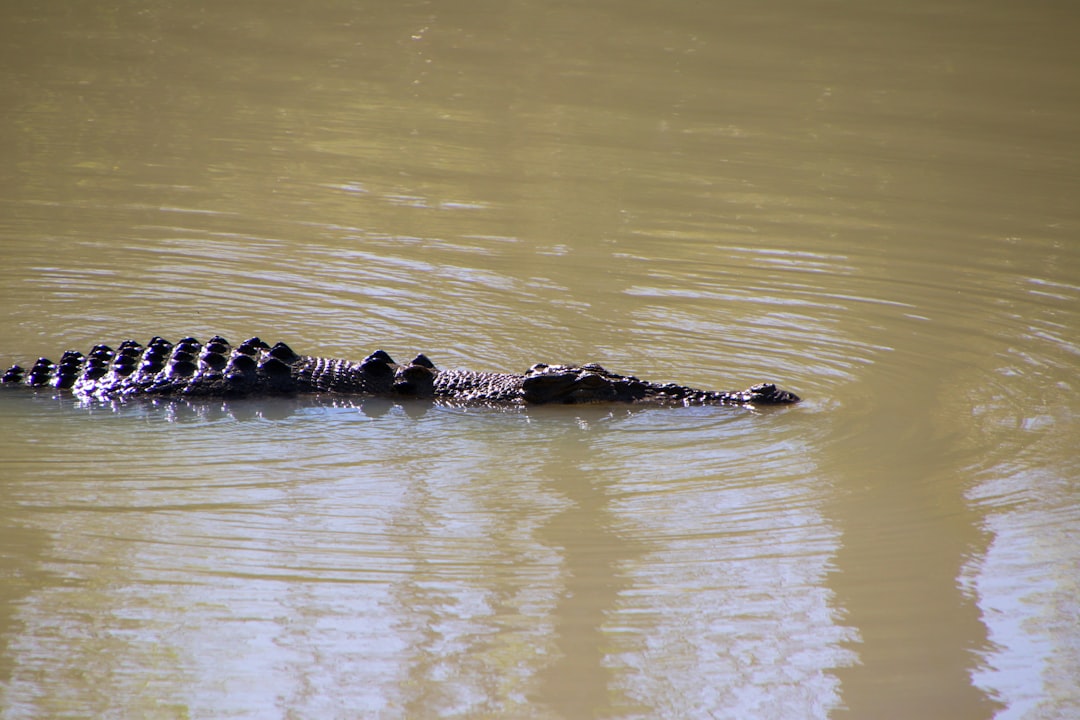
You’ll hear them before you see them — a low, wet exhalation from the shadows of a paperbark tree, followed by the heavy splash of something large slipping into tea-coloured water. The sound stops you mid-stride on the dirt track, your campervan idling a few metres behind, the afternoon heat pressing down like a blanket. You’re not at a designated tourist lookout or a boardwalk with interpretive signs; you’re at a bush campsite off the Kakadu Highway, a patch of packed earth beside a billabong where the only other occupant is a saltwater crocodile the length of your vehicle, its ridged back barely breaking the surface as it regards you with the patience of something that has been here for millions of years. This is the real Kakadu, the one that exists between the guided tours and the visitor centres. It’s why you brought your campervan here.
Setting up your mobile base in this landscape requires a shift in thinking. Forget the neat, manicured caravan parks of the coast; in Kakadu, your home on wheels becomes a piece of survival gear, a shield as much as a comfort. You’ll want to arrive with your fresh water tanks full, your fridge stocked for at least a week, and a clear understanding that the term “waterhole campsite” means something very specific here — it means you’re sharing the water, whether you like it or not. The campsites along the South Alligator River, particularly those at Mardukal and Muirella Park, are positioned precisely for this kind of encounter. Pull your van onto a concrete slab under a canopy of monsoon vine forest, step out, and immediately feel the weight of the silence broken only by bird calls and the occasional, unmistakable sound of a crocodile sliding into the river fifty metres away. There are no fences, no barriers, no gentle reminders about wildlife safety — just you, your vehicle, and the understanding that this is their territory, and you are the visitor.
The Cardinal Rule of the Top End
The practicalities of camping in crocodile country are not complicated, but they are absolute. Every seasoned traveller in the Top End knows the cardinal rule: never approach the water’s edge, and never, under any circumstance, assume a crocodile isn’t there. Even a billabong that appears still and empty can hold a four-metre saltie submerged just below the surface, its nostrils barely visible as two small bumps in the murk. You’ll develop a habit of scanning the water’s surface constantly, not out of fear, but out of a kind of primal awareness you didn’t know you had. Your campsite setup becomes a ritual: you park with your van door facing away from the water, you set up your awning on the high ground, and you keep your camp chairs at least five metres from the bank. The rangers at Bowali Visitor Centre will give you the same advice they give everyone, and you will find yourself repeating it to the couple who pulls in late in a hired camper with Queensland plates and no idea what they’ve gotten themselves into.
Magpie Geese and Rusty Hinges at Dawn
But here is the thing about these waterhole campsites that the glossy brochures never quite capture: they are alive with a kind of noise and movement that makes the crocodiles feel almost incidental. At dawn, when the light filters through the pandanus palms and the mist rises off the water like steam from a kettle, the real show begins. Magpie geese lift off in squadrons, their calls filling the air with a sound like rusty hinges. Whistling ducks cut low across the surface, and somewhere in the depths of the paperbark swamp, a jabiru stalks methodically through the shallows. You’ll sit with your first coffee of the day, the campervan door slid open, and watch as the waterhole transforms from a silver mirror into a churning theatre of life. The crocodiles are there — you’ll spot them basking on distant mudbanks, their jaws agape to regulate body temperature — but they are only one player in a cast that includes dingoes padding along the far bank, wallabies grazing at the treeline, and monitor lizards that scuttle across your campsite with unnerving speed.
Chasing the Light to Gunlom
One of the most compelling arguments for doing this in a campervan is the freedom it gives you to chase the light and the water. Kakadu’s wet season — roughly November to April — transforms the landscape into a flooded, impassable wonderland that most visitors never see. But in the dry season, from May to October, the waterholes contract and concentrate, pulling the wildlife into smaller and smaller pools. This is when the campsites at places like Gunlom and Maguk become truly spectacular. You’ll drive the rough, corrugated roads to reach them — roads that shake every loose bolt in your van and test your suspension like nothing else — and you’ll arrive at the end of a red dirt track to find a plunge pool fed by a seasonal waterfall, the water so clear you can see the sandy bottom. And yes, there will be warning signs about crocodiles, because this is Kakadu and they are never entirely absent, but these upper catchment pools are generally safe for swimming during the dry months, and the feeling of lowering yourself into cool, clean water after a day of dusty driving is a pleasure you will not soon forget. The campsite at Gunlom, perched on the escarpment above the plunge pool, offers a view that makes the rough road worth every jolt. You’ll park your van on a level pad of compacted earth and unfold your awning to face the vast, ancient landscape of the Arnhem Land escarpment, the sandstone cliffs glowing ochre in the late afternoon light. From your camp chair, you can watch the sun descend behind the plateau, turning the sky shades of orange and purple that seem almost theatrical in their intensity. The campsites are basic — a fire pit, a picnic table, a pit toilet — but the lack of amenities is precisely the point. You are here for the immersion, for the experience of falling asleep to the sound of the waterfall and waking to the calls of lorikeets. You’ll cook dinner on your portable stove, the smell of garlic and onions mixing with the eucalyptus-scented air, and you’ll eat under a canopy of stars so bright and dense that the Milky Way looks like a cosmic river flowing directly overhead.
The Dusty Track Reward
What you will notice, as you move from one waterhole campsite to the next, is how few other travellers you encounter. The big coach tours and package holiday crowds stick to the sealed roads and the boardwalk circuits at places like Ubirr and Nourlangie, where the rock art galleries are world-class and the views are spectacular. But the campervan crowd — the ones who have invested in solar panels and 4WD tyres and the patience to drive the unsealed roads — they know something different. They know that the real magic happens at the end of a long, dusty track, where the only sounds are the wind in the paperbarks and the distant bellow of a bull buffalo. You’ll share a campsite with a retired couple from Tasmania who have been on the road for six months, or a pair of German backpackers who bought a clapped-out van in Darwin and are working their way around the Top End on a shoestring. You’ll swap stories over a campfire, sharing tips about which waterholes are safe to swim in and which ones you should only view from a respectful distance.
The crocodiles, of course, are the thread that ties every campsite together. You will develop an eye for them — the dark log that suddenly submerges, the twin bumps on the surface that track your movement along the bank, the massive, prehistoric silhouette that materialises on a sandbar at sunset. The locals call them salties, and they have survived in this landscape for millions of years by being patient, opportunistic, and utterly unafraid. You will learn to respect them not as a novelty or a photo opportunity, but as the apex predators they are. Every time you set up camp near a waterhole, you’ll run through the mental checklist: keep food sealed and stored, never leave washing up water unattended, always use the toilet facilities rather than finding a bush spot near the bank. It becomes second nature, a quiet discipline that makes the whole experience feel more real, more grounded, than any fenced-off safari park ever could.
On the East Alligator, Drifting Past
One afternoon, you’ll find yourself at a campsite on the East Alligator River — a name that comes from a mistranslation, as there are no alligators in Australia, only crocodiles, but the name has stuck anyway. You’ll park your van in a spot that overlooks a wide, slow-moving stretch of the river, the far bank marking the boundary of Arnhem Land, a restricted Aboriginal territory you cannot enter without a permit. From your campsite, you’ll watch a crocodile the size of a small boat drift past, its back breaking the surface in a series of ridges, its tail sweeping lazily from side to side. It pays you no attention at all. You are irrelevant to its world, a two-legged creature in a metal box that will be gone in a day or two. But for that moment, you are sharing the same waterhole, the same afternoon, the same ancient stretch of river that has been flowing through this landscape for millennia. And it will occur to you, sitting there with a cold drink in your hand and the sun on your face, that this is what you came for — not a checklist of sights, but an encounter with a place so raw and alive that it changes the way you see the world.
Your campervan becomes more than a vehicle in this landscape; it becomes a kind of sanctuary, a mobile fortress that carries you safely through a world that does not care about your comfort or your schedule. You’ll learn to work with its limitations — the limited water supply that forces you to shower sparingly, the solar panels that demand you chase the sun, the fridge that hums through the night as a reminder that you are entirely self-contained. And in return, it will give you access to places that no hotel or lodge can reach: a secluded billabong at the end of a four-wheel-drive track, a clearing in the monsoon forest where the only light comes from your campfire, a stretch of river where you can sit in silence and watch the crocodiles patrol their domain.
When you finally pack up and head back towards Darwin, your campervan dusty and rattling from the corrugations, you’ll carry with you a collection of moments that no photograph can capture. The sound of a crocodile sliding into water at midnight. The smell of the bush after a late afternoon shower. The impossible green of the pandanus after the dry season’s first rain. And you will understand, in a way you could not have before, why the people who have lived here for sixty thousand years have never needed to build fences between themselves and the water. The crocodiles were here first. They will be here long after you are gone. And for a few days, you shared their waterhole, and that was enough.
📷 Photos: Megan Clark (Unsplash)