The Wet-Market Secret That Unlocks the Mekong Delta’s True Flavor
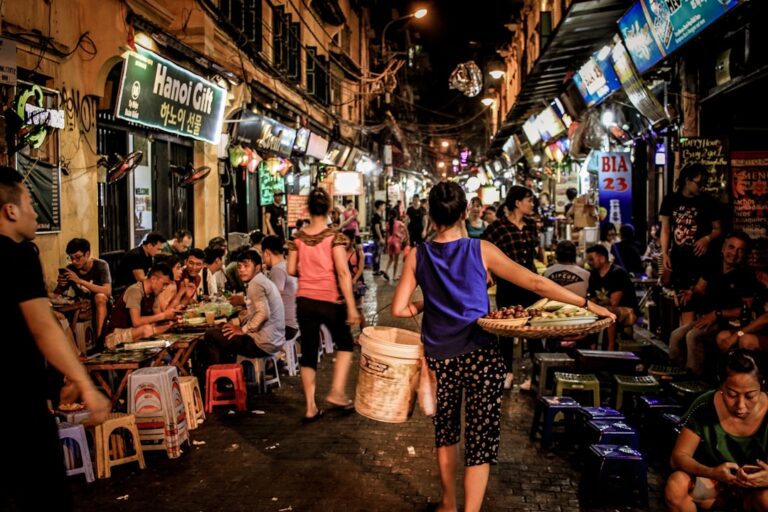
You are standing in the belly of the Delta, where the air is thick enough to spoon—a humid cocktail of fermenting fish sauce, ripe jackfruit, and the faint, muddy breath of the Mekong itself. To your left, a woman built like a river current is wielding a cleaver with the casual precision of a concert pianist, reducing a coconut husk to perfect shards. To your right, a pile of herbs lies heaped on a blue plastic tarp, an unorganized chaos of greens, purples, and silvers that looks less like produce and more like someone harvested a swamp. This, you’re about to discover, is not a garnish. This is the entire point.
Forget the banquet halls and the cruise-ship buffets. The real lunch of the Mekong Delta—the one that locals guard like a family heirloom—isn’t ordered from a menu. It’s foraged. It’s gathered. It’s a living, breathing map of the water that surrounds you, and the key to unlocking it has nothing to do with a chef’s knife and everything to do with your own two hands, a sharp eye, and the willingness to eat things you cannot identify. Welcome to the Delta’s edible landscape, where every muddy bank and floating patch of hyacinth is a potential larder.
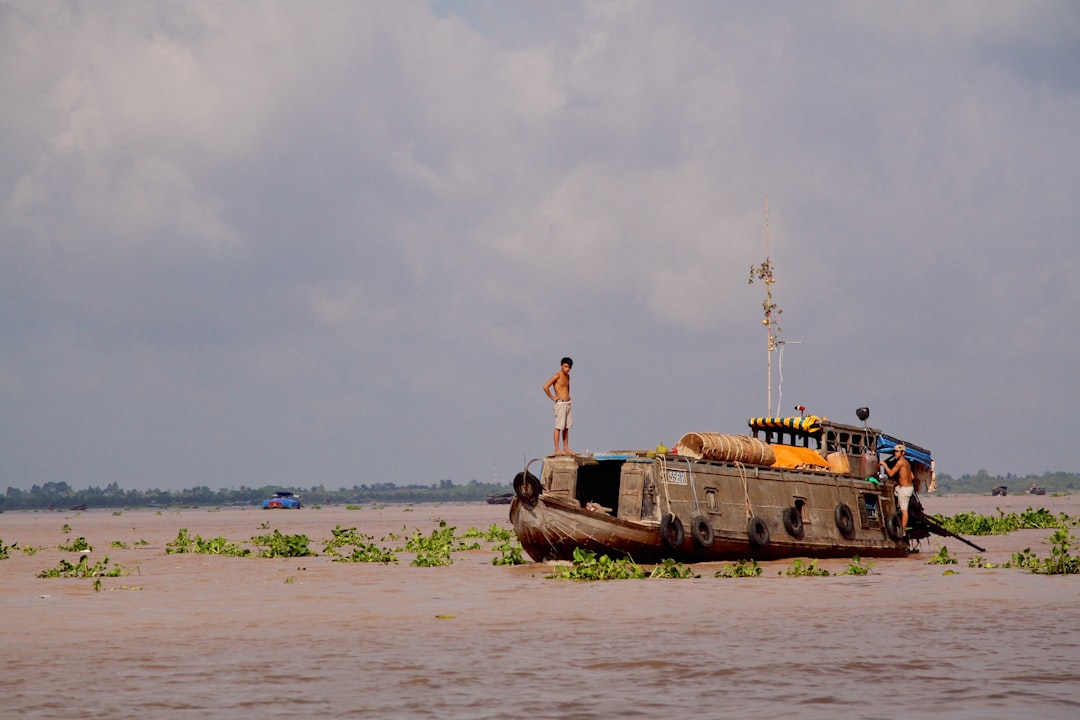
A narrow wooden boat, its hull painted a faded cerulean, sits moored to a rickety pier. The Mekong here is not the mighty brown artery visible from the hotel balcony in Can Tho. It’s a capillary: a silent, green-brown channel choked with floating vegetation, its surface a mirror of the dense mangrove canopy above. The only sounds are the dip of an oar and the distant, rhythmic thwack of someone hulling rice. A local guide offers a hand into the boat; he communicates in a language of gestures and grunts and knowing smiles.
The first prize is obvious, almost laughably so, once a visitor knows what to look for. It’s the lotus. Not the flower, though that is a showstopper of pink and white, but everything else. The guide reaches over the side of the boat, hand plunging into the murk with a practiced nonchalance. He emerges not with a fish, but with a rope of submerged stem, thick and fibrous like a leek on steroids. This is *ngó sen*, the lotus stem. It is everywhere, a weed, a pest, a miraculous ingredient. Later, sliced thin, its crisp, watery crunch will prove a perfect foil for the funk of fermented shrimp paste. The lesson is immediate: what a visitor might consider a pond ornament, the Delta considers a salad.
Then comes the next lesson, and it’s a humbling one. The guide points to a patch of a broad-leafed plant floating serenely on the surface. It looks like a water lily, but wrong. He plucks a leaf, folds it in half, and hands it over. The moment a bite is taken, the taste arrives: a peppery, mustardy burn that hits the back of the throat and clears the sinuses instantly. It’s watercress of the Delta, *rau nhút*, and it doesn’t grow in a tidy supermarket bag. It grows on the edge of fish farms, in the runoff of rice paddies, in the only place that is exactly wet enough. In the Delta, the best ingredient is often the one that is aggressively growing where it is least expected.
The boat continues deeper into the channel, and the guide begins to slow, scanning the banks with a hunter’s focus. He’s after something specific, something that doesn’t wave in the wind. He points. Strapped to a mangrove root, half-submerged, is what looks like a piece of driftwood, gnarled and blackened. Anyone would have paddled right past it. He reaches in, and with a twist, detaches it. It’s a mushroom, a lumpy, ear-shaped fungus that locals call *nấm mối*—the termite mushroom. It grows not from the earth, but from the abandoned nests of termites that thrive in the acidic, waterlogged soil. The flavor is a revelation: dense, meaty, with a deep, almost smoky umami. The effort to find it is the seasoning.
By now, a small bamboo basket—the same kind seen on the back of every motorbike—is filling up. There are the peppery leaves, the lotus stems, the termite mushrooms, and a fistful of *rau răm*, a pungent Vietnamese coriander that smells like the back of a clean spice cabinet. Nothing has been eaten yet. The foraged material is not a side dish. It is the script for the meal, and the meal itself is a performance about to unfold in the floating kitchen of a small home stilted over the water.
The kitchen is a single burner, a propane tank, a wok blackened from decades of use, and a counter made from an old door. The host, a grandmother whose age is a guessable mystery, takes the basket without a word. She doesn’t wash the herbs. She doesn’t need to. They are wet from the river, and that is their natural state. She separates the lot, her hands moving with the speed of a dealer shuffling cards. The termite mushrooms are sliced paper-thin and tossed into a bowl with a squeeze of calamansi and a pinch of salt. The lotus stems are julienned and blanched for exactly thirty seconds, then shocked in cold water. The peppery leaves are left whole, a final, live addition.
What happens next is the true secret. She builds a stock from the simplest things: a handful of dried shrimp, the leftover trimmings of the lotus stem, and a single tomato. It simmers for ten minutes, and while it does, she prepares a dipping bowl that is the Delta’s entire flavor philosophy in one vessel: a central pool of *nước mắm*—fish sauce—thinned with lime and water, studded with slivers of a green chili that is not for the faint of heart, and crowned with a pile of the foraged, peppery leaves. The meal that follows is not a sequence of courses. It is a single, glorious, interactive mess.
Eating happens with hands, or with a single chopstick, or with a piece of crackling pork skin she produces from a hidden corner. The foraged herbs get wrapped in a lettuce leaf that is actually a water spinach leaf. The bundle is dipped in the fish sauce. The lotus stem crunches. The peppery leaf burns. The termite mushroom dissolves into a smoky velvet. The fish sauce floods everything with salt and funk. This is not a refined dish. This is a weapon of deliciousness. And the core of its power is that none of these ingredients appear on any menu in sight.
Later, back in the nearest town, a walk into a market reveals the same herbs, but they are different. They are cut, de-stemmed, arranged in pretty piles. The magic is gone. The magic was in the act of finding them, of understanding their context, of knowing that the plant pulled from the water is the reason that lunch tastes so alive. The market’s version is a souvenir. The foraged version is a story that can be tasted.
The Delta’s edible landscape doesn’t reward the tourist with a reservation. It rewards the traveler who is willing to get their hands wet, who will sit in a rocking boat and listen to the silence, who will trust an old woman with a cleaver and a stranger’s basket of weeds. The food found here is not the food that appears in a glossy guidebook. It is the food that was here first, the food that the river decided to grow, the food that requires paying attention. It is a lunch only locals know.

📷 Photos: Matthias Mitterlehner (Unsplash), Trang Trinh (Unsplash)