Why the Best Bánh Mì in Hội An Comes from a Woman Who Never Writes Down Her Recipe
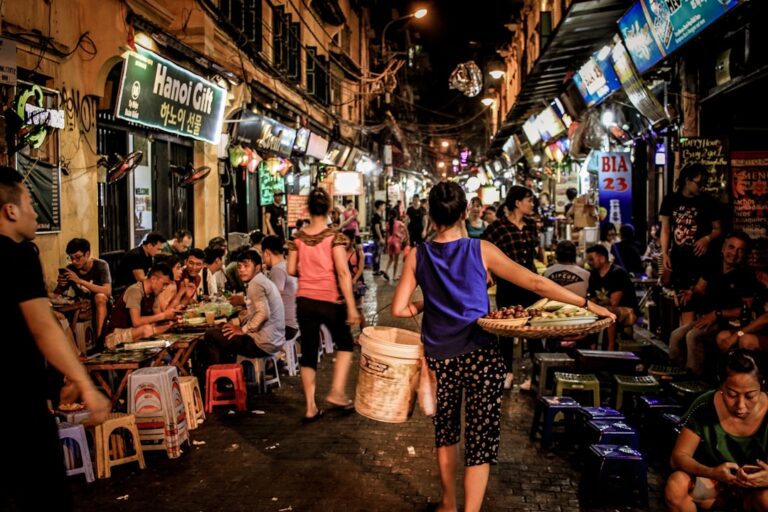
You’re standing in a narrow, sun-bleached lane in Hội An’s Old Town, the scent of charcoal smoke and fresh cilantro wrapping around you like a welcome. A small metal cart, no bigger than a coffee table, sits under a fraying umbrella. Behind it, a woman in a conical hat and a floral apron works with the quiet, unhurried precision of someone who has done this ten thousand times. Her hands move from a steaming pot of pâté to a basket of crusty bread, to a jar of pickled daikon and carrot, and back again. There is no written menu. No sign. No prices displayed. Just the rhythmic thwack of a cleaver against a wooden board, and the line of locals—three, four, sometimes eight deep—that tells you everything you need to know. This is not a restaurant. This is a living recipe, passed through memory and muscle alone, and you are about to eat the single best sandwich of your life.
The bread arrives first, and it matters more than you might expect. In the hands of this woman, the bánh mì baguette is a contradiction you learn to love: shatteringly crisp on the outside, practically airy on the inside. She slices it open without measuring, without a second thought, and the sound is a clean crack that announces something good. You watch as she spreads a thin layer of rich, liver-forward pâté—her own, always her own—along one side. Then comes a swipe of mayonnaise, the kind that tastes unmistakably homemade, with a whisper of garlic and a faint tang. She piles on slices of char siu pork, the edges caramelized and sticky from an overnight marinade she will never, ever describe in measurements. You try to memorize the sequence: pâté, mayo, pork, pickles, cucumber, jalapeño, a handful of herb sprigs, a final drizzle of soy-based sauce from a plastic squeeze bottle. But you already know this is a recipe you will never truly replicate.
The magic, you realize, is in the exchange between her hands and the ingredients—a tactile knowledge that no written recipe could capture. She presses the finished sandwich gently, feeling its resistance, then wraps it in a single sheet of recycled paper. The warmth radiates through the paper into your palms. You take your first bite standing right there on the curb, because there is no way you are waiting. The crust shatters. The pâté melts. The pickles crunch. The pork yields. It is a symphony of textures and temperatures, and in that moment you understand something fundamental: this woman has made this same sandwich, this exact sandwich, for thirty years. She learned it from her mother, who learned it from her grandmother, and not one of them ever wrote a single instruction down. The recipe lives in her fingers, in the way she judges the doneness of the pork by its color in the morning light, in how she seasons the pâté by smell alone. You are eating a tradition that exists only as long as someone is there to perform it.
You’ll notice the other carts, of course. Hội An is famous for its street food, and bánh mì stalls dot nearly every corner. Some have laminated menus with English translations. Some have photos of their sandwiches displayed on stands. They’re good—many of them are very good. But you will also notice that the women behind those carts often follow a script, working from written notes or portioned ingredients prepared in advance. There is nothing wrong with this; consistency has its own virtues. But it lacks the improvisational genius you’re witnessing here. Your bánh mì lady adjusts her seasoning based on the humidity of the morning, the ripeness of the herbs, the way the pork rendered its fat overnight. You watch her taste a sliver of daikon, then add a tiny pinch more salt to the pickling liquid. She never measures. She never tastes twice. She just knows.
The locals have a term for this kind of cooking: “nấu bằng mắt,” or cooking by eye. A skill that can’t be taught from a book, only absorbed through years of standing beside someone who already knows. You see it in the way she handles the bread—how she rejects a loaf that feels too dense, how she sets aside one that crackles too softly when squeezed. She selects each component as if choosing a brush for a painting, and you realize that her cart is not a kitchen so much as a mobile studio. The finished bánh mì is her art, and you are the collector lucky enough to acquire it.
You might wonder why she never writes her recipe down. Maybe you ask, if you speak enough Vietnamese to try. She’ll likely give you a small, knowing smile and say something about not needing paper when the recipe is in her hands — or something like that, a vague answer that feels deep but doesn’t quite explain everything. But the deeper truth is more poignant than that. Writing it down would freeze the recipe, fix it in time, make it something static. And what makes this bánh mì so extraordinary is that it is never quite the same twice. The pork is a little fattier in the rainy season, when heavier food is needed. The pickles are a little sharper in summer, when the heat demands brightness. The pâté changes with the availability of local livers. The recipe is alive, adapting to its environment, and that adaptability is exactly what has kept it perfect for three generations.
You’ll want to arrive early, around 10:30 in the morning, before the lunch rush hits and the queue stretches into the sun. The cart sets up at the same spot every day, a modest patch of curb near the intersection of two narrow streets in the Old Town. There is no signage, but you will recognize it by the crowd. Locals bring their own containers sometimes, a reusable tin or a cloth sack, and she wraps their sandwiches with an extra piece of paper, a small gesture of sustainability that few tourists notice. The price is laughably low—close to 15,000 Vietnamese đồng, maybe a little more or less depending on the day—and you’ll feel a pang of guilt as you hand over the crumpled bill. You are paying for a masterpiece at the price of a snack.
The sandwich itself is compact by bánh mì standards. Some stalls pile on inches of filling, making the bread secondary to the contents. Here, the proportions are exact: the bread accounts for about half the experience, the filling the other half. It’s a balance that feels almost architectural, each bite delivering the same ratio of crunch, richness, acidity, and heat. You eat the entire thing in about four minutes, standing like everyone else does, wiping the corner of your mouth with the back of your hand. The paper wrapper is stained with pâté and sauce, and you crumple it with a sense of reverence.
If you’re smart, you’ll order a second one before the line gets any longer. You’ll eat it more slowly this time, paying attention to the way the heat from the jalapeño builds gradually, the way the fresh cilantro cuts through the fat of the pâté, the way the pickles linger on your tongue with a faint sweetness. You’ll notice that the bread is not just crunchy but has a slight chewiness to the crumb, a honeycomb structure that soaks up the sauce without getting soggy. You’ll wonder if the woman ever considers franchising, or teaching others, or writing a cookbook. But as you watch her work, you understand the answer. This is her craft, hers alone, and to write it down would be to diminish it.
Later, when you’re back home and craving that exact sandwich, you’ll try to replicate it. You’ll buy the right bread from a Vietnamese bakery, find the right pâté, pickle your own daikon and carrot. Follow every video tutorial you can find, study every blog post about Hội An bánh mì. And it will be good—maybe even very good. But it won’t be hers. Because you can’t capture thirty years of daily repetition, of early mornings in a humid kitchen, of adjusting a recipe by feel and taste and memory alone. The recipe she carries is not just a list of ingredients and steps. It is a library of sensory experiences, a catalog of thousands of mornings, each one slightly different. You can imitate the sandwich, but you cannot inherit the knowledge.
That is the real reason the best bánh mì in Hội An comes from a woman who never writes down her recipe. It’s not stubbornness, or secrecy, or a desire to hold onto something exclusive. It’s that the recipe cannot be written. It exists only in the act of making it, only in the hands of the person who learned it by standing in the kitchen of someone who learned it the same way. To write it down would be to produce a pale copy, a snapshot of a living thing. And so she keeps it in her fingers, her eyes, her nose, her memory. Each morning, she performs it anew, and each morning, it is perfect. You are lucky enough to be there for one of those mornings. You know, as you lick the last trace of pâté from your thumb, that you will never taste anything quite like it again.

📷 Photos: Kyle Petzer (Unsplash), Kyle Petzer (Unsplash)