Tracking Down Hanoi’s Secret Egg Coffee Stalls That Only Open After Midnight
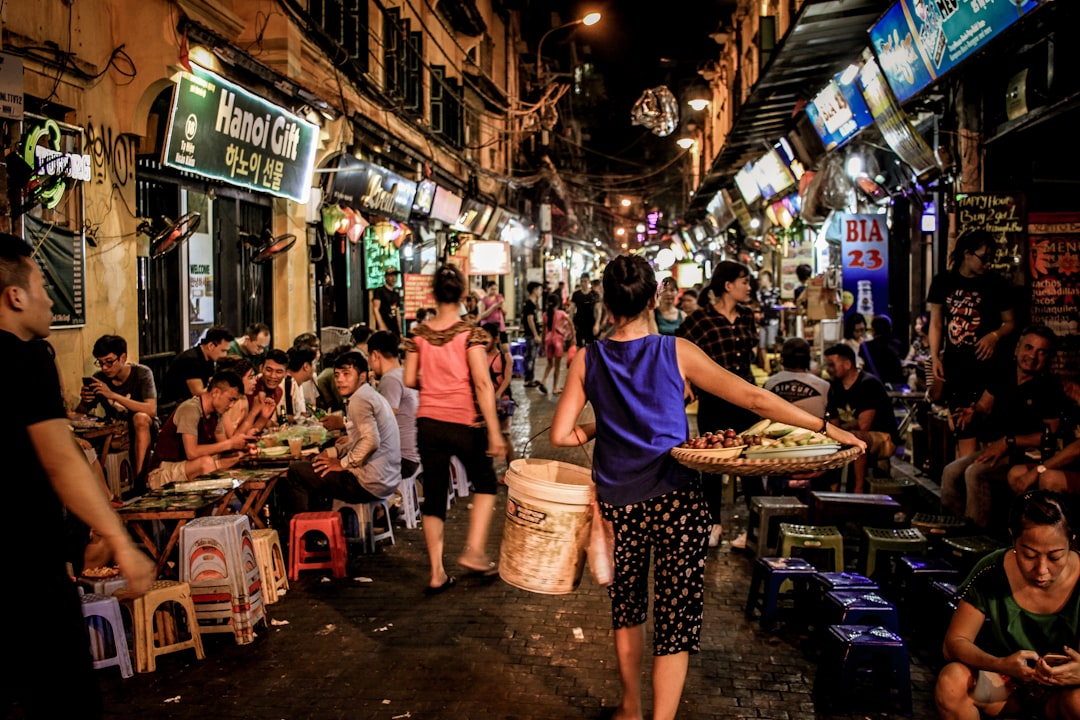
The first clue is never a sign. It’s the sound—a low, percussive clinking of small glasses, rising from a narrow alley that, by day, serves as a motorbike parking spot. Around 11:30 p.m., the steel shutters of a nondescript tube house roll upward, not all at once, but in a series of metallic groans that announce the start of Hanoi’s most particular culinary shift. This is when the city’s egg coffee scene transforms from a tourist-friendly afternoon ritual into something far more intimate and elusive, a world of stalls that exist only for the night owls, the insomniacs, and those who know exactly where to find the sweet, frothy payoff after the last bia hoi glass has been drained.
The hunt is for a drink that is equal parts dessert and survival fuel. The classic egg coffee—the velvety, golden-topped concoction served at Café Giảng or its many imitators during daylight hours—is just the opening chapter. After midnight, the recipe shifts. The egg yolks are still beaten with condensed milk until they form a thick, almost mousse-like crown over robust Vietnamese drip coffee, but the technique grows rougher, more personal. Some stalls add a whisper of cacao powder; others fold in a splash of dark rum. The coffee itself is brewed darker and stronger, designed to cut through the languor of a long evening, to bring a drinker back to full alertness just when the brain is beginning to soften at the edges.
One of the most reliable late-night outposts operates from a cart wedged between a pho stall and a fruit seller on Nguyễn Hữu Huân Street. It is spotted by the small kerosene lamp flickering on a plastic stool, and by the trail of condensed milk drips that have dried into a sticky map on the pavement over countless nights. The woman running this stall has been doing so for nearly two decades, her hands moving with an automatic grace that suggests she could prepare a drink in complete darkness. She cracks an egg with one hand while the other pours coffee from a phin filter that has been dripping for exactly the right amount of time. The result is a cup that arrives at the table warm and fragrant, the egg foam standing tall like a golden cloud, dusted with a fine layer of cocoa that stains the upper lip when that first careful sip is taken.
Timing is everything in this world. Arriving at 10 p.m. does not yield ready stalls. The vendors emerge on their own schedules, dictated by the ebb and flow of Hanoi’s nightlife around them. A stall near the intersection of Hàng Mã and Hàng Chiếu might not set up until 12:30 a.m., when the last of the wedding decoration shops have closed their doors and the street takes on a quieter, more contemplative character. There is no phone number to call, no social media page to check. The knowledge passes between taxi drivers, bartenders, and the old men who sit on miniature plastic stools outside convenience stores, nursing their own glasses of hot, sweet coffee long past midnight.
The geography of these stalls follows its own logic, too. They cluster not around tourist landmarks but around the city’s second-shift workers: the night market vendors packing up their wares, the hospital staff finishing their shifts at Bạch Mai, the taxi drivers waiting for fares near the train station. One such stall sits tucked behind the Quảng Bá Flower Market, a place that only comes alive after 1 a.m. when the flower trucks roll in from the countryside. Here, the egg coffee is served in a paper cup, the foam still warm from the whisk, and it is drunk standing up, shoulders brushing against buckets of roses and bundles of lilies. The coffee is sweet and thick, fortifying against the damp chill that settles into Hanoi’s bones during the small hours.
The ritual of drinking egg coffee at these late hours carries a different weight than its daytime counterpart. In the afternoon, it’s a treat, a pause. After midnight, it becomes an anchor, a moment of stillness in a city that never fully sleeps. The stall owner pours the coffee slowly, deliberately, as if performing a small ceremony for a single customer. The egg foam sits on top of the dark liquid like a secret about to be discovered, and when it is stirred in, the coffee turns a pale, caramel color, the sweetness balanced by a lingering bitterness that keeps the drinker awake and alert.
A stall on Phố Đinh Liệt operates from a ground-floor window so narrow that an order must be placed by leaning in. The owner never speaks above a murmur, and the menu is unwritten, understood. A request for “cà phê trứng” gets a nod, then the owner turns to a small electric whisk that hums quietly in the silence of the alley. The coffee here is served in a glass teacup with a saucer, a detail that feels deliberately old-fashioned, as if the stall is preserving a version of Hanoi that has all but disappeared. The foam is thicker than any encountered elsewhere, almost pudding-like, and the first few spoonfuls are eaten before mixing the rest into the coffee below.
The ingredients themselves reveal the ingenuity of Hanoi’s coffee culture. The eggs must be fresh—yesterday’s eggs produce a foam that falls flat, a telltale sign of a stall cutting corners. The condensed milk, a staple of Vietnamese kitchens since colonial times, provides the sweetness and the body, while the coffee must be a dark roast, usually from the Central Highlands, ground coarse enough to allow a slow drip through the phin filter. The difference is tangible when a stall uses good beans: the coffee has a chocolatey depth that lingers long after the cup is empty.
One of the most atmospheric of these late-night spots is a stall that sets up under the iron bridge on Trần Nhật Duật, where the streetlights cast a yellow glow on the worn concrete. The rumble of motorbikes sounds overhead, but down here, at street level, the world feels suspended, cut off from the city’s frantic daytime rhythm. The stall owner brews the coffee in a small phin placed directly on the table, and dark droplets fall one by one into the glass below. It takes five minutes for the coffee to finish dripping, and in that time, there is no choice but to slow down, to listen to the night sounds around, to let the anticipation build.
The egg foam itself is a study in texture. The best versions are aerated to the point of being almost airy, yet they hold their shape when spooned up. The yolk adds a richness that coats the mouth, while the condensed milk provides a sweetness that is distinctly Vietnamese—not cloying, but persistent, the kind that carries through the next block of walking. Some stalls add a drop of vanilla extract, a subtle touch that elevates the drink without overwhelming its essential character.
As the night deepens, the crowd shifts. Around 2 a.m., the restaurant workers start appearing, their white aprons stained from a long shift, stopping for a quick coffee before heading home. The artists and musicians arrive later still, their conversations carrying the energy of a performance just finished. Fragments of discussions about painting techniques, guitar chords, the logistics of a gallery opening float through the air. The egg coffee becomes a lubricant for these late-night conversations, a shared experience that binds strangers together in the quiet intimacy of a Hanoi alley.
A stall on Lương Văn Can serves its egg coffee with a small side of bánh mì, the bread toasted over a charcoal brazier until it’s crisp on the outside and soft within. The bread dipped into the coffee foam creates a combination that sounds improbable but works with a surprising harmony. The warm, sweet coffee clings to the crust, and the bread soaks up the richness like a sponge. It’s a snack never thought to order on a first visit, but one that becomes a regular request.
The price of these late-night egg coffees is stubbornly democratic. Payment falls between 15,000 and 25,000 Vietnamese đồng—less than a dollar for a drink that took years of practice to perfect. There is no premium for the hour, no surcharge for the inconvenience of setting up a stall at midnight. The vendors operate on thin margins, driven more by tradition than by profit, and the weight of that tradition is felt in every sip. This is not a trend or a gimmick; it is a living practice passed down through generations, a thread connecting modern Hanoi to its colonial past.
One stall, hidden in the courtyard of an old apartment building on Hàng Bông, requires navigation of a narrow staircase and a dark corridor before reaching a small room where the owner brews coffee on a gas stove. The room smells of roasted beans and cigarette smoke, and the walls are lined with old photographs of Hanoi from the 1960s and 1970s. The egg coffee here is served in a chipped ceramic cup, and the foam has a slightly grainy texture, evidence of a hand-whisked preparation that takes twice as long but yields a result that feels more personal. The drink is consumed slowly, acknowledging the imperfections, knowing that this version may not exist in five years.
The act of tracking down these stalls becomes its own kind of reward. Each successful discovery feels like a small victory, a piece of the city’s hidden geography revealed. The signs become readable: a cluster of motorbikes parked in an unexpected spot, a single light burning in an otherwise dark alley, the sound of small glasses clinking together. Familiar faces start to appear, the regulars who show up at multiple stalls across different nights, fellow travelers on this nocturnal quest.
By 4 a.m., the stalls begin to close. The owners pack up their phin filters, their eggs, their condensed milk, and their small stoves, folding everything back into the tube houses and storage rooms from which they emerged hours earlier. The streets grow quiet again, the last motorbikes disappearing into the pre-dawn mist. A final cup of egg coffee finished, the foam leaving a faint residue on the lips, the empty street ahead holds the city just beginning to stir back to life, the taste still on the tongue—sweet and slightly bitter—and the question of which stall will be ready again tomorrow night still unanswered.
📷 Photos: Frida Aguilar Estrada (Unsplash)