The Last Fifty Steps: Standing Still at the Top of Singapore
At the base of the final assault, the staircase vanishes into the canopy above. The air is still thick with the night’s humidity, the sky just beginning to pale through the dense foliage. Lungs are already working harder than they have in months, and the climb that matters most hasn’t even started. This is the final push to the summit of Bukit Timah Hill — a lung-burning, thigh-shaking vertical workout wrapped in primary rainforest, hiding in plain sight behind the gleaming efficiency of Singapore’s MRT.
Most visitors to Singapore never make it here. They tick off Marina Bay Sands, eat their way through Maxwell Food Centre, maybe take the cable car to Sentosa. But they miss the singular experience of watching the sun rise over the Malay Peninsula from a peak that, at just 164 metres, feels like a proper mountain because of the relentless, unbroken climb that earns you the view. The Bukit Timah Nature Reserve isn’t a gentle morning stroll. It’s a 1.2-kilometre hike that gains nearly all its elevation in the final third.
That staircase isn’t a single, uniform flight of steps. It’s a series of steep ascents, each one turning a corner to reveal another stretch rising into the gloom, the wooden railings worn smooth by thousands of hands. The steps are uneven — some high, some low, some with a slight tilt that keeps you honest. By the time you reach the section locals call the “killer slope,” legs are burning, breath comes in ragged gulps. But the stairs are precisely why this hike works. They force you to slow down, to pay attention, to feel each step rather than mindlessly plodding. The rhythm of footfalls becomes a kind of meditation, punctuated by the calls of birds you can’t see and the rustle of monitor lizards in the undergrowth.
Timing matters. A dawn ascent means leaving the hotel by 5:30 a.m., because the reserve opens at 7:00 a.m., and you want to be on the trail as close to that moment as possible. By 9:00 a.m., the sun clears the canopy, and the combination of humidity and direct sunlight turns the hike from challenging to punishing. On weekends, the trail becomes a procession of families, fitness groups, and tourists, and the narrow sections of staircase become bottlenecks. A weekday dawn visit gives you the trail nearly to yourself — a dozen runners and a few dedicated hikers, all sharing that unspoken camaraderie of early risers who know they’ve caught the reserve at its best.
The path itself is a study in contrasts. The first section, the Main Trail, is a gentle, winding dirt track that lulls you into a false sense of security. You’re walking through a cathedral of trees — towering dipterocarps, strangler figs, and the occasional giant tembusu — and the air smells of damp earth and decaying leaves. Around the one-kilometre mark, the path narrows and the angle sharpens. The dirt gives way to exposed tree roots and then to the first steps. From here, it’s a steady grind upward, with only brief, level sections to catch your breath. The seasoned hikers know to take the less-travelled alternative route, the Dairy Farm Loop, which adds distance but spreads the elevation gain more evenly. Most first-timers stick with the Main Trail — it’s the fastest, and the sense of reward when you finally break through to the summit platform is unmatched.
That summit platform is nothing fancy. A modest concrete pad with a trig point marker, a few benches, and a sign confirming you’ve reached the highest point in Singapore. No sweeping, 360-degree views — the trees have reclaimed their territory, and the vista is mostly a wall of green. But this is the summit’s secret: the view isn’t the point. The point is what you feel standing there. Heart still pounding, T-shirt soaked through, sweat dripping off your chin, but you’ve done it. The silence around you is the real reward. The city’s hum is gone, replaced by the whistle of a spiderhunter and the rustle of leaves in the breeze.
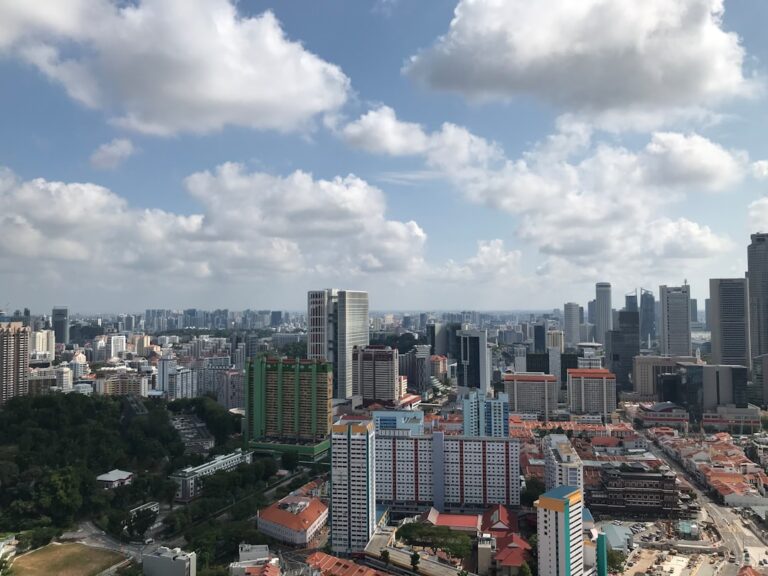
If you want a view, there’s a hidden move. Don’t stop at the summit platform. Instead, take the short, unmarked spur trail to the left, just before the summit. It leads to a small clearing with a concrete water tank, and from here, through a gap in the trees, you can see the downtown skyline in the distance — the Bank of China building, the spire of the Marina Bay Sands, the crane-dotted skyline of the port. It’s not a grand panorama, but it’s a genuine surprise, a visual reward for those who know where to look. In a city where every viewpoint is meticulously signposted and packaged for social media, that small, secret clearing feels like a personal discovery.
The descent is a different experience entirely. Legs wobble, knees protest the downward impact. This is where you’ll be grateful for the wooden handrails, and where you’ll notice details you missed on the way up: the gnarled roots of a ficus that have wrapped around a boulder like tentacles, the sudden burst of colour from a wild ginger flower, the tiny waterfall that’s been trickling beside the path the whole time. Take your time. The return journey should be slower than the ascent; the risk of slipping increases as fatigue sets in, and the steps can be slick with morning dew. There’s no shame in taking a seat on one of the benches mid-trail and just sitting, listening, watching the forest come to life around you.
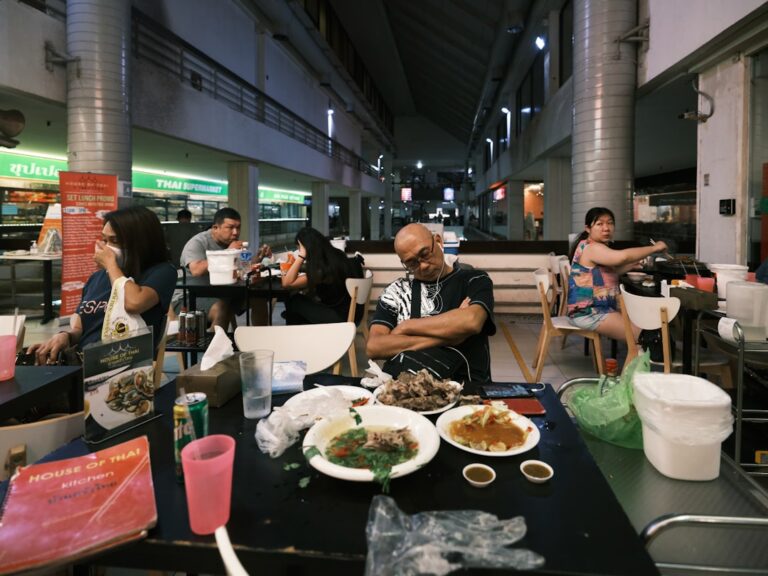
By the time you reach the visitor centre, you’ll have been on the trail for about an hour and a half to two hours, depending on your pace and how many times you stopped. Dehydrated, hungry, covered in a fine layer of trail dust and insect repellent. The reward now is breakfast, and the best post-hike meal in the area is a ten-minute walk away at the Bukit Timah Food Centre. Grab a table at the bak kut teh stall — the peppery pork rib soup, served with youtiao for dipping, is restorative in a way that no smoothie bowl could ever match. The broth is deeply savoury, the meat falling off the bone, and the heat of the white pepper cuts through the lingering humidity. Pair it with a pot of oolong tea and a plate of char kway teow if you’ve earned the calories, which you absolutely have.
A few practical notes. The reserve has no water fountains past the visitor centre, so carry at least one litre per person, more if you’re hiking in the late morning. Good footwear matters — trail runners or hiking shoes with decent tread will save you from a slip on the descent. Mosquito repellent is non-negotiable; the reserve is home to the Aedes mosquito, and dengue is a real risk. Wear long, lightweight trousers and avoid floral or dark patterns that attract insects. A small towel for your face and neck will feel like a luxury. And bring a flashlight or headlamp — the canopy is so dense that even at 8:00 a.m., the trail can be oddly dark in places.
What most coverage misses is that Bukit Timah isn’t just a hike; it’s a training ground. You’ll see ultra-marathon runners doing repeats of the staircase, slapping the wooden posts at the top before turning around to descend and do it again. You’ll see rock climbers carrying crash pads to the granite boulders near the summit. You’ll see elderly Chinese aunties in sensible sandals and cotton hats moving at a steady, unhurried pace, passing younger hikers who’ve sprinted themselves into exhaustion. The reserve has a culture, a rhythm, a community of regulars who treat it as their gym, their sanctuary, their morning ritual.
There’s a particular magic to the reserve after a night of rain. The trails become slick with mud, the air heavy with the smell of wet earth, and the streams running beside the path turn into rushing torrents. The frogs come out, their calls a percussive symphony that follows you up the hill. The leeches, too — more of a nuisance than a danger. If you’re hiking after rain, wear light-coloured socks and tuck your trousers into them, and check your ankles regularly. A dab of salt or a leech-repellent balm will send them packing.
The final thing to know, the thing that sets this experience apart, is the quiet. Singapore is a city of millions, a place where silence is a rare commodity. But at dawn on the Bukit Timah summit, you can stand still and hear nothing but the forest. No traffic, no construction, no announcements or advertisements or phones. Just the wind in the canopy, the birds calling through the mist, and your own breath, slowing, steadying. That staircase is tough. But the quiet at the top is tougher — and it lasts.

📷 Photos: Wengang Zhai (Unsplash), Joylynn Goh (Unsplash)