Follow the Forgotten Gold: A Week on New Zealand’s Ghost Town Trail
Follow the Forgotten Gold: A Week on New Zealand’s Ghost Town Trail
There’s a version of New Zealand’s South Island that the tour buses miss. The postcard peaks of Milford Sound and the turquoise glare of Lake Tekapo are fine, but what if you traded the crowds for a different kind of treasure? A week-long itinerary tracing the forgotten gold rush trails—from the preserved streets of Arrowtown to the silent, collapsing wooden storefronts of a true ghost town—promises something rarer than a souvenir photo. This is a journey into the bones of the South Island’s most dramatic boom-and-bust story, where you’ll walk ground that was once thick with fortune seekers, pan for your own specks of color, and stand in valleys where the only sound is the wind through a rusting sluice box. It’s a road trip built for curiosity, not a checklist, and the rewards are as tangible as the gold dust you might just find.
Arrowtown’s Chinese Settlement, After the Tour Buses Leave
Your starting point is Arrowtown, a town that wears its gold-rush legacy like a well-tailored coat. The main street is lined with boutiques and cafes, but the real story begins where the tarmac ends. Park your campervan at the Arrowtown Holiday Park, then walk the short distance to the Chinese Settlement. This is no sanitized museum display. The original stone cottages and narrow lanes, reconstructed with painstaking accuracy, give you a visceral sense of the life of the thousands of Chinese miners who arrived in the 1860s. You can duck into the tiny, dark interiors and imagine the smoky fires, the quiet perseverance, and the isolation.
From here, follow the Arrow River walkway. You’ll be walking the very watercourse that yielded some of the richest alluvial gold in the country. The water is clear, fast, and cold, and you’ll spot other visitors with gold pans, their heads bowed in concentration. Don’t leave without renting a pan from one of the local shops—it’s cheap, and the thrill of seeing a few flecks of gold settle in the bottom of the black plastic is surprisingly addictive. The Lakes District Museum, just off the main street, is your best bet for context: it holds the original nuggets, the photographs of bearded men in heavy coats, and the heartbreaking letters families sent from halfway around the world. For dinner, grab a pie from the Arrowtown Bakery—the venison and blueberry is a local institution—and eat it on a bench by the river as the sun drops behind the mountains.
The Crown Range Summit, and a Distillery Named for Miners
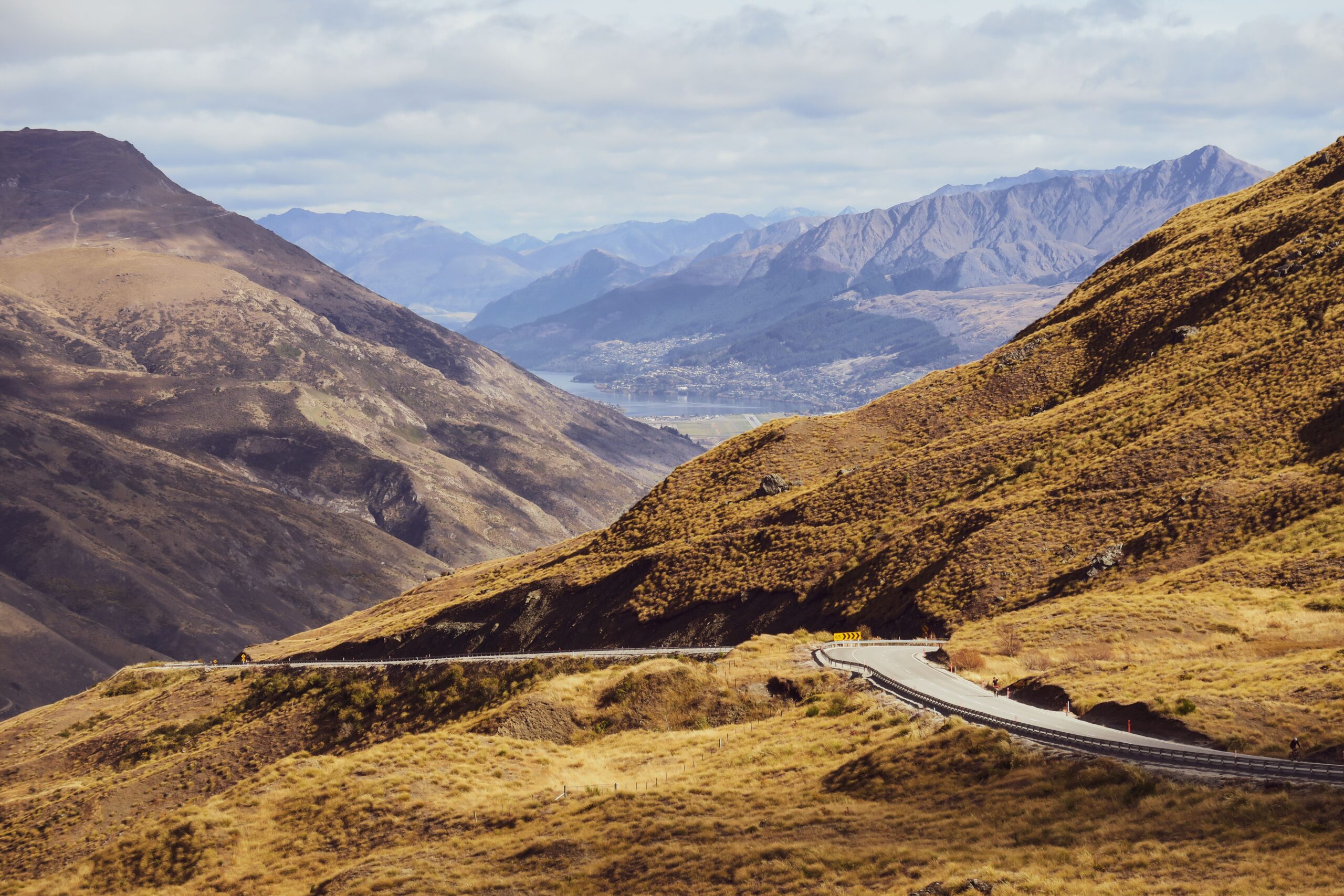
Day two is about altitude and appetite. You’ll leave Arrowtown and tackle the Crown Range Road, a twisting, steep ascent that is New Zealand’s highest sealed highway. The air thins and the view expands as you climb. At the summit, pull over. The panorama of the Wakatipu Basin is staggering, but the real reason to stop is the Crown Terrace, the old gold-mining road that snakes its way across the hillside. You can see its faint, terraced line from the lookout—a trail worn by thousands of feet and wagon wheels, now silent under tussock grass.
Descending into the Cardrona Valley, you’ll find the historic Cardrona Hotel, a classic 1863 coaching inn. Its veranda and stone fireplace make it an obvious lunch spot, but don’t linger too long. Just a few kilometers down the road, you’ll find the Cardrona Distillery, which offers a tasting of its single malt, gin, and liqueur. The connection to the gold rush is tangible: the distillery’s name and location honor the miners who once drank here, and the water they use comes from the same snowmelt that ran through the gold-bearing streams. It’s a contemplative stop that lets you connect the dots between thirsty miners and modern craft spirits. Your camp for the night is the Cardrona Valley Farm Park, a working sheep station that offers unpowered sites and basic cabins. The stars here are remarkable.
Caroline’s Silent Main Street
This is the day that gives your itinerary its name. From Cardrona, you’ll head for the true forgotten settlement of Caroline, a ghost town so complete and so out-of-the-way that most tourists never find it. It requires a four-wheel-drive or a seriously sturdy campervan—check with your rental company about your vehicle’s clearance. The road is gravel, rough, and winds through Department of Conservation land. After about 45 minutes, the forest opens, and you’ll see it: a main street of collapsing wooden buildings, a rusty boiler from a stamping mill, and the silent, dignified remains of a town that once housed hundreds.
Park your vehicle and walk. The most intact building is the old post office and general store, its tin roof still holding, its floorboards sagging under decades of leaf litter. You can look through the windows and see the counter where someone once weighed your parcel. The chimney of the town’s bakery still stands, a defiant brick column against the sky. There are no interpretive signs, no gift shop, no entry fee—just the raw, potent fact of a place abandoned. Spend at least an hour here. Sit on the step of the old schoolhouse. The only sound is the wind. You’ll leave with a feeling that’s half melancholy, half exhilaration—a genuine encounter with a vanished world that no museum can replicate.
The Nevis River Crossing, and a Cemetery of Tilted Headstones
From Caroline, you’ll drive south toward the Nevis River, one of the most legendary gold-bearing waterways in New Zealand. The road is long and rough, but the destination is worth every jarring mile. You’ll aim for the Nevis River crossing, a historic ford that was once the site of a thriving settlement. Today, it’s a place of dramatic cutbanks and deep, swift water. This is a prime spot for recreational gold panning, so pack your pan from Arrowtown. The locals swear by the inside bends of the river, where the current slows and deposits heavy material. You can spend a few hours here, working a pan, feeling the weight of the gravel, and watching the water run clear.
Later, drive to the Carricktown Trail, a short but rewarding walk that takes you through the remnants of another vanished community. The trailhead is marked by a sign, and the path follows the old road, passing by collapsed stone walls, a cemetery with a handful of tilted headstones, and the foundations of a hotel that once served three meals a day. The trail is easy, but the history is dense. You’ll find the site of the post office, the blacksmith’s shop, and the Chinese camp, all reduced to faint outlines in the grass. This is a place that rewards a slow, deliberate pace. Stop at each foundation and imagine the lives that played out here—the weddings, the deaths, the daily grind of survival in a place that gave up its gold slowly.
Bannockburn’s Sluicings, and a Beer Garden Over a Flooded Mine
Your fifth day brings you to Bannockburn, a historic gold-mining settlement on the shores of Lake Dunstan. The town itself is a quiet, friendly place, but its real treasure is the Bannockburn Sluicings, a stark, otherworldly landscape carved by hydraulic mining. You’ll take the short walk from the town center into this moonscape of deep gullies, towering cliffs of gravel, and abandoned water races. The force of the water that was used to blast away hillsides is still visible in the raw, eroded shapes of the land. It’s a sobering reminder of the environmental cost of the gold rush, but also a powerful, almost sculptural landscape.
From here, head to the Vulcan Hotel in the small settlement of St. Bathans, about a 40-minute drive away. The Vulcan is one of New Zealand’s most famous historic pubs, built in 1882 and still serving drinks. The building is a perfect example of the architecture of the era: a wide veranda, a corrugated iron roof, and a bar that feels unchanged since the 19th century. Have a drink in the beer garden overlooking the Blue Lake, a flooded former gold mine that glows an impossible, milky turquoise. The contrast between the barren sluicings of Bannockburn and the vibrant blue of the lake is striking—a reflection of the land’s transformation. Camp tonight at the St. Bathans Holiday Park, a small, friendly site right next to the lake.
Poolburn Gorge Viaduct, from the Saddle of a Bike
Day six is a shift in pace. You’ll leave the mines behind and take to the Otago Central Rail Trail, a 150-kilometer cycling and walking route that follows the old railway line that once served the goldfields. The trail is gentle and accessible, with a gravel surface that’s perfect for e-bikes or mountain bikes. You can pick up a bike in Clyde or Alexandra, and ride a section that takes you through the heart of gold-rush country. The trail passes through tunnels, over viaducts, and past small towns like Omakau and Oturehua, each with its own story of boom and bust.
Stop for lunch at the Omakau Hotel, a classic country pub with a beer garden and a fireplace. The trail is a social experience in a way the ghost towns are not—you’ll share the path with cyclists, walkers, and local farm vehicles. It’s a chance to meet people, to hear their stories, and to experience the land at a slower, more intimate pace. The highlight of your ride is the Poolburn Gorge Viaduct, a soaring structure that offers a long view of the gorge below. You’ll feel the wind in your face and the satisfaction of covering ground on your own power. Camp at the Omakau Domain, a basic but scenic free campsite with toilets and picnic tables.
Your Final Pan on the Kawarau
Your final day is a celebration of everything you’ve discovered. Drive to the Goldfields Mining Centre, a living history experience near Cromwell that gives you a hands-on, immersive look at the mining technology of the era. You’ll see a fully operational stamper battery crushing quartz, a water-operated gold-cradle, and the massive water-driven turbines that powered the later mines. You can try your hand at gold panning in the centre’s sluice, and the staff—friendly and knowledgeable—will teach you the techniques that worked a century and a half ago.
After the centre, find a quiet spot on the Kawarau River or at the historic Bendigo Station, where you can have your final pan. Sit by the water, work the gravel, and think about the week you’ve had. You’ve walked the streets of a ghost town, cycled an old railway line, stood in the silent ruins of a Chinese settlement, and felt the weight of history in your hands. The gold you find—even if it’s just a few tiny flakes—is a tangible connection to the thousands who came before you, searching for their own fortune. Drive back to Queenstown or Christchurch with the dust still on your boots, and the quiet satisfaction of a journey that went deeper than any map could show.