Parking the Campervan at a Remote South Island Beach to Watch the Southern Lights Without Another Soul in Sight
You’ve seen the Instagram shots: a glowing green curtain of light draped over a silhouette of mountains, the milky way reflected in a still lake. But what most coverage misses is the mechanics of actually being there—specifically, how to make the Aurora Australis a private, campervan-fueled experience rather than a crowded tourist spectacle. The South Island of New Zealand offers a rare gift: you can park your campervan on a beach, cook dinner with the ocean at your feet, and watch the Southern Lights dance overhead with no one else in view. This isn’t a guided tour or a lodge booking; it’s a self-contained, DIY adventure that rewards preparation and patience with the most intimate natural show on earth.
The trick is knowing where to go, how to read the conditions, and what your campervan needs to handle the remote roads and dark skies. Most people head to the usual suspects—Lake Tekapo, Mount Cook, or Stewart Island—but those spots are well-trodden for a reason: they work. The secret is finding their lesser-visited cousins, the beaches and bays where you can pull up, switch off the engine, and let the quiet settle around you while the sky does its thing.
Kaka Point, Where the Waves Drown Out Everything but the Sky
The Southern Lights are visible from New Zealand’s South Island roughly from March to September, with peak activity typically falling around the equinoxes. But the question isn’t just *when*—it’s *where*. Most campervan travelers gravitate toward the west coast, lured by the drama of the Southern Alps and the glaciers. But the west coast’s notorious cloud cover can ruin a night’s viewing in seconds. The east coast, by contrast, offers a more reliable microclimate: drier, clearer skies, and long stretches of coastline that face due south—the direction the aurora arrives from.
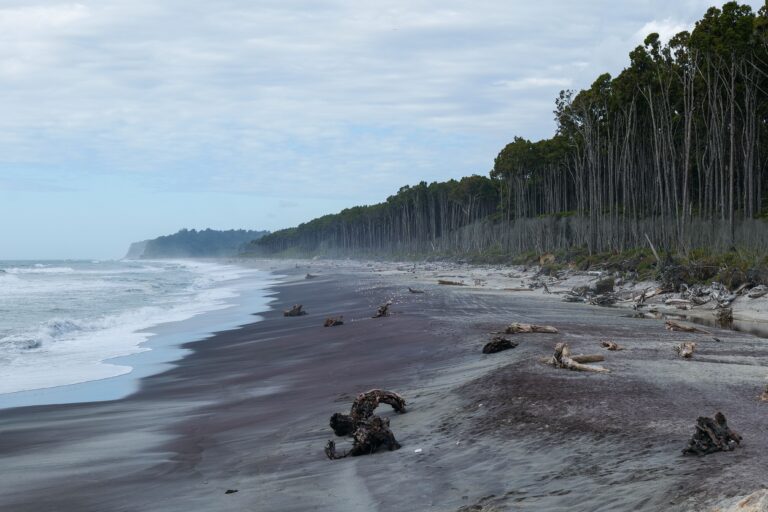
Think of beaches like Kaka Point, just south of Balclutha, or the Catlins coast near Tautuku Bay. These aren’t tourist hubs; they’re working fishing communities and conservation areas where the biggest nighttime disturbance is the sound of waves. You can park your campervan on a grassy reserve above the beach, or at a designated freedom camping spot with the ocean as your front yard. The key is exposure: you want an unobstructed view to the south, ideally with a low horizon of sea or flat land. Hills, mountains, or even tall dunes can block the aurora’s lower reaches, which is where the most vivid colors appear.
When you stop, do it early—before sunset. Walk the beach, check the horizon, and imagine where the lights will rise. You’re looking for a spot where the sky meets the sea or land without interruption. A campervan’s height can give you an advantage: park on a slight rise, and your rooftop becomes a perfect viewing platform. Leave your interior lights off to preserve your night vision, and aim to have your sleeping setup ready before dark so you’re not fumbling with torches later.
Reading the Aurora Forecast Like a Local
Most travelers check the weather—but few check the space weather. The aurora is caused by solar wind interacting with Earth’s magnetic field, and activity levels are measured on the Kp-index, a scale from 0 to 9. For the South Island, you’ll want a Kp rating of at least 4 or 5 to see the lights with the naked eye from the east coast beaches. The good news: apps like Aurora Forecast or websites like Space Weather Live give you real-time updates. The better news: you don’t need to obsess over the numbers if you understand the patterns.
A high Kp index means the aurora oval expands southward, pushing the lights within reach of New Zealand’s latitudes. But the oval isn’t stationary—it shifts and pulses. A common mistake is to look only at the Kp number and give up if it’s below 5. In reality, brief spikes in activity can produce a visible display even on a lower-rated night. The trick is to be out there, watching, when those spikes occur. That means committing to a late night or a pre-dawn alarm—most aurora activity peaks around local midnight, but the hours between 10 PM and 2 AM are your sweet spot.
Campervan life plays to your advantage here: you can sleep at your viewing spot, set an alarm for 11 PM, and step outside in your slippers. No driving, no shivering in a car park, no rushing back to a hotel. You’re already home. Bring a camp chair, a thermos of something hot, and a red-light headlamp—white light ruins your night vision and annoys other campers, if any are around. Your camera needs a tripod and a manual mode—set your aperture wide (f/2.8 or lower), your ISO around 1600–3200, and your shutter speed to 10–20 seconds. But the real magic is just watching with your own eyes: the lights often appear as a faint grey-green haze at first, then brighten and move like a slow-motion curtain in the wind.
Freedom Camping Etiquette and the Unwritten Rules
New Zealand’s freedom camping regulations are generous but specific. On South Island’s east coast, you’ll find designated freedom camping areas that allow self-contained campervans—those with a fixed toilet, greywater tank, and a certificate of self-containment. This is non-negotiable: the Department of Conservation and local councils enforce strict rules, and fines can be hefty. But the reward is access to spots like Tunnel Beach near Te Anau or the wild coastline of the Catlins, where the only other vehicles might be a few hardy overlanders.
The unwritten rules matter just as much. When you park for the night, angle your campervan so the door opens away from the prevailing wind—the Canterbury coast can be blustery even in summer, and a gusty door is no fun at 2 AM. Keep your generator off—you don’t need it; your battery should handle lights and a fridge for a night. And if you leave your van to walk down the beach, take nothing but your camera. The beaches here are pristine, and the silence is part of the experience—break it with a loud conversation or a barking dog, and you’ll feel like an intruder in a sacred space.
Most locals who know these spots will wave as they pass but leave you alone. That’s the etiquette: you’re a temporary neighbor, not a tourist attraction. Offer a friendly nod, but keep your distance.
Oreti Beach, Southland
If you have to pick one beach for aurora hunting, make it Oreti Beach, on the southern coast near Invercargill. It’s a massive, flat expanse of sand that stretches for miles, with an unimpeded view south to the Southern Ocean. The beach is hard-packed enough to drive on—check the tides first; soft sand at high tide is a recovery nightmare—so you can park your campervan right where you want. The nearest town is a 15-minute drive away, but on a clear winter night, you’ll feel like you’re on the edge of the world.
Oreti’s advantage is its combination of accessibility and emptiness. The beach is a popular local spot during the day—dog walkers, horse riders, kite flyers—but by 10 PM, it’s yours. The sand stays cold, so bring a waterproof mat to stand on. Watch the horizon for a faint green glow; on a good night, the aurora will rise as a vertical band of light, then split into pillars that shift and shimmer. The reflection on the wet sand doubles the spectacle—a trick photographers love but you can appreciate with your naked eye.
One note: Oreti Beach can be intensely dark, which is perfect for the aurora but treacherous for walking. Use your campervan’s headlights to orient yourself before you step out, and mark your parking spot with a reflective stake or a light on the ground. The last thing you want is to lose sight of your van in the darkness—it’s a big beach, and landmarks disappear at night.
When the Lights Don’t Show: The Backup Plan
No one admits it in their blog posts, but aurora hunting comes with no guarantees. You might spend three cold nights staring at a blank, star-filled sky while the Kp index stubbornly hovers at 2. The trick is to treat the wait as part of the adventure. Your campervan is a mobile base camp: cook a proper dinner—the gas hob works fine for pasta, steak, or even a one-pot curry—play cards, read a book by your van’s warm interior light. The night itself—the stars, the waves, the utter silence—is a reward even without the lights.
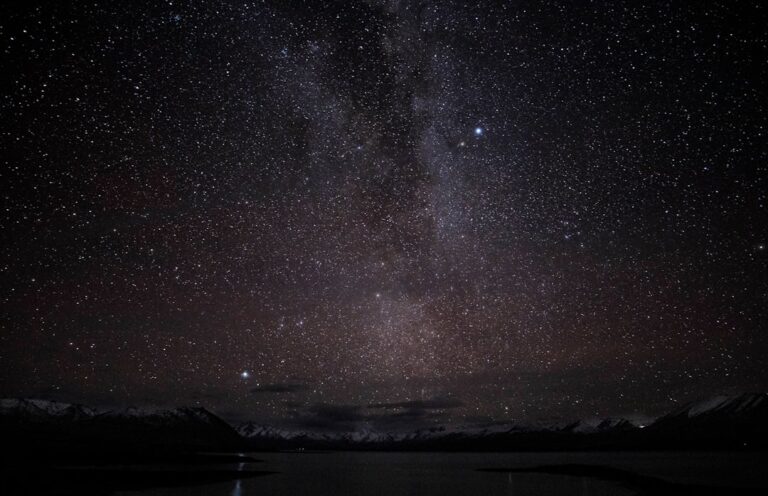
If the aurora stubbornly refuses to show, pivot to stargazing. The South Island’s eastern skies are among the darkest on earth, and your no-light-pollution beach will reveal the Milky Way as a thick, dusty ribbon overhead. The Magellanic Clouds, two dwarf galaxies visible only from the Southern Hemisphere, are a highlight—they look like faint, fuzzy patches of light, and they’re visible even on nights of low aurora activity. Download a stargazing app before you go, or simply lie on the sand and trace the Southern Cross overhead.
Your campervan’s battery can handle a few hours of dim interior lights, but keep it minimal. The darker your campsite, the brighter the sky—and the more likely you’ll notice that faint green shimmer that means the lights are waking up. Patience pays off more than any forecast.
Packing the Essential Auroral Kit
Your campervan should already have the basics—bedding, cooking gear, water—but aurora hunting demands a few extras. A high-quality sleeping bag rated for -5°C or lower is non-negotiable: even in summer, South Island nights can drop below freezing, and you’ll be getting in and out of the van. A hot water bottle or an electric blanket—if your van has a hookup or a large battery bank—makes getting back into bed at 2 AM far less punishing.
Pack a pair of binoculars with a wide field of view—they’re better for scanning the horizon than your camera lens, which is usually too narrow. A notebook and a pen are unexpectedly useful: the aurora is so intense and otherworldly that your brain will struggle to remember the color gradients the next day. Write down what you see—the exact shade of green, the way the light pulsed, the sound or lack of it of the ocean. You’ll be glad for the record when you’re telling the story later.
And bring a spare camera battery. Cold weather drains lithium-ion cells fast, and nothing is more frustrating than your camera dying mid-display. Keep the spare in your sleeping bag, close to your body heat, and swap it in when the first battery gives out.
Cold Sand, Warm Van, Open Sky
There’s a moment, when the Southern Lights finally appear, that feels like a secret being shared. The green glow rises, pulses, and then spreads across the sky in slow, deliberate waves—and you’re standing alone on a cold beach, your campervan glowing faintly behind you, the ocean breathing at your feet. It’s not a show you’ve paid for or a sight you’ve queued for; it’s a gift you’ve earned with preparation, patience, and a willingness to be uncomfortable for a few nights.
The South Island’s remote beaches will give you that moment if you let them. Park your van, switch off the engine, and wait. The lights will come, or they won’t—but the quiet, the stars, and the cold salt air will be more than enough either way. You’ll leave with a story no filter can capture, and a sense of having found something most travelers only dream of: a place where the sky opens up just for you.
📷 Photos: Manuela Meierhofer (Unsplash)