The afternoon I picked up the Proton Saga from the lot in Tanah Rata, the man behind the counter told me something I didn’t understand until later. “The road to the top plantations,” he said, squinting at my booking form, “it’s not about the car. It’s about knowing when not to use the brakes.” He handed over the keys without another word. I spent the first hour wondering what that meant, then the next three hours learning.
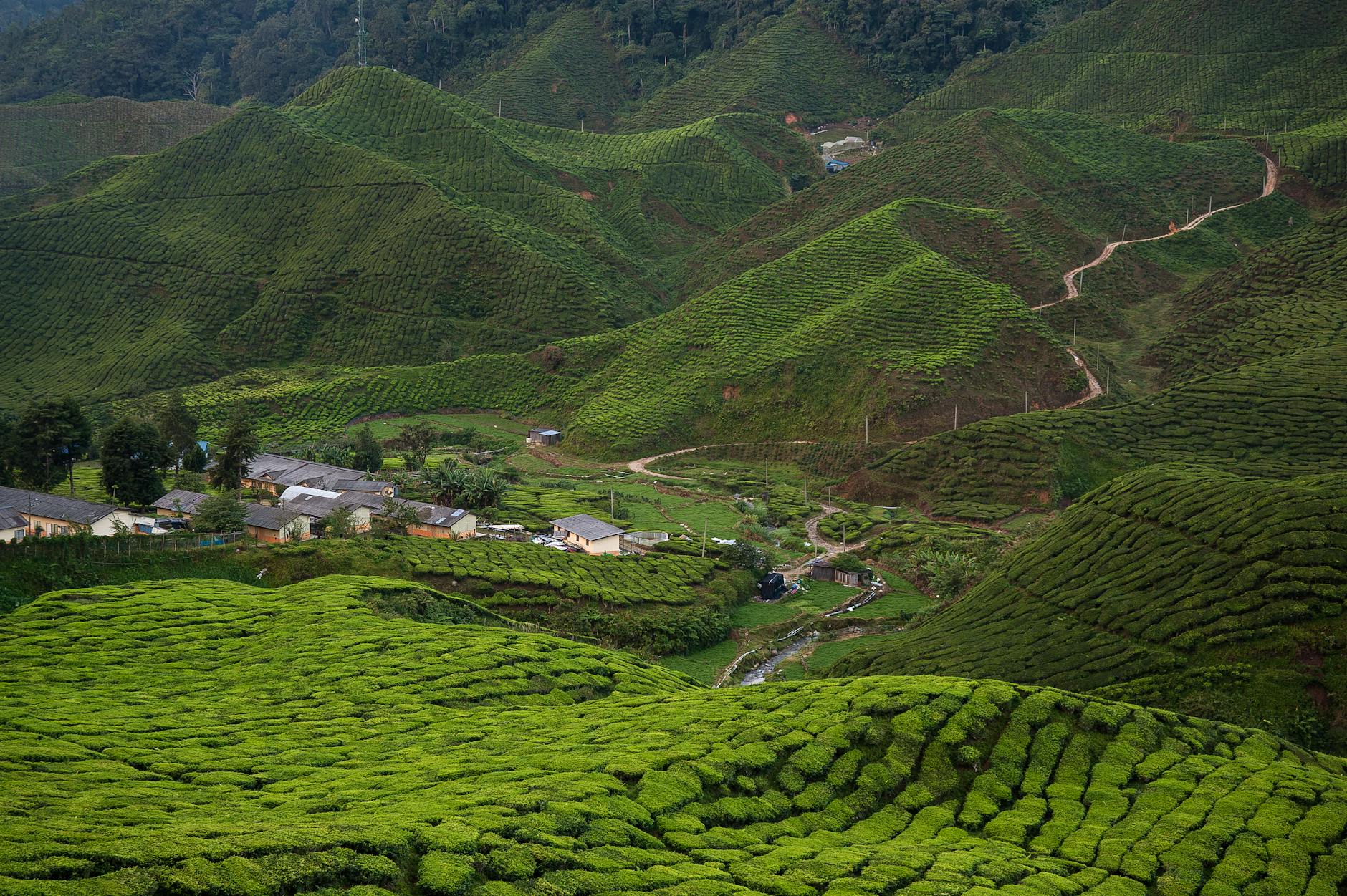
The Cameron Highlands are not a single place so much as a series of roads that happen to have tea growing beside them. Most visitors arrive with a list of names—Boh Tea Plantation, Cameron Valley, Sungai Palas—and assume the hard part is finding parking once they get there. The hard part, it turns out, is the road itself. Specifically, the stretch from Ringlet up to the Boh Sungai Palas centre, a twelve-kilometer ribbon of asphalt that narrows without warning and tilts at angles that feel personal.
I had driven mountain roads before. The Highlands are different. The gradient isn’t constant; it shifts mid-corner, so a turn that starts gentle tightens as you apex, and the car, a 1.3-liter Saga with tires that had seen better years, responded the way a tired dog responds to a second walk—reluctantly, with audible complaint. I dropped to second gear before the steeper sections and let the engine hold me back, the way the rental agent had implied without quite saying. The brake pedal stayed untouched for entire stretches, and the car felt more stable for it. You learn to trust it.
What surprised me wasn’t the road itself but the things people miss while focusing on the road. At one of the wider pull-offs, maybe halfway up, a man was selling rambutan from the back of a pickup truck. Not at a tourist stall—just a truck, parked, with a handwritten cardboard sign that said “RM5.” I bought a bag. The fruit was still warm from the sun, and the juice ran down my wrist as I stood there, watching cars creep up the hill in low gear. Nobody else stopped. That truck is there most afternoons. A retiree who comes up from Ipoh every few weeks to escape the heat told me about it that evening. “The rambutan guy,” he called him, as if everyone knew. “He’s been there maybe eight years now.” Or something like that.
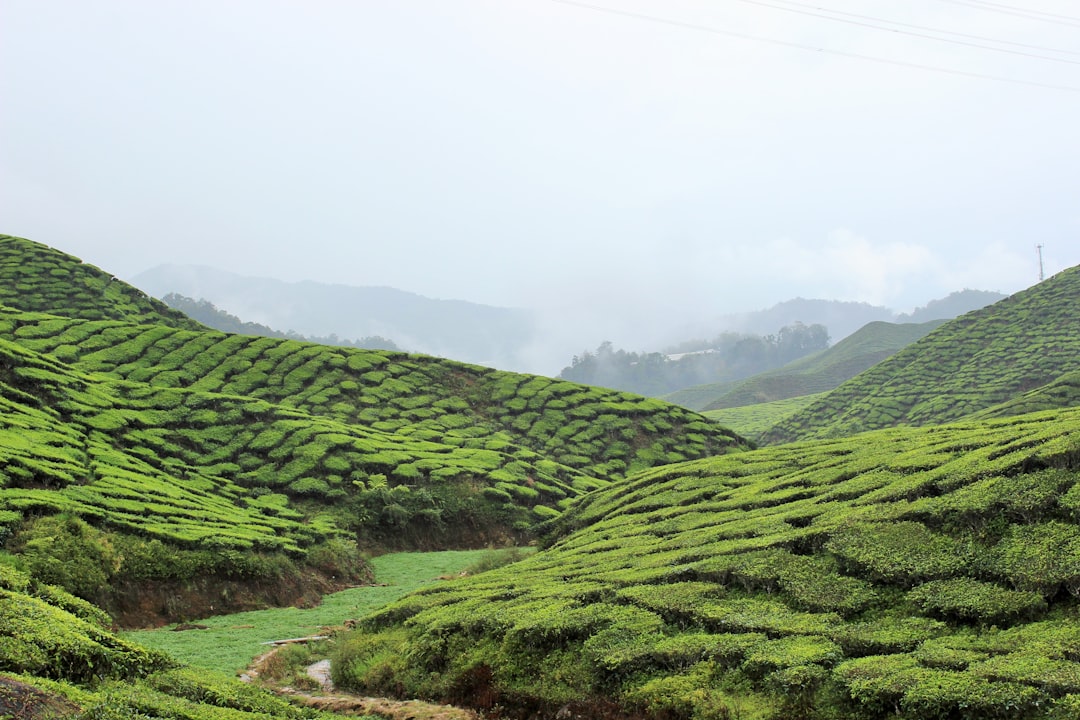
The tea plantations themselves are more industrial than the brochures suggest. The Boh centre at Sungai Palas is clean and well-run, but the real operation happens on the slopes below the viewing deck, where workers move between rows with baskets strapped to their backs, picking leaves at a pace that looks slow from a distance but isn’t. The factory tour gives you a sense of the process—withering, rolling, oxidation, drying—but the smell is what stays. It’s not the floral aroma of a brewed cup. It’s green, damp, like cut grass that’s been left in a shed overnight. I stood near the withering troughs longer than I needed to, trying to place it.
By late morning, the clouds lift from the valleys and sit on the ridges, thick enough that visibility drops to maybe thirty meters. I had been told the mist was “atmospheric.” It is, until you’re trying to navigate a hairpin with no guardrail and a tour bus coming the other way. The bus drivers know the road intimately. They take their half of the road in the middle, and you take yours wherever you can find it. There’s no hostility in it—just the pragmatism of drivers who do this three times a day while you’re doing it once.
A local motorbike courier I met at a petrol station near Brinchang—he was filling a small tank, not even bothering to turn off the engine—laughed when I asked about the driving. “Tourists always go too slow,” he said, “or too fast in the wrong places.” He gestured at the road with his chin. “The corners after the big sign. That’s where people get stuck. They brake in the middle of the turn.” He was gone before I could ask what he meant, but I understood an hour later, when I found myself doing exactly that—touching the brakes mid-corner, feeling the rear end shift slightly, and realizing the mistake halfway through the motion.
The tea itself is better at the smaller factories. Cameron Valley’s outlet near Tanah Rata sells a BOH Silver Tips that I didn’t see at the main visitor centre, and the staff there, an older woman with reading glasses perched on her nose, told me it’s the same leaf but a different cut. “Finest grade,” she said, not looking up from the newspaper she was folding. “The tourists don’t ask for it.” I bought a pack for RM12 and brewed it that evening in my guesthouse, using water that had been boiled in a kettle with a loose lid. It was better than it had any right to be, given the circumstances.
The mistake that taught me the most was an accidental turn onto a road that wasn’t on any map I had. Leaving Sungai Palas, I missed the junction back to Tanah Rata and ended up on a smaller road that ran along a ridgeline, past a cluster of wooden houses and a small mosque painted pale green. The road was unpaved for about two kilometers, then paved again, then unpaved. I passed a group of workers on a break, sitting on a fallen log, eating from metal tiffins. One of them waved. I waved back. The road eventually rejoined the main route near Kampung Raja, and I sat in the car for a minute after parking, trying to figure out where exactly I had been. The map on my phone showed nothing—just white space where the road should have been.
That unmarked road is the kind of thing I’d recommend to anyone who asks, but I don’t know how to tell them to find it. It’s the road you take when you miss the turn you meant to take. The Highlands are full of these non-destinations. The mossy forest trail near Gunung Brinchang, for instance, is often skipped because it’s not on the main tourist circuit, and the entrance is easy to miss—a gap in the trees with a faded sign that says something about a research station. I walked it on my last morning, alone, the air thick with the smell of wet earth and something floral I couldn’t name. A researcher from the nearby MARDI station passed me on the trail, carrying a plastic bag full of soil samples. He nodded but didn’t stop. “The soil here is different from the lower slopes,” he said, already past me. “More organic matter. That’s why the tea tastes the way it does.” He was gone into the trees before I could ask anything else.
The rental car went back without incident. The agent glanced at the tyres, gave a small nod, and handed me my deposit. “Did you go up to Sungai Palas?” he asked. I said yes. He didn’t ask anything else. I drove away in a taxi toward Ipoh, watching the Highlands shrink in the rearview mirror, and I thought about the rambutan man, the motorbike courier, the researcher with the soil samples—people who live in a place most visitors only pass through. The postcards get the green right. But the smell of the withering troughs, the feel of a rental car finding its grip on a wet corner, the unmarked road that led nowhere and everywhere at once—that’s a different kind of green altogether.
📷 Photos: Amélia Blondin (Unsplash), Vincent Tan (Pexels)