The Van Door Slides Open, and the Silence Hits First
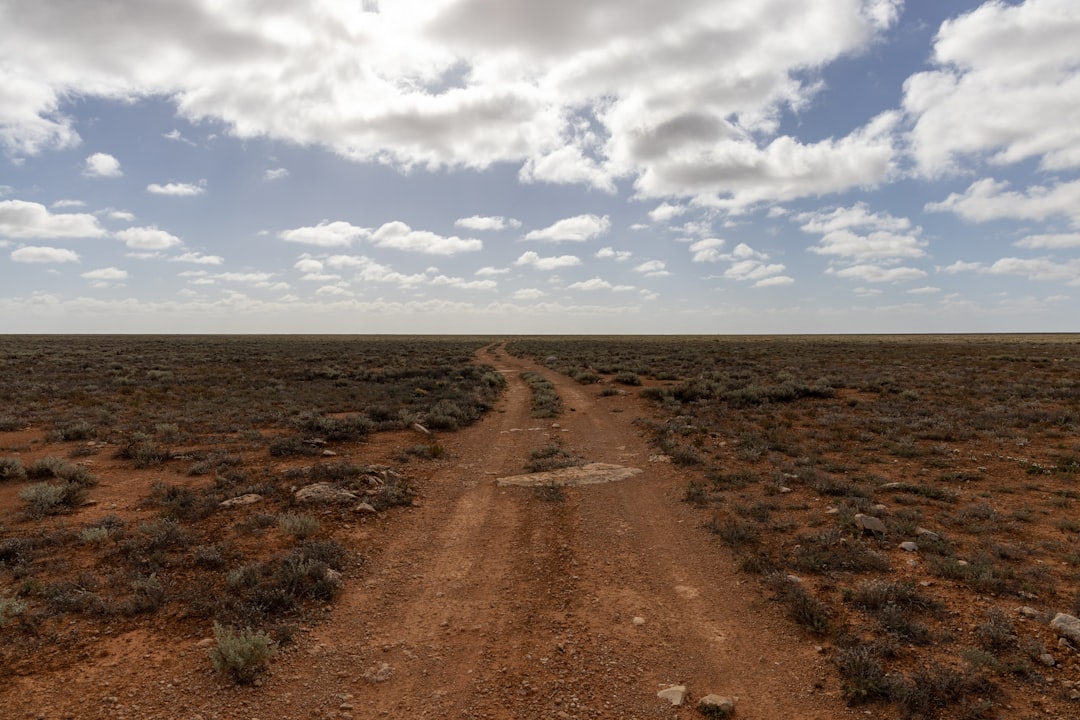
The first thing you notice isn’t the Milky Way—though it will, eventually, command every ounce of your attention. It’s the quiet. Not the absence of sound, but the absence of human sound. There’s no distant hum of a highway, no airplane drone, no neighbour’s dog, no refrigerator compressor kicking on from a campsite a hundred metres away. What you hear, once the van’s engine is killed and the red dirt meets your boots, is your own breathing, the settling tick of hot metal cooling, and—if you stand still long enough—the faint, almost imperceptible rustle of wind moving across a landscape that hasn’t changed much in fifty million years. You are parked on the edge of the Nullarbor Plain, and you are about to witness something that city-dwellers have all but forgotten exists: a sky so densely packed with stars it feels less like looking up and more like falling into an ocean of light.
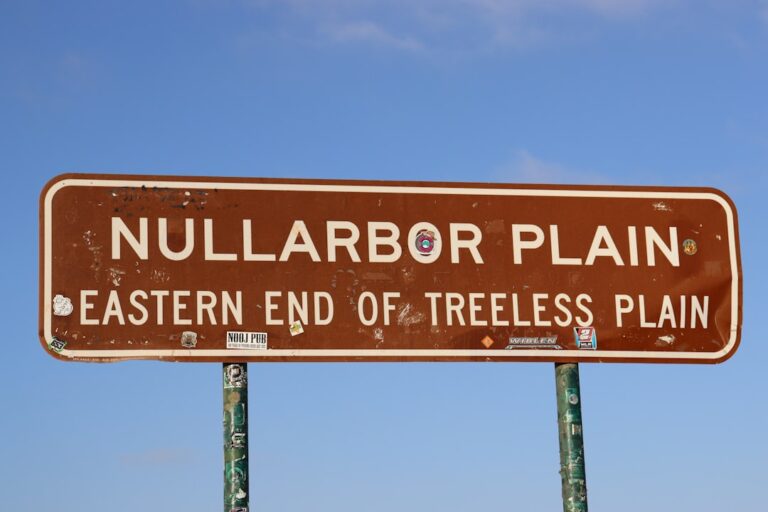
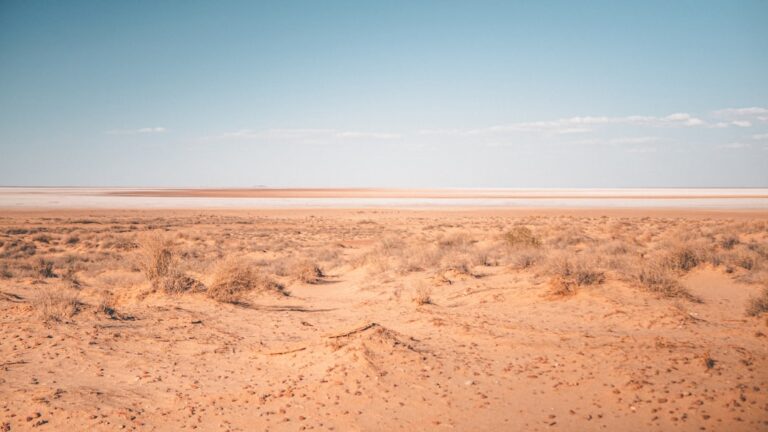
This is the Nullarbor’s “star corridor,” a term astronomers use loosely to describe the band of near-zero light pollution that stretches from the Western Australian coast, across the vast limestone plateau, and into South Australia. For campervanners, it represents one of the last true dark-sky sanctuaries on the continent—and one of the most accessible, provided you know how to approach it. The drive itself, the Eyre Highway, is the famous bit: 1,200 kilometres of dead-straight road crossing a treeless plain that can feel both monotonous and hypnotic. But the real experience begins when you turn off the engine, roll open the side door, and let the sky take over.
You’ll want to time the journey around the moon phase. A full moon, beautiful as it is, will wash out the faintest stars and turn the Milky Way into a pale ghost of itself. The three nights either side of a new moon, at least fifty kilometres from any town—Ceduna, Eucla, Norseman, or the roadhouses that punctuate the highway—are the target. That’s not difficult here: the Nullarbor’s interior is defined by its emptiness, and a short detour onto an unsealed track can drop you into absolute darkness within minutes. Just make sure your campervan is equipped for gravel roads, and carry a recovery board and tyre pressure gauge—the limestone surface can be sharp, and the fine red dust will find its way into every seal and crevice you thought was tight.
Once you’ve chosen a spot, the ritual of settling in becomes part of the experience. You’ll likely arrive in the late afternoon, when the heat of the day is beginning to soften and the plain stretches out in shades of ochre and sage under a sky that still feels ordinary. Park with the sliding door facing roughly south—this gives the best view of the galactic centre as it rises, and it means you can lie on the mattress with the door wide open, watching the stars wheel overhead without ever leaving the sleeping bag. Set up a camp chair, pull out a thermos of something warm (the desert cools fast after sunset, even in summer), and simply wait. The transition from dusk to true dark on the Nullarbor is not gradual; it’s a shift that happens in stages.
The First Stars Appear, Then the Sky Fills In Like a Photograph Developing
First, the brightest stars appear—Venus if you’re lucky, then Sirius, then the familiar shape of the Southern Cross low on the horizon. Then, as the last orange light drains from the west, the sky begins to fill in. It’s like watching a photograph develop in slow motion. Fainter stars emerge, then fainter still, until the pinpricks of light become too numerous to count. And then, around an hour and a half after sunset, the Milky Way reveals itself. On the Nullarbor, it isn’t a faint band of cloud—it’s a brilliant, three-dimensional river of stars, so bright and structured that you can see the dark rifts of interstellar dust dividing it into lanes. You can trace the shape of the Coal Sack. You can see the glowing centre of our galaxy, a dense ball of light that seems to pulse. And if you lie back on a blanket and let your eyes fully adjust—which takes at least twenty minutes of not looking at any light source, not even your phone—you will start to see the subtle colours: the faint pink of the Carina Nebula, the blue-white haze of star clusters too distant to resolve.
This is where a campervan becomes more than just a vehicle. It’s your base camp, your shelter, your dark-room. A proper night of stargazing involves a few intentional choices. The van’s headlights, brake lights, and interior cabin lights are your enemy; you’ll want to cover the van’s external light sources with red cellophane or buy a red-filtered headlamp for any movement after dark. Red light preserves your night vision, allowing you to move around without resetting the forty-minute clock your eyes need to reach full dark adaptation. A foldable blackout curtain that clips over the windscreen and cab windows is invaluable—not just for sleeping in past dawn, but for ensuring that when you step out of the van at three in the morning, the sudden wash of light doesn’t ruin the show for yourself or anyone else camped nearby.
Four in the Morning, the Dew Settles, and the Silence is Complete
There is a particular moment, around four in the morning, when the air temperature drops to its coldest and the dew begins to settle on the windscreen. The stars are at their brightest, and the silence is so complete that you can hear your own heartbeat. This is the moment that most travellers miss because they’re asleep. The galactic centre, which in early evening hangs low in the southeast, climbs higher as the night deepens, and by the small hours it’s directly overhead—a spectacle so intimate and overwhelming that seasoned travellers report feeling a strange mixture of awe and vertigo. This is the moment to have a camera ready, but also the moment to put the camera down. The Nullarbor’s sky is notoriously difficult to photograph well—the sheer density of stars tricks sensors, and without a tracker mount, even a wide-angle lens at 20 seconds will show trailing—but the real memory isn’t the image you take home. It’s the feeling of lying on the warm, cracked limestone, the campervan a dark silhouette beside you, and realising that you are seeing something that hasn’t changed since humans first looked up.
Practicalities matter here, because the Nullarbor does not forgive oversight. Fuel stops are sparse: the longest stretch between services is roughly 190 kilometres, which sounds manageable until you factor in headwinds that can chew through your tank faster than you expect. Top up at every opportunity, even if the gauge reads half full. Water is even more critical. Many of the roadside rest areas and informal campsites have no facilities at all—no taps, no toilets, no bins. You need to carry enough drinking water for the entire crossing, plus extra for washing and cooking, and you need to pack it out with you. There are no exceptions. The limestone plain is porous, and what little water falls here seeps straight into the aquifer; the environment is fragile, and the rangers are serious about leave-no-trace ethics. Carry a portable toilet or use the designated dump points, and never, ever leave waste behind.
The classic route for a Nullarbor stargazing road trip begins in Norseman, Western Australia, where the bitumen turns east and the landscape begins its slow transformation from golden eucalypt woodland to open saltbush plain. Your first night can be spent at the Fraser Range Station, a working sheep station that offers basic campsites with the significant advantage of being miles from any town lights. From there, you push east to the Madura Pass, where the escarpment drops away to the Roe Plains and the view south over the Great Australian Bight is uninterrupted all the way to Antarctica. The sky here, high above the coastal plain, is clear enough that you can see the Magellanic Clouds with the naked eye—two fuzzy patches of light that are actually dwarf galaxies orbiting our own.
Further east, the Bunda Cliffs stretch for nearly 200 kilometres, a sheer limestone wall that drops straight into the Southern Ocean. Camping here is not for the faint-hearted: the wind can be fierce, and the cliffs themselves are unstable, with undercut edges that can collapse without warning. But on a still night, with the ocean below and the sky above, the sense of being poised at the edge of the continent is profound. You’ll want to park well back from the cliff line—at least fifty metres—and choose a spot where the ground is firm and the view is clear. Eucla, just over the South Australian border, offers a roadhouse with basic supplies, but the real attraction here is the old telegraph station, half-buried in sand dunes, where the night sky feels even more ancient because the human presence is so clearly temporary.
The Van Becomes a Capsule of Warmth Against the Indifferent Dark
The campervan itself becomes part of the experience in ways you might not anticipate. Inside, the van is a capsule of warmth and light, a small sanctuary against the vast, indifferent dark. Cooking a simple meal—pasta with a jar of sauce, a can of beans heated on the stove—tastes better when you eat it sitting in the open doorway, watching the colours drain from the horizon. The limited power supply from the van’s auxiliary battery forces you to be deliberate about energy use: a few hours of LED lighting, a phone charge for navigation, perhaps a short burst of music before bed. The constraint is freeing. You stop scrolling. You start looking.
A word about wildlife: the Nullarbor is not empty. Kangaroos graze the open plains at dawn and dusk, and they have no understanding of road rules—drive at night only if you absolutely must, and even then, keep speed below 80 km/h. Wedge-tailed eagles ride thermals during the day, and if you’re very lucky, a perentie goanna crossing the road in a slow, deliberate waddle. At night, the small things come out: hopping mice, geckos, and the occasional dingo padding silently past camp. Leave food sealed and stored, and never feed anything. The desert is unforgiving, and animals that learn to associate humans with food rarely survive.
Photographers tend to recommend a sturdy tripod, a wide-angle lens with a fast aperture (f/2.8 or wider), and a remote shutter release. But the most important piece of equipment is patience. The best shots come not from the first hour of darkness, but from the deep night, when your eyes have adjusted and you can frame the Milky Way against the silhouette of the van with the kind of intentionality that comes from knowing exactly what you’re looking at. Play with exposure times—twenty seconds for a clean shot, thirty if you’re willing to accept a hint of trailing. Use a manual focus and set it to infinity, then take test shots and zoom in to confirm. The results, when they work, are images that will make your friends ask if you Photoshopped them. You didn’t. The Nullarbor just looks like that.
The Final Leg to Ceduna, Where the Sky Begins to Fade
The final leg takes you across the treeless interior to Penong, then Ceduna, where the stars begin to fade as the lights of civilisation return. By the time you reach Ceduna, you’ll notice the difference immediately: the sky is still beautiful, but it’s no longer the immersive, all-consuming spectacle it was a hundred kilometres back. You’ll feel a small pang of loss, and you’ll already be planning your return trip. The southern winter sky, with Orion standing on his head and Canopus blazing overhead, gives way to the summer triangle rising in the east. The morning star appears, and the sky begins to pale. When you finally pull back onto the Eyre Highway and continue east, windscreen smeared with the remains of a thousand insects, the sun warm on your arm, you’ll carry that darkness with you. It changes how you see every sky after it.
📷 Photos: Stephen Mabbs (Unsplash)